



Antique Rosewood Chairs
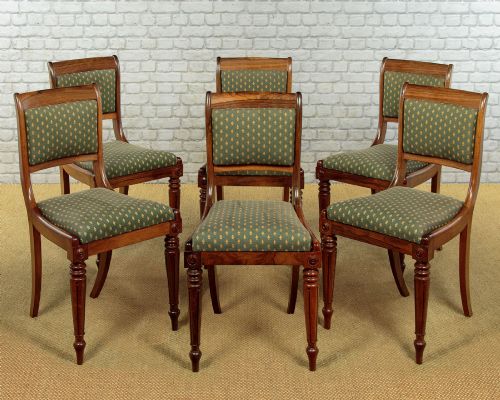
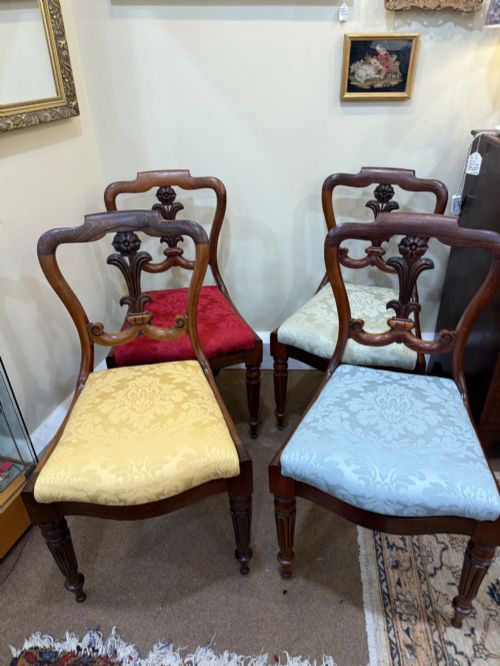
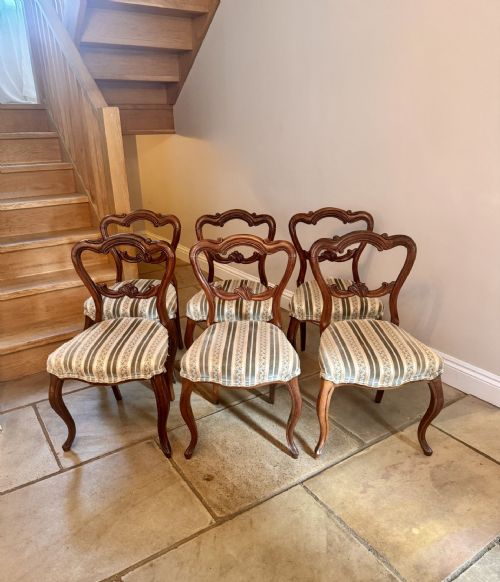
Nineteenth-century British seat furniture in rosewood, or in beech grained to look like it, made for the dining room, drawing room and bedroom.
Antique Rosewood Chairs
Rosewood came into English chair-making from the late 18th century, shipped in from Brazil, India and elsewhere, and its dark figure and hard, close grain suited smart Regency and early Victorian rooms. It was costly, so cheaper woods were grained and painted to give the same effect.
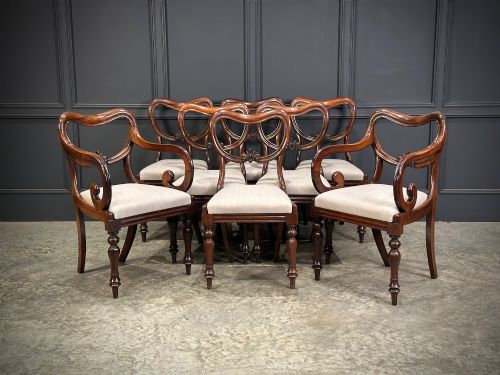
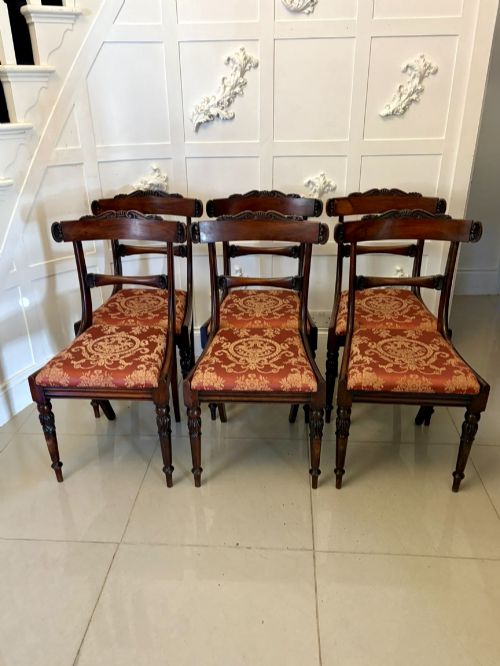
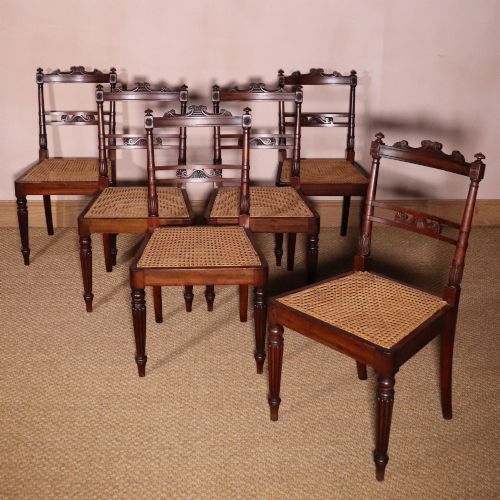
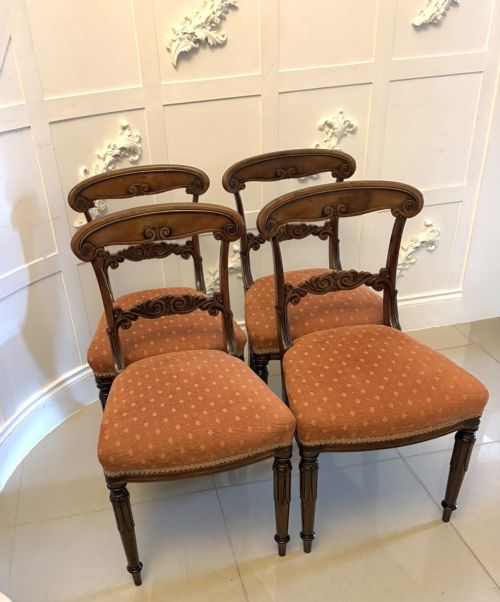
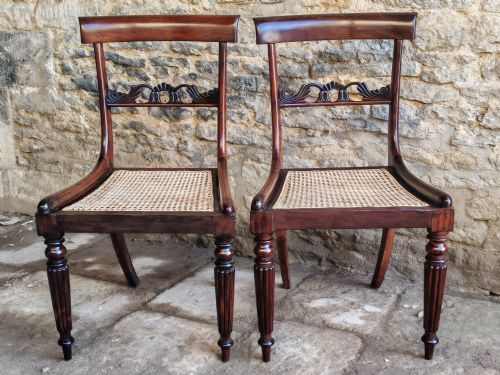
The chair you'll meet most often is a Victorian or Regency dining or side chair sold as a pair or a set. Dining chairs run through a third of titles on Sellingantiques, and Victorian and Regency are the two commonest period labels, with William IV close behind as a title word.
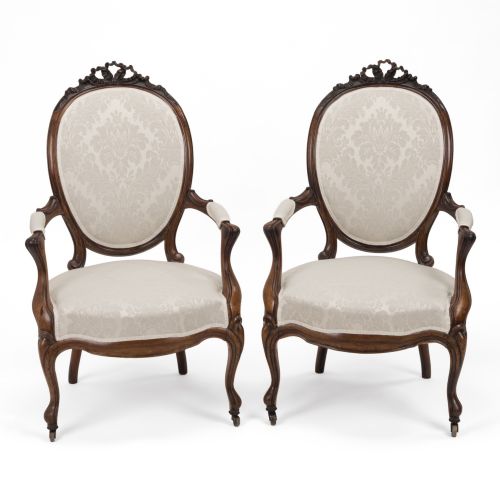
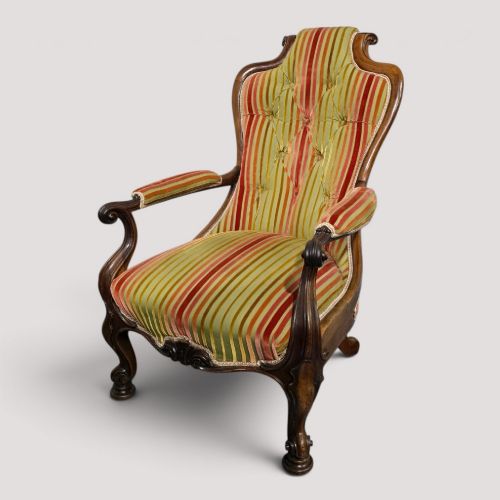
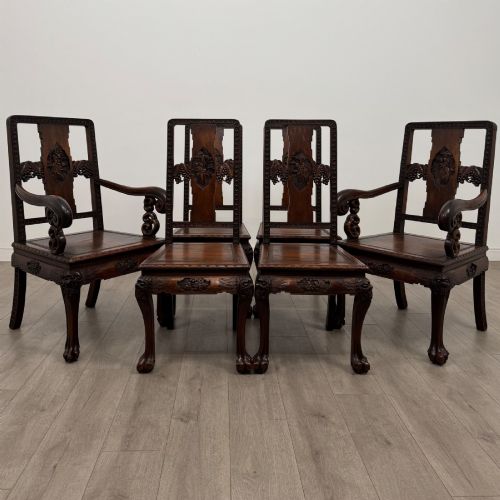
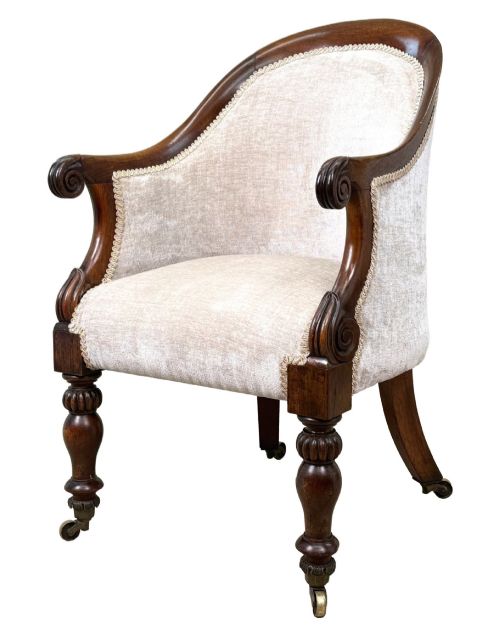
Around a fifth of the category is armchairs, single or in pairs: show-frame and button-back chairs, open armchairs, library chairs and bergères. Below that sit the small forms, nursing and slipper chairs, prie dieux, dressing-table and children's chairs. A thin seam of Anglo-Indian, Burmese, Chinese hongmu and Portuguese chairs turns up throughout.
Dating is loose by nature. Only 268 of 924 listings carry a clean year, the rest resting on period words, and "19th Century" is the commonest of them. Where years are given they pile up on 1850 and 1860, thinning through the later decades, so a chair called Regency may be anywhere from about 1810 to the late 1830s.
What Sets Them Apart
Set size does more work than anything else. Singles and pairs occupy the lower reaches, sixes and fours the middle, and the sets of eight, nine, ten and the one set of twelve William IV dining chairs sit at the top of the range. A single balloon-back bedroom chair marks the other end.
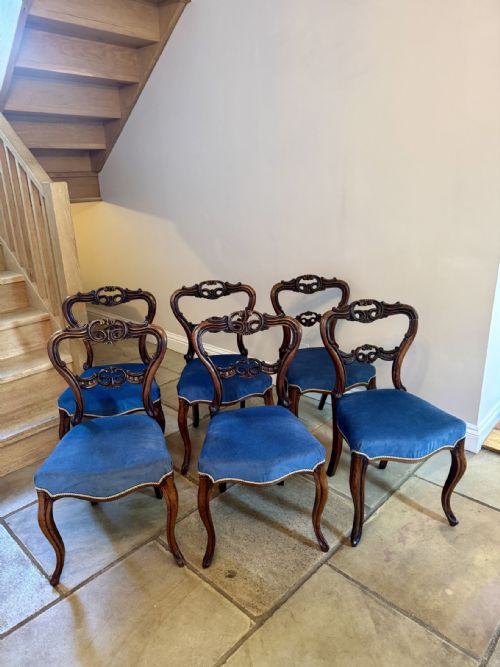
Solid rosewood carries a set higher than grained beech, though not absolutely: simulated and faux appear in 87 titles between them and run across the whole range, including some of the higher-priced bergères. Carving and inlay lift a chair too, with carved in 91 titles and inlaid in 82, brass inlay a Regency habit, and marquetry on individual pieces.
Form matters as much as material. Library and bergère armchairs concentrate at the top, along with reclining and Gillows-attributed pieces, while nursing, bedroom, dressing-table and child's chairs concentrate at the bottom. Regency and George IV bergère library armchairs hold the very top.
Antique Rosewood Chairs Retail Price Guide 2026
Typical UK retail prices for rosewood chairs, calculated from the Sellingantiques database of over a million retail prices indexed since 2003. This retail price guide relies exclusively on Sellingantiques data; no external sources or auction records are used, so the figures do not describe the wider market.
Gillows is the name that turns up from the most dealers on Sellingantiques for rosewood chairs, appearing from ten of them.
Gillows
The Antique Rosewood Chairs Glossary
- Balloon back
- Rounded, waisted chair back of mid-Victorian type, named in 34 titles and often on single bedroom chairs.
- Simulated or faux rosewood
- A cheaper wood, commonly beech, grained and painted to imitate rosewood. One Regency set is described as beech with its original rosewood graining.
- Bergère
- Deep enclosed armchair, often caned in the back and sides. Several of the 22 titles call them library bergères.
- Show-frame
- An upholstered chair where the polished frame is left visible rather than covered.
- Harlequin set
- A set assembled from chairs that match closely but aren't identical.
- Elbow chair or carver
- The armed chair in a dining set, usually one or two to a run of singles.
Antique Rosewood Chairs: Frequently Asked Questions
What is the commonest form in this category?
A Victorian or Regency dining or side chair, sold as a pair or a set. The word chairs appears in 510 titles and dining chairs in 313.
Pairs are the single commonest grouping at 192 titles, with sets of six and four the next steps up.
Why do some listings say simulated rosewood?
Rosewood was expensive, so chair-makers grained and painted cheaper timber, often beech, to get the same dark figured look. It was a normal trade practice, not a later dodge.
Simulated appears in 64 titles and faux in 23. They run across the whole range, and some of the higher-priced bergères are among them.
How large do the dining sets get?
Sets of six and four dominate, but eights, nines and tens appear regularly in titles.
The largest recorded on Sellingantiques is a set of twelve William IV dining chairs, which appears once.
Which names appear on rosewood chairs?
Gillows is the one name that behaves like a category rather than one dealer's stock, appearing from ten different dealers.
It turns up variously as by, stamped, attributed to, in the manner of, or of Gillows design. Gillows-attributed dining sets and bergères cluster among the highest titles.
Are there non-British rosewood chairs?
Yes, a small but persistent minority. Anglo-Indian, Burmese and Bombay chairs appear, along with Chinese hongmu and Qing throne chairs.
The rarest are the 18th-century Portuguese and Anglo-Portuguese chairs, which turn up only a couple of times.
What unusual forms turn up in rosewood?
Beyond dining chairs and armchairs, the small forms include nursing, slipper, prie dieu, dressing-table and children's chairs.
One-offs recorded include a child's correction chair, an adjustable music chair, a harp chair, a revolving dressing-table chair, a corner chair, a rocking chair, a campaign armchair and a nine-piece inlaid parlour suite.