


Antique Office Chairs
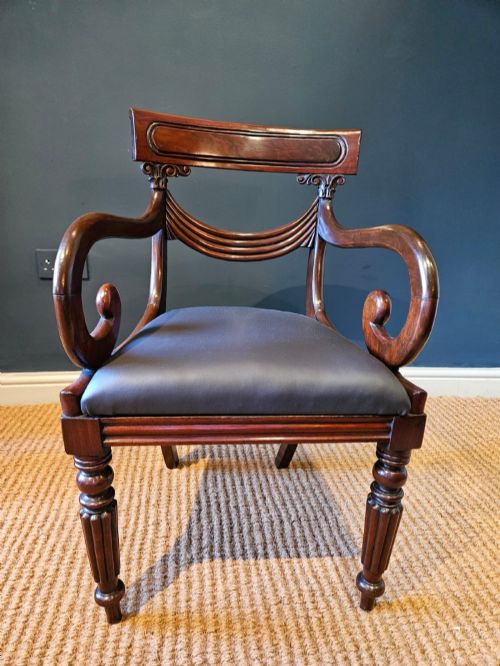
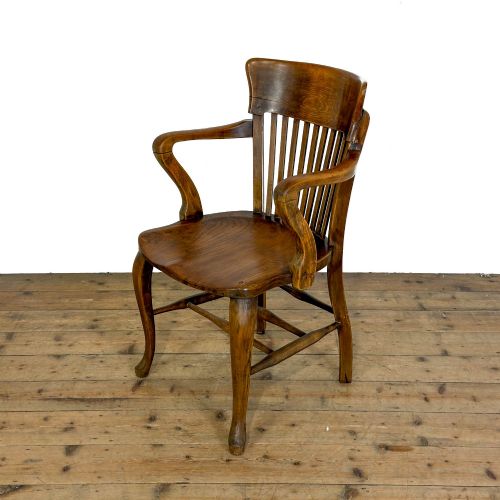
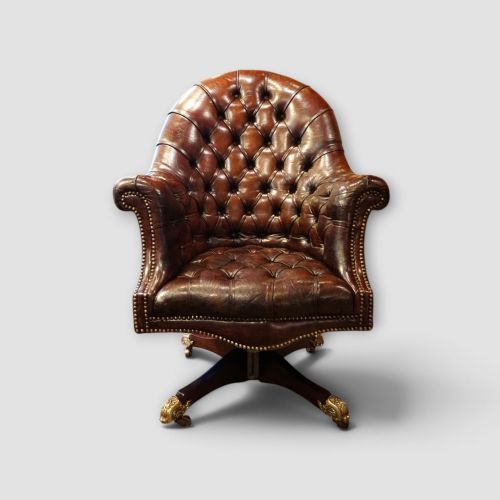
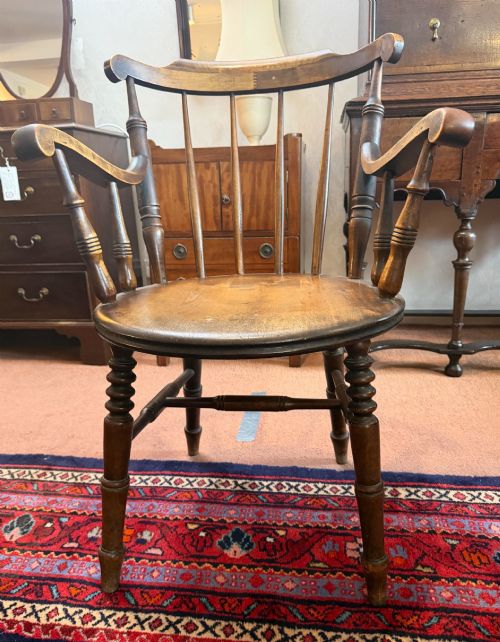
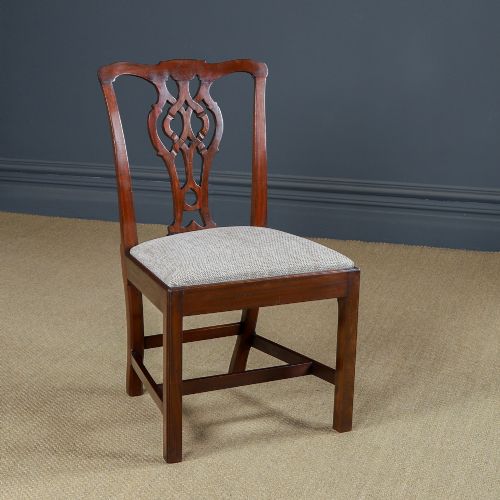
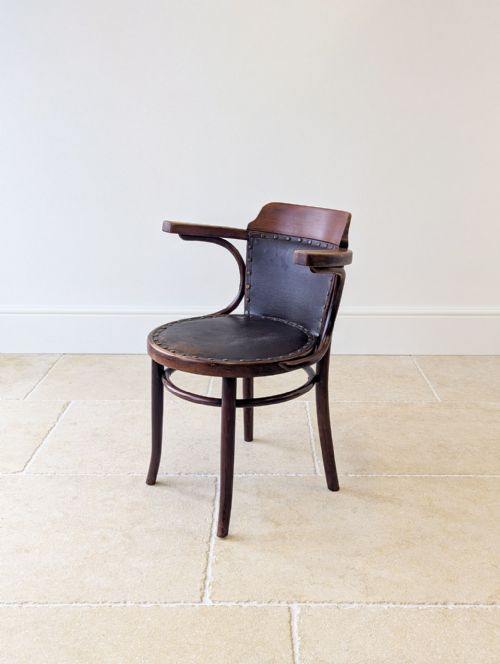
Single seating made or sold for desk work: open-arm elbow chairs and revolving chairs on a screw or cast-iron base, in oak or mahogany, with leather, cane or plain wooden seats.
Antique Office Chairs
The form that dominates is an English oak or mahogany revolving desk armchair of the late Victorian to 1920s period. Revolving and swivel between them account for the largest block of titles, oak and mahogany run neck and neck as the timber, and leather covers roughly three in ten. Green leather is the commonest colour, and every green listing is a leather one.
Chairs built for desk work grew out of clerical and library seating, and the height-adjustable revolving chair on a central screw became standard equipment as commercial offices multiplied through the Victorian period. Titles record rise-and-fall, height adjustable and tilt alongside the revolve, so the mechanism is often part of the description.
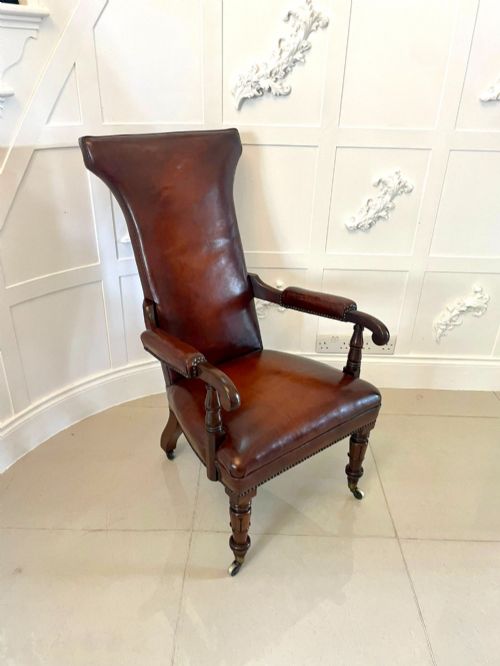
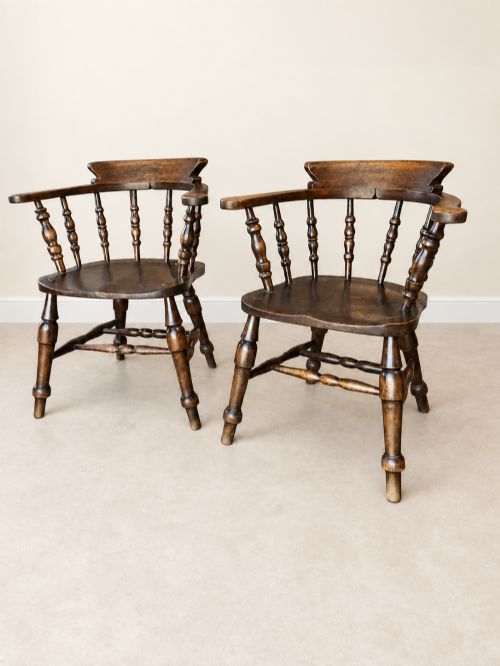
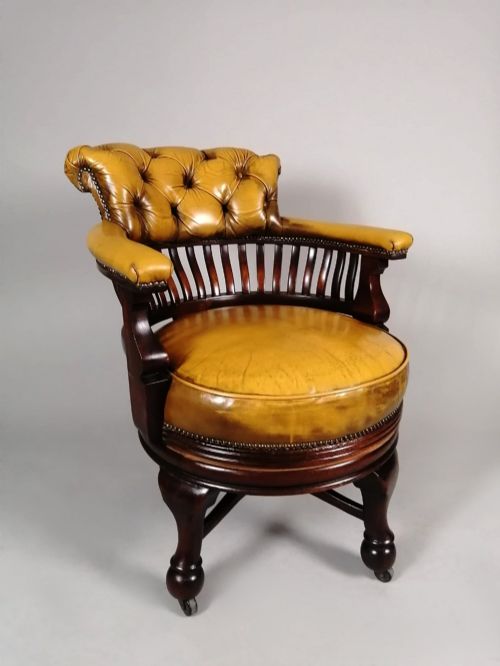
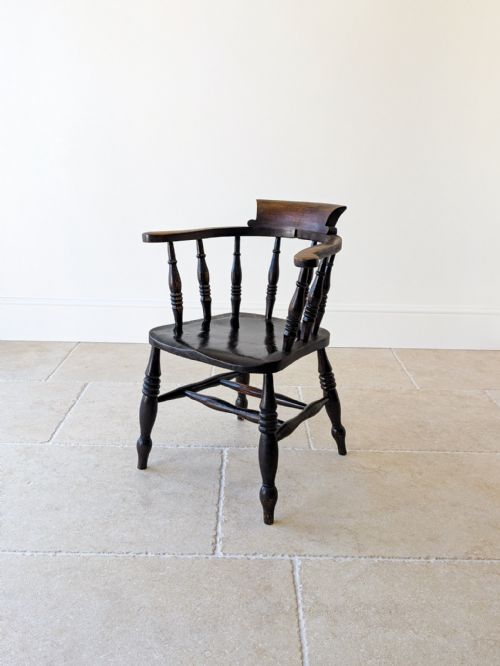
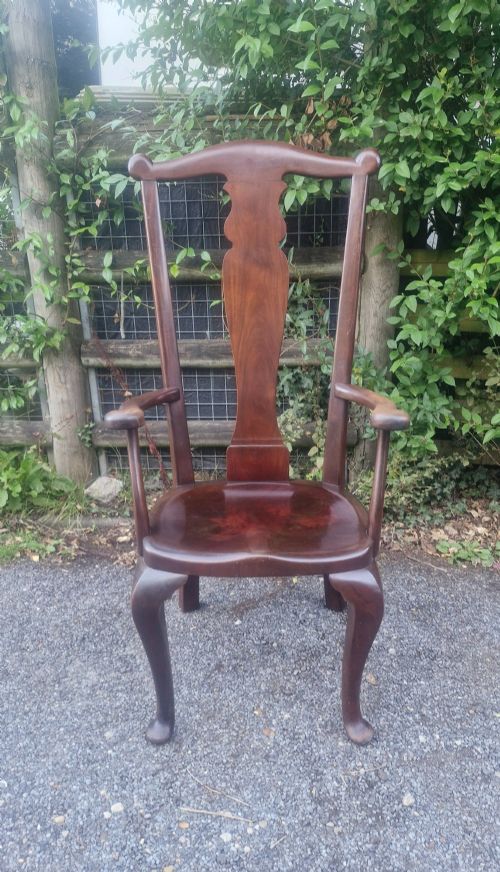
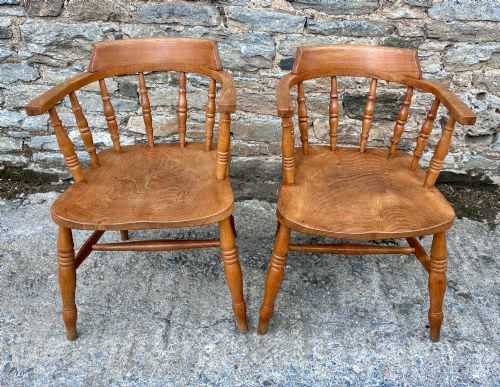
The heading also gathers in smoker's bow and captain's chairs, Windsor-made forms with turned spindles and a low encircling arm, taken up as cheap institutional seating and usually in elm, beech, ash or yew. Alongside them sit mahogany elbow and carver chairs, and library or upholstered armchairs a dealer thinks will serve at a desk.
Dates run from 1750 to 1960, but the ends are outliers. The bulk sits between the 1870s and the 1930s, with the 1910s the single largest decade, and much of the profile carries period words like Victorian, Edwardian or 19th century rather than a year. Georgian and Regency examples are a small minority. About 81 come to market a year on Sellingantiques, listed by 156 different dealers.

Where The Range Widens
Timber does most of the separating. Figured walnut, rosewood, satinwood-inlaid mahogany and yew sit at the top of the range; plain oak, beech and elm sit at the bottom. Carving and inlay push in the same direction, with brass-inlaid and marquetry frames and heavily carved walnut and mahogany clustering in the upper part.
Upholstery is the other lever. Leather lifts a chair, buttoned leather more so, while plain wooden and cane seats keep a chair in the middle or lower part of the range. On the revolving group, a working revolve with height adjustment, and tilt where it is fitted, is the feature collectors are after.
Multiples reach highest. Pairs turn up throughout, and matched sets of eight smoker's bows, sets of six captain's chairs and sets of four Victorian oak captain's chairs set the ceiling. Ships' chairs are the scarce corner: heavily carved rotating oak examples, P&O revolving chairs, and a pair of satinwood-inlaid mahogany swivelling ships chairs at the very top.
Antique Office Chairs Retail Price Guide 2026
Typical UK retail prices for office chairs, calculated from the Sellingantiques database of over a million retail prices indexed since 2003. This retail price guide relies exclusively on Sellingantiques data; no external sources or auction records are used, so the figures do not describe the wider market.
Dated office chairs on Sellingantiques run from 1750 to 1960, though the bulk of them sit between the 1870s and the 1930s.
The Antique Office Chairs Glossary
- Revolving / swivel
- A seat that turns on a central pivot or screw. The two words are used interchangeably in titles, and some listings carry both.
- Rise and fall
- Height adjustment, the seat raised or lowered on a threaded screw column. Often written as height adjustable instead.
- Elbow chair
- An open-arm single chair, and the usual trade word for a desk chair with arms. Around a fifth of the category is elbow or carver work in mahogany.
- Carver
- An armchair from a dining set, frequently sold on for desk use. Turns up alongside dining and occasional in multi-purpose titles.
- Smoker's bow
- A Windsor-type chair with a low continuous bow arm on turned spindles. The captain's chair is the same form, named for shipboard and office use.
- Golden oak
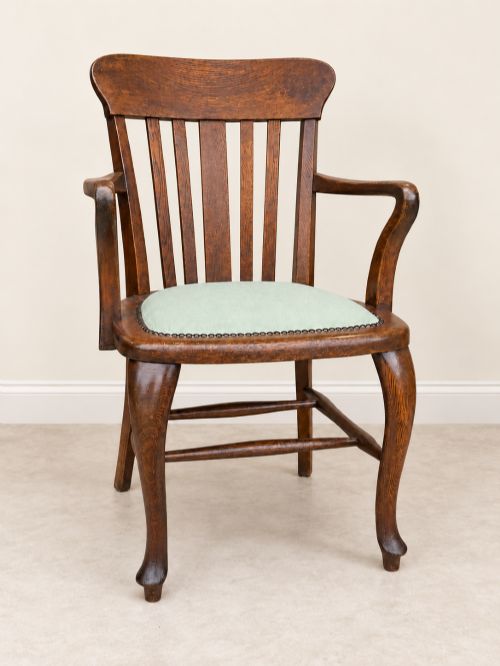
- The warm-toned polished oak of the office chairs of about 1890 to 1920. Slat back and spindle back describe the same group's open, unupholstered backs.
Antique Office Chairs: Frequently Asked Questions
What period do most of these date from?
The bulk falls between the 1870s and the 1930s. The 1910s is the largest single decade by a wide margin, followed by the 1880s, 1900s and 1920s.
Many listings give a period word rather than a year. Victorian, Edwardian and 19th century all appear in quantity, and Edwardian and Victorian labels are close to level with each other.
One listing in the samples is dated as late as 1960, and only two carry an 18th-century date.
Are Georgian office chairs common?
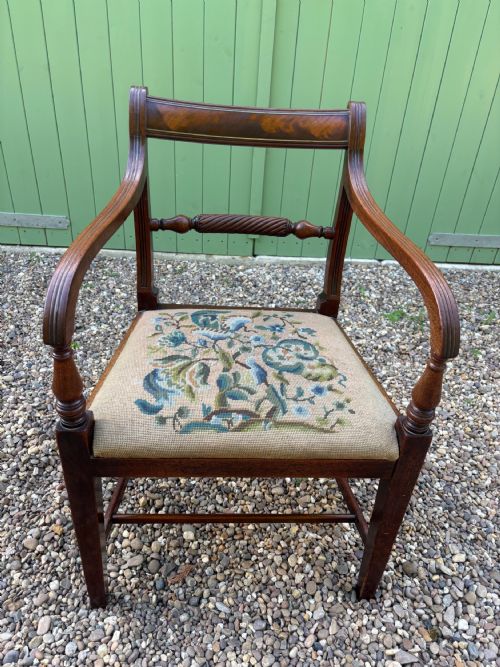
No. Georgian and Regency titles are a small minority against the Victorian and Edwardian mass. Where they appear, they are usually mahogany elbow or carver chairs rather than revolving ones.
Pairs of William IV and George III desk chairs turn up in the upper part of the sampled range.
What colour leather turns up most?
Green, and it is always leather: every listing with green in the title also has leather. Red comes next, then brown.
Leather appears in roughly three in ten titles overall. The rest are wooden, cane or upholstered seats in other materials.
Which timbers were used?
Oak and mahogany form the core and run at similar levels. Walnut, beech and elm follow, with beech and elm usually on the smoker's bow and captain's chair group.
Beyond that core, yew, alder, fruitwood, chestnut, burr elm, teak, rosewood and satinwood each appear only a handful of times.
Do these come as pairs or sets?
Mostly singles, but pairs are a steady presence and account for about a tenth of the category along with other multiples.
Larger sets are the exception and they set the top of the range: matched sets of eight mid-19th-century smoker's bows, sets of six captain's chairs and sets of four Victorian oak captain's chairs.
Why are smoker's bows listed as office chairs?
The smoker's bow and captain's chair are Windsor-made forms with turned spindles and a low encircling arm. They were adopted as cheap institutional and office seating, so they sit in this heading by use rather than by shape.
Together they make up under a tenth of the category, usually in elm, beech, ash or yew.