

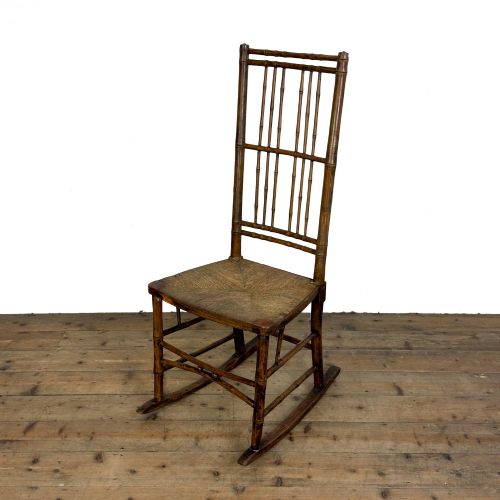
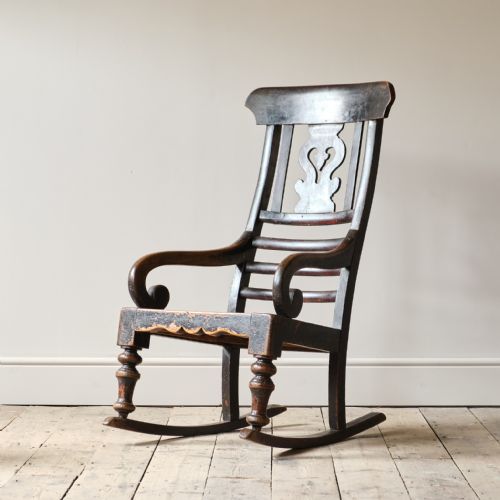
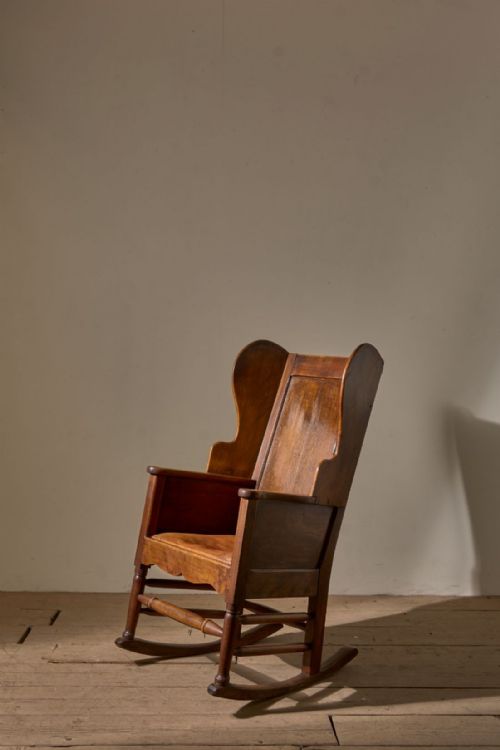
Antique Rocking Chairs
A chair set on curved rockers, made as a fireside or nursing seat for adults and, just as often, as a scaled-down chair for a child.
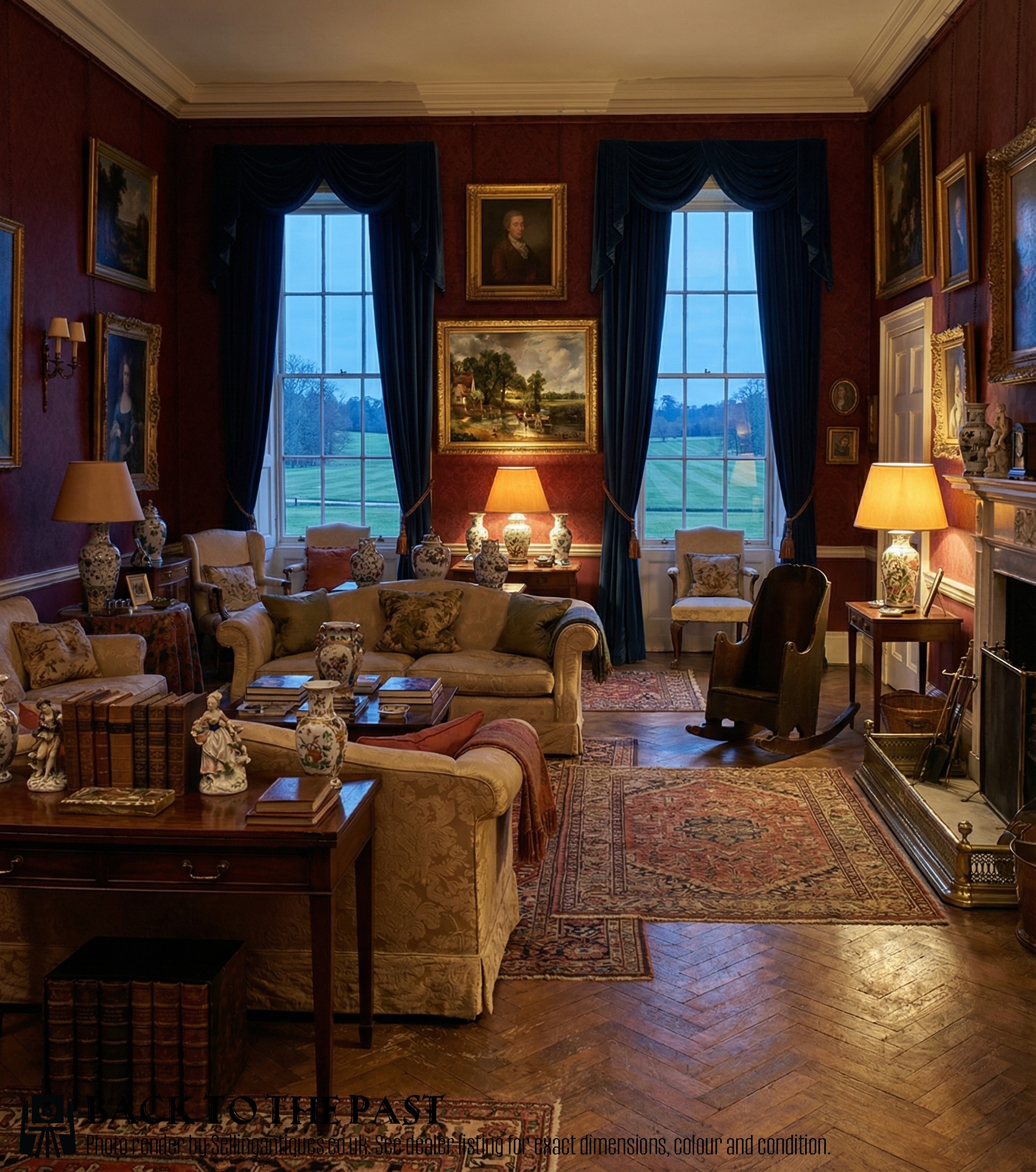
Antique Rocking Chairs
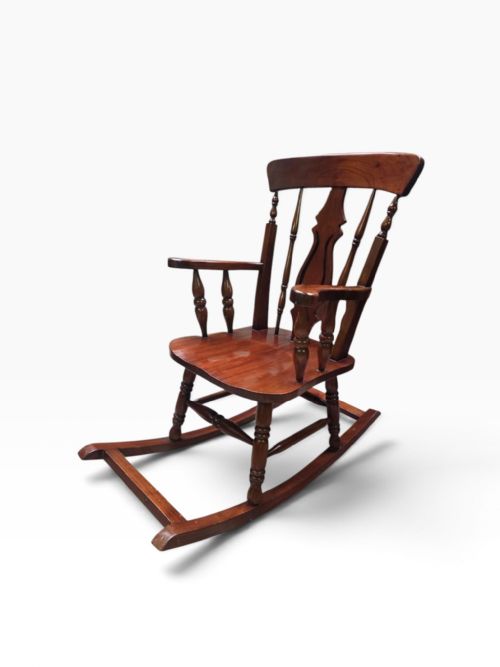
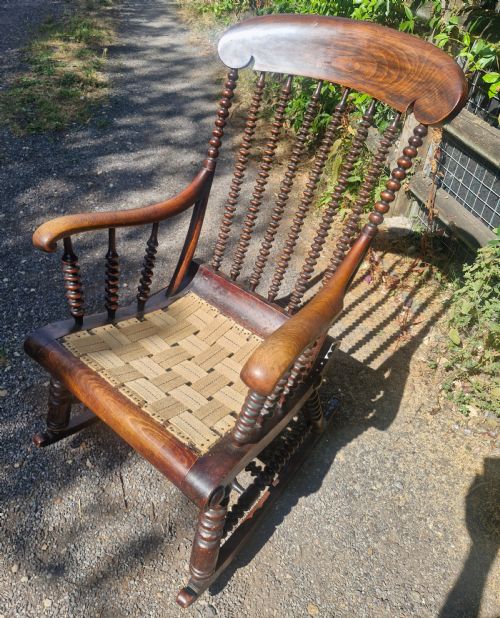
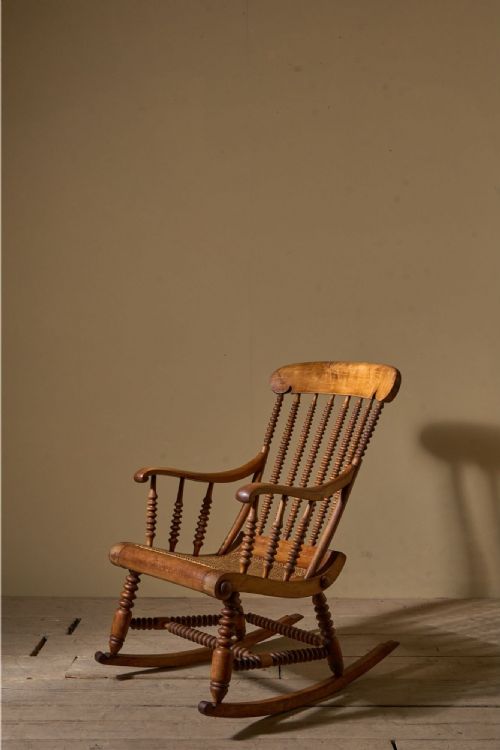
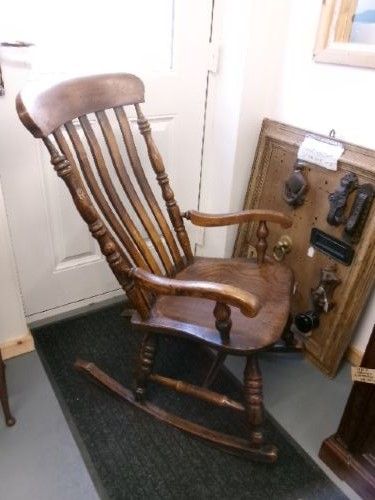
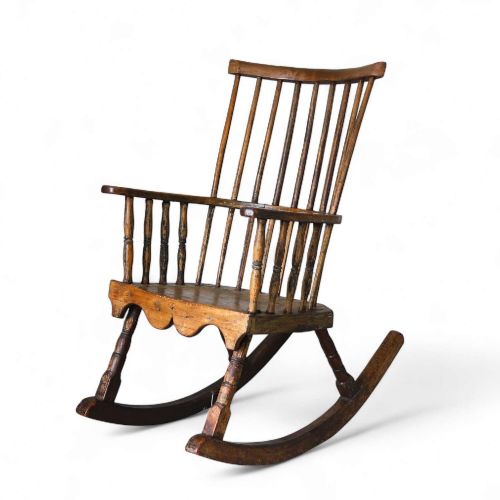
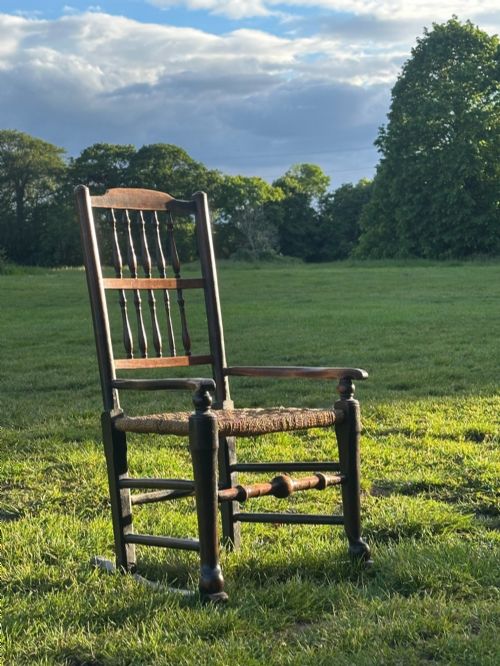
The bulk of the category is English country seating in native timbers. Elm and ash lead the naming, with yew, beech and fruitwood behind them, and backs filled with sticks, spindles, slats, laths or a broad central splat. Seats are shaped elm plank, rush or cane.
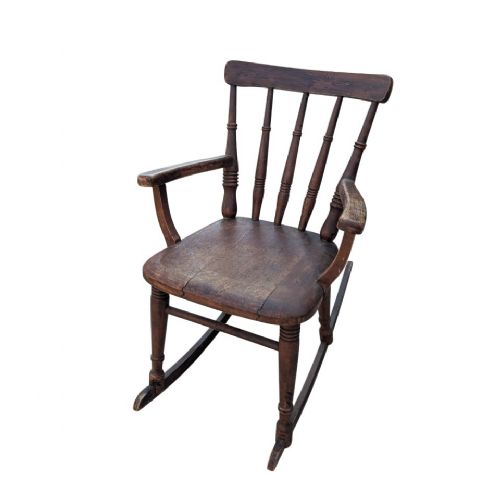
Rockers came into general use in the 18th century, first by fitting curves to chairs that already existed and later as purpose-built frames. Victorian is the commonest period word in the titles, and Windsor the commonest form word, so a Victorian Windsor in ash and elm is the chair you'll meet most often.
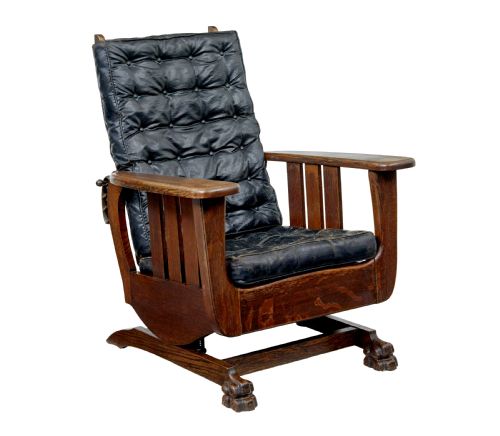
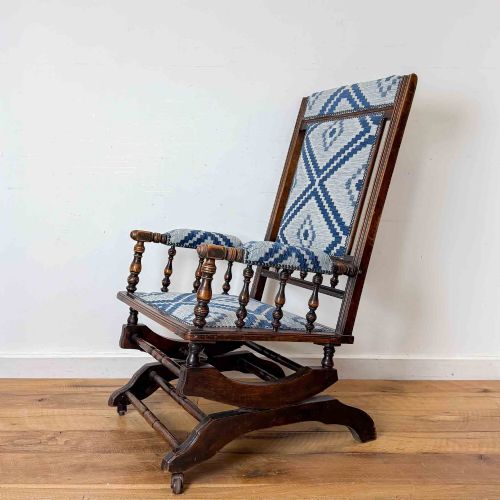
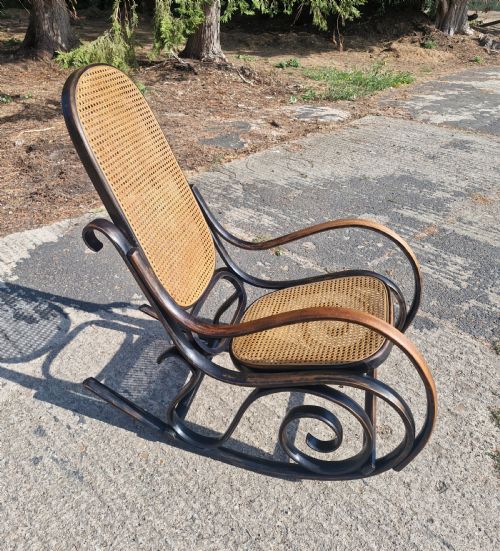
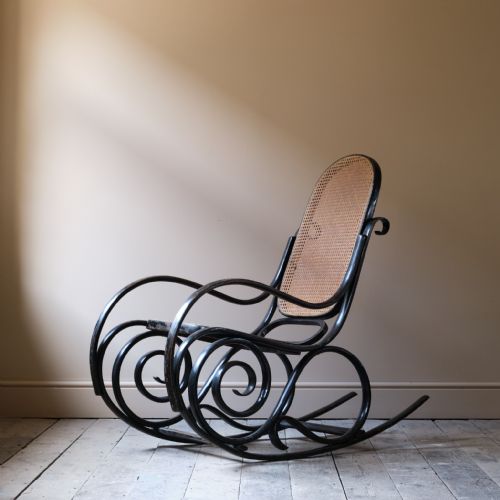
Around it sit four smaller groups. Child's and doll's rockers are a category in their own right, running from early oak and elm through Georgian mahogany to bentwood. Turned American-style rockers turn up steadily, as do Continental bentwood frames with cane seats and ebonised finishes. A smaller run is upholstered in leather or built on a metal frame.
Regional labels are unusually rich for a chair category. Lancashire, Yorkshire, Thames Valley, Herefordshire, West Country, Welsh, Sussex, Scottish Darvel, Caistor, Worksop and Orkney all appear. Foreign origins are scarce by comparison: a few Swedish painted examples, an Austrian bentwood, an Anglo-Indian brass and copper one.
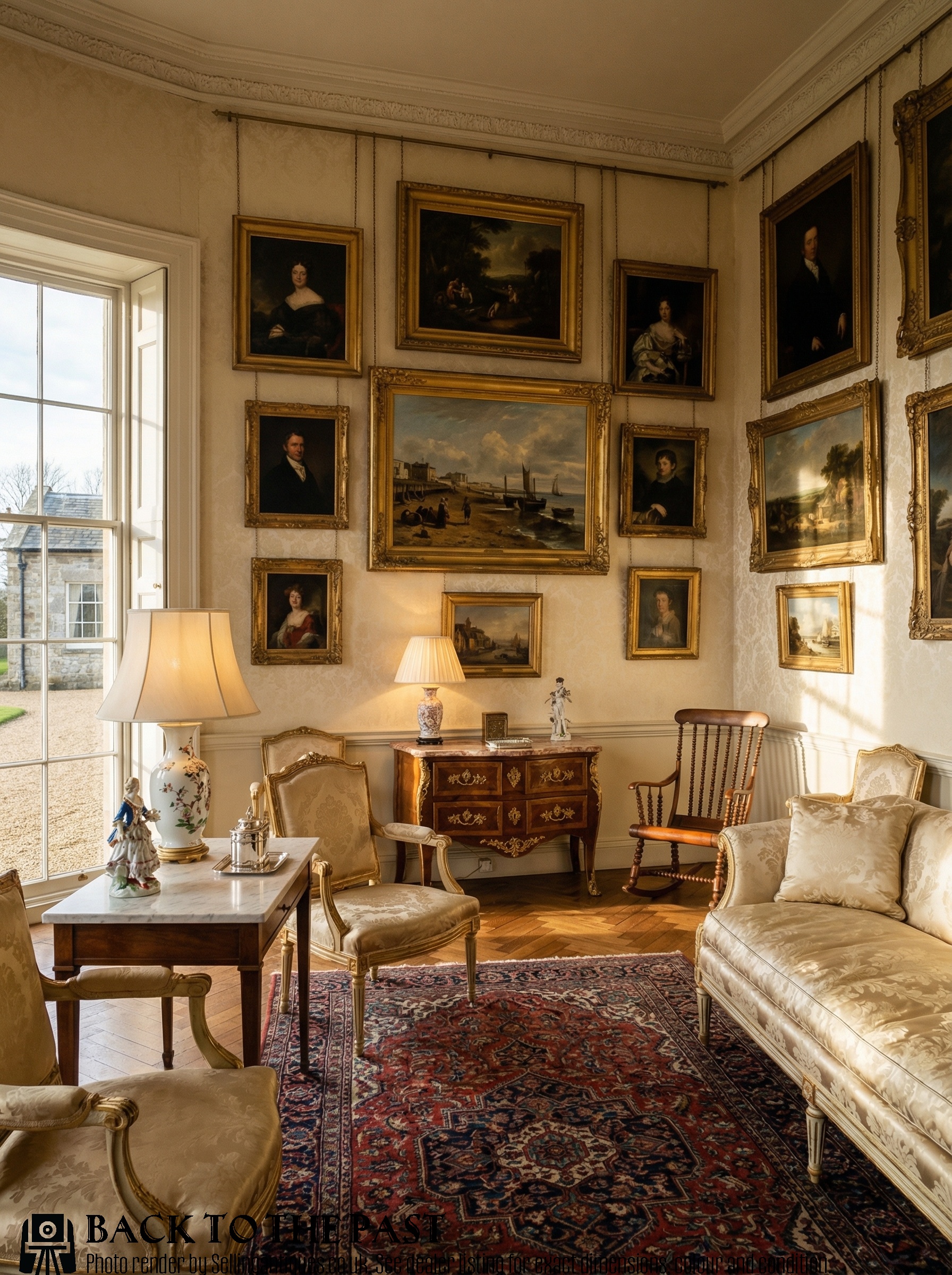
What Separates Them
Timber does most of the work. Yew, fruitwood and figured walnut cluster at the upper end, often in broad-arm Windsor form, while plain beech and undifferentiated elm sit low. Original paint and a stated patina push a chair up the range wherever they appear.
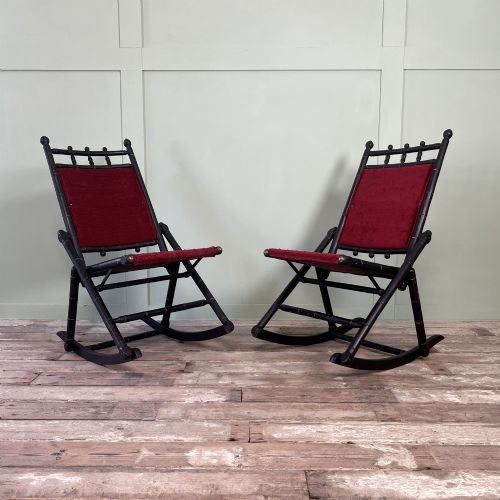
A named region or workshop lifts a chair well above the mass of titles that say only Victorian country rocker. The same goes for pairs, which are genuinely uncommon at eight titles and every one of them sitting in the upper third.
Scale works the other way. Child's and doll's sizes concentrate at the lower end, with the exceptions being early oak and elm children's chairs and Welsh lambing types. Right at the top of the range are the metal-framed rockers in steel and leather, the scarcest frames in the category.
Antique Rocking Chairs Retail Price Guide 2026
Typical UK retail prices for rocking chairs, calculated from the Sellingantiques database of over a million retail prices indexed since 2003. This retail price guide relies exclusively on Sellingantiques data; no external sources or auction records are used, so the figures do not describe the wider market.
English native timbers dominate the titles: elm names sixty rocking chairs on Sellingantiques, ash forty, with yew, fruitwood, sycamore and birch far behind.
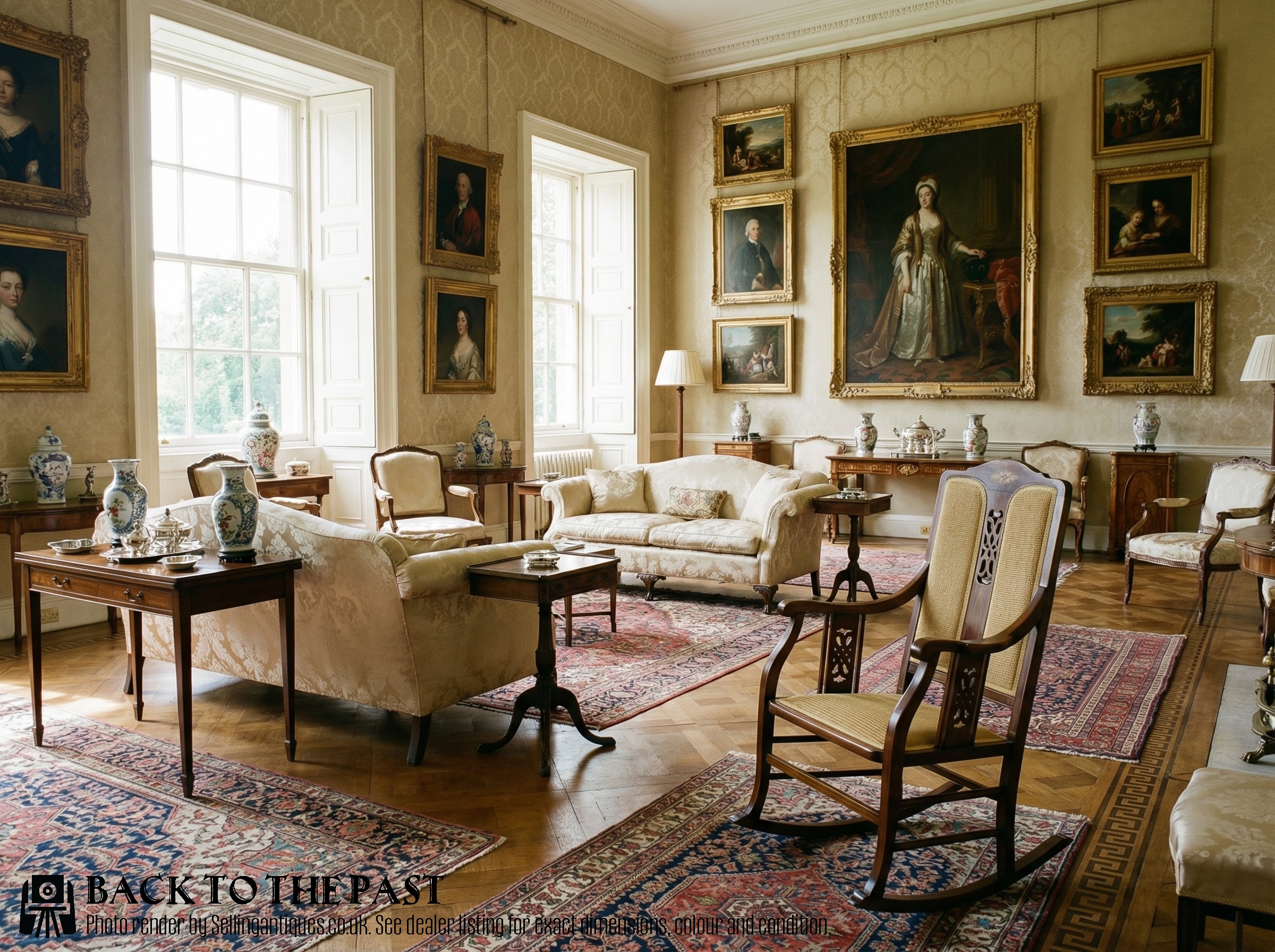
Thonet
The Antique Rocking Chairs Glossary
- Windsor
- A chair whose legs and back sticks socket into a solid shaped seat. It names 51 titles, more than any other form word.
- Spindle back
- A back filled with turned or plain vertical sticks, also called stick back. Spindle and spindle back together account for around thirty titles.
- Slat back
- A back of horizontal timber rails, written variously as slat, lath or ladderback across the listings.
- Rush seat
- A seat woven from twisted rush, named in eleven titles, with seagrass and cane appearing as related fillings.
- Bentwood
- A steam-bent solid timber frame, usually beech, often paired with a cane seat. Twenty-four titles use the word.
- Lambing chair
- A deep high-backed enclosed fireside chair, here set on rockers. Nine titles, several of them Welsh.
Antique Rocking Chairs: Frequently Asked Questions
How old are most antique rocking chairs?
The dated field runs from 1750 to 1930, and 154 of 405 listings carry a clean year. A handful of sampled titles claim the 17th century, pushing the outer edge earlier, so treat the extremes as dealer opinion.
Nearly half the archive is dated only as 19th Century or Victorian. Precise years are the exception rather than the rule.
What wood are English country rockers made from?
Elm appears in 60 titles and ash in 40, with the pairing of the two named directly in eleven. Elm was the usual seat timber, ash the usual choice for turned and bent parts.
Yew, beech, fruitwood, sycamore, birch and rosewood each turn up occasionally. Yew and fruitwood tend to sit higher in the range than beech.
Are child's rocking chairs common?
Yes. Sixty-nine titles carry child or child's, roughly one listing in six, which makes them a branch in their own right rather than a curiosity.
They run from 18th-century oak and elm through Georgian mahogany to bentwood. Doll's rockers, apprentice pieces and a wool-winding child's chair appear among them.
What is a bentwood rocking chair?
A frame of steam-bent solid timber, usually beech, curved into long sweeping lines and commonly fitted with a cane seat. Ebonised finishes recur through the group.
Bentwood names 24 titles on Sellingantiques, with Thonet in thirteen of them from three dealers. Unsigned frames are often listed as attributed or possibly, and the listings themselves hedge.
Which rocking chairs sit at the top of the range?
Metal-framed rockers in steel and leather occupy the highest sampled positions, including a pair at the ceiling of the range. Winfield is named in eight titles.
Among timber chairs, yew-wood broad-arm Windsors, original paint, named regional attributions and pairs all sit above the mass of undifferentiated country rockers.
Do rocking chairs come up often?
About 41 are listed a year, spread across 132 different dealers over the life of the archive.
That's a category almost nobody specialises in but many pass through. Pairs are the genuinely uncommon thing, with eight titles.