


Antique Swivel Chairs
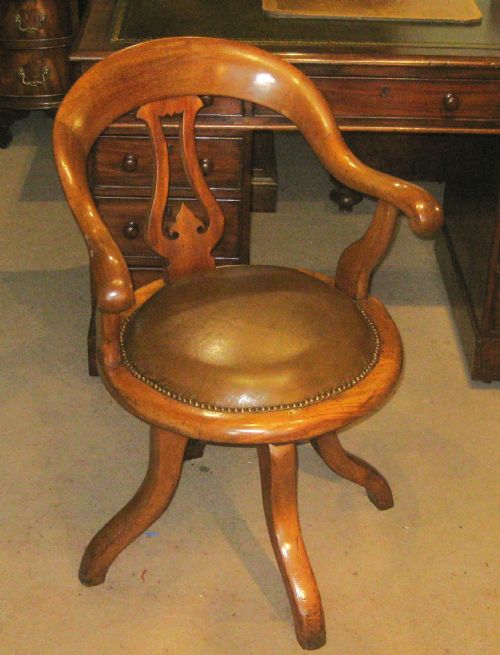
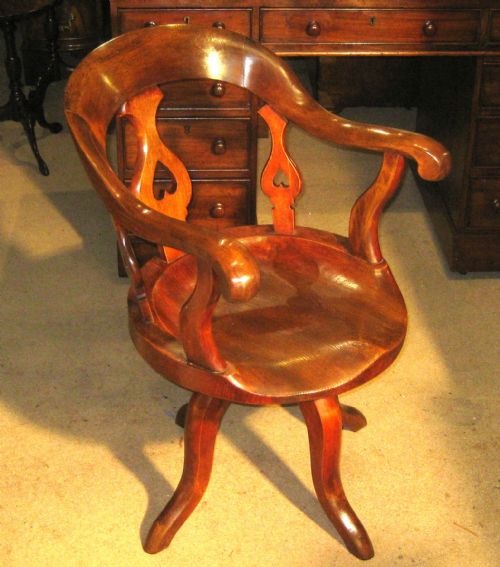
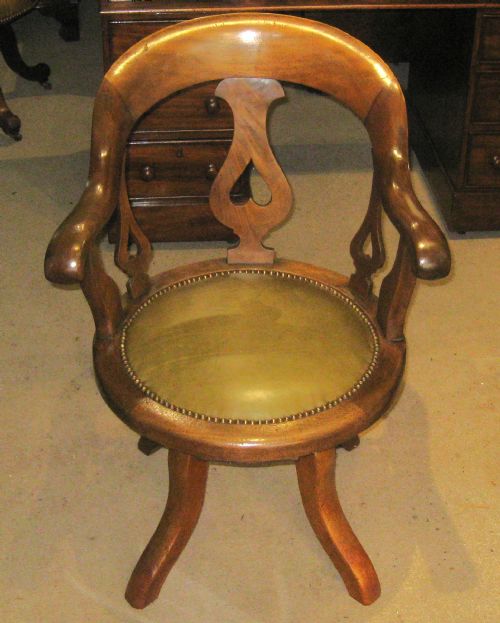
A wooden chair mounted on a screw column so it turns, and often rises or tilts, made for sitting at a desk.

Antique Swivel Chairs
The swivel or revolving chair grew up in the 19th century as seating for desks, counting houses and offices. A seat was set on a screw column, so it could turn and usually rise or drop, and the same idea was borrowed for ships' cabins, music stools and dressing tables.
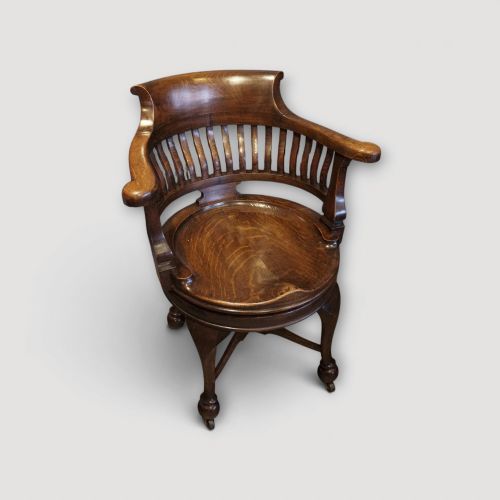
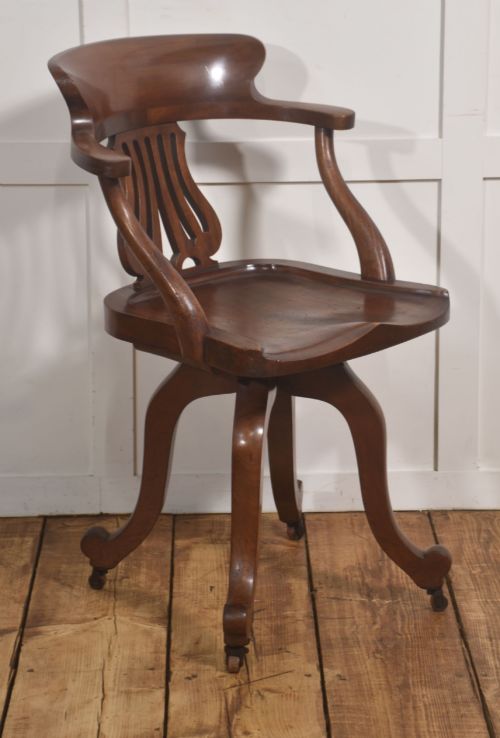
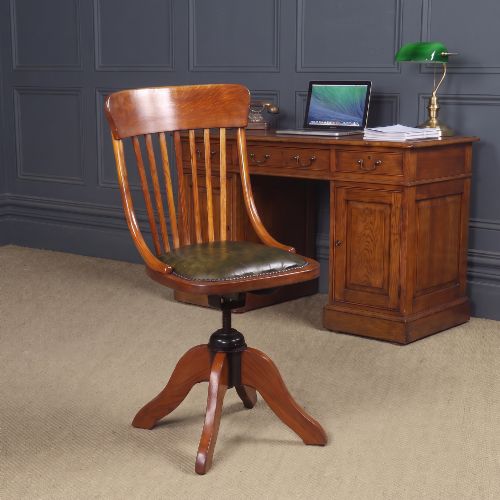
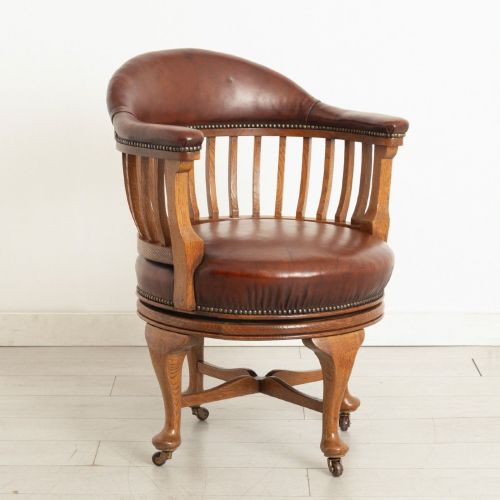
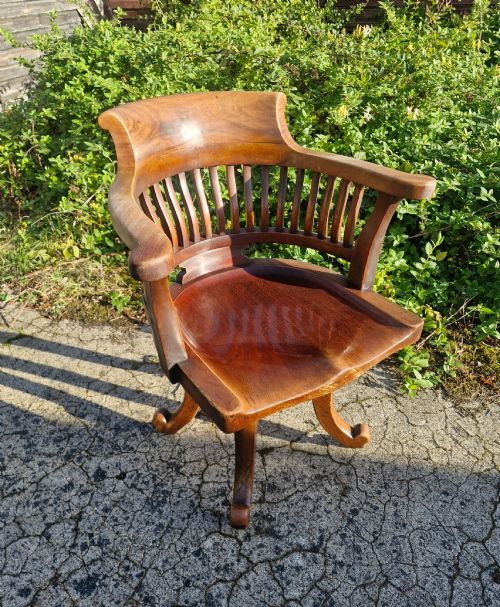
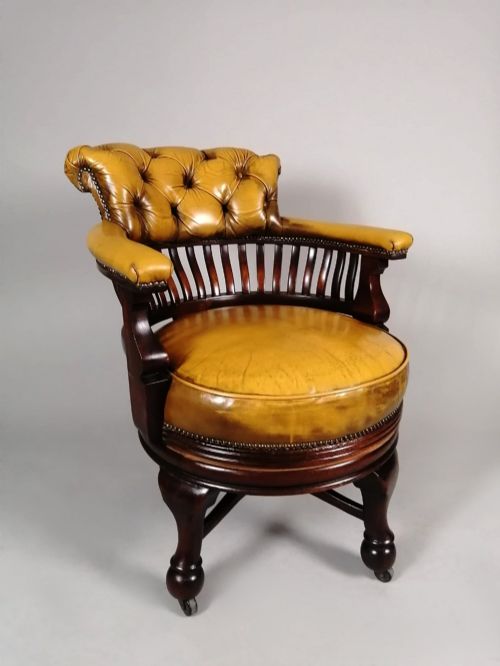
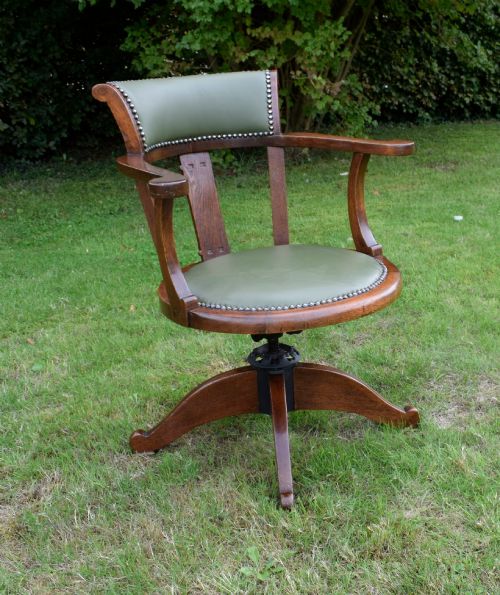
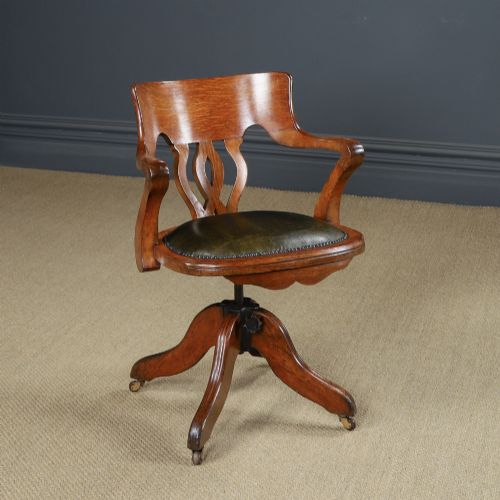
On Sellingantiques the category is dominated by the British desk chair of the late Victorian to inter-war years. "Desk" appears in more than three quarters of titles and "office" in a third. The usual shape is an open-armed frame in oak or mahogany, with a spindle, slat or tub back, on a four- or five-spoke base, often on castors, and a seat of wood, cane or leather.
Oak leads the stated timbers, with mahogany second, and roughly half of listings carry an explicit Victorian or Edwardian label. The dated field runs 1860 to 1960, but the weight sits either side of 1900: the 1920s is the single busiest decade in the record, and the 1930s carries only a handful. Bear in mind that "Victorian", "Edwardian" and "19th century" are era labels, so a good share of the record is a decade-wide estimate rather than a year.
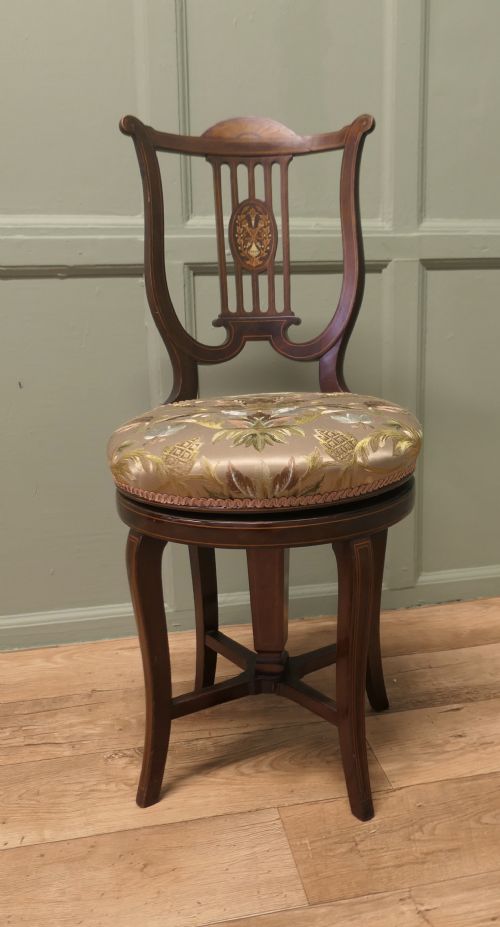
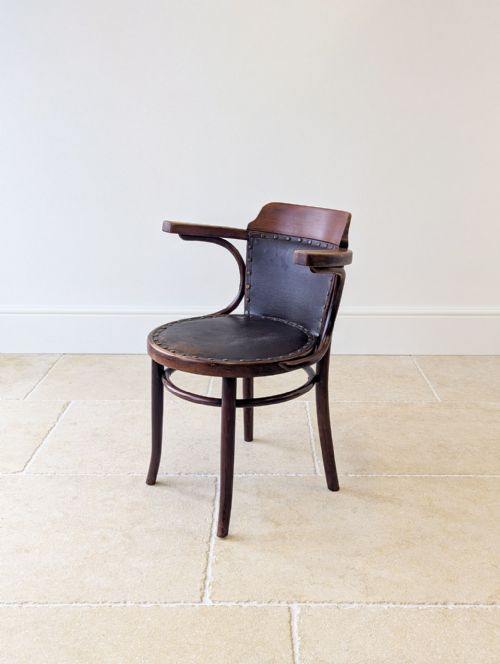
Around the desk chairs sits a fringe of other revolving forms. Captain's and tub chairs turn up steadily. Ships' chairs are the standing curiosity, carved oak examples, a cast-iron-based one, a cockpit chair. Music, dressing-table and harpist chairs appear perhaps once or twice a year.
Where The Range Splits
Timber does much of the work. Plain oak, elm, beech and ash sit at the bottom of the range, and the flattest examples of all are undecorated oak office chairs of the 1910s and 1920s. Walnut, rosewood and satinwood titles cluster at the other end, and mahogany sits comfortably above the oak run.
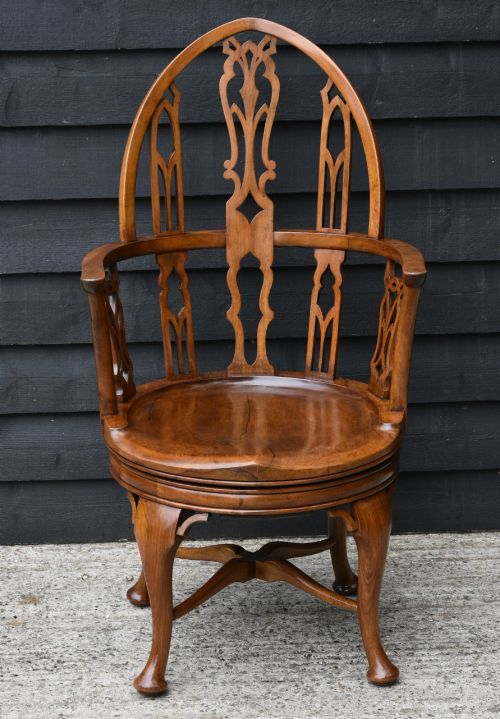
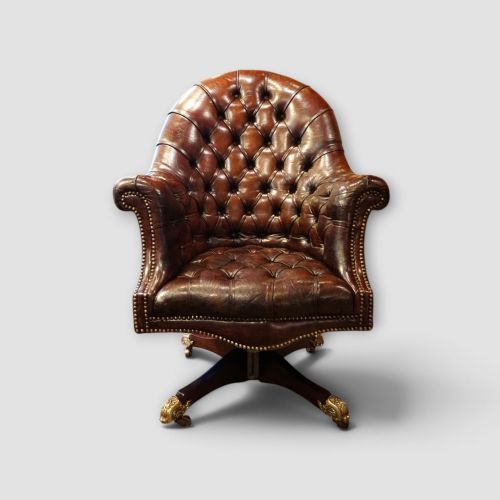
Then decoration and design pedigree. Gothic Revival, Aesthetic Movement and Arts and Crafts labels, along with heavily carved and inlaid work, occupy the upper half of the sampled range, and the nautical chairs sit at the very top. Leather seats push a chair up as well, buttoned leather most of all, where cane and plain wooden seats stay level with the ordinary run.
Two other things move a price. Mechanism: swivel-and-tilt, or a fully adjustable rise-and-fall column, sits above a plain turning seat. And number: pairs and sets are genuinely scarce, the archive showing a set of four library desk armchairs and a small run of pairs, all in the top quarter of the range.
Antique Swivel Chairs Retail Price Guide 2026
Typical UK retail prices for swivel chairs, calculated from the Sellingantiques database of over a million retail prices indexed since 2003. This retail price guide relies exclusively on Sellingantiques data; no external sources or auction records are used, so the figures do not describe the wider market.
The most expensive swivel chair ever sold on Sellingantiques was a 19th century oak and leather swivel desk chair, in May 2021.

The Antique Swivel Chairs Glossary
- Swivel / revolving
- The same action described two ways. "Revolving" is the older-fashioned word and dominates current stock.
- Adjustable / rise and fall
- The seat height is set by winding it up or down the screw column. Around ten titles use the word adjustable.
- Tilt
- The seat rocks back on a sprung mechanism as well as turning. Named in a small number of titles.
- Desk arm chair
- An open-armed swivel chair meant to pull up to a desk. Variations on "armchair", "arm" and "desk arm" run through the titles.
- Captain's chair
- A low chair with a curved horseshoe back and arms in one sweep. It appears in a couple of dozen titles across the two spellings.
- Bergere
- Caned panels in the back and sometimes the sides, seen on a few walnut and mahogany examples.
Antique Swivel Chairs: Frequently Asked Questions
What wood are they usually made from?
Oak leads by a distance, named in around two in five titles, with mahogany second. Together they account for the great bulk of stated timbers.
The archive has also thrown up elm, ash, beech, walnut, rosewood, satinwood, teak and Burmese padouk. Those turn up in ones and twos rather than as a run.
How old are most antique swivel chairs?
The dated field spans exactly a century, 1860 to 1960, and 217 of the 365 listings carry a clean year. The bulk sits either side of 1900.
The 1920s is the busiest single decade in the record, ahead of the Edwardian and Victorian labels. The 1930s carries only nine listings, and pre-1870 pieces amount to a couple of entries at 1860.
Are ships' chairs a separate thing?
They're a small, recurring branch of the same category. Titles include carved oak ships chairs, a cast-iron and oak upholstered one, a cockpit desk chair and a pair attributed to a passenger liner.
They sit at the very top of the range on Sellingantiques, well above the ordinary desk chairs.
Do swivel chairs come in pairs?
Rarely. The archive shows a set of four late 19th century oak library desk armchairs and a handful of pairs, against hundreds of singles.
When they do appear, multiples occupy the top quarter of the range.
Which chairs are not desk chairs?
A few revolving forms were made for other jobs. Music chairs in rosewood and satinwood, an adjustable dressing-table chair, a harpist's chair, and a valet stand fitted with swivel drawers.
They come up perhaps once or twice a year, so the desk chair is what you'll meet nearly every time.
How many turn up for sale each year?
About 37 swivel chairs are listed on Sellingantiques in a year.
Over the whole record, 104 different dealers have handled one. That means almost every dealer who has sold one has sold only one or two, so it isn't a category anyone specialises in.