
Antique Country Chairs
Chairs made outside the fashionable cabinet trade, by village turners and chairmakers in native ash, elm, oak and yew, for farmhouses, cottages and inns.

Antique Country Chairs
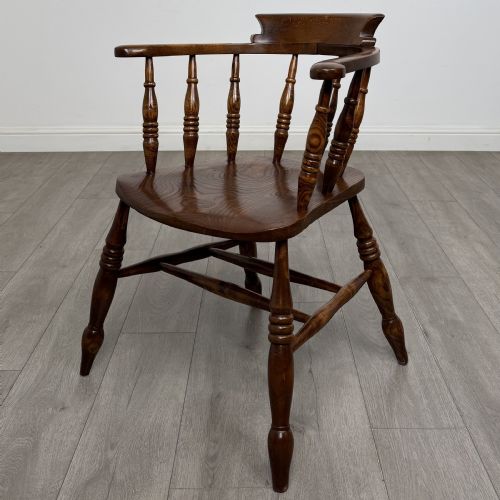
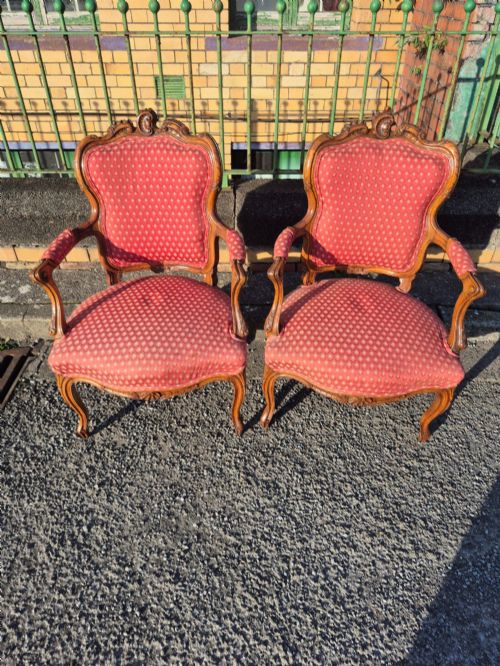
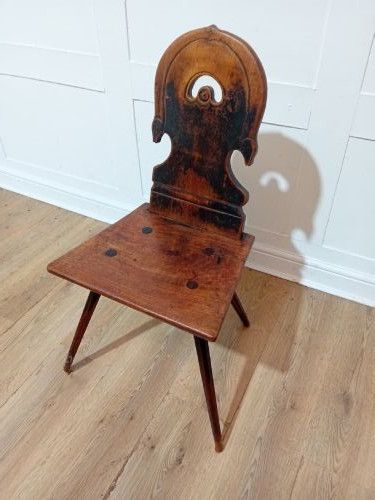
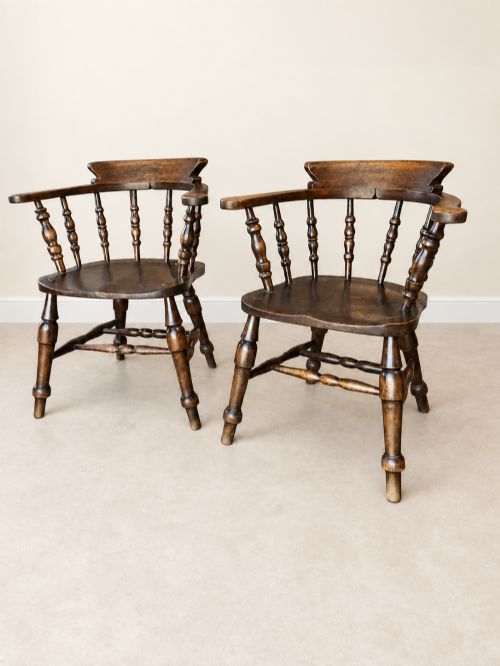
The heading covers vernacular seating: Windsor chairs, rush-seated ladder and spindle backs, smoker's bows and captain's chairs, joined oak chairs of Chippendale or Hepplewhite pattern, and upholstered country house armchairs. Timber gets named in titles more often than form, with elm leading, then oak, ash, yew and beech.
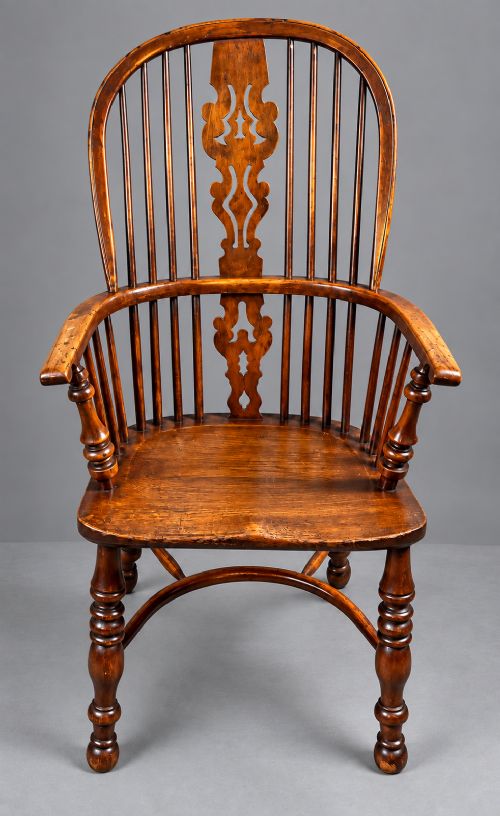
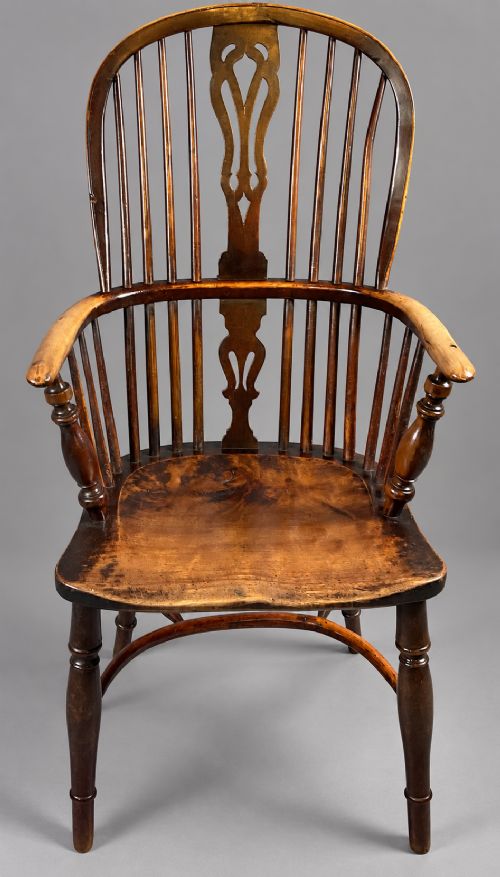
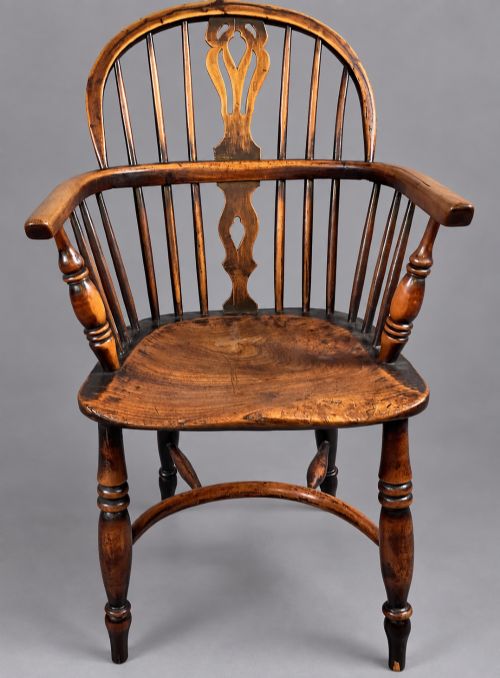
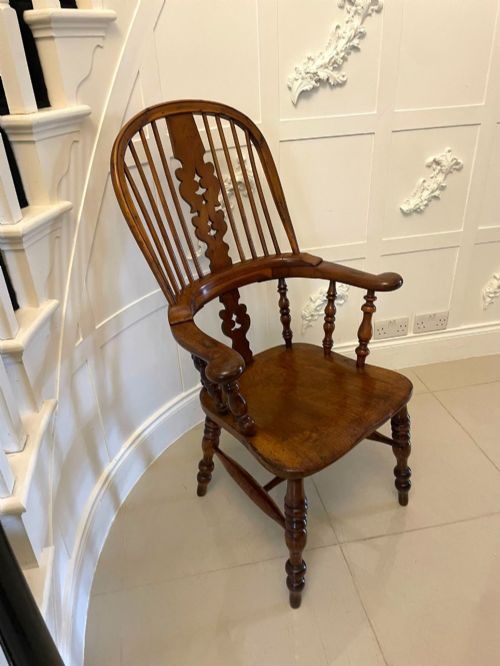
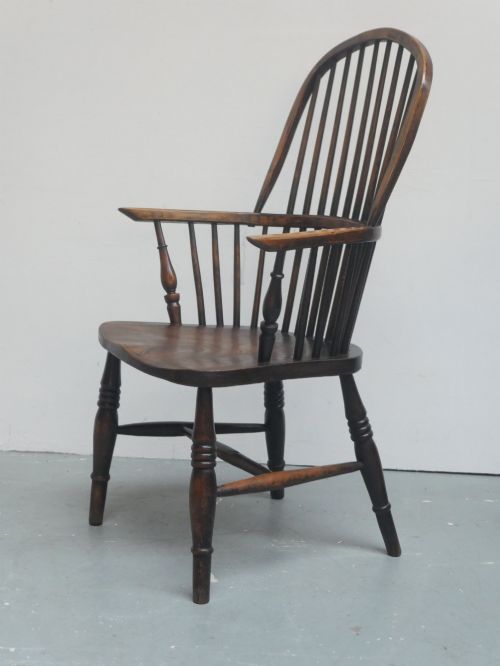
The Windsor dominates. It appears in around a quarter of titles on Sellingantiques, built on a solid plank seat with legs and back members socketed into it rather than framed. Backs are named in the listing: hoop, comb, lath, stick, wheel, lyre, fiddle or spindle. Ash and elm together are the classic pairing, elm for the seat, ash bent and turned.
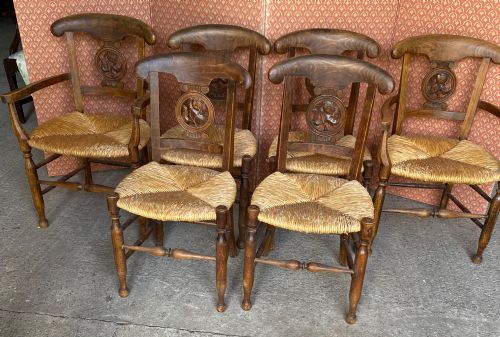
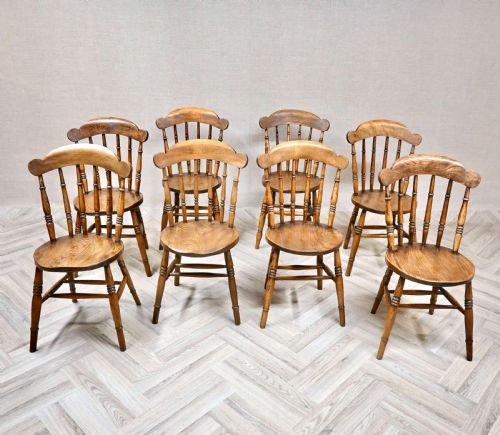
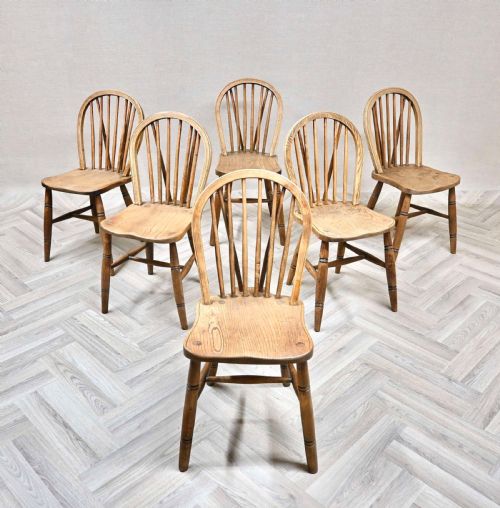
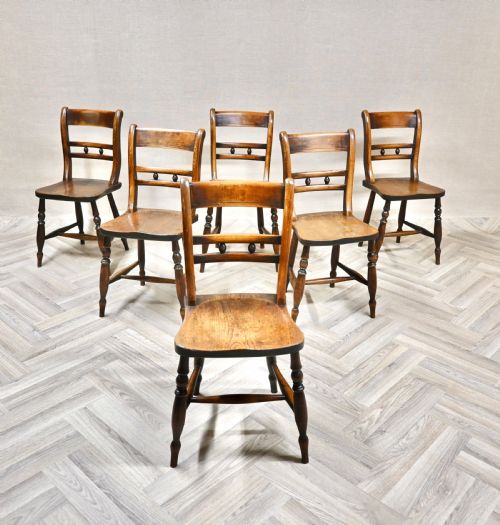
The everyday encounter is a set of Windsor kitchen or dining chairs in elm and ash. 'Dining' and 'kitchen' attach to these repeatedly, and roughly a third of titles say 'chairs' plural, so pairs and sets are as common as singles. 'Armchair' shows up in a bit over a quarter of titles, the single elbow chair being the other pole.
Dating is broad brush. Only about a quarter of listings carry a clean year, the rest sitting under labels like 19th Century, Victorian, 18th Century or Georgian. The declared span runs 1700 to 1940, with 17th-century joined oak and wainscot chairs surfacing too, and later machine-turned kitchen Windsors well into the 20th century.
Where The Range Splits
Timber sorts the Windsors before anything else. Yew, the scarcest of the named timbers on Sellingantiques and sometimes showing burr figure in the splat, sits at the top. Beech, pine and plain elm kitchen chairs of the same shape sit at the bottom, and the form alone tells you little.
Number and integrity matter as much. A true set of six, eight, ten or twelve outruns the same chairs sold apart, and titles are careful to separate a true set from a matched or harlequin set assembled from similar but not identical chairs. Singles and pairs make up a large part of the listings.
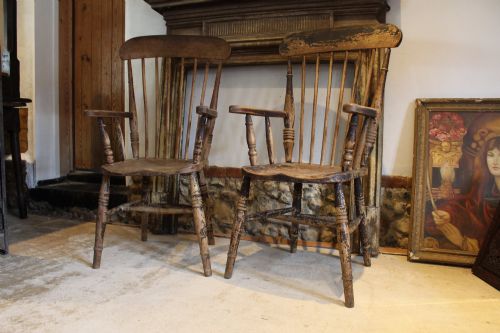
Two other things lift a chair. A named place or a maker's stamp, with West Country, Thames Valley, Macclesfield, Ormskirk, Billinge, Shropshire, Yorkshire and Welsh among the tags used, though only a minority of titles name any place at all. Surviving original paint or scumble does the same, and turns up in only a handful of titles. At the very top of the whole heading sit upholstered country house armchairs carrying a firm's name, stamped or attributed, rather than any vernacular timber chair.
Antique Country Chairs Retail Price Guide 2026
Typical UK retail prices for country chairs, calculated from the Sellingantiques database of over a million retail prices indexed since 2003. This retail price guide relies exclusively on Sellingantiques data; no external sources or auction records are used, so the figures do not describe the wider market.
Country chairs have been listed on Sellingantiques since 2008, with over nine hundred passing through since then.
The Antique Country Chairs Glossary
- Windsor
- A chair built on a solid plank seat with legs and back members socketed into it, not framed and jointed like a joined chair.
- Hoop, comb, lath and stick back
- The four commonest Windsor back types named in titles: a bent hoop, a flat top-rail over sticks, flat vertical laths, or plain turned sticks.
- Wheel, lyre and fiddle back
- Pierced central splat patterns, a spoked wheel, a lyre outline or a fiddle shape, and the usual way a set gets identified.
- Smoker's bow
- Low-back Windsor armchair with a continuous bowed arm and back rail, listed interchangeably with captain's chair.
- Elbow chair or carver
- The armchair in a dining set, as against the side or single chairs.
- Penny seat or dish seat
- A small round or shallow-saddled plank seat. Both terms appear in titles, alongside rush, the woven twisted-rush alternative.
Antique Country Chairs: Frequently Asked Questions
What is the most common type sold?
The Windsor, by a wide margin. It runs to about a quarter of titles on Sellingantiques, in ash and elm and sometimes yew, with the back type spelled out in the listing.
Most often it comes as a set of kitchen or dining chairs, or as a single armchair.
Which timbers turn up in these chairs?
Elm leads, then oak, ash, yew and beech, with fruitwood, walnut and mahogany in smaller numbers. Elm and ash are frequently named together, elm for the plank seat and ash for the bent and turned parts.
Yew is the scarcest of the Windsor timbers in this archive and sits at the top of the range, now and then with burr figure in the splat.
How large do sets get?
Fours and sixes are the usual sizes named in titles, with pairs very common too.
Bigger runs do appear. Sets of eight, ten, twelve, thirteen and even fourteen have come through. Listings distinguish a true set from a matched or harlequin set, which is a group of similar but not identical chairs.
Are country chairs always English?
The population is overwhelmingly English and Welsh, made by local turners, wheelwrights and village chairmakers using native timbers and regional patterns.
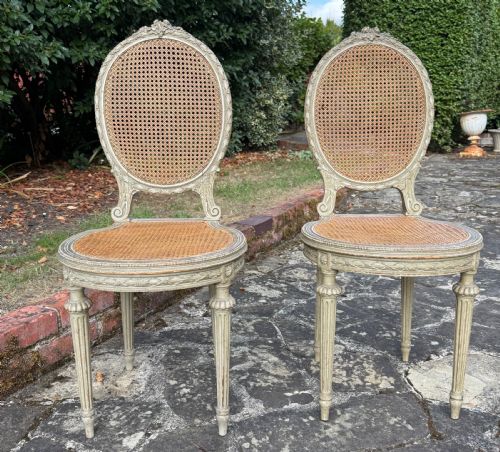
Continental and further-flung pieces do appear in small numbers: French, Dutch, Spanish, Swedish, Irish súgán, Scandinavian and American.
Why do upholstered armchairs appear under this heading?
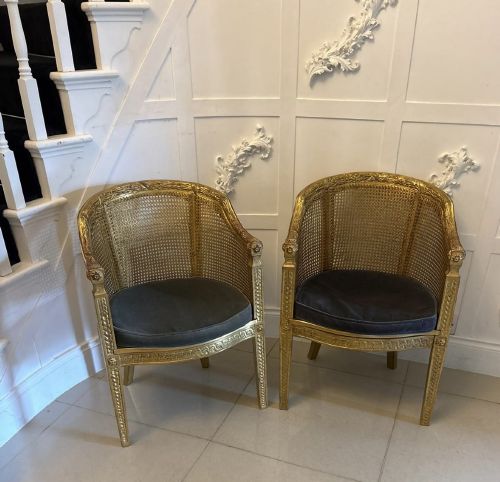
Country house armchairs share the heading with vernacular timber chairs. Deep-seated, buttoned-back, wing, club and library armchairs all sit here, around a seventh of the category.
They behave differently from the timber chairs. The ones carrying a firm's name, stamped or attributed, sit at the highest end of everything listed under this heading.
Do unusual one-off forms come up?
They do, and generally once. A metamorphic chair that opens into library steps, a child's correction chair, a chair on wheels, an Orkney chair, a Fair Isle crofter chair and a lambing chair have each surfaced.
Children's chairs are a steadier minor strand: high chairs, small rockers and miniature Windsors.
The occasional settle or bench arrives under the heading as well.