
Antique Mahogany Chairs
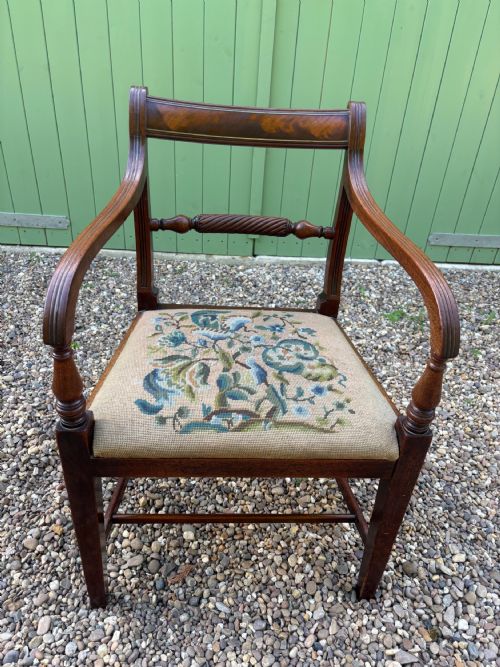
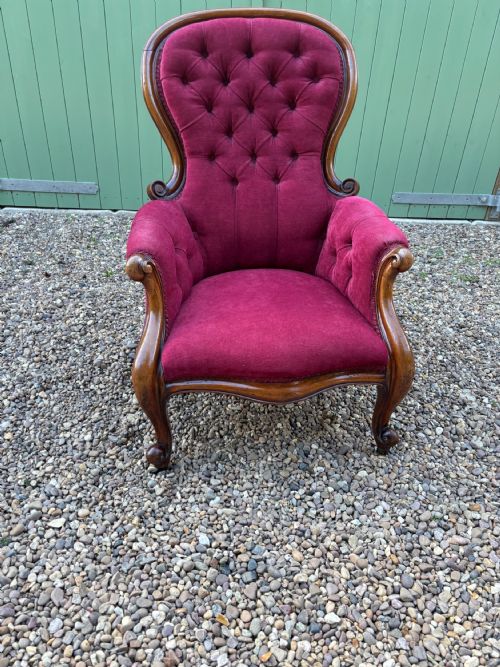
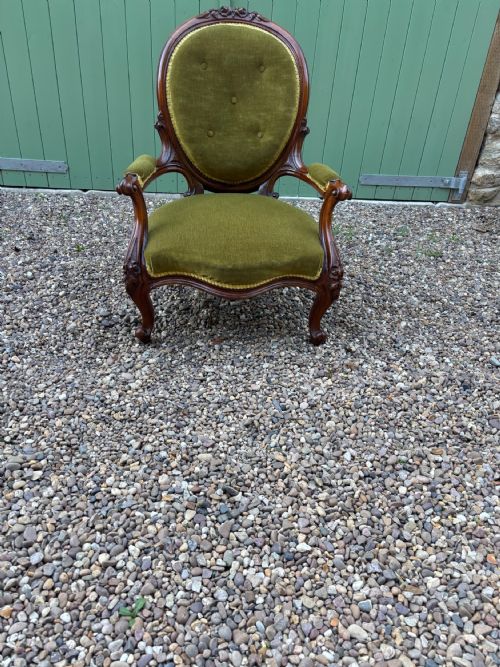
Mahogany-framed seat furniture from British workshops, listed as dining sets, pairs and single armchairs, made for dining rooms, libraries, halls and desks.
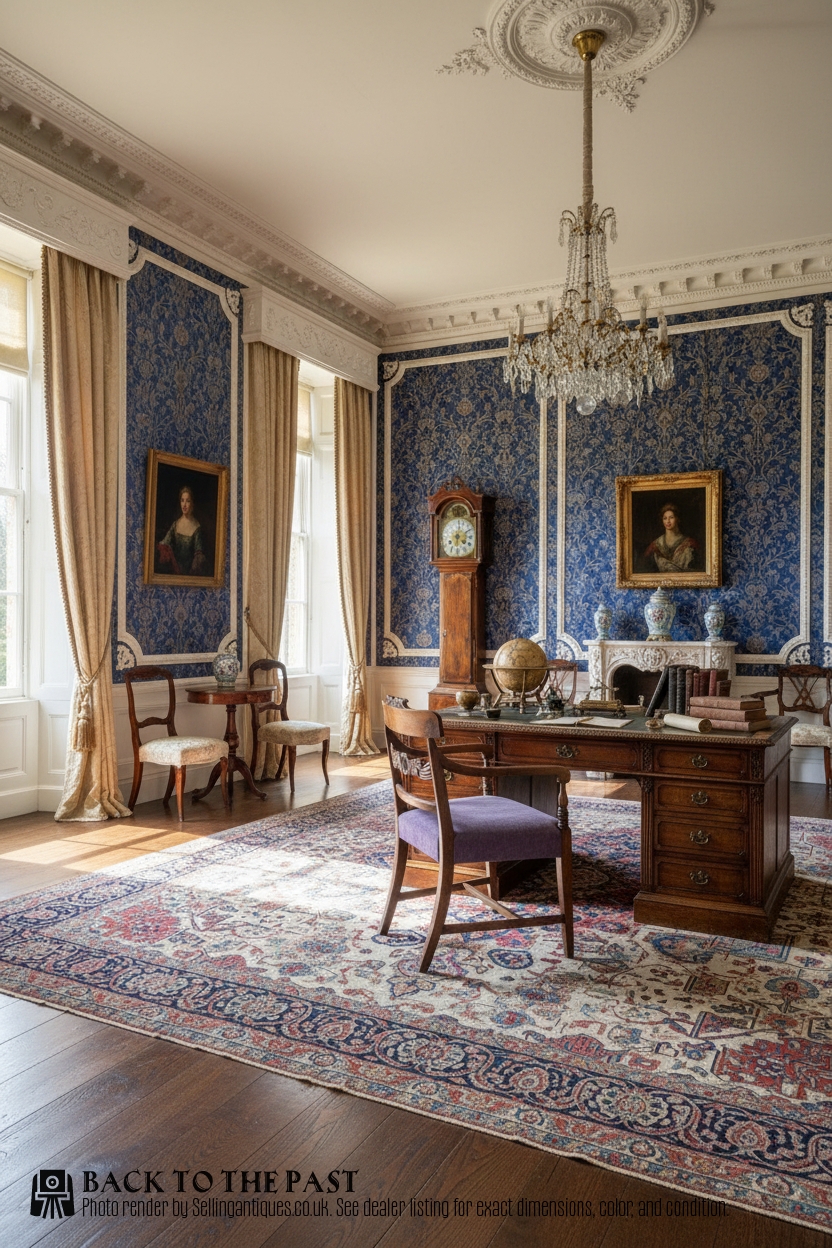
Antique Mahogany Chairs
Mahogany came into general English chairmaking in the eighteenth century, valued for strength in slender members and for taking carving. It stayed the standard timber for dining, library and hall seating through the nineteenth century and into the Edwardian years, and revivals of eighteenth-century patterns kept it in use long after the original designs.
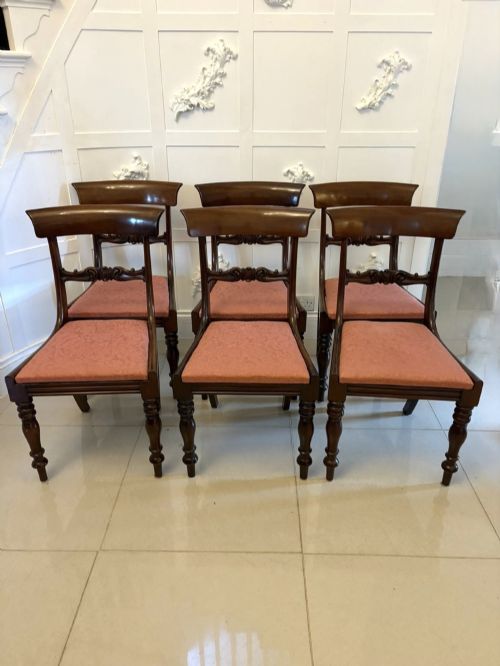
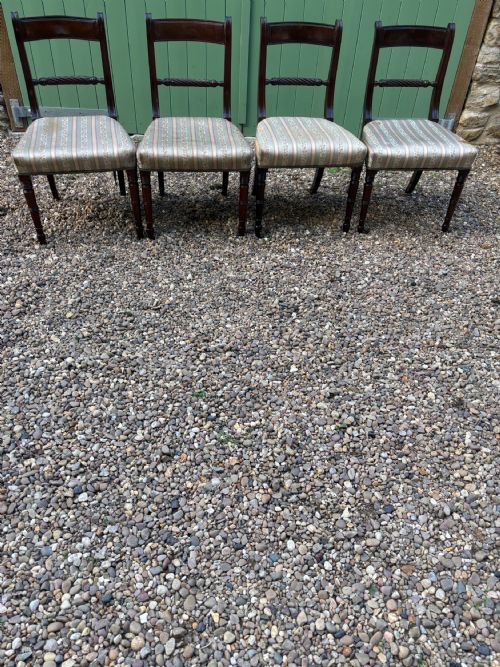
The dining chair in a set dominates. Around a third of listings use the word dining, and 'chairs' in the plural appears in nearly half. Set sizes named in titles run to six, eight and four, and 'pair' turns up in some 1,388 titles. Armchairs, elbow and open-arm chairs make up about a quarter, and desk, office and library chairs roughly one in six.
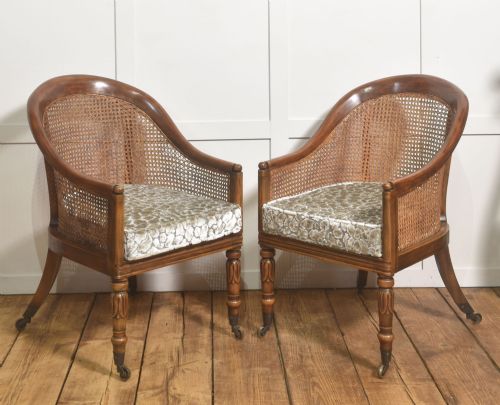
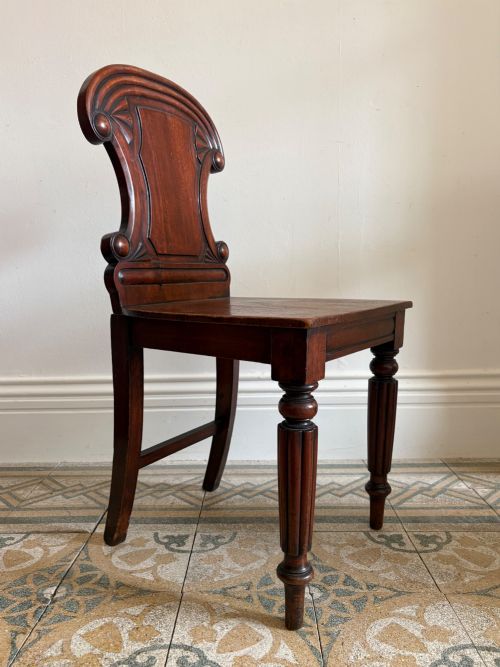
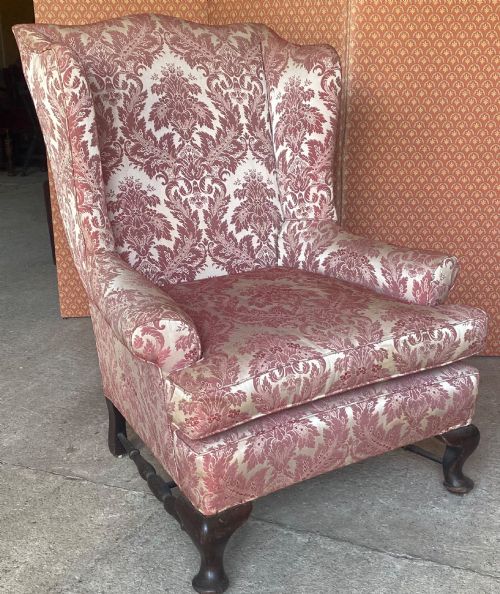
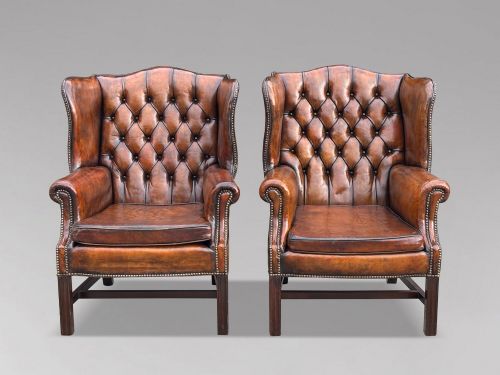
Smaller blocks sit behind those. Hall and side chairs account for under one in ten and almost always come in pairs rather than singles, which sets them apart from every other form. Upholstered easy shapes - wing, bergere and tub - are about one in ten, often with leather. The most-named back shape is the balloon back, and the commonest style label is Chippendale.
Many chairs here are described by period or monarch rather than by maker, and a large minority carry a style label instead of a date of manufacture. Of 7,610 listings, 2,632 give a clean year, spanning 1720 to 1960. The largest single period label is the vague '19th Century', ahead of Victorian, Regency, Georgian and Edwardian, so a third or more of dated pieces are placed only within a century or a reign. Title wording and the dated field routinely disagree, so read the two together.
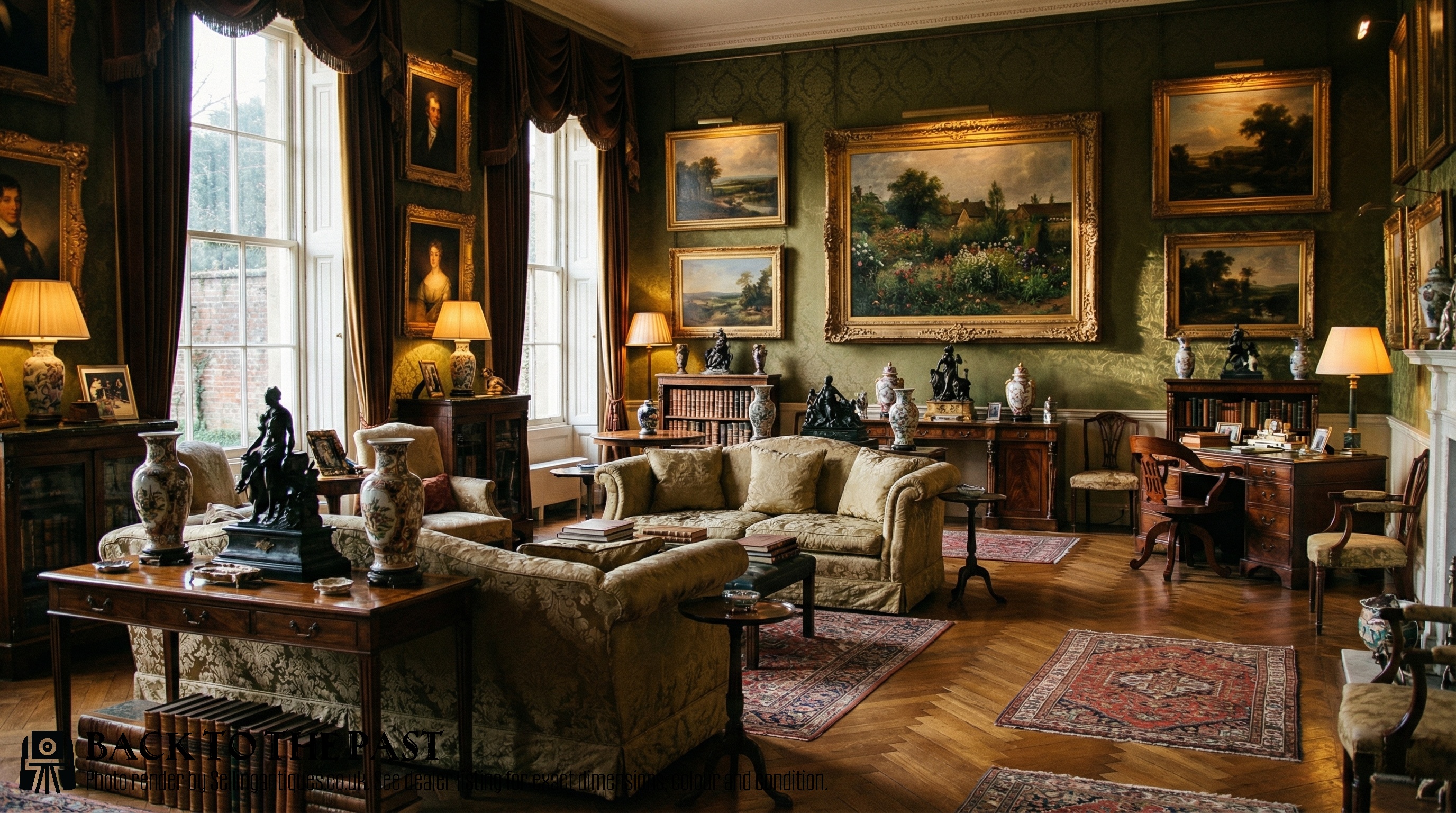
What Sets Them Apart
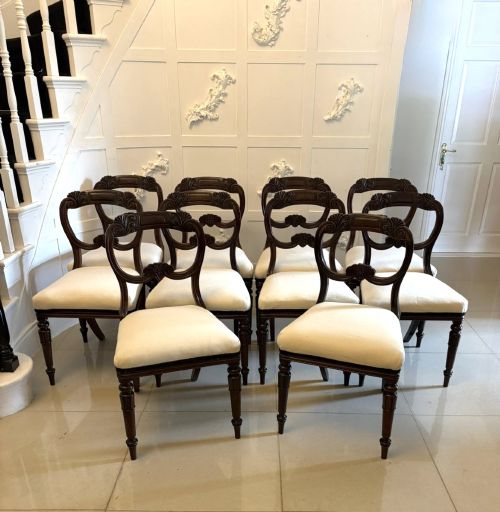
Set size does more work than anything else. The upper reaches are sets of eight, ten, twelve, fourteen and fifteen, while sets of four and pairs sit low. Titles separate 6+2 and 8+2 configurations, singles plus carvers, from harlequin and matched sets brought together later to resemble one.
Then the question of period against pattern. 'Chippendale style', 'Hepplewhite style', 'Sheraton revival' and 'Queen Anne style' run right through the category, and 154 titles say revival outright. Eighteenth-century and Regency-period work sits above later copies of the same design, with 'Chippendale period' and George II and III attributions clustering at the top.
Carving and inlay lift a frame: carved appears in 396 titles, inlaid in 475, and carved mahogany George II and III armchairs sit at the very top alongside Gainsborough armchairs. Scale counts too, with wing, bergere and Gainsborough forms and titles noting generous proportions or great scale in the upper half. Plain frames, and single Victorian bedroom, nursing and hall chairs, hold the bottom.
Antique Mahogany Chairs Retail Price Guide 2026
Typical UK retail prices for mahogany chairs, calculated from the Sellingantiques database of over a million retail prices indexed since 2003. This retail price guide relies exclusively on Sellingantiques data; no external sources or auction records are used, so the figures do not describe the wider market.
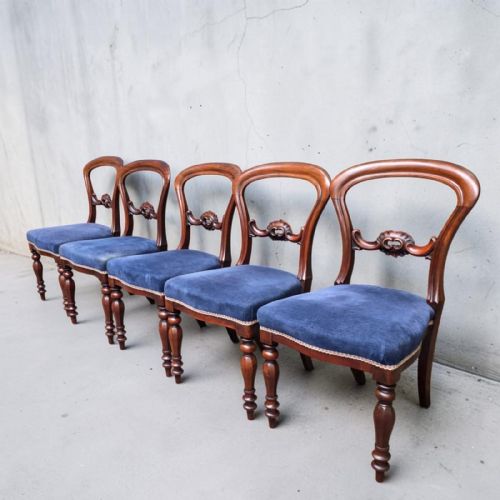
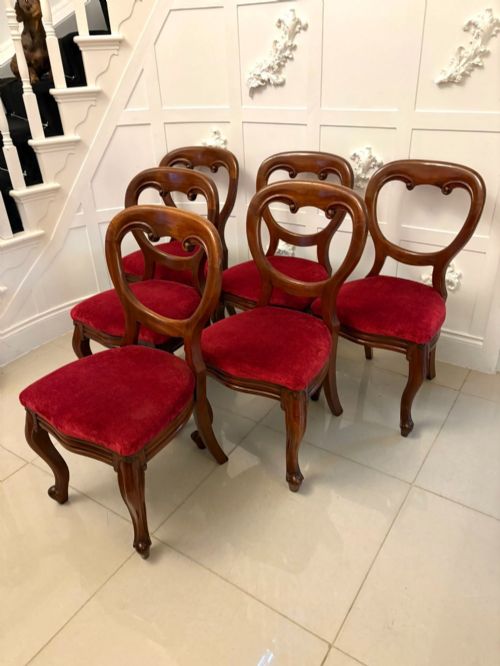
Balloon backs are the most-named back shape on Sellingantiques, appearing in more than 250 titles and in sets as large as twelve.
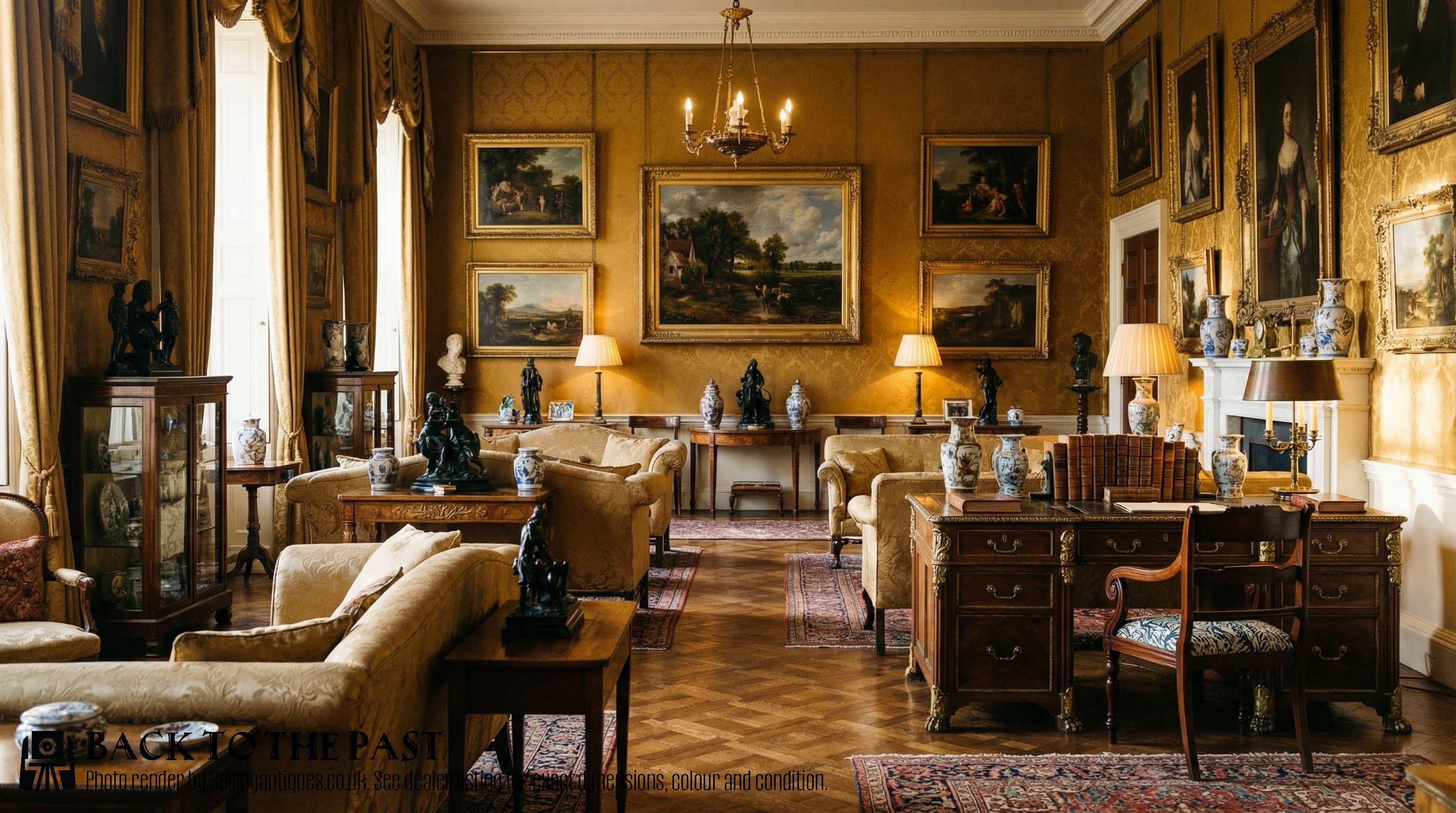
Gillows of Lancaster·Maple & Co·James Shoolbred
The Antique Mahogany Chairs Glossary
- Carver
- The armchair in a dining set. Sets are often quoted as 6+2 or 8+2, meaning single chairs plus carvers.
- Balloon back
- The rounded, waisted Victorian dining-chair back. It is the commonest named back here, in 258 titles, and appears in sets as large as twelve.
- Shield back
- A shield-shaped open back, tied in these titles to Hepplewhite patterns.
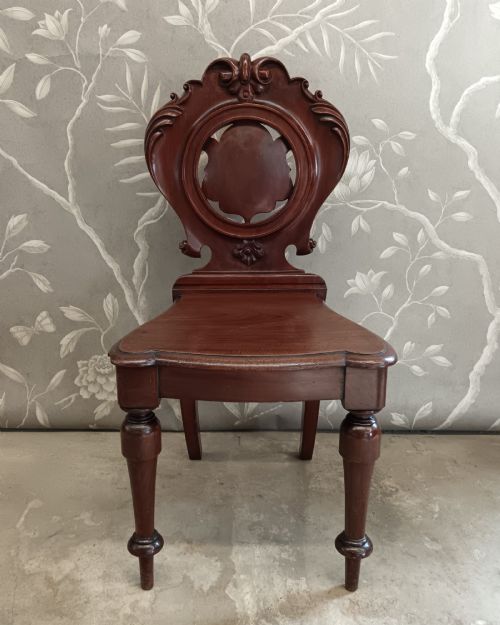
- Hall chair
- A hard-seated chair, often solid-backed, for an entrance hall. It runs to 217 titles and comes in pairs far more often than singly.
- Harlequin set
- A set assembled from similar but not identical chairs, stated as such in several titles. Matched or matched pair means the same thing for two.
- Showood
- The polished mahogany frame left visible around upholstery, also called a show frame.
Antique Mahogany Chairs: Frequently Asked Questions
How many mahogany chairs are listed each year?
Around 768 mahogany chairs and chair sets are listed on Sellingantiques in a year, and 347 different dealers have offered them. That makes it one of the broadest-based furniture categories on the site.
The spread of dealers is part of why the range of forms is so wide, from dining sets down to children's chairs.
What set sizes turn up?
Six is the commonest named size, then eight, then four. Pairs are everywhere, in some 1,388 titles.
Larger lots exist but thinly. The biggest recorded in the samples is a set of fifteen in the Regency style, with sets of twelve and fourteen appearing only a handful of times.
Does a style label mean the chair is that old?
No. A large minority of listings carry a style label rather than a date of manufacture, and 154 titles say revival outright.
'Chippendale style', 'Hepplewhite style' and 'Sheraton revival' describe a pattern, not a period. Where a chair is period work, titles tend to say so, as with 'Chippendale period' or a George II or III attribution.
Which forms sit at the top of the range?
Carved George II armchairs and Gainsborough armchairs occupy the very top. Named or attributed pieces sit well above the median, and Gillows is the one name with real reach, cited by 20 dealers.
At the other end are single Victorian bedroom, nursing and hall chairs, and children's chairs, which stay near the bottom whatever their period.
Are any Continental or Scottish chairs listed?
A scattering. Scottish and Irish origins are stated only occasionally, and a Scottish cockpen chair appears in single figures in the samples.
Swedish and Empire French frames are rarer still. The bulk of the category is British.
What unusual chairs have appeared?
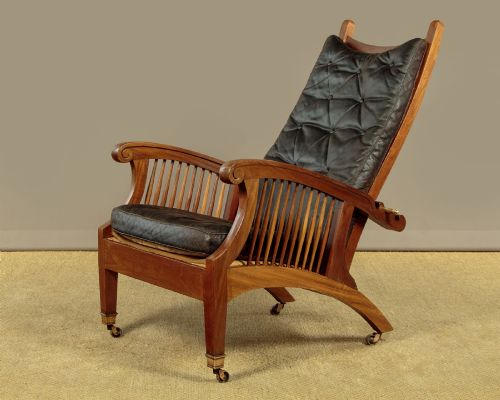
One-offs come up now and then: a metamorphic chair-and-steps, a hall porter's hooded chair, a reclining campaign chair, a music room chair with gilt bronze.
Ships' swivel chairs, a pair of liner chairs and a convalescing invalid wheel chair each appear once in the samples and nowhere else.