







Antique Gainsborough Chairs
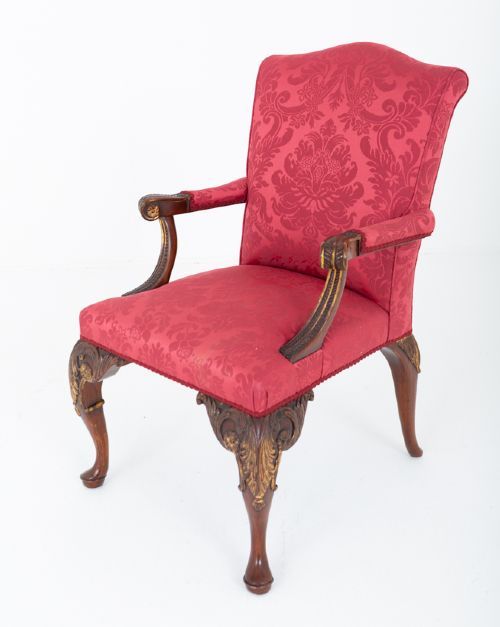
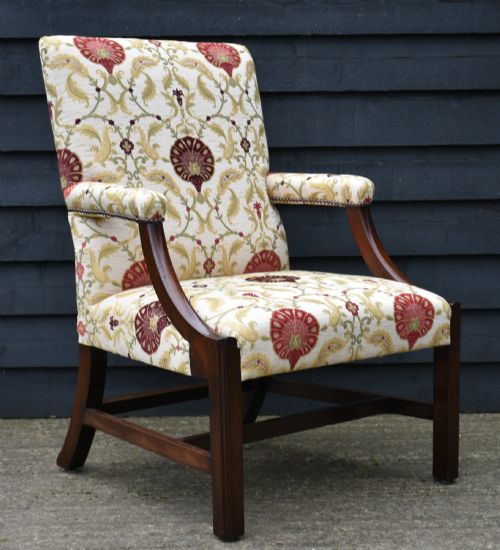
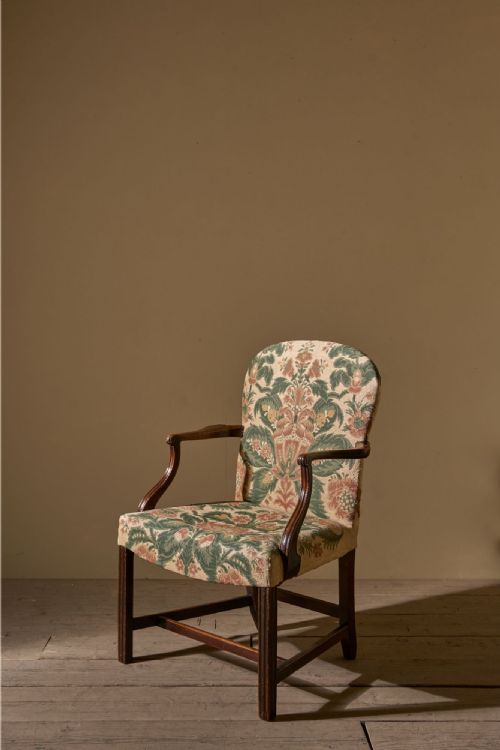
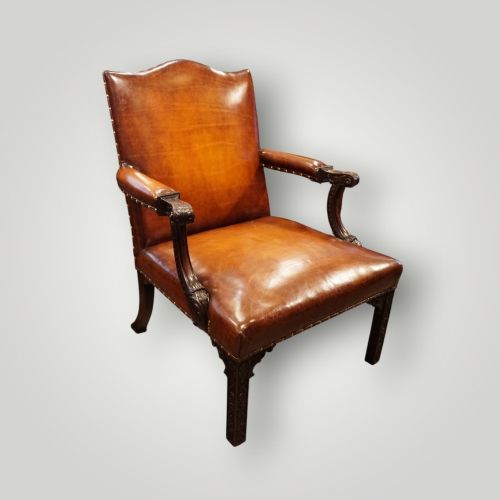
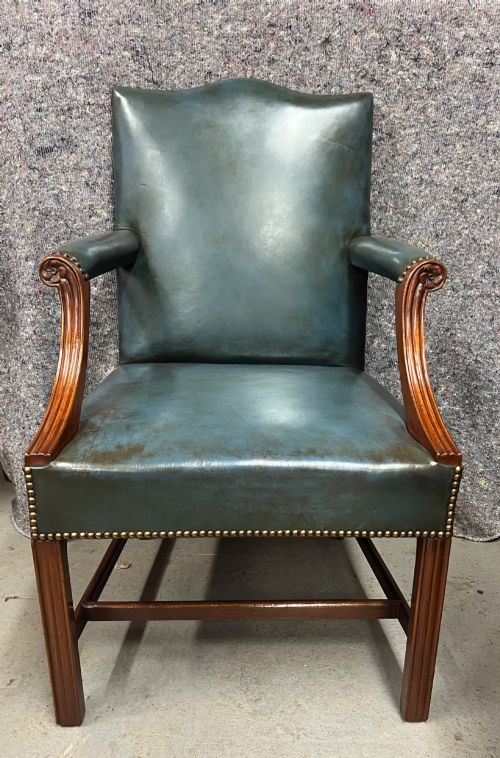
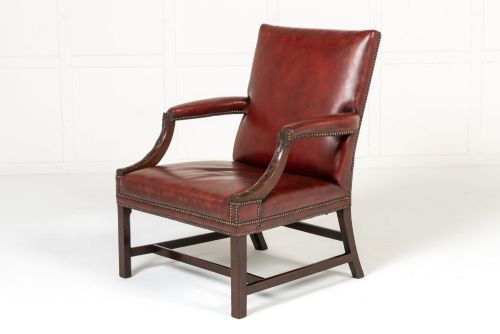
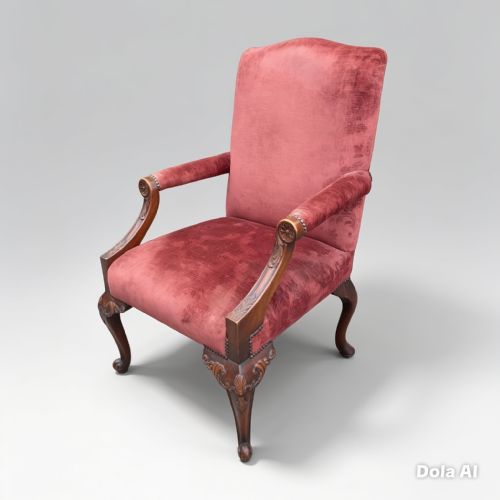
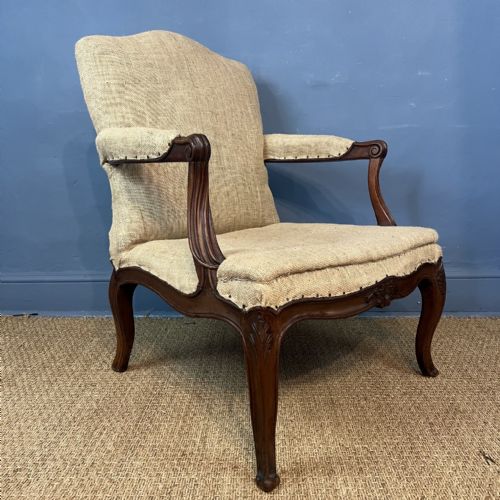
An upholstered open-arm library or desk chair on a show-wood frame, made to be sat in for long spells at a writing table.
Antique Gainsborough Chairs
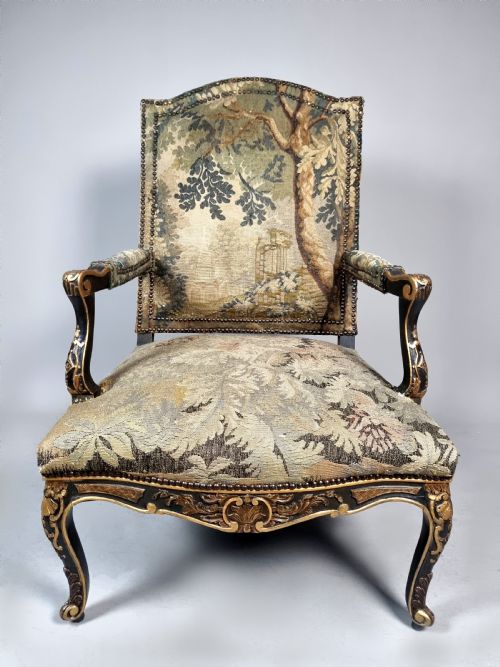
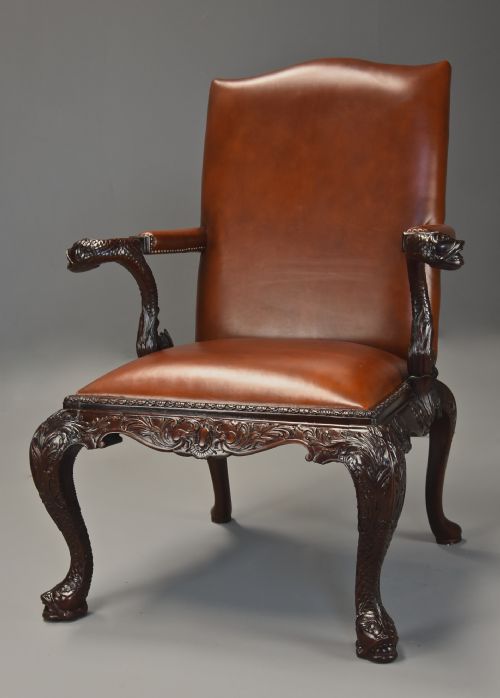
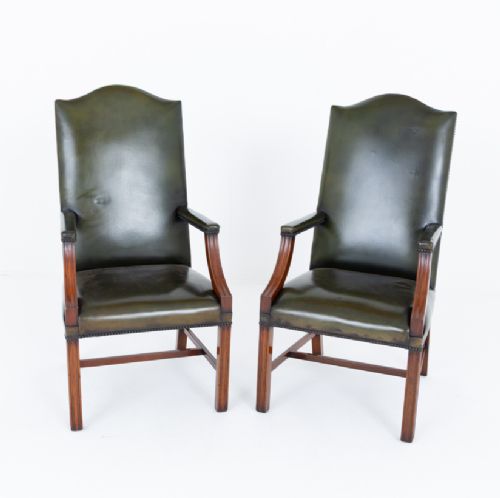
The form is a mid-18th-century English library chair: stuffed seat and back, arms left open between the padded arm pad and the seat rail, the whole thing carried on a visible timber frame with four square or turned legs. The name Gainsborough came from the trade later on, not from the makers.
Mahogany dominates. It appears in just over half of the titles on Sellingantiques, with walnut a small minority and single chairs in elm, solid yew and giltwood. Leather is the covering named most often, with tapestry, needlepoint, suede and wool turning up alongside it. Around a fifth of listings are pairs rather than singles.
Dating splits into two humps. One block is 18th-century and Georgian, with George III the single commonest label and a handful of George II chairs at the early end. The other is an early 20th-century block running from the 1900s through the 1930s. Between them sit 19th-century mahogany and walnut chairs.
Much of the dating is by period label rather than year, and titles often pair a vague date with a style name, so a Georgian label frequently describes a later chair. "Library chair" attaches to a good number of them and is used interchangeably with Gainsborough. The name stretches too: wing-backed versions and armless side chairs both appear under it.
Where The Range Splits
Period does most of the work. Chairs dated to the 18th century and labelled Georgian concentrate at the top of the range, while "Gainsborough style", "Georgian style" and 1900s to 1930s dates sit at the bottom. The revival copies repeat the model faithfully enough that the date, not the shape, sorts them.
Number counts for as much as age. Pairs sit well up the range, and the multiples cluster higher still: a set of four George II armchairs holds the very top, and a set of ten Edwardian leather carvers is the largest lot recorded. A single chair of the same date and timber reads differently.
After that it comes down to the frame and the timber. Carving on the show wood pushes a chair upward, and carved mahogany appears mainly in the dearer listings. Mahogany is the baseline, so a named timber like Cuban mahogany, walnut, yew or giltwood stands out. Words like large, wide and substantial run through the upper end too.
Antique Gainsborough Chairs Retail Price Guide 2026
Typical UK retail prices for gainsborough chairs, calculated from the Sellingantiques database of over a million retail prices indexed since 2003. This retail price guide relies exclusively on Sellingantiques data; no external sources or auction records are used, so the figures do not describe the wider market.
Dealer-supplied dates on Sellingantiques run from about 1740 to 1930, with a George II chair at the early end.
The Antique Gainsborough Chairs Glossary
- Show wood
- The exposed timber of the frame, seen at the arms, legs and back edge; "mahogany framed" is the usual phrasing.
- Open armchair
- The arms are unupholstered between the padded arm pad and the seat rail, leaving the sitter's elbows clear.
- Library chair
- The same form under its other name, used for a chair meant for a desk or a library, and often swapped in for Gainsborough.
- Deep buttoned
- Upholstery drawn down at intervals with buttons into hollows, a recurring note on the leather chairs.
- Georgian Revival
- An early 20th-century reproduction of a Georgian model, stated outright in a few titles and implied by the many reading "Georgian style".
- Fauteuil
- French open armchair; three titles use it, for walnut chairs of French design and a pair of giltwood salon chairs.
Antique Gainsborough Chairs: Frequently Asked Questions
Why is it called a Gainsborough chair?
The name was applied later by the trade rather than by the people who made the chairs. It describes a form, not a workshop or a designer.
Listings on Sellingantiques use it alongside "library chair" and "desk chair" for the same open-arm upholstered model.
What wood are they usually made from?
Mahogany, in just over half the titles recorded. It is close to a defining feature of the form.
Walnut is a distinct minority. Beyond those two, the archive throws up single chairs in elm, solid yew and giltwood, plus one described as Cuban mahogany.
How old are most of these chairs?
The dealer-supplied dates run from 1750 to 1930, and the spread is two-humped. One group is 18th-century and Georgian, the other early 20th-century, with 19th-century chairs sitting between them.
Only some listings carry a clean year. The rest use period labels such as "18th Century", "Georgian" or "George III", which are broader than a date.
Do they come in pairs?
Often. Around a fifth of the listings are pairs rather than single chairs, and pairs sit noticeably higher in the range.
Larger groups are scarce. The archive holds one set of four George II armchairs and one set of ten Edwardian leather chairs described as carvers.
What does Georgian style mean in a title?
It signals the model rather than the date. Titles reading "Georgian style", "George II style" or "Gainsborough style" cluster with the 1900s to 1930s chairs.
These revival copies follow the 18th-century shape closely and hold the lower end of the range.
Are wing and armless versions sold under this name?
Yes, though rarely. A pair of Gainsborough wing arm chairs and a set of George III Gainsborough side chairs both appear.
It shows how loosely the trade name gets applied to related upholstered forms.