
Antique Victorian Chairs
Victorian chairs are the seat furniture of 19th-century British homes: dining sets, upholstered armchairs, hall and desk chairs, made in quantity for houses that were multiplying.
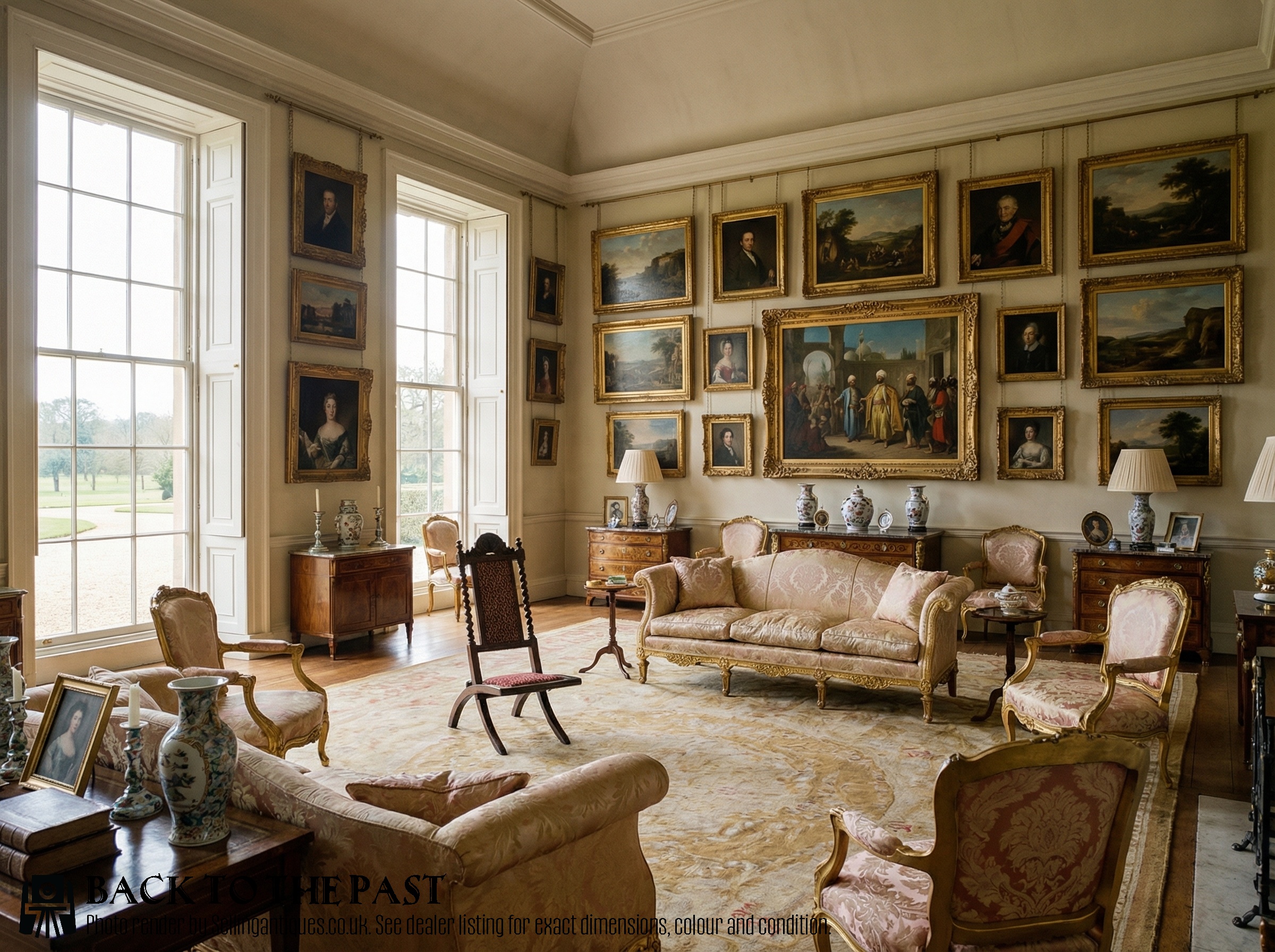
Antique Victorian Chairs
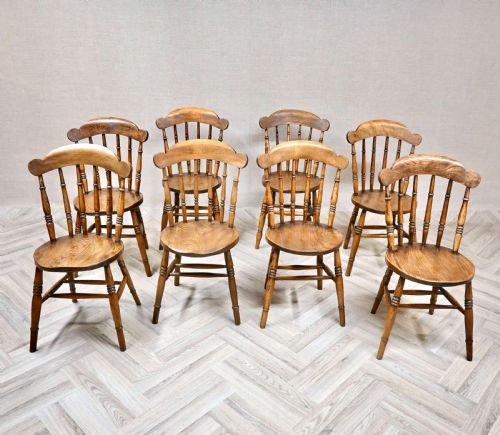
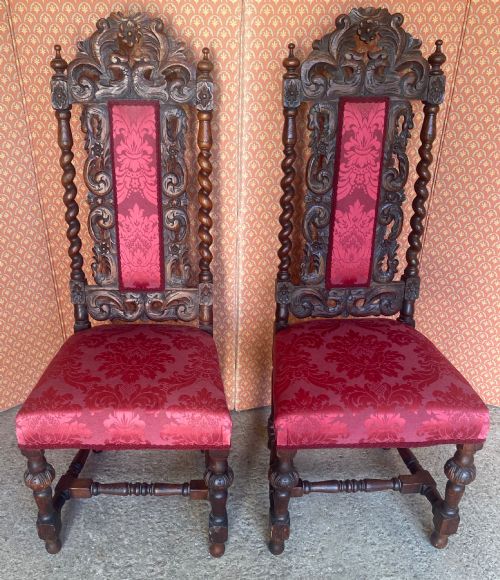
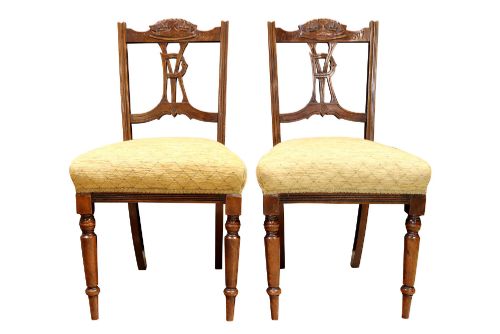
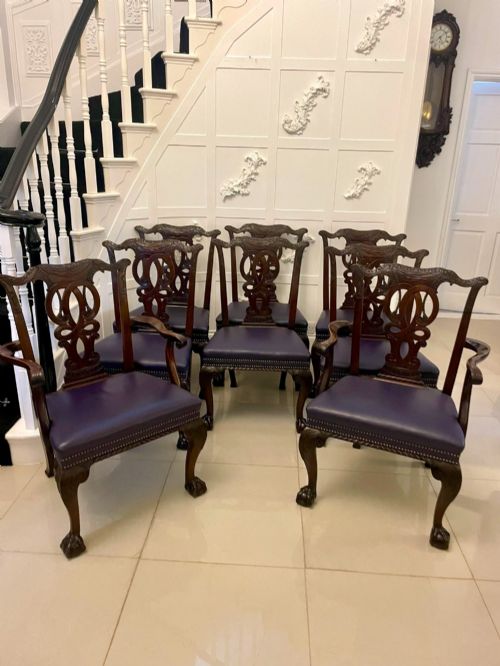
The chair you meet most often is a mahogany or walnut dining chair, and it usually comes as a set. Plural "chairs" sits in more than a third of titles, with "dining" and "pair" close behind. Sets of four, six, eight, ten and twelve all turn up, and the largest single lot recorded on Sellingantiques is a set of 22 in oak.
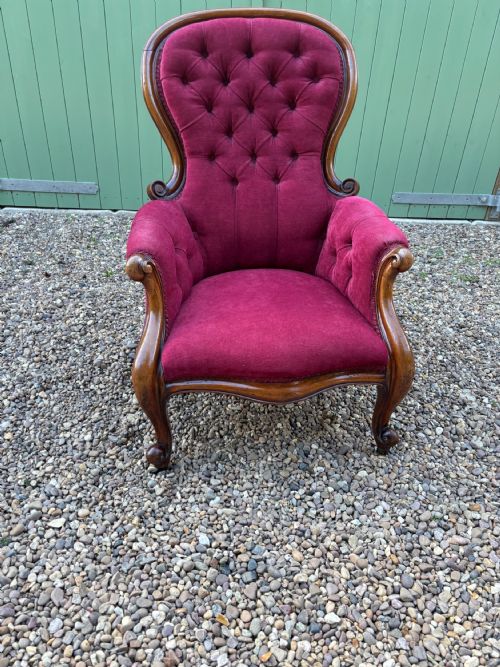
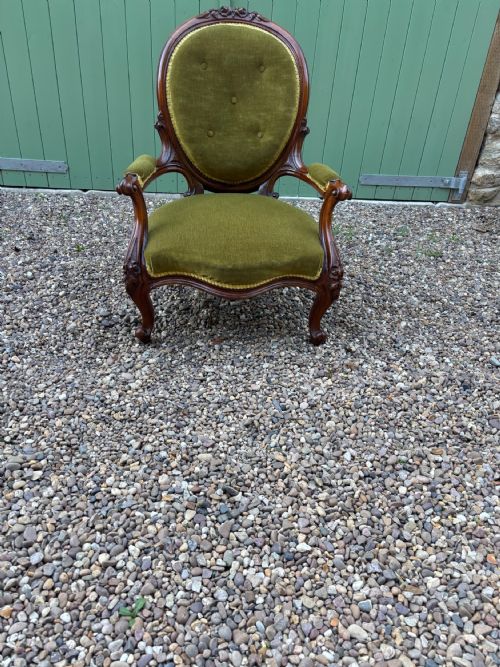
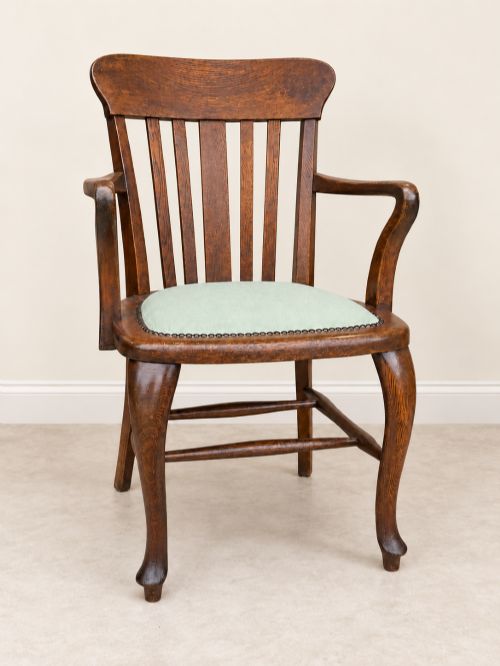
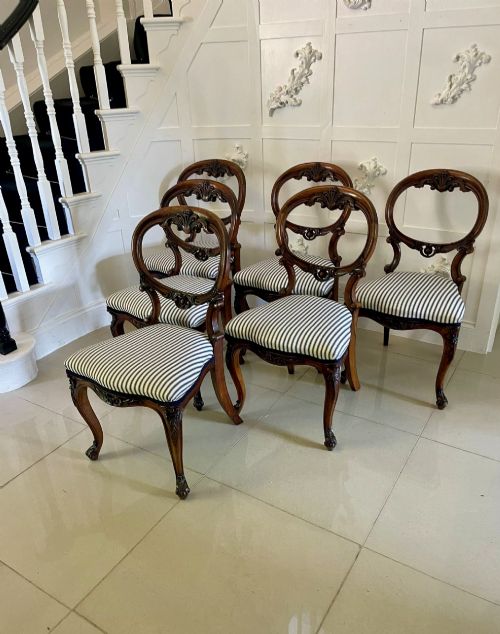
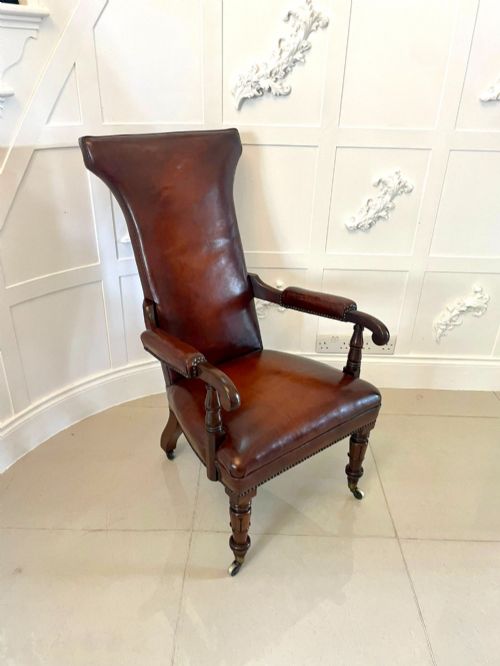
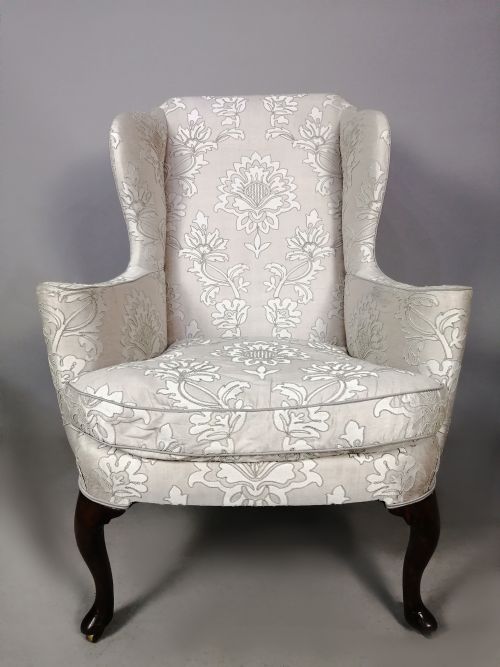
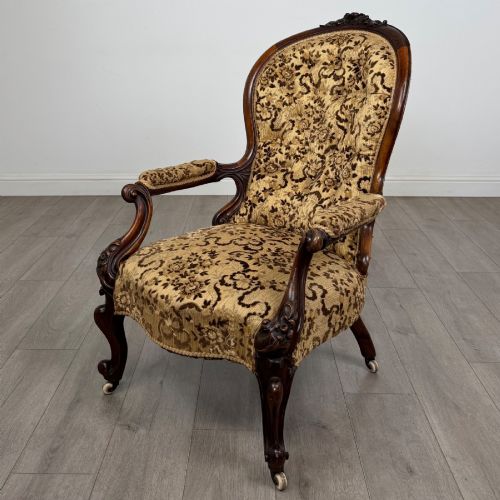
Balloon back is the one named back shape that recurs at scale, on 452 titles, more than shield, spoon and bar backs together, and most often in mahogany. Alongside the dining chairs sit the armchairs, in about a quarter of titles: button backs, spoon backs, wings, library and easy chairs, commonly in leather.
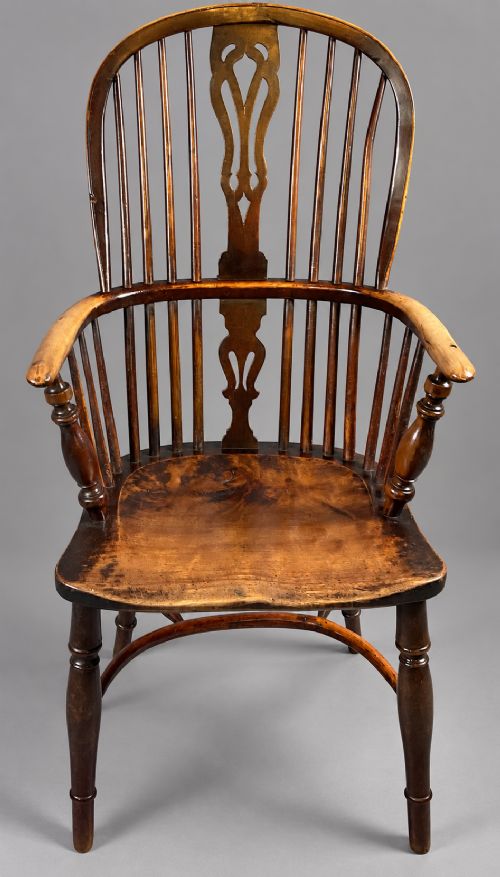
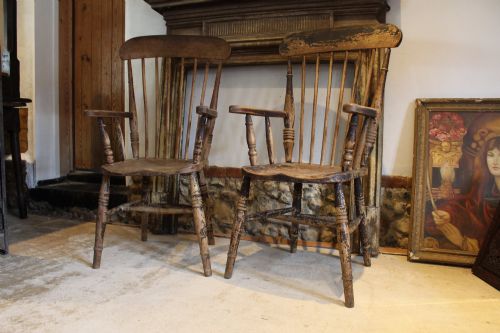
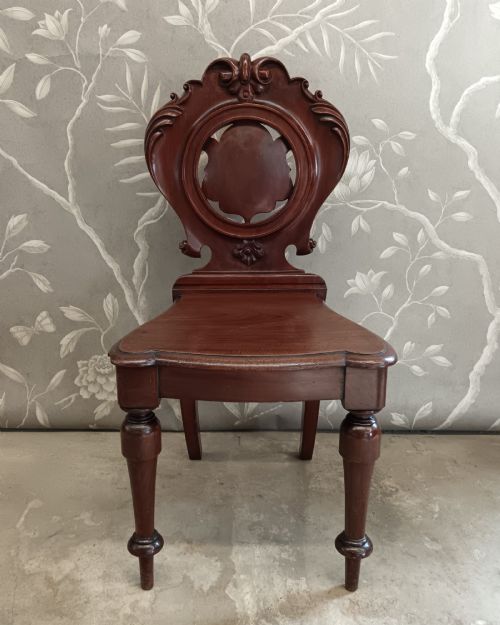
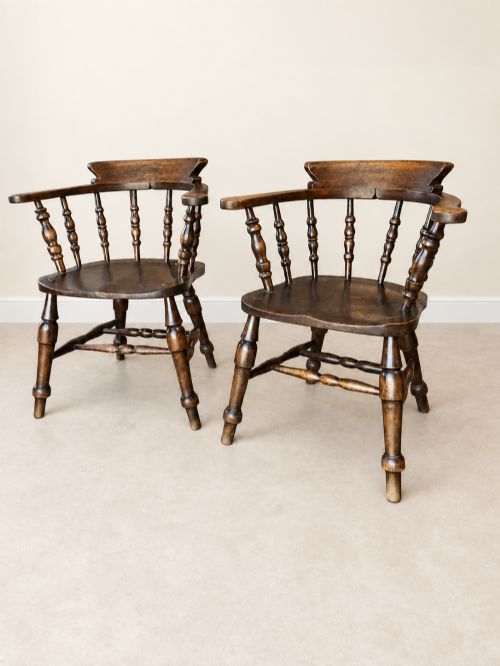
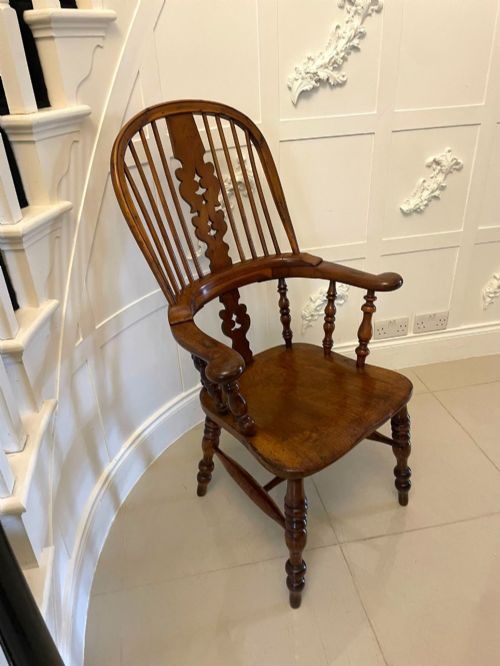
Then the working chairs. Windsor and country chairs in elm, ash and beech, including smoker's bows and captain's chairs, make up roughly one in ten. Hall and side chairs, often carved oak or mahogany, form a steady band, and desk, office and revolving chairs account for around one in twelve.
Dating is loose by convention. Nearly 2,900 listings say only "Victorian" and another 991 say "19th Century", so about half the archive carries no closer date than a reign. Where a decade is given the weight falls between the 1850s and the 1890s, and the label sits on chairs given as c.1840 and on others given as c.1900.
The Range
Numbers do most of the work. Singles and pairs run through the lower reaches; sets of eight, ten and twelve occupy the upper end, and the oak set of 22 sits at the very top. A set that has stayed together is a different proposition from the same chair on its own.
Timber and decoration sort the rest. Walnut, rosewood and figured mahogany push a chair up, with burr walnut and yew-wood Windsors high in the range and painted beech, elm and pitch pine low. Carving lifts things further: carved walnut, carved oak and carved mahogany all recur, and marquetry, boxwood stringing and inlay cluster at the top.
Upholstery and names matter too. Buttoned leather on library, desk and wing chairs sits well above plain upholstered work. The Howard name is the strongest single thread near the top, in 132 titles, and named-maker armchairs occupy the highest reaches while simple hall and kitchen chairs mark the bottom.
Antique Victorian Chairs Retail Price Guide 2026
Typical UK retail prices for victorian chairs, calculated from the Sellingantiques database of over a million retail prices indexed since 2003. This retail price guide relies exclusively on Sellingantiques data; no external sources or auction records are used, so the figures do not describe the wider market.
Victorian is the period label used most on Sellingantiques for these chairs, with 19th Century next and the 1880s third.
Gillows·Cornelius·John Taylor & Sons·Holland & Sons·Philip Webb
The Antique Victorian Chairs Glossary
- Balloon back
- Rounded, waisted open back on a dining or side chair. The most-named back shape in the category, on 452 titles.
- Button back
- Upholstery drawn into a pattern of buttoned dimples. It appears on 249 titles, usually armchairs.
- Carver
- The armed chair in a dining set, as opposed to the armless singles. A set of six is often described as four plus two carvers.
- Windsor
- Stick-built chair with a solid shaped seat, usually elm with ash or beech. On 451 titles, and the form yew wood almost always turns up on.
- Harlequin set
- A set assembled from chairs of similar but not identical pattern. It appears repeatedly through the listings.
- Prie dieu
- Tall-backed, low-seated prayer chair. A minor form that keeps surfacing among the upholstered chairs.
Antique Victorian Chairs: Frequently Asked Questions
What is a balloon back chair?
It's a dining or side chair with a rounded, waisted open back. The shape appears on 452 titles, which makes it the only back pattern common enough to count as a type of its own.
Mahogany is the usual timber, and walnut examples turn up as well.
How large do Victorian dining sets get?
Fours and sixes are the common sizes, with pairs and singles running below them. Eights, tens and twelves appear regularly.
The largest single lot recorded on Sellingantiques is a set of 22 oak chairs, which also sits at the top of the range.
Which timbers were used?
Mahogany leads by a wide margin at 1,637 titles, followed by walnut, oak, elm, rosewood, ash and beech.
Elm, ash and beech belong to the country and Windsor chairs. Yew is the rarest timber that recurs, almost always on Windsor armchairs.
Are all chairs labelled Victorian actually Victorian?
The dated field runs from 1700 to 1960 across the 2,394 listings that carry a clean year, so a handful of pieces fall well outside the reign, with samples given as 1800, 1920, 1930 and 1940.
Dealers also apply the label to chairs dated c.1840 and c.1900. It works as shorthand for a style and a broad period rather than a fixed span.
What unusual forms turn up in this category?
One-offs surface now and then: a sedan armchair, a cock fighting chair, a metamorphic library chair that opens into steps, a lambing chair, a Burmese padouk harpist's chair and a rise-and-fall music chair each appear once.
Iron shows up too, in iron-framed button back armchairs, a steel and leather rocker and cast iron garden chairs.
How many come up for sale each year?
Around 672 a year, listed by 356 different dealers over time. That makes Victorian chairs one of the most widely stocked things on Sellingantiques.
Roughly a third of listings are multiples rather than single chairs.