
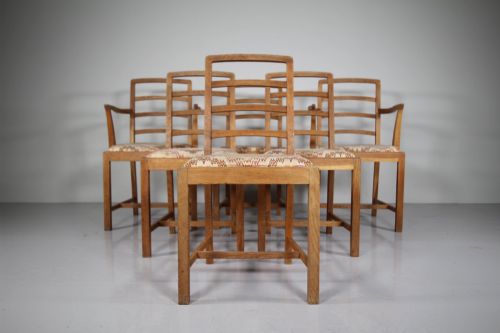
Antique Oak Chairs
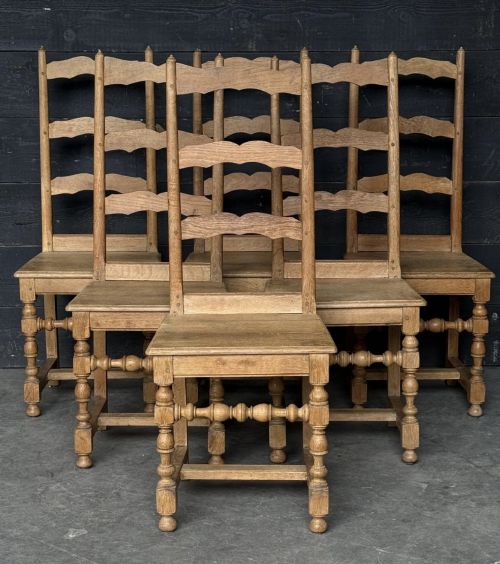
Chairs made in oak, from joined 17th-century wainscot armchairs to Victorian hall chairs, revolving desk chairs and country farmhouse seating, sold singly, in pairs and in sets.
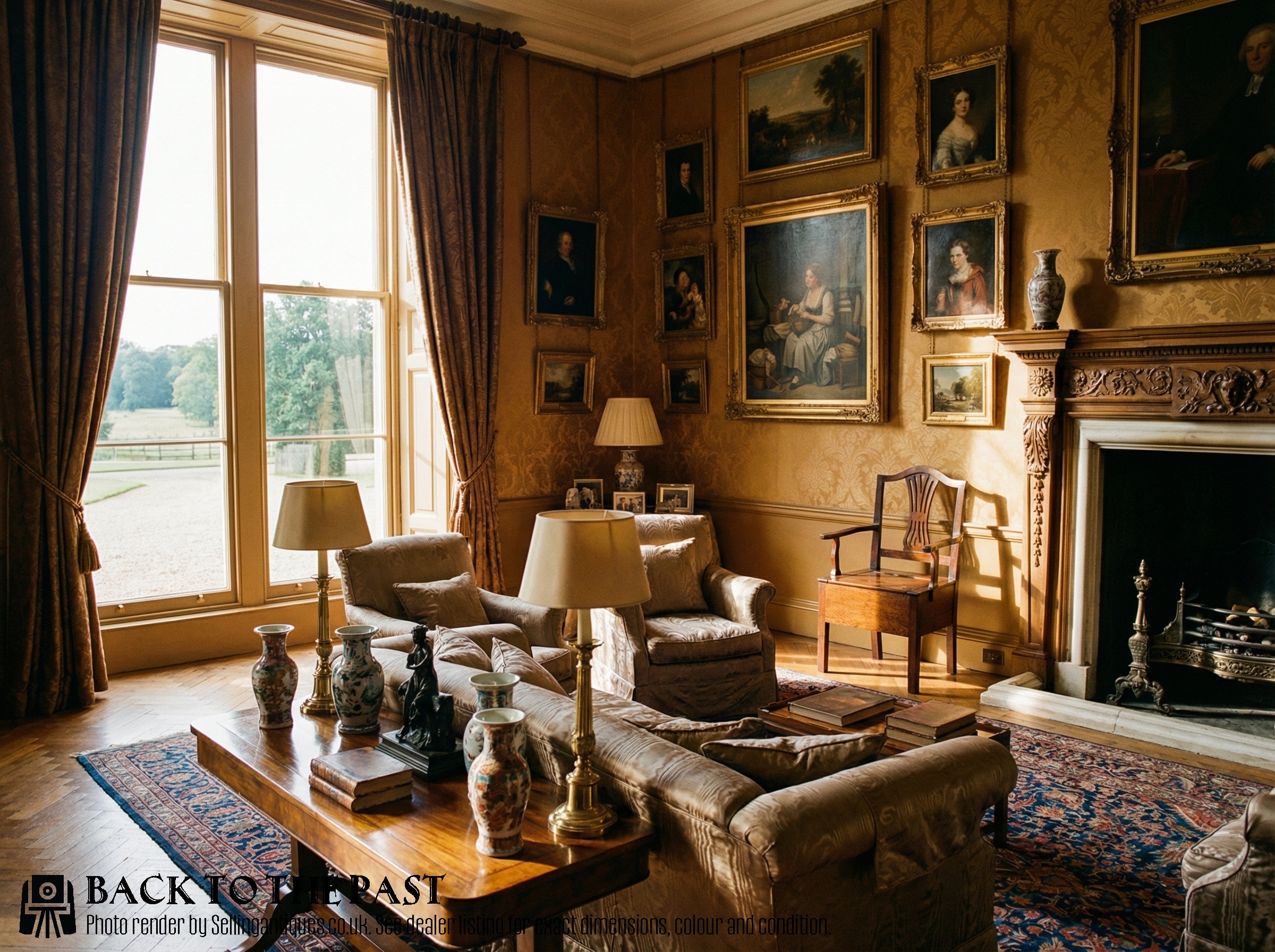
Antique Oak Chairs
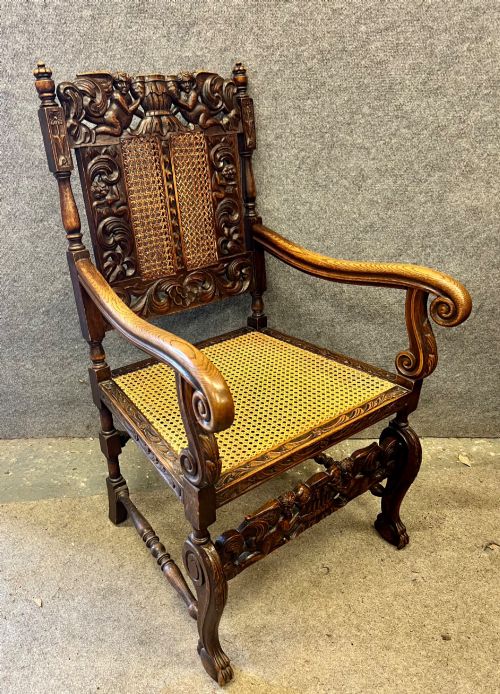
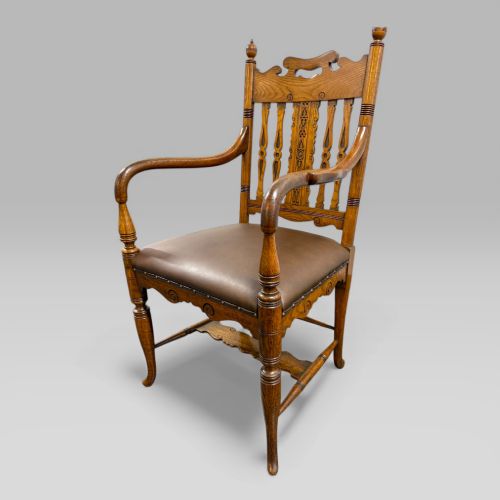
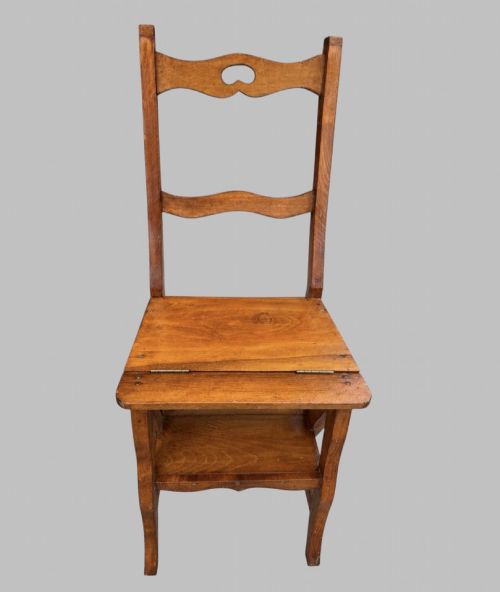
Oak was the standard English timber for joined seating from the medieval period through the 17th century, when joiners made panel-back and wainscot chairs for hall and parlour. It came back into favour in the 19th and early 20th centuries for revival, country, dining, hall, office and church seating, and that second wave is what fills most of this category.
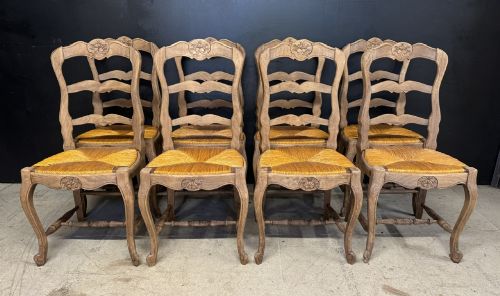
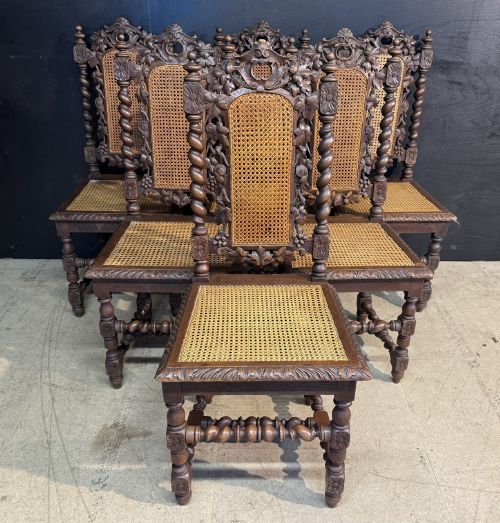
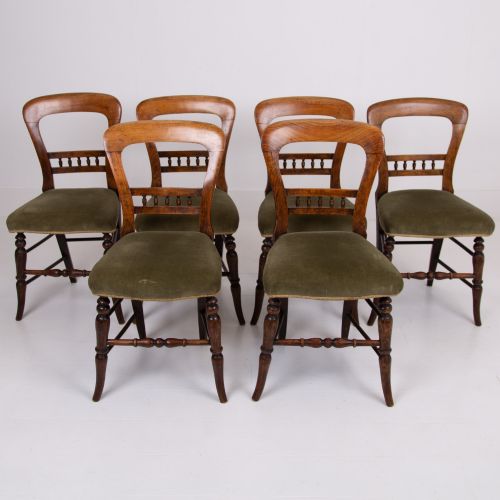
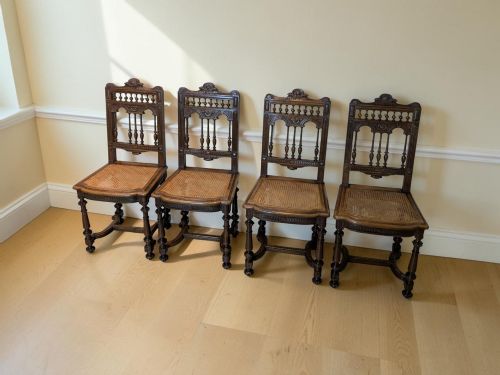
Sets and pairs of dining chairs dominate. Dining appears in about a fifth of titles, pair in slightly under a fifth, and set sizes are named outright: six is the commonest number stated, then four, then eight, with tens, twelves and a fourteen in the sampled range. Titles use harlequin, matched and near pair openly, so a set is not assumed to have started life together.
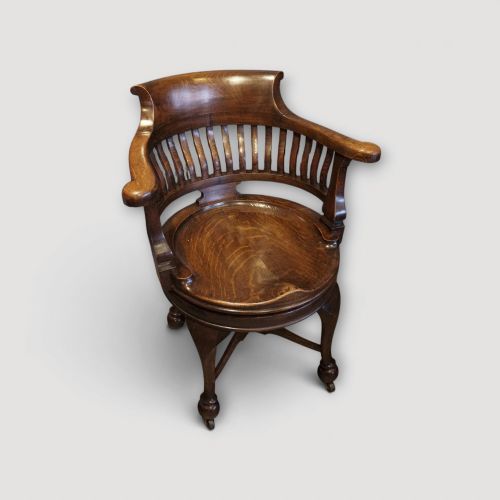
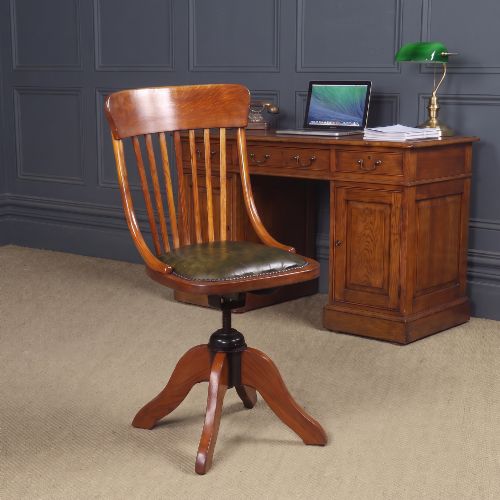
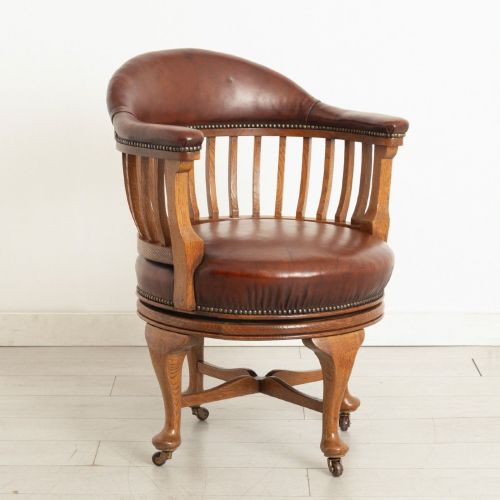
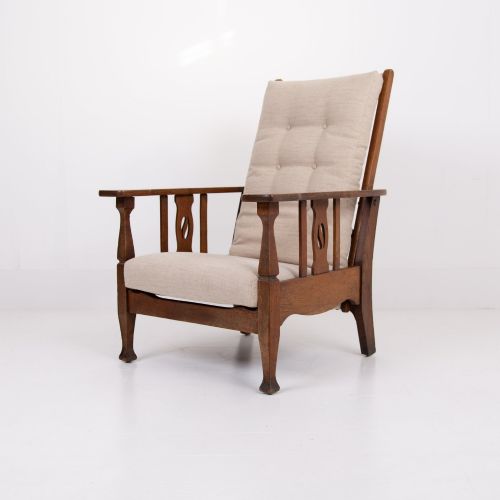
The next largest strands are single seat forms. Armchairs run through the category, and the desk group is large and unusually mechanical for antique seating, with revolving, swivel, adjustable-height and reclining versions and leather seats common among them. Hall chairs and Gothic Revival seating form another block, carved being the most frequent decorative word on the whole category.
Dating is broad but not evenly spread. The dated field runs from 1635 to 1960, and while 17th- and 18th-century oak is genuinely present, the two biggest buckets are the dealers' own vague labels, 19th Century and Victorian. Decade labels crowd the turn of the century, so a large part of what you meet is Edwardian to interwar rather than Georgian. Country and vernacular chairs, Welsh types among them, and Arts and Crafts oak each make up a smaller share.
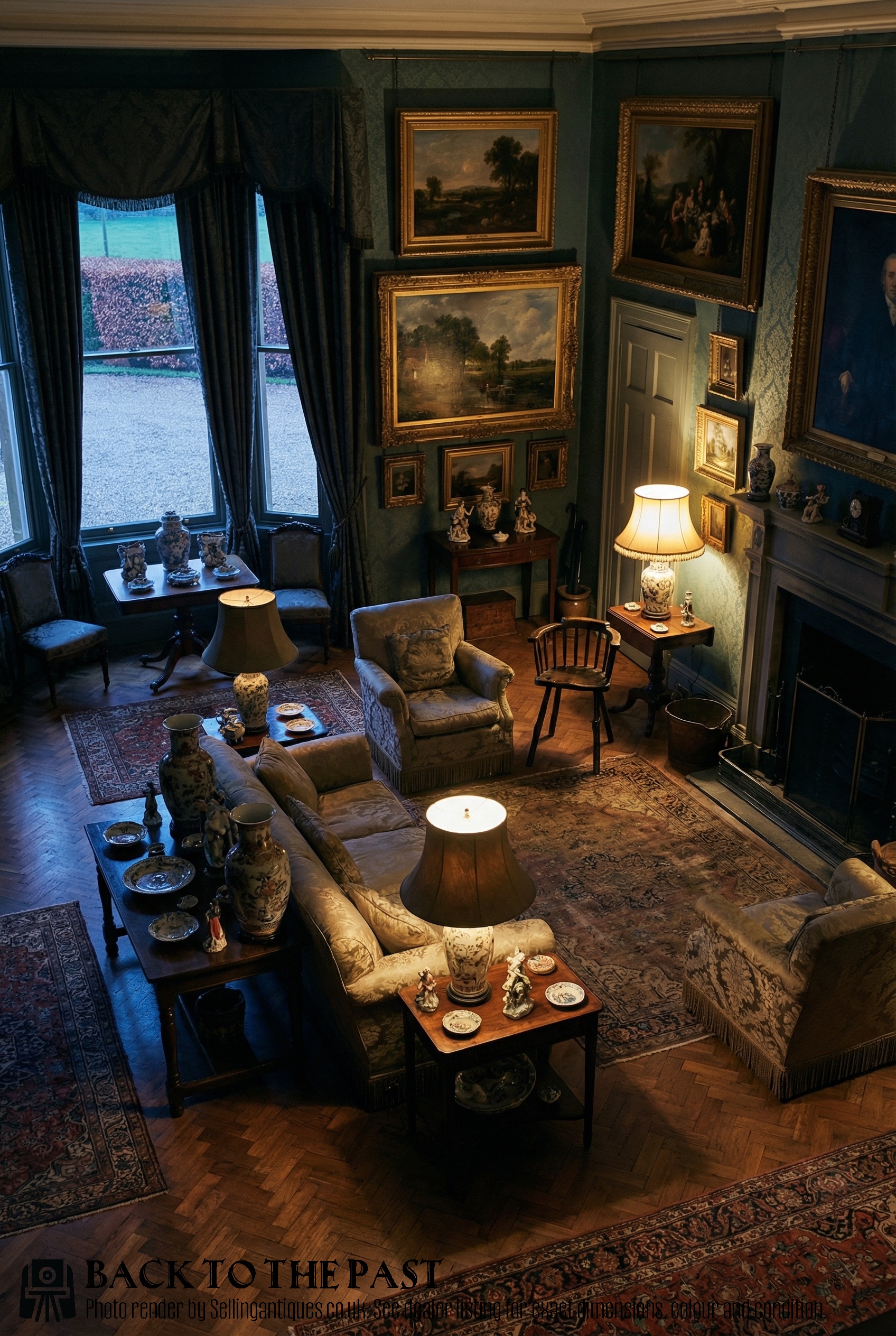
Where The Range Splits
Numbers matter more here than in almost any other seating category. Singles and pairs sit at the lower end, six is the working middle, and the sets named as eight, ten, twelve and fourteen climb from there, a fourteen sitting near the very top of the sampled range. That is arithmetic rather than quality, but it is what moves a listing up the scale.
Age does the other heavy lifting. The 17th-century joined forms, the wainscot armchairs and backstools, sit well above the middle, and the Yorkshire and Lancashire examples highest among them. Carving pushes in the same direction: armorial, heraldic, throne and Gothic pieces appear repeatedly in the upper half. Among desk chairs, leather-seated library and desk armchairs sit above plain wooden-seat office chairs.
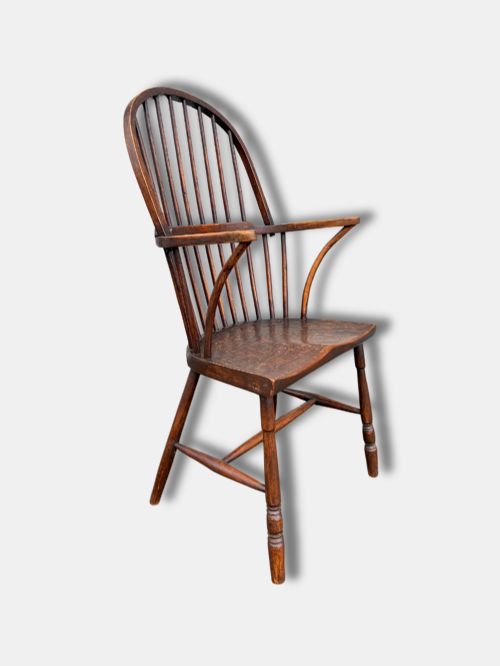
Two smaller lifts are worth knowing. A named workshop counts, and unattributed chairs of the same date sit lower. Within country seating, a stated regional identity does the same work, so Welsh stick chairs, Lancashire, Derbyshire and Orkney types hold higher positions than a chair described only as country or farmhouse.
Antique Oak Chairs Retail Price Guide 2026
Typical UK retail prices for oak chairs, calculated from the Sellingantiques database of over a million retail prices indexed since 2003. This retail price guide relies exclusively on Sellingantiques data; no external sources or auction records are used, so the figures do not describe the wider market.
Gillows of Lancaster and Shoolbred are the names that turn up from the most dealers on Sellingantiques in this category, four dealers each.
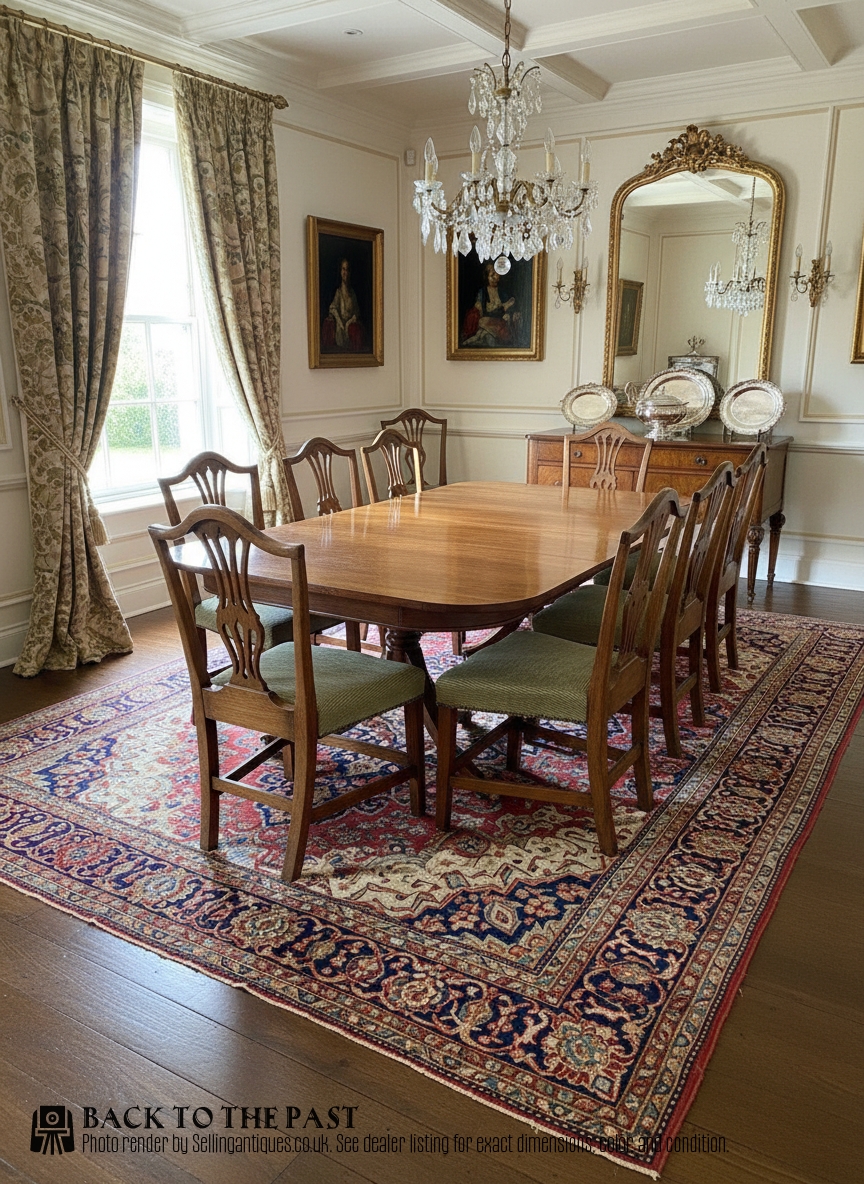
Gillows of Lancaster·Shoolbred·Heal's of London·John Taylor & Son·Charles Bevan
The Antique Oak Chairs Glossary
- Wainscot chair
- Joined oak armchair with a solid panelled back, the standard early English form. Around 159 titles use the word, across several spellings including wainscott.
- Carver
- The armchair in a dining set, usually one or two of them among six or eight side chairs.
- Hall chair
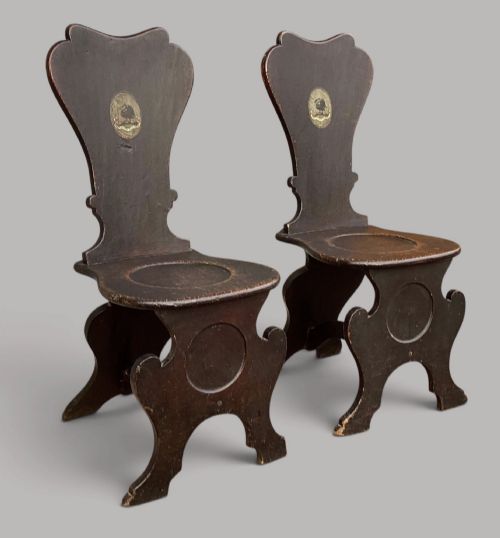
- A hard-seated chair made for an entrance hall, frequently carved with arms or a crest. Shield-back and tile-inset versions turn up.
- Revolving or swivel desk chair
- Office chair on a screw or swivel mechanism, often with a leather seat. Revolving appears in 197 titles, swivel in 132.
- Harlequin set
- A set assembled from similar but not identical chairs. Dealers use the word openly in titles, as they do matched and near pair.
- Smoker's bow
- Low-back Windsor-type elbow chair with a bowed arm rail, also called a captain's chair in these listings.
- Glastonbury chair
- X-framed folding-style armchair with a panelled back, a form that recurs through the Gothic Revival material.
Antique Oak Chairs: Frequently Asked Questions
How many oak chairs come up for sale each year?
Around 424 reach the market annually on Sellingantiques, and 321 separate dealers have listed one. It is a category almost every furniture dealer touches at some point.
That volume is spread widely rather than concentrated, which is why the styles on offer at any one time range across three centuries.
Are most of these chairs 17th century?
No. The 17th-century material is real but a minority, with about 215 listings carrying that date and 179 for the 18th century.
Against that, 19th Century accounts for close to 700 and the 1900 to 1939 decade buckets together carry well over a thousand. Victorian is the single most-cited style word in titles.
What is a wainscot chair?
A joined oak armchair with a solid panelled back, made by joiners for hall and parlour use. It is the signature early form in this category, with 159 titles using the word.
Backstools are the related seat without arms, essentially a stool given a back. Both recur in Yorkshire and South Yorkshire entries, and the 17th-century Yorkshire wainscot chairs sit at the top of the range.
Do oak dining chairs sell in sets or singly?
Both, and set language runs right through the titles. Six is the commonest number stated, then four, then eight, with tens, twelves and a fourteen appearing in the sampled range.
Pair appears in roughly a fifth of titles too, so pairs are as familiar as full sets. Words like harlequin and matched show up where the chairs were brought together later.
Why are there so many oak office chairs?
Oak suited institutional and desk furniture in the late 19th and early 20th centuries, and the desk strand makes up about an eighth of listings.
It is a mechanical group by antique standards: 197 titles say revolving, 132 say swivel, and adjustable-height and reclining versions both appear. Leather seats are common among them.
Which country and regional types turn up?
Welsh leads, in around 194 titles, covering spinning chairs and stick chairs. Yorkshire, Lancashire, Derbyshire, Suffolk, Orkney, the Northern Isles and Carmarthenshire all appear.
Farmhouse, Windsor, ladderback and rush-seated chairs fill out the vernacular side, along with lambing chairs and smokers' bows. Continental examples are the scarcer end, with French the most frequent of them.