

Antique Tub Chairs
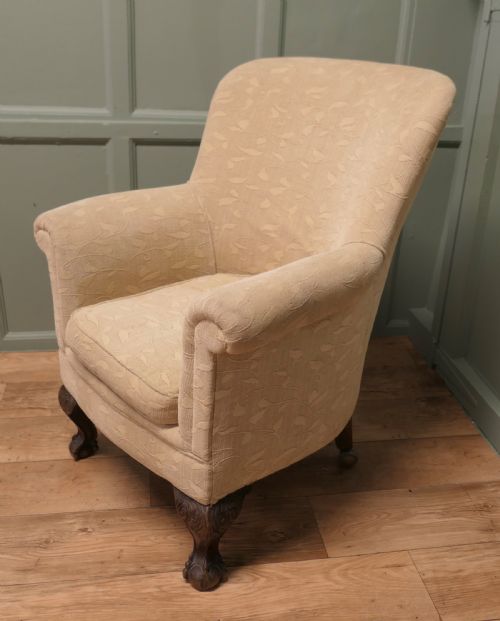
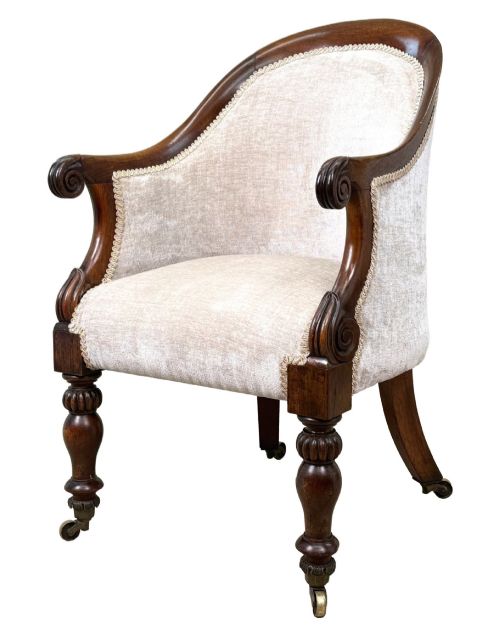
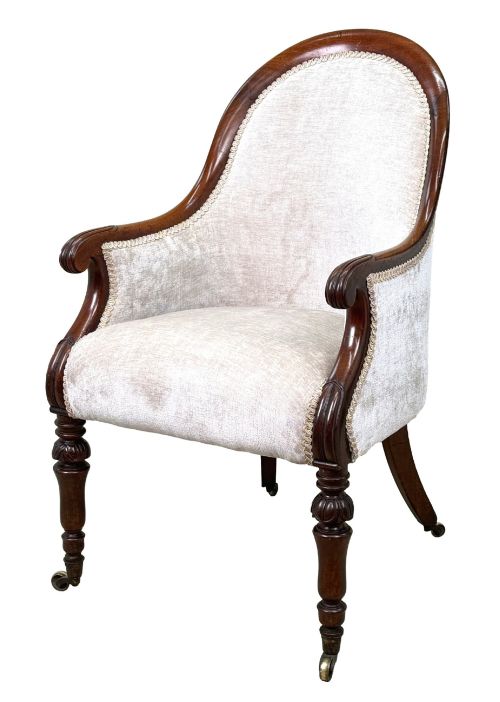
A tub chair is a low armchair whose back curves round without a break to form the arms, built to enclose the sitter for reading, writing or sitting close to a fire.

Antique Tub Chairs
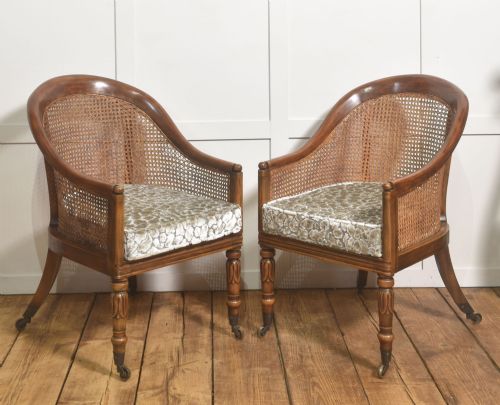
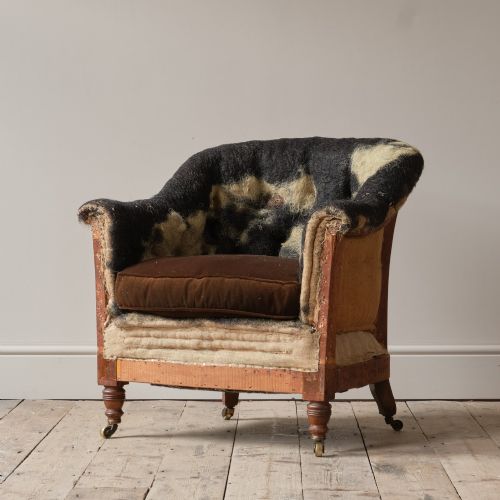
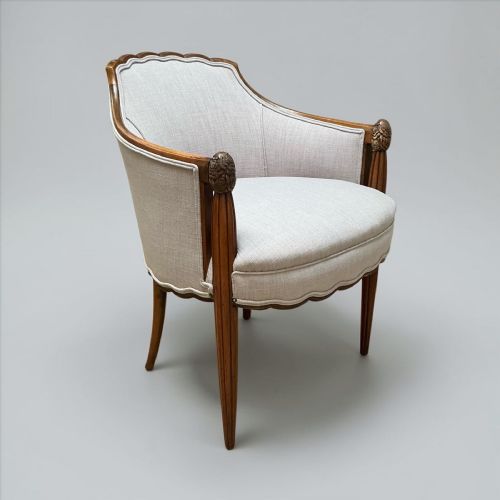
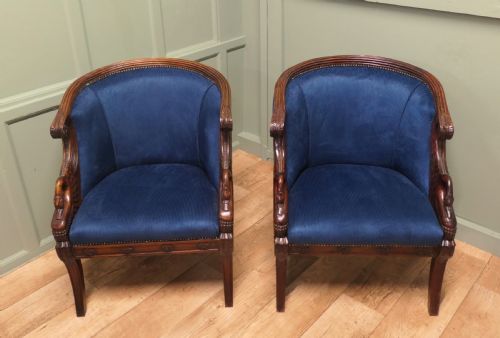
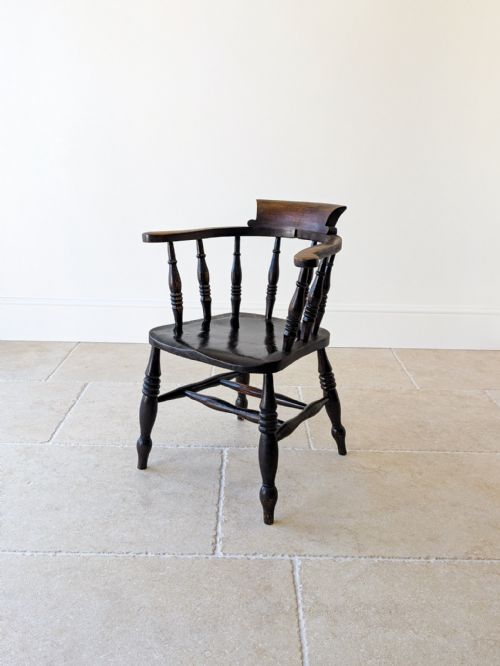
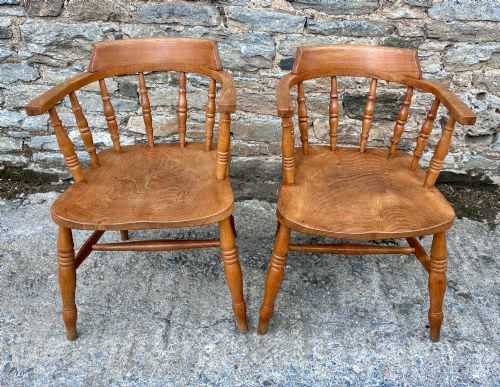
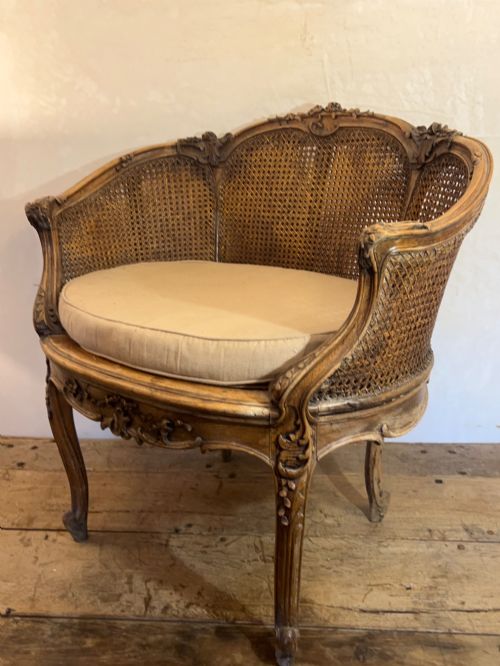
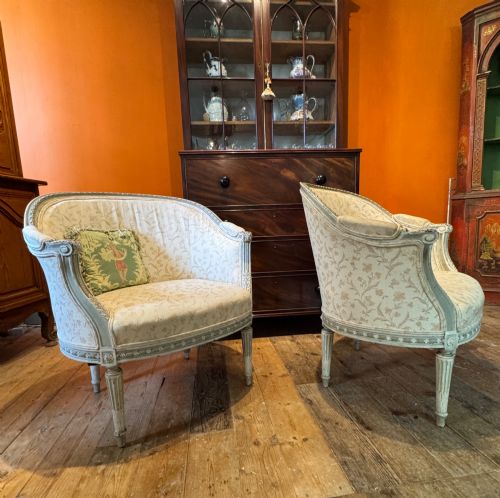
The form emerged in Britain and France around the turn of the nineteenth century, the enveloping back meant to shelter whoever sat in it. On Sellingantiques the heading covers a wide family: mahogany-framed salon and desk chairs, caned bergere tubs, buttoned upholstered chairs, French tub armchairs, and the turned-spindle smoker's bow, filed here for its identically curved bow back.
The chair you're most likely to meet is a late Victorian or Edwardian mahogany-framed tub, often inlaid. Mahogany runs through 203 of 778 titles, Edwardian through 157 and Victorian through 147, with inlay in 68. Walnut appears too, and rosewood in smaller numbers. Show-wood frames with an upholstered seat and back are the standard arrangement.
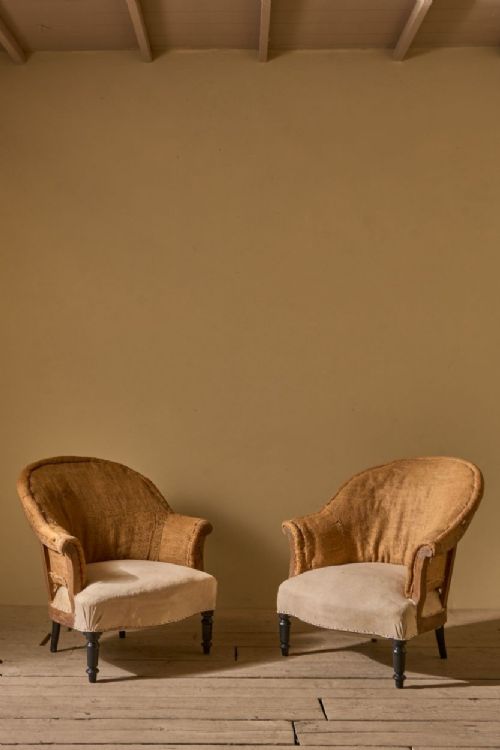
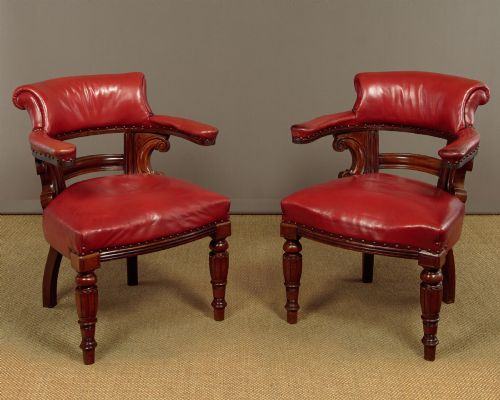
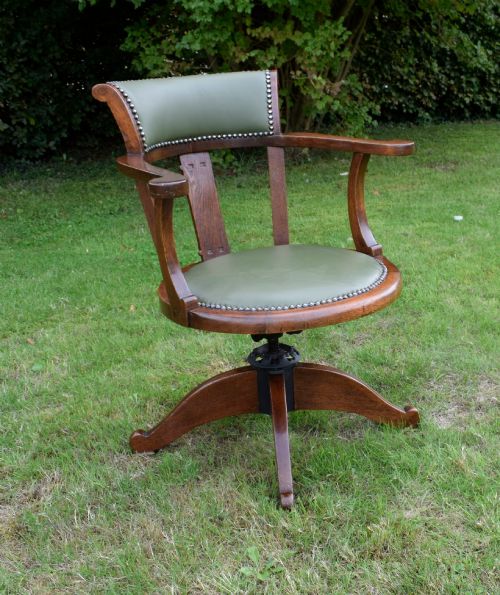
Four other branches recur. Desk, office and library tubs, some on revolving or swivel bases, make up about one in six. Smoker's bow and captain's chairs, with turned spindles over a solid elm or beech seat, run to roughly one in eight and are rising in live stock. French bergere, Napoleon III, Louis and Empire tubs form a similar share, and a smaller 1920s and 1930s group covers Art Deco, club and cocktail models.
Pairs are the defining unit. "Pair" leads every term in the archive at 254 titles, so you'll meet these in twos as often as singly, and sets of four, six and once twelve smoker's bows have passed through. Dating is mostly banded rather than exact: 19th Century accounts for 170 entries, Edwardian 115, Victorian 101, with decade tags clustering between 1880 and 1930 and Regency the only substantial earlier bracket.
Where The Range Splits
Timber and decoration do most of the work. Inlaid mahogany, walnut and rosewood frames sit above the plain oak, beech and elm chairs, and carving appears in only a handful of titles. Upholstery pulls in the same direction: leather runs through 85 titles and deep buttoning through more than sixty combined, both reading higher than plain fabric.
Number matters as much as material. Pairs climb steadily through the range and the top of the archive is almost entirely pairs and sets rather than singles, with the largest sets of smoker's bows at the very top. A single plain Victorian or Edwardian chair sits at the other end of the same catalogue.
Date and attribution mark the ceiling. Regency and William IV frames sit well above the Edwardian mainstream, and cluster in the upper samples alongside bergere library forms. An attributed frame does the same, though attribution is uncommon rather than routine.
Antique Tub Chairs Retail Price Guide 2026
Typical UK retail prices for tub chairs, calculated from the Sellingantiques database of over a million retail prices indexed since 2003. This retail price guide relies exclusively on Sellingantiques data; no external sources or auction records are used, so the figures do not describe the wider market.
Pairs are the usual unit: the word appears in 254 of the 778 tub chair titles on Sellingantiques.
Gillows
The Antique Tub Chairs Glossary
- Tub chair
- Low armchair whose back curves round without a break to form the arms. The seat is usually upholstered and the back often is too, within a show-wood frame.
- Show wood
- The exposed polished frame around the upholstery. Titles such as "show-wood button-back tub armchair" use it to say the timber is on view rather than covered.
- Button back
- Upholstery drawn into a pattern of buttons, sometimes deep. "Button" appears in 23 titles and "buttoned" in 19, and it runs across both English and French chairs.
- Smoker's bow
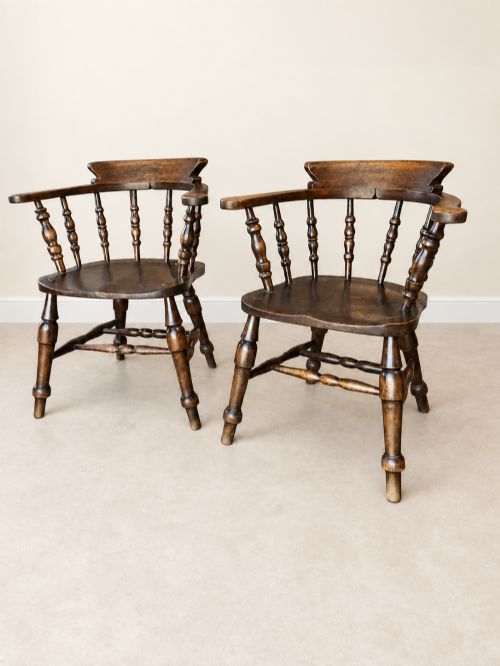
- Turned-spindle chair with a curved bow forming back and arms over a solid saddle seat. Twenty titles use the term; dealers also call the same form a captain's chair, often on a swivel or desk base.
- Bergere
- Used here for a tub chair with caned or upholstered enclosed sides. It turns up in 40 titles, mostly on French and library examples.
- Crapaud
- Squat, low-slung French upholstered tub form. It appears once across the whole archive, so it is a term you meet rather than one you rely on.
Antique Tub Chairs: Frequently Asked Questions
What is a tub chair?
A low armchair whose back sweeps round in a horseshoe or barrel form to meet the arms, with no break between the two. The seat is upholstered, and the back often is as well.
It developed in Britain and France around 1800 as a fireside and writing chair, the curved back enclosing the sitter.
Why are so many sold in pairs?
Pairs are the defining unit in this category. "Pair" appears in 254 of 778 titles, more often than any other term, so buyers meet tub chairs in twos about as readily as singly.
Sets go further at the upper end. A set of four, a set of six and, once, a set of twelve smoker's bow chairs have all passed through Sellingantiques.
Are smoker's bow chairs really tub chairs?
Dealers file them here because the bow forms a continuous curved back and arms, the same enveloping line as an upholstered tub.
The construction is different: turned spindles under the bow, a solid elm or beech saddle seat, no upholstery. Some sit on swivel or desk bases, which is why the captain's chair label attaches to the same form.
They account for about one in eight listings, and a larger share of current stock.
How old are most of these chairs?
The dating runs from 1700 to 1940, but much of it is banded rather than exact. 19th Century covers 170 entries, Edwardian 115 and Victorian 101, placing a lot of pieces in a twenty to sixty year window.
Decade tags cluster between 1880 and 1930. Regency, at 22 in the dated field, is the only substantial earlier bracket, and pre-1800 entries appear as isolated outliers.
Which woods turn up in the frames?
Mahogany dominates, in 203 titles, and is frequently inlaid. Walnut follows at 49, with rosewood in smaller numbers.
Oak appears in 50 titles, and elm and beech in 18 each, mostly on the spindle-backed bow chairs where the seat is cut from the solid.
Do unusual versions of the form exist?
A few, and each turns up only once. A five-leg Victorian tub, a button-back tub rocking chair, a conversation seat with two revolving tub armchairs, and a child's caned tub highchair are among them.
Small-scale chairs recur more quietly, with "small" in 15 titles alongside several child's tubs and a boudoir chair.
Origins stray too: Swedish, Venetian, Italian, Syrian and Anglo-Indian examples each appear a handful of times beyond the English and French mainstream.