



Antique Bobbin Chairs
A chair whose frame is turned on a lathe into rows of bead-like swellings, made for bedrooms, halls, dining rooms and country kitchens.
Antique Bobbin Chairs
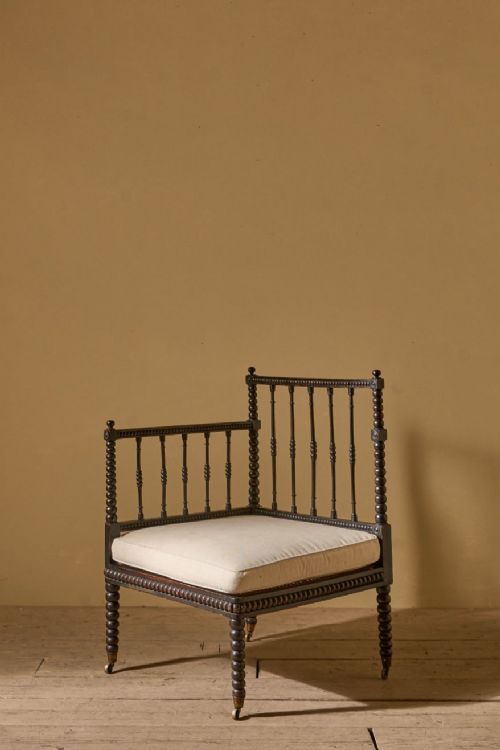
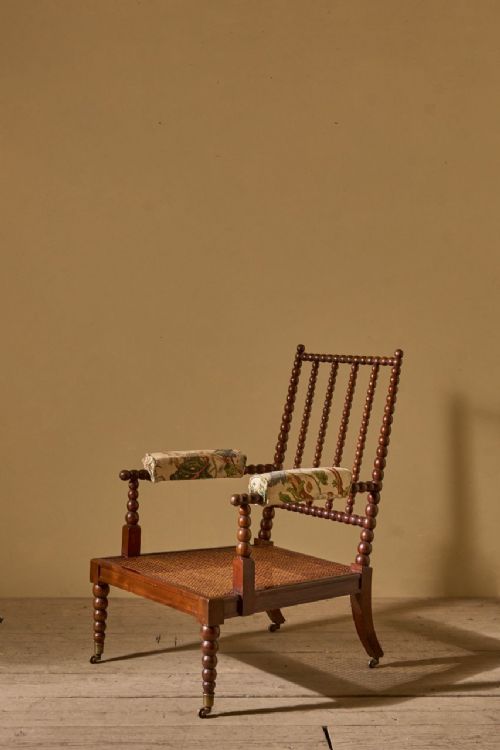
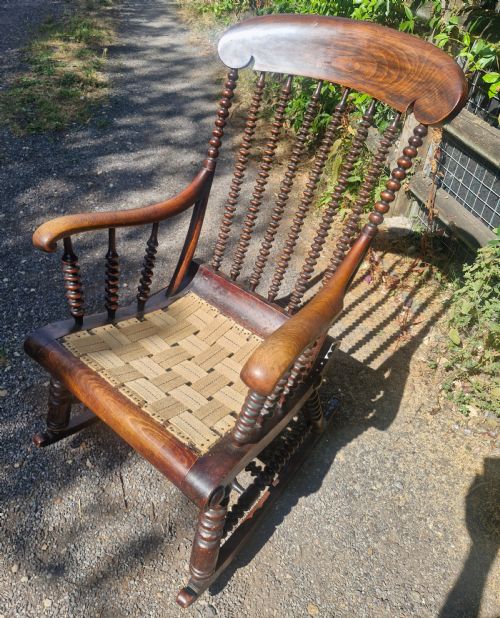
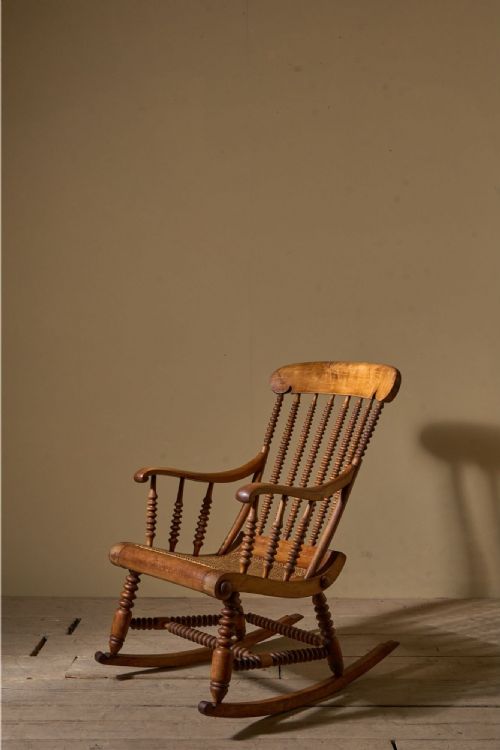
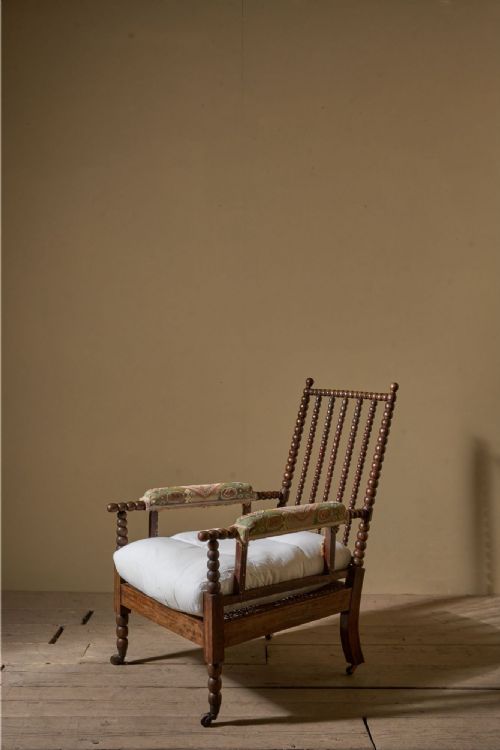
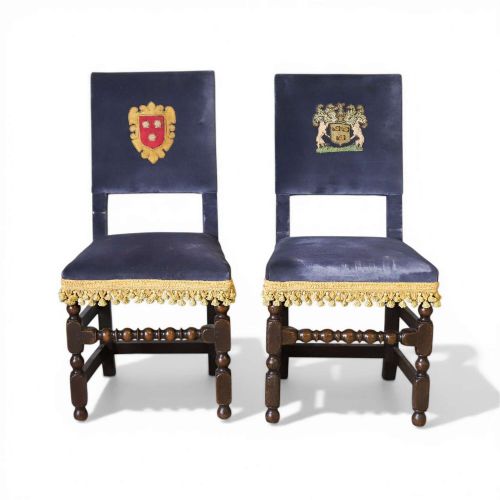
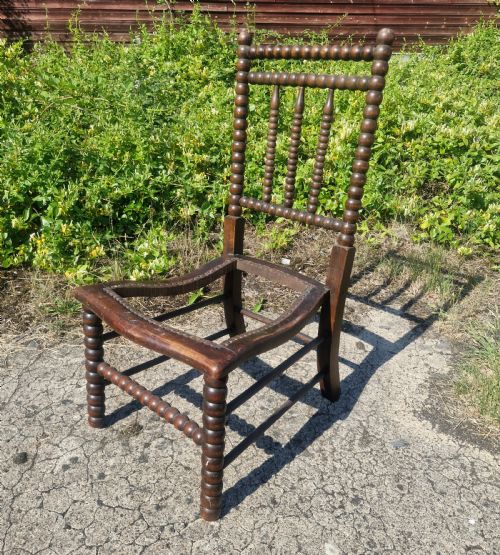
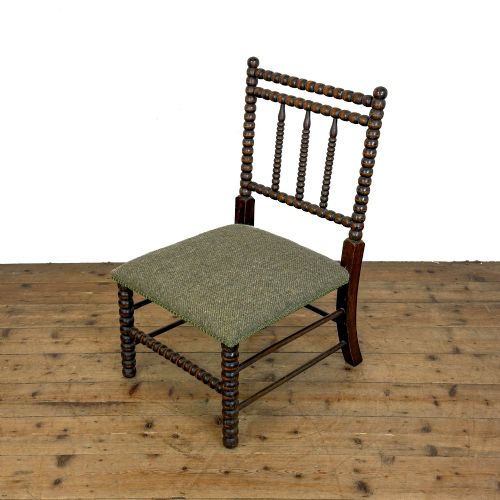
Bobbin turning is a row of bead or spool shapes cut on a lathe, run along back uprights, spindles, arms and legs. The technique goes back to the 17th century, when turners built whole chairs from turned members, and it came back strongly in the 19th century because it gave decorative effect quickly, without carving.
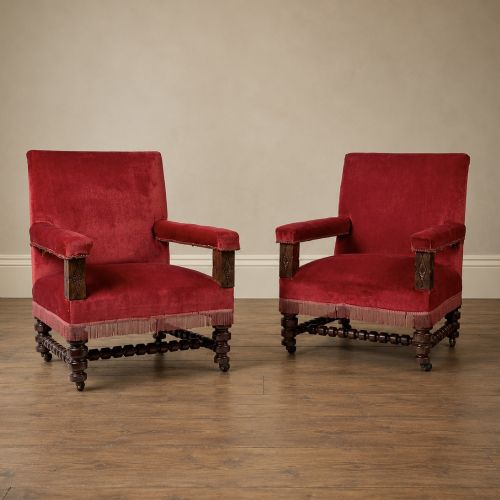
What you'll meet on Sellingantiques is overwhelmingly 19th-century English seat furniture. Oak is the most-named timber, with beech, walnut, rosewood and ebonised or simulated finishes behind it. The commonest single form named in titles is the armchair, and open armchairs of William IV, Regency and Victorian type turn up throughout, some on brass cup castors.
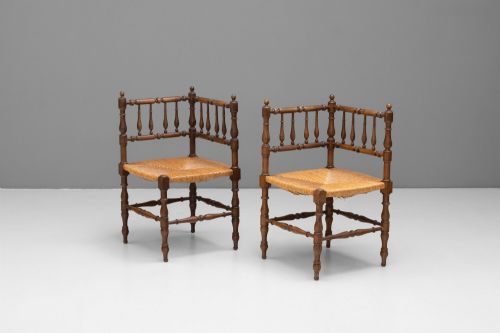
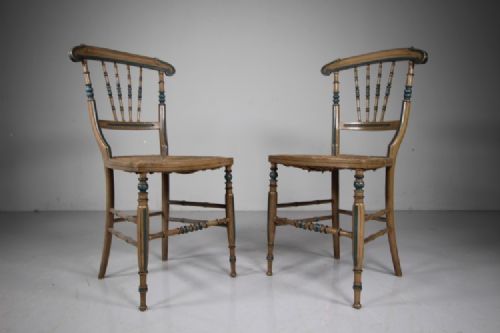
Beyond the armchair the category spreads wide. Small bedroom, side and slipper chairs make up a large minority. Corner chairs are a persistent sideline at about one in ten, often offered in pairs and in matched pairs assembled from separate chairs. Rocking chairs, children's chairs and sets of dining and kitchen chairs each hold a smaller share.
Dating is mostly by broad label rather than year. "19th Century" alone accounts for 96 listings, with Victorian and Regency next and decade labels thin. Seven listings are dated 17th century, but those are the wainscot, backstool, turner's and Lancashire chairs grouped alongside rather than bobbin work proper.
Where The Range Splits
Count comes first. Singles sit at the bottom of the range, pairs and sets in the upper half. "Pair" appears in 46 titles, and the samples run to threes, fours, sixes and eights, including a harlequin set of four in ash and elm. A single small bedroom or child's chair sits at the other end.
Form and timber then sort the rest. Open armchairs sit consistently above side and bedroom chairs, and the top of the range is held by pairs of Regency ebonised and rosewood armchairs. Simulated rosewood and stained beech fall well below solid rosewood, walnut and ebonised work.
Period label and scale push in the same direction. Regency and earlier pieces cluster high, while the broad "19th Century" label spans the whole range. Titles reaching for size, using large, ample, oversized, good sized or deep seated, sit in the upper half as well.
Antique Bobbin Chairs Retail Price Guide 2026
Typical UK retail prices for bobbin chairs, calculated from the Sellingantiques database of over a million retail prices indexed since 2003. This retail price guide relies exclusively on Sellingantiques data; no external sources or auction records are used, so the figures do not describe the wider market.
Origins named in titles on Sellingantiques are nearly all English, with single strays from Scotland, Wales, Yorkshire, Ireland, Sweden, France and Italy.
The Antique Bobbin Chairs Glossary
- Bobbin turned
- Frame members turned into a row of bead or spool swellings. The phrase carries 48 titles, about a fifth of the category.
- Bobbin framed
- Used where the whole visible frame is bobbin-turned, often on an upholstered chair, as opposed to bobbin back, where the turning is concentrated in the uprights or spindles.
- Corner chair
- Seat set diagonally with the back running across one corner. Twenty-two titles, several with rush or cane seats, and pairs are common.
- Elbow chair
- Older trade term for an open armchair. It appears in several titles alongside the plainer word armchair.
- Simulated or faux
- Cheaper timber grained and finished to imitate something else, nearly always rosewood or bamboo. Nine titles use simulated; ebonised, meaning stained and polished black for ebony, carries twelve.
- Harlequin set
- Chairs of similar but not identical pattern brought together as a set. A matched pair works the same way with two.
Antique Bobbin Chairs: Frequently Asked Questions
How many bobbin chairs come up each year?
About 26 a year come to market on Sellingantiques, and 84 different dealers have listed one at some point.
That spread means almost every dealer who handles them handles only one or two. They arrive as one-offs rather than from specialists in the form.
What period are most bobbin chairs?
The great bulk are 19th century. "19th" appears in 69 titles, and 96 listings give no more than the words "19th Century".
Victorian and Regency labels come next. A handful reach into the 1900s, with Edwardian and 1910s to 1930s labels in the samples, and the dated field runs as late as 1940.
Which timbers turn up in this category?
Oak leads, named in 44 titles. Beech, walnut and rosewood follow, along with ash and elm in country sets.
Ebonised finishes appear in twelve titles. Simulated and faux surfaces show up in nine or so, standing in for rosewood or bamboo.
Are bobbin chairs sold singly or in pairs?
Both, in near equal measure. "Pair" carries 46 titles and "chairs" another 46, against a large body of single chairs.
Sets of three, four, six and eight all appear. Corner chairs arrive in pairs unusually often, sometimes as matched pairs put together from separate chairs.
Why are 17th-century chairs listed under this heading?
Seven listings carry a 17th-century date, and a couple of samples go back before 1700. They are the oldest things in the category.
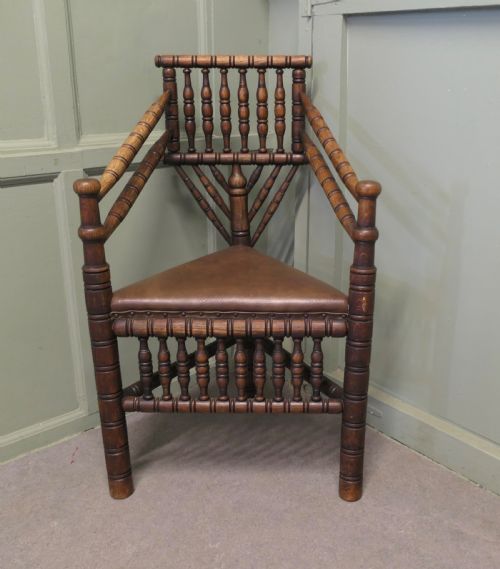
These are turner's or "Old Saxon" chairs, wainscot chairs, backstools and Lancashire chairs, grouped here as related turned and country seating rather than as bobbin work.
What unusual forms appear among bobbin chairs?
The category is mostly armchairs, side chairs, corner chairs and rockers, but the tail is varied.
Among the odder single forms to pass through are a child's deportment chair, a metamorphic library armchair that converts to steps, a swivel desk chair, a spinning chair and a miniature pair.