2,455  PAGES BROWSED TODAY PAGES TODAY 0 ANTIQUES UPLOADED TODAYNEW ARRIVALS
Childs Chairs
Childs Chairs
LATEST STOCK
Sort Order
Items Per Page
Browse Categories
Sort order
Items per page
↓ Select a category No. of items
Home > Chairs > Childs Chairs > Page 1

Antique Childs Chairs

140 items · page 1 of 9
Page 1 of 9

Seating built deliberately small for children: country Windsor chairs, tall feeding chairs, rockers and scaled-down drawing-room armchairs, made in the same timbers and back patterns as the full-size chairs they stood beside.

£110
2 WEEKS AGO
chairs
£290
2 WEEKS AGO
chairs
£900
2 WEEKS AGO
chairs
£110
2 WEEKS AGO
chairs
£650
1 MONTH AGO
chairs
£150
2 MONTHS AGO
chairs

Yew turns up in 38 child's chair titles on Sellingantiques, spelled out as 'yew wood' in 29 of them.

£120
2 MONTHS AGO
chairs
£220
3+ MONTHS AGO
chairs
1 2 3 4 5 ... 9
Sellingantiques  ·  Guide 4142026/2027 edition
Chairs

Antique Childs Chairs

Seating built deliberately small for children: country Windsor chairs, tall feeding chairs, rockers and scaled-down drawing-room armchairs, made in the same timbers and back patterns as the full-size chairs they stood beside.

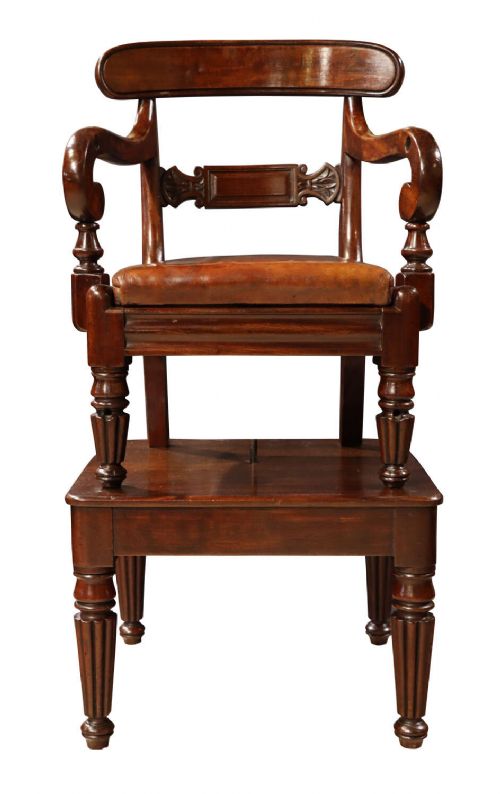
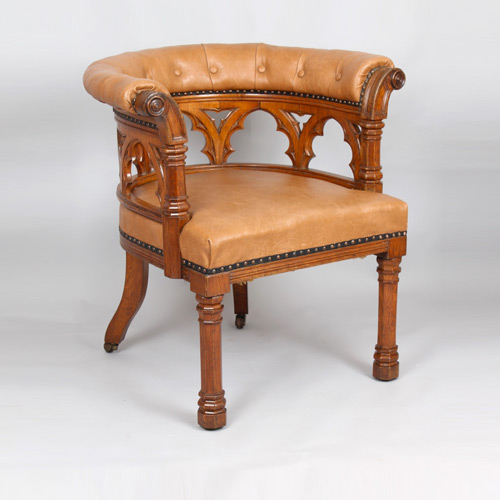
Childs chair upholstered in buttoned leather, rosewood carved and turned frame, C 1840
Plate I  ·  Childs Chair Upholstered in Buttoned Leather, Rosewood Carved and…, 19th CenturyRobert Belcher Antiques
The category

What Are Antique Child's Chairs?

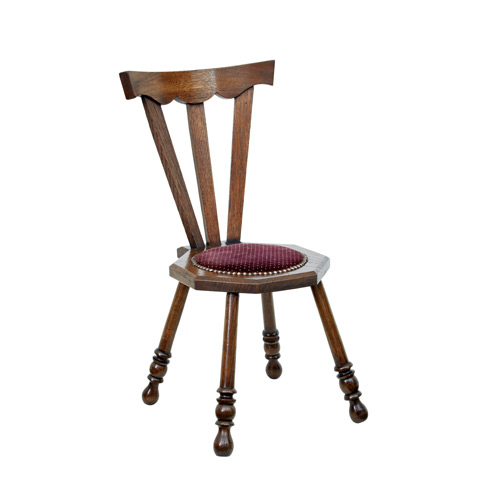
The word "child" appears in half the titles on Sellingantiques, and "Windsor" in a further slice of them, so the likeliest thing you're looking at is a 19th-century country child's chair of Windsor type: turned legs and spindles socketed into a solid shaped seat, in elm, ash or yew, sold on its own. Elm and ash are the timbers named most often.

Back forms carry the description where a maker's name would sit elsewhere. Stick back, hoop back, wheelback, bar back, scroll back and low back all recur, and "primitive" turns up alongside the plainer stick-back examples. Titles tend to be short: the wood, the back, the period.

Beyond the Windsors, four other strands run through the category. High chairs and feeding chairs are the next largest group, some sold as a high chair and table or on a stand. Rocking chairs form a smaller band, including rocking armchairs and a lambing form in child size. Polished-timber chairs in mahogany, walnut and rosewood, bergere among them, make up around one in five. Orkney chairs with woven straw backs are a small but steady presence.

Dating is usually a period label rather than a year. "19th Century" alone accounts for a large share, with Victorian, Georgian and Regency behind it, so read that as a century-wide estimate. Where a clean year is given, the range runs from 1700 to 1930, with weight in the Victorian core and either side of 1900. Non-British examples are scarce; French, Swedish, Spanish, Dutch, Chinese and American chairs each surface only a handful of times.

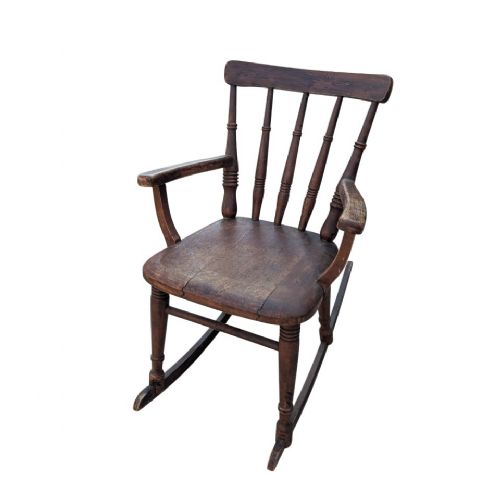
Childs rocking chair 19th century
Plate II  ·  Childs Rocking Chair 19th CenturyElaine Phillips Antiques Ltd
What sets them apart

Where The Range Splits

Timber does a lot of the sorting. Yew is named in a good number of titles, often spelled out as "yew wood", and those chairs cluster in the upper part of the range. Ash and elm, the everyday country woods, run through the middle and lower bands. Stated age works the same way: 17th-century and early 18th-century labels, including wainscot and Jacobean forms, sit at the very top, while bentwood and woven-fibre chairs of the 1900s to 1930s sit at the bottom.

Form matters next. Armchairs sit above side chairs, and the broad-arm, corner and winged-back examples appear well up the range. Anything that does more than one job climbs too: metamorphic high chairs that drop into a low chair and table, chairs on their original stand, and high chair and table pairings all show up in the higher bands.

Surviving decorated surface is the third lever. Painted chairs are a recurring note, with original paint, original blue paint, folk painting and painted sycamore among them, and they read upward. Pairs and sets are the exception rather than the rule, so where they do appear, two or more together pushes above the single chair.

The market

Retail Price Guide 2026

Entry-levelUnder £200
Typical prices£200 – £800
Premium examplesOver £800

Typical UK retail prices for childs chairs, calculated from the Sellingantiques database of over a million retail prices indexed since 2003. This retail price guide relies exclusively on Sellingantiques data; no external sources or auction records are used, so the figures do not describe the wider market.

From the Sellingantiques archive

The Orkney chair, a straw-backed Scottish form, has appeared in child size twenty times on Sellingantiques.

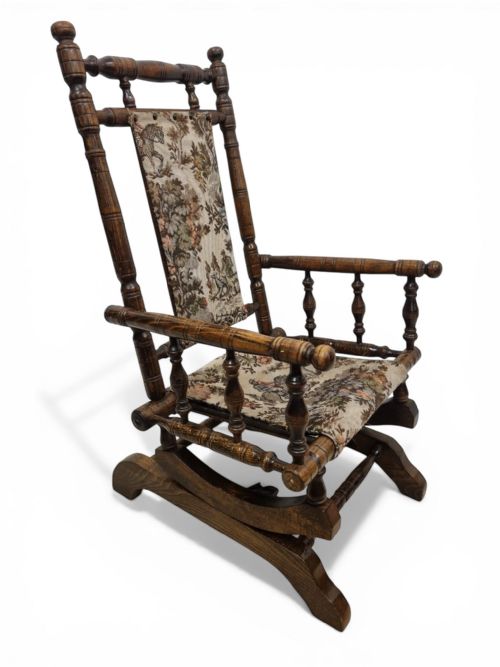
Early 19th century Elm Child's chair
Plate III  ·  Early 19th Century Elm Child's Chair, GeorgianWalton House Antiques
Terms antiques dealers use

The Antique Childs Chairs Glossary

Windsor
Chair with turned legs and spindles socketed into a solid shaped seat. The single most common form named in this category.
Stick back
Back made of plain turned or shaved sticks with no central splat. Often paired with the word primitive.
Hoop back
Back rail bent into a continuous hoop or bow over the spindles. Also written bow back.
Wheelback
A Windsor whose pierced central splat is cut as a wheel. Bar back describes the alternative, a horizontal top bar instead of a hoop.
Metamorphic
A high chair that converts to a low chair and table. Appears around ten times in the archive, several on their original stand.
Correction chair
Tall narrow chair meant to hold a child upright, also listed as correctional or deportment. A small recurring group, as are commode and potty chairs with a seat aperture.
Questions people ask

Frequently Asked Questions

How many child's chairs come up each year?

About 62 come to market on Sellingantiques in a year, and 176 different dealers have listed one at some point.

That spread tells you it's a category almost every general furniture dealer touches occasionally, rather than anyone's specialism.

Which wood is most common?

Elm and ash are the timbers named most often in titles, which fits the country Windsor chairs that dominate the category. Beech also appears among the vernacular pieces.

Yew is named in a good number of titles and tends to be spelled out as "yew wood". Those chairs sit in the upper part of the range.

Mahogany leads the polished-timber strand, with walnut and rosewood behind it.

What does a listing dated 19th Century mean?

It's a period label, not a decade. "19th Century" alone accounts for the largest block of dated listings, so read it as a century-wide estimate.

Only some listings carry a clean year. Where they do, the range runs 1700 to 1930, with a scatter of 17th-century and "Before 1700" labels at the top end.

Are these chairs sold singly or in sets?

Singly, for the most part. Pairs appear in a modest number of titles, and larger groups are unusual.

The biggest group recorded in the archive is a set of six elm-seated stacking chairs.

What is an Orkney chair?

A Scottish form with a woven straw back over a wooden frame, often listed as oak framed. It turns up in child size around twenty times.

It's one of the few named regional types with a real presence in this category, alongside a scattering of Arts and Crafts, aesthetic movement and bentwood pieces.

Do child's chairs carry maker's names?

Not as a rule. The evidence from titles and descriptions on Sellingantiques returns no maker names as a normal feature of the category.

What carries the description instead is the timber, the back form and the period. Regional words like Welsh, West Country and Lancashire appear, but only as scattered single titles.

65,829
Antiques For Sale
0
Antiques Approved Today
1,666
Antique Uploads This Month
438,940
Total Antiques Sold
items
Add keywords to the filter
Price
£100
£250000
Era
Movements
Material
Origin
Stock Location
Freshness
Online Payments
Categories