
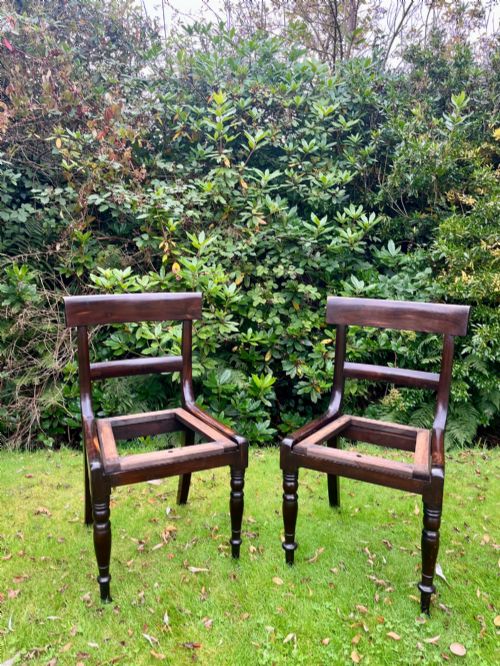
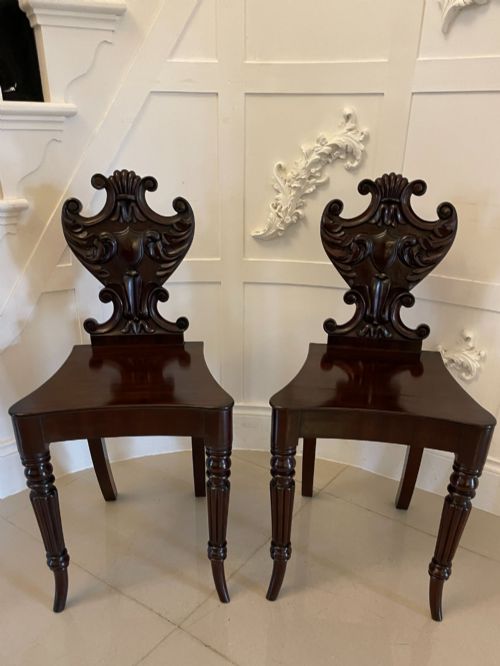
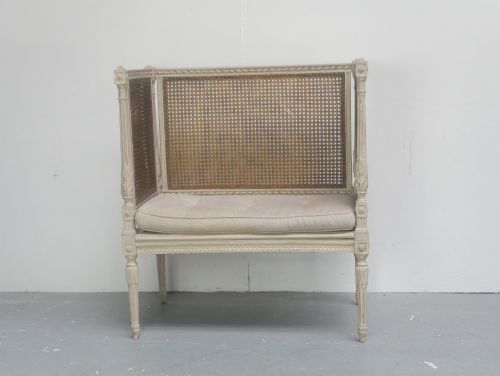
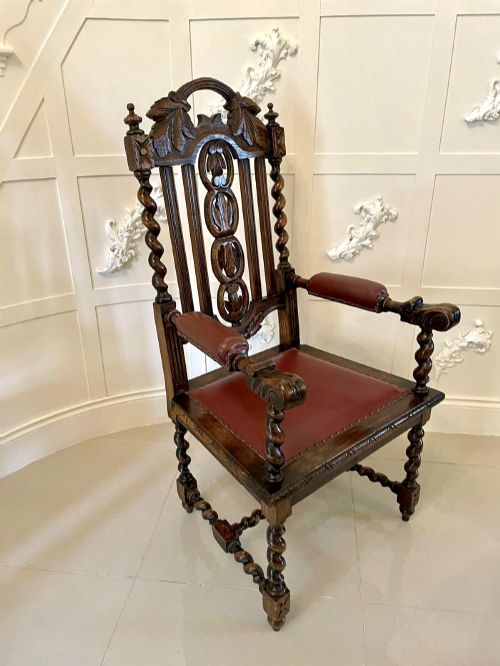

Antique Hall Chairs
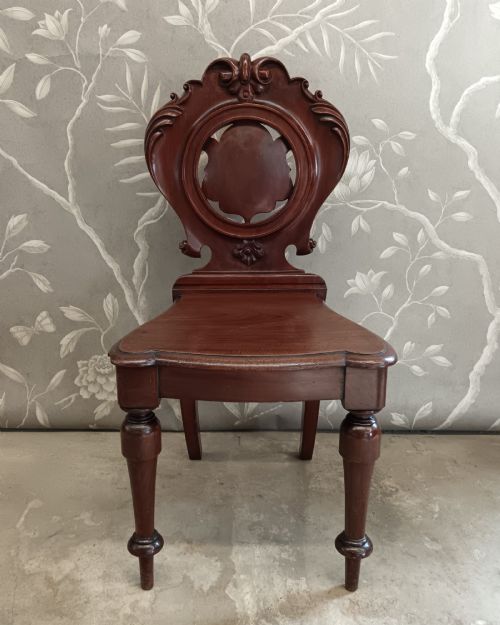
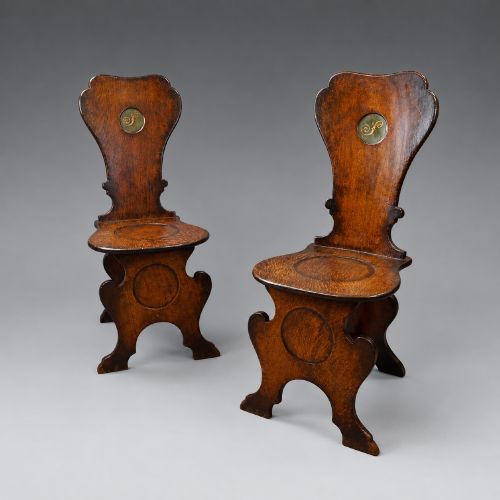
A hard-seated, mostly unupholstered single chair with a solid shaped back, made for an entrance hall or passage where callers, messengers and servants waited.
Antique Hall Chairs
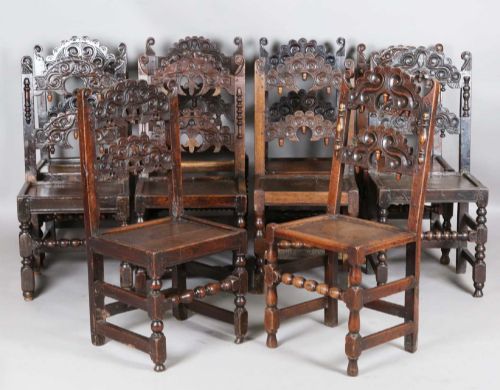
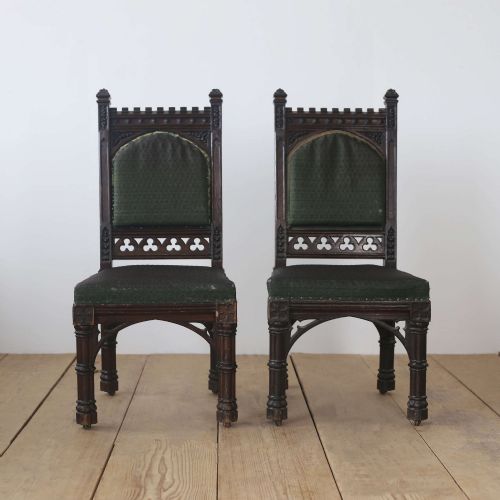
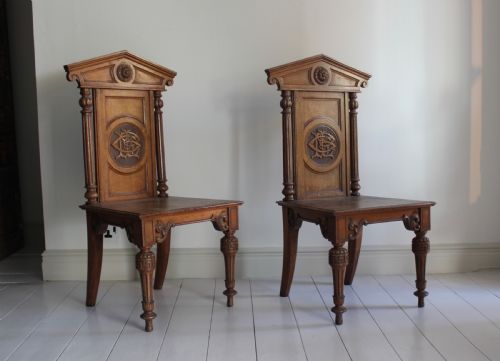
The hall chair is an English house-furnishing type of the 18th and 19th centuries. No upholstery, so it could take a caller in outdoor clothing, and a solid back that was often carved, painted or fitted with a crest to say whose house you were standing in. They were made two at a time, one for each side of the hall.
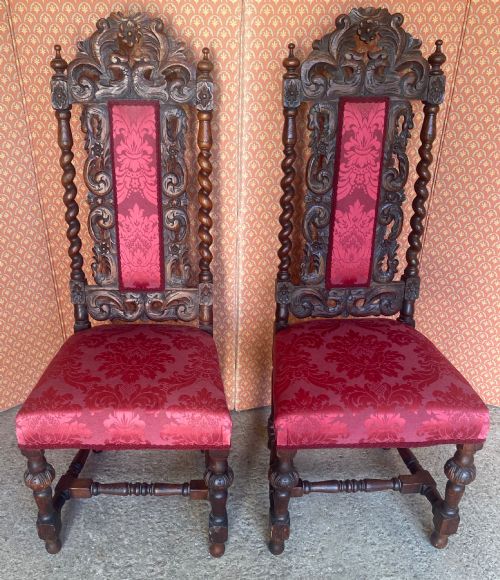
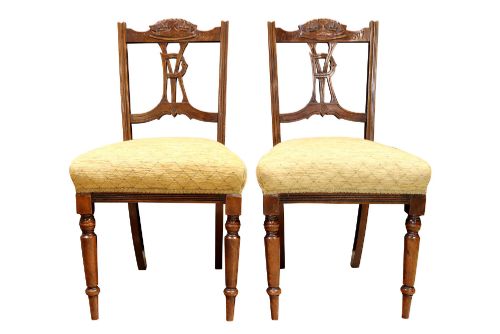
That pairing still governs the category. "Pair" appears in 696 of 1,332 titles on Sellingantiques, and the chair you are most likely to meet is a Victorian or Regency pair in oak or mahogany with a carved back. Oak leads the timbers at 416 titles, mahogany follows at 390, and "Victorian" runs through 330.
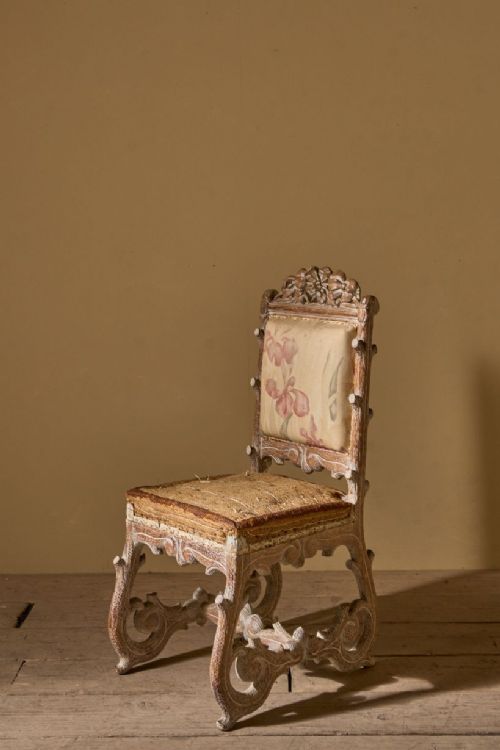
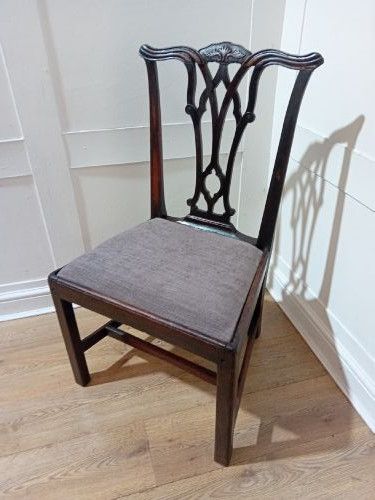
The heading is broader than the strict type. Roughly a quarter of listings are single side, occasional, bedroom or dining chairs, a share that has been rising in current stock. Gothic, Carolean and Renaissance revival carved oak makes a smaller distinct group, with Gothic in 99 titles. Sgabello and X-frame forms, wainscot chairs and backstools, benches, settles and the deep leather porter's chair all sit under it too.
Dating is broad rather than exact. The dated field runs 1700 to 1930, but only 405 listings pin a clean year, and 19th Century and Victorian together dominate ahead of Regency, 18th Century, Georgian and 17th Century. Expect a bracket, and read a single year in a title as the dealer's estimate.
Top And Bottom
Number counts first. The highest-priced listings in the archive are not single hall chairs at all but sets: six in figured mahogany, six in Italian walnut, four marquetry side chairs dated 1715. Singles in Victorian oak or mahogany sit at the other end, and a pair sits between the two.
Then decoration and timber. Carving turns up in 231 titles, with inlay, paint, shield backs, armorial and heraldic work appearing well up the range. Figured mahogany, walnut and rosewood sit above plain oak and pine, and phrases like pollard oak and faded mahogany recur in the higher titles.
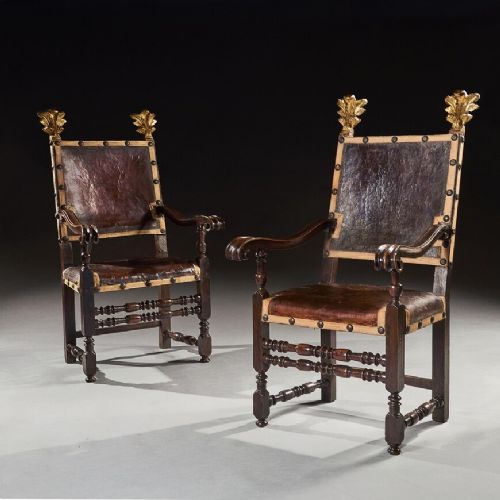
Age and a name lift the rest. The 17th and 18th century examples stand above the Victorian mass, and an attribution helps, whether a title says by, stamped, attributed to, or in the style of. Hall seating other than chairs behaves the same way: the leather porter's chair, hooded and wing-backed, keeps to the upper reaches of the range.
Antique Hall Chairs Retail Price Guide 2026
Typical UK retail prices for hall chairs, calculated from the Sellingantiques database of over a million retail prices indexed since 2003. This retail price guide relies exclusively on Sellingantiques data; no external sources or auction records are used, so the figures do not describe the wider market.
One-offs from the archive: a chair with an inset printed tile of Cymbeline, a cast-iron hall chair, and a Swiss marquetry musical chair.
Gillows of Lancaster
The Antique Hall Chairs Glossary
- Hall chair
- Hard-seated backed chair made for an entrance hall, usually without upholstery. Leather and upholstered examples do appear in titles, so the rule is not absolute.
- Pair
- The standard unit in this category, since hall chairs were made and sold two at a time. Sets of three, four and six also occur.
- Side chair
- A single chair without arms. It appears in 177 titles and is increasingly used as the heading for chairs of this kind.
- Armorial or crest
- A carved or painted coat of arms on the back panel, marking a household. Titles say armorial or heraldic without naming the family.
- Sgabello
- Italian-derived form with a shaped solid back, plank seat and slab or trestle supports. Sometimes spelled scabello, and claimed for English mahogany, oak, fruitwood and yew as well as Italian walnut.
- Wainscot chair
- Heavy panelled-back oak armchair of 17th-century type. The related backstool is an early joined chair, in effect a stool given a back.
Antique Hall Chairs: Frequently Asked Questions
Why are hall chairs sold in pairs?
Because that is how they were made. A hall had two sides, and the chairs were bought two at a time to flank a door or passage.
The archive follows suit: "pair" appears in 696 of the 1,332 listings. Sets of three, four and six turn up as well, and the sets sit at the top of the range.
What wood are hall chairs usually made from?
Oak and mahogany between them account for most of the category, with oak just ahead at 416 titles against 390.
Walnut comes next at 114, then rosewood and elm in smaller numbers. Where a title says figured mahogany, pollard oak or faded mahogany, the piece tends to sit higher up the range.
Are all chairs under this heading true hall chairs?
No. About half the listings are pairs and sets of English hall chairs in oak or mahogany, and that group defines the heading.
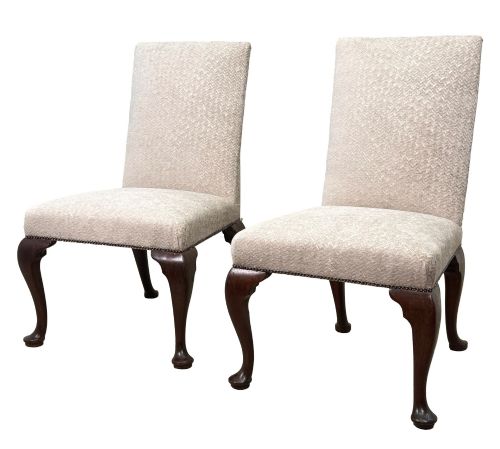
The rest takes in single side, occasional, bedroom and dining chairs, sgabello and X-frame forms, wainscot chairs and backstools, plus hall benches, settles, thrones and porter's chairs.
How old are most hall chairs on the market?
Nineteenth century, on the whole. The dated field stretches from 1700 to 1930, and 19th Century and Victorian together dominate it.
Regency, 18th Century, Georgian and 17th Century follow. Where a decade is named it clusters late, in the 1850s, 1860s, 1880s and 1900s.
Which styles show up most often?
After the reign names, Gothic is the most persistent label, in 99 titles, with 29 of those spelling it out as Gothic Revival. Carolean, Jacobean and Renaissance revival carved oak sit alongside it.
Continental and Asian forms are the thin end: Italian, French, Chinese, Qing, Black Forest, Swiss, Portuguese, Dutch, Flemish, Burmese and Ceylonese pieces each appear only a handful of times.
Does a maker's name appear on hall chairs?
Rarely. Gillows is the one name that recurs, handled by eight dealers, and titles reach it by way of stamped, by, attributed to, or in the style of.
Most hall chairs carry no name at all. What the listings do record instead are crests and armorials, described as heraldic or armorial without the family being identified.