
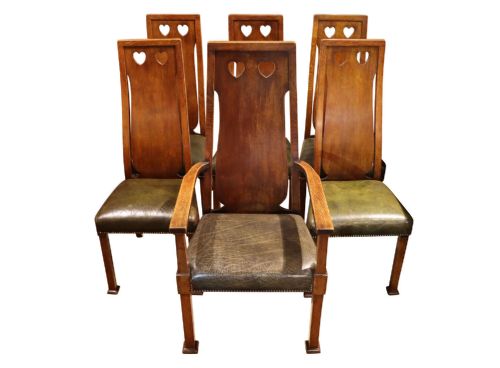
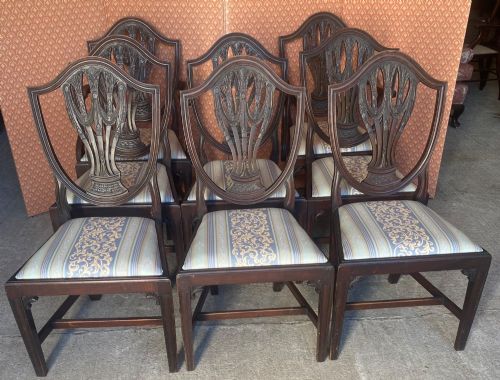
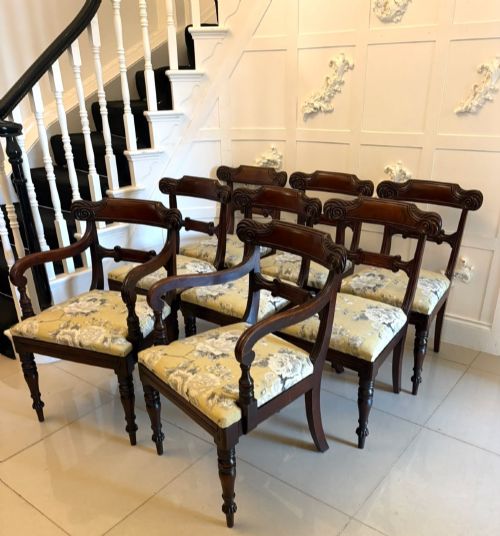
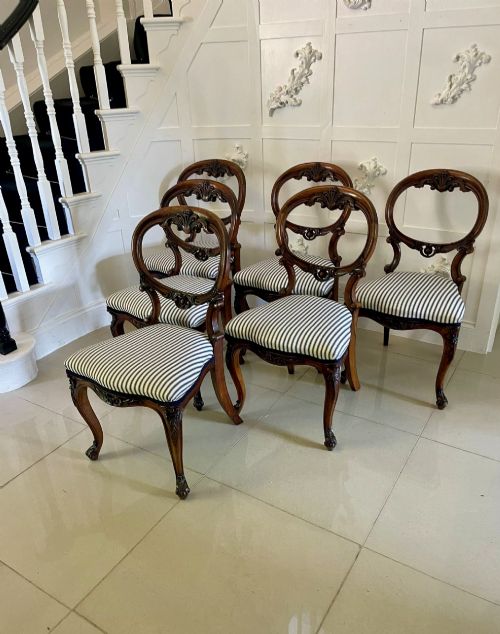
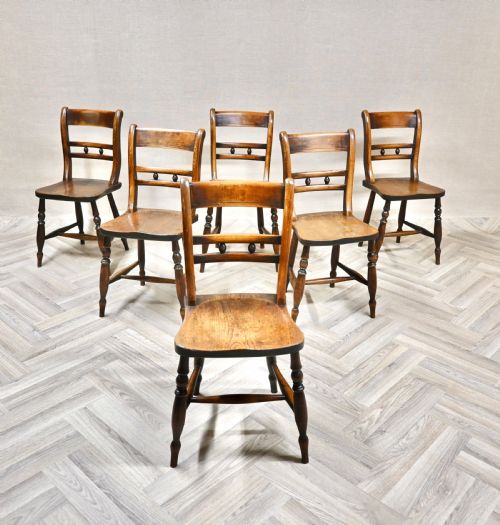
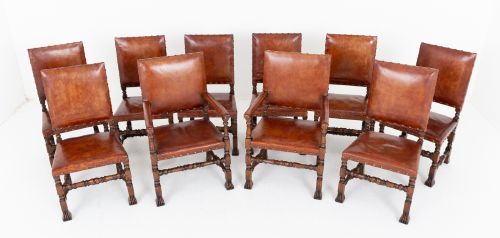
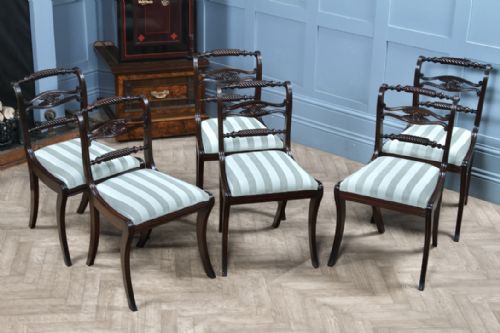
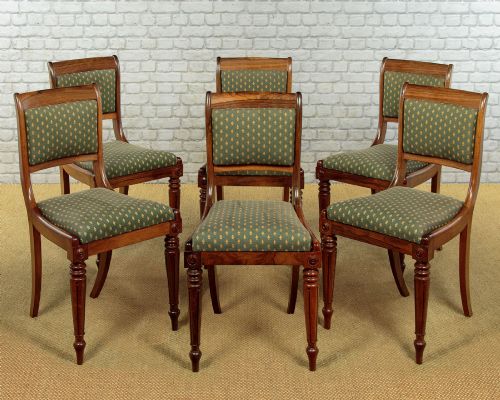
Antique Set of Chairs
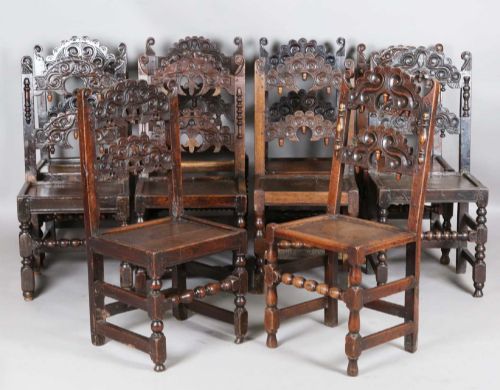
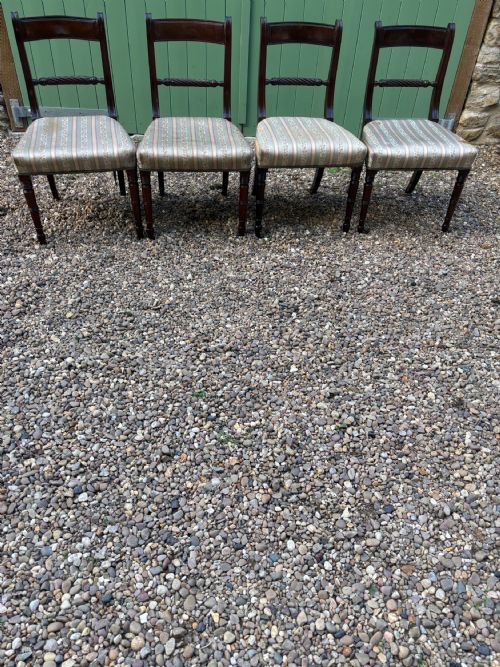
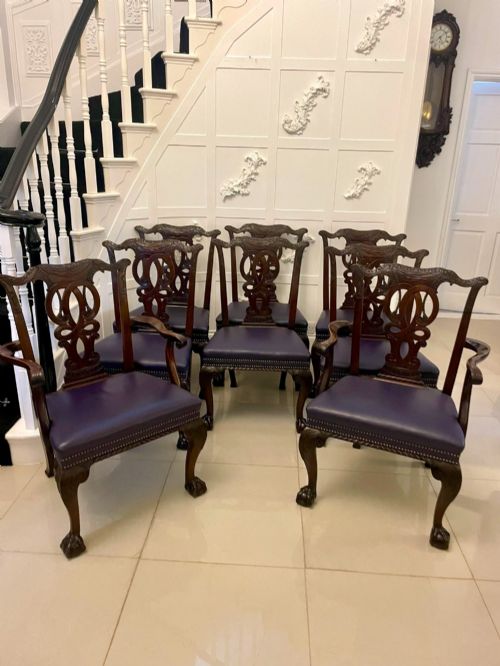
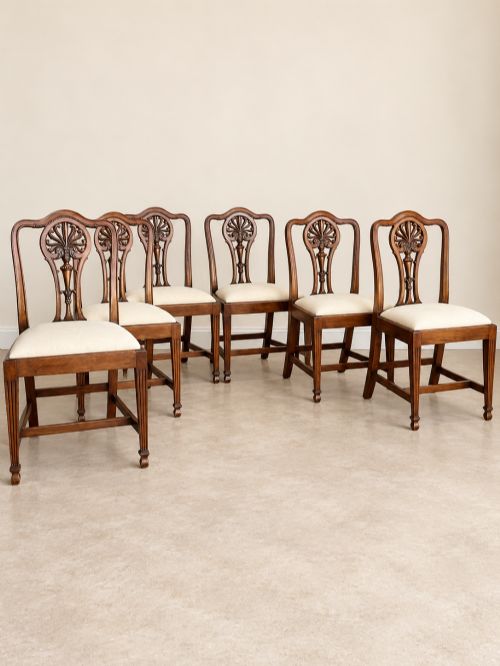
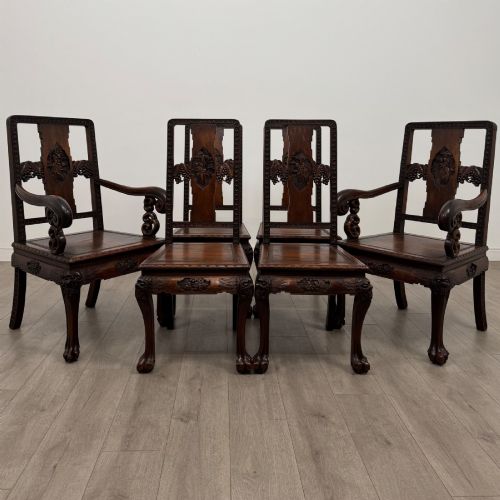
Matching chairs sold as one lot, mostly dining chairs from the 19th and early 20th century, bought by the half-dozen or dozen to sit round a table.
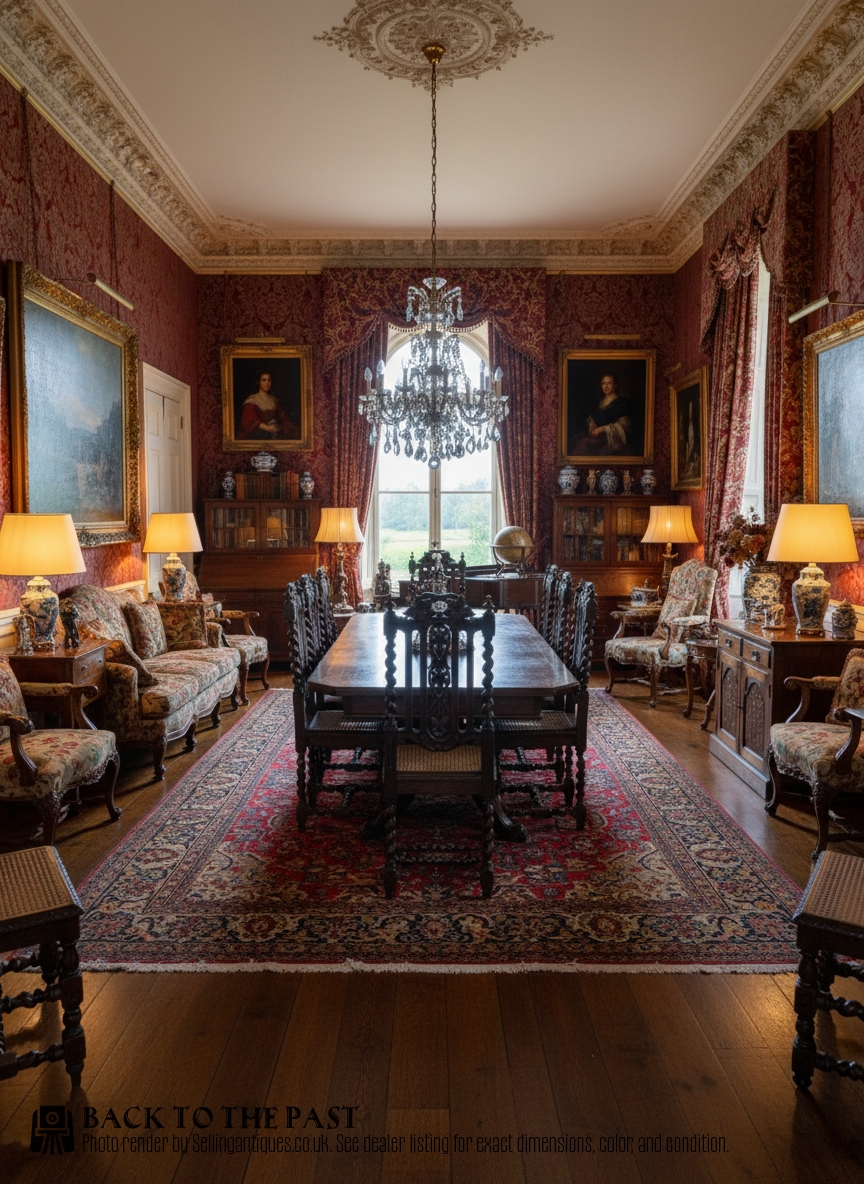
Antique Set of Chairs
A set is several matching chairs offered together, and the count sits in the title: four, six, eight, ten, sometimes written as "6+2" to show six single chairs and two armchairs. The word "chairs" appears in nearly every title and "dining" in most of them, so the dining room is what this category is mainly about. Kitchen, salon, chapel, garden and hall chairs make up the rest.
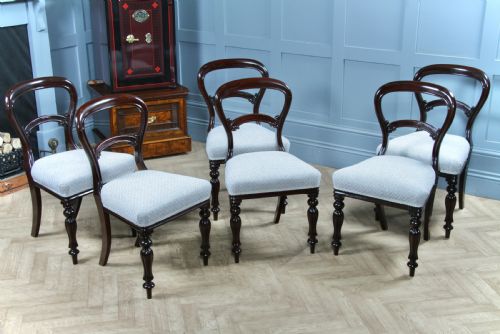
The likeliest thing you'll meet is a set of six or four mahogany dining chairs of Victorian or Regency date. Mahogany is the most-named timber by a wide margin; Victorian leads the style words, ahead of Regency and Georgian. Balloon backs are the single most-named pattern, and half of those are mahogany.
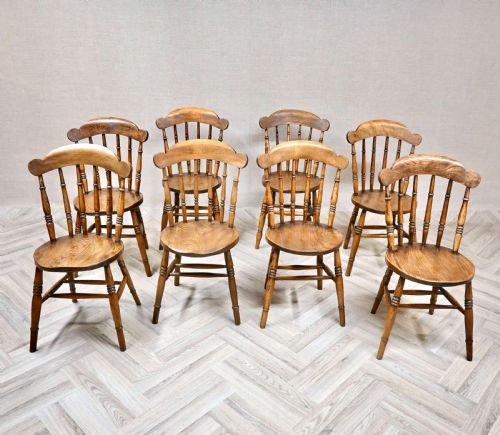
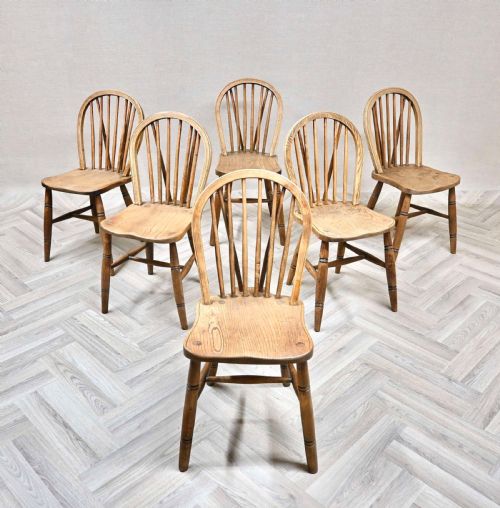
Country seating is a branch in its own right, running to roughly a quarter of the category: Windsor, wheelback, spindle and ladderback chairs in elm and ash, listed as kitchen or farmhouse sets. Oak sets account for about one in seven, taking in Arts and Crafts, Jacobean revival, chapel and school chairs. Named-style revival sets, mostly dated between 1900 and 1930, form a substantial minority.
Dates are often given by era rather than by year. "19th Century" is the largest single label, used 1,594 times, with Victorian next; decade labels cluster in the 1920s, 1900s and 1910s. Around 703 sets are listed a year on Sellingantiques, offered by 314 different dealers.
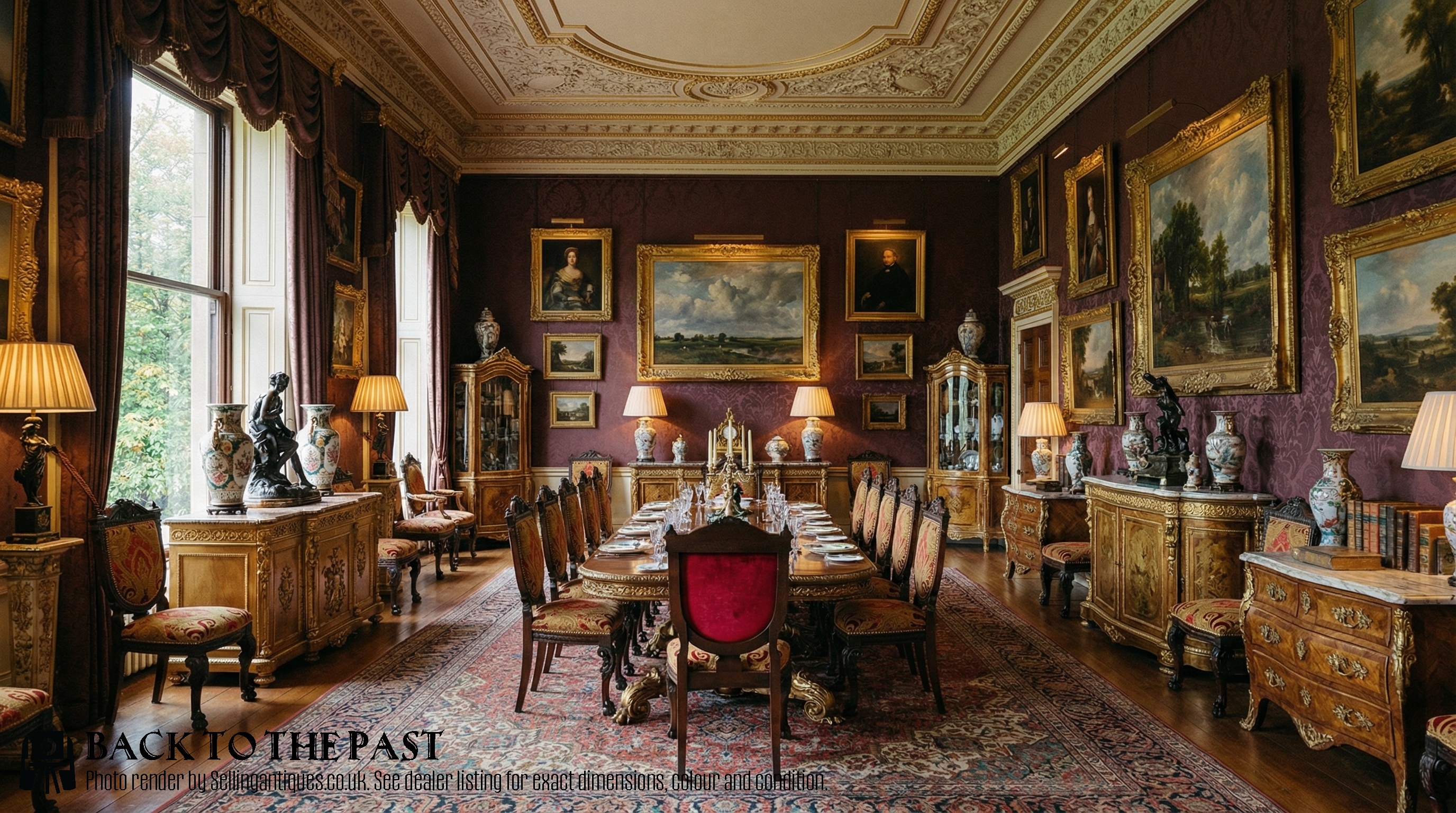
Where The Range Splits
Number comes first. Sets of four and six are the everyday sizes and fill the lower and middle of the range; tens, twelves, fourteens, sixteens and the odd twenty sit at the top. Whether the set includes carvers matters too, and titles written as 6+2 or 8+2 concentrate in the upper half.
Then whether the set is a true one. Harlequin, matched, near matching and mix-and-match sets are an accepted trade category, named in 144 titles, and they sit lower than an unbroken set of the same size and pattern. "A true set of six" is written into titles as a selling point.
Timber and decoration do the rest. Rosewood, burr walnut, satinwood and figured mahogany push up, while beech, elm and unspecified hardwood sit lower. Carved and inlaid work, brass inlay, marquetry and parcel gilding lift a set; so does date, with 18th-century and Georgian sets at the top and 1920s revival sets below them.
Antique Set of Chairs Retail Price Guide 2026
Typical UK retail prices for set of chairs, calculated from the Sellingantiques database of over a million retail prices indexed since 2003. This retail price guide relies exclusively on Sellingantiques data; no external sources or auction records are used, so the figures do not describe the wider market.
19th Century is the period label used most on Sellingantiques for sets of chairs, with Victorian next and the 1920s third.
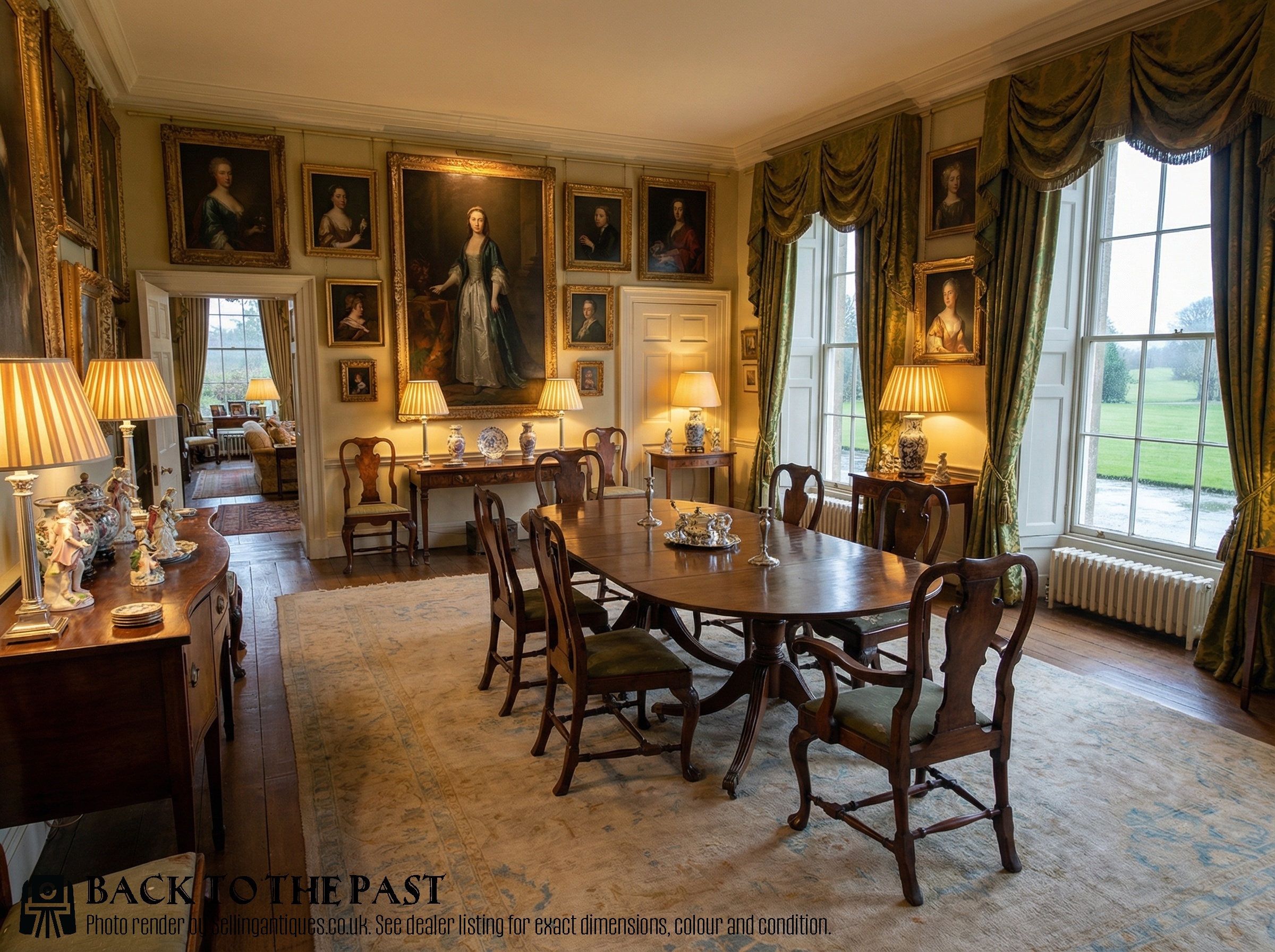
Gillows·Waring and Gillows·Thonet
The Antique Set of Chairs Glossary
- 6+2
- The make-up of the set, written into the title. Six single chairs plus two armchairs; 8+2 and 10+2 work the same way.
- Carver
- The armchair in a dining set. Usually wider than the singles, and its presence is worth noting in a listing.
- Single chair
- A side chair without arms. Sets are counted in singles first, then carvers added.
- Harlequin set
- Chairs of similar pattern but not all from one original set. Matched and near matching mean much the same thing.
- Balloon back
- The rounded open back of Victorian dining chairs, and the most-named pattern in this category at 367 titles.
- Smoker's bow
- A low hooped Windsor armchair, which turns up here in sets rather than singly.
Antique Set of Chairs: Frequently Asked Questions
How many chairs make a set?
Titles on Sellingantiques run from three to twenty. Six and four are the everyday sizes, with "six" in 1,214 titles and "four" in 826.
Above that the numbers thin out fast. Ten appears in 146 titles, and the largest recorded are a set of twenty French dining chairs, a set of twenty Victorian balloon backs and two sets of sixteen.
What does 6+2 mean in a listing?
Six single chairs, without arms, plus two armchairs. The armchairs are called carvers and are usually wider than the singles.
You'll also see 8+2 and 10+2, and phrases like "including two carvers" or "including pair of armchairs" doing the same job.
Is a harlequin set ranked below a true set?
Harlequin sets sit lower in the range than unbroken sets. The chairs match in pattern but didn't all start life together.
It's a recognised trade category rather than a fault, named in 144 titles, alongside matched, near matching and mix and match. Dealers flag "a true set of six" when they have one, which tells you how the two are ranked.
Which timbers turn up most often?
Mahogany dominates the titles. Oak follows, then walnut, rosewood, elm, ash and beech.
Rosewood, burr walnut and satinwood sit at the upper end of the range. Beech, elm and unspecified hardwood sit lower, largely because they belong to the country and kitchen branch.
What are Windsor and kitchen chair sets?
Country seating, made in elm and ash, with backs filled by turned sticks, spindles or a pierced wheel splat. Windsor appears in 513 titles, kitchen in 757, and 202 combine the two.
They make up around a quarter of the category and are usually described as kitchen, country or farmhouse sets rather than dining.
Are dates in these listings precise?
Often not. Nearly half the dated pieces are described by era instead of a year, and "19th Century" is the most-used label of all at 1,594 listings.
Where years are given, the field spans 1700 to 1960, with 2,973 listings carrying a clean one. Decade labels bunch in the 1920s, 1900s and 1910s.