

Antique Nursing Chairs
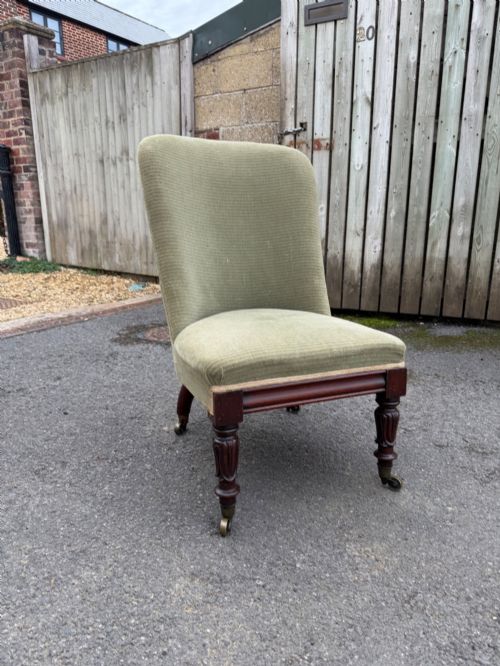
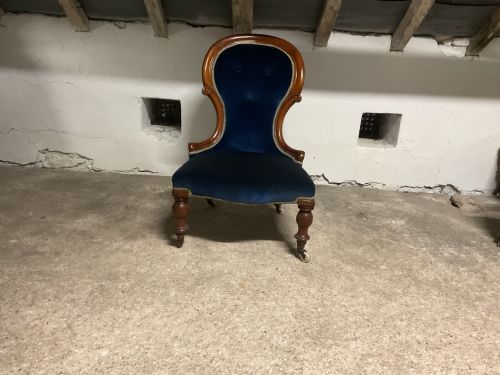
A low-seated single chair, usually armless, made in quantity in 19th-century Britain for the bedroom, the parlour and the dressing table.
Antique Nursing Chairs
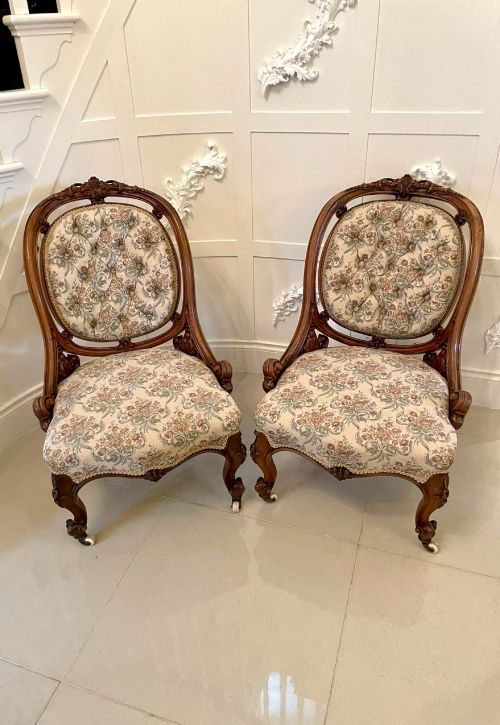
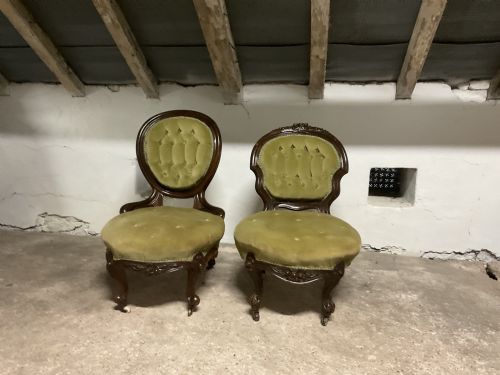
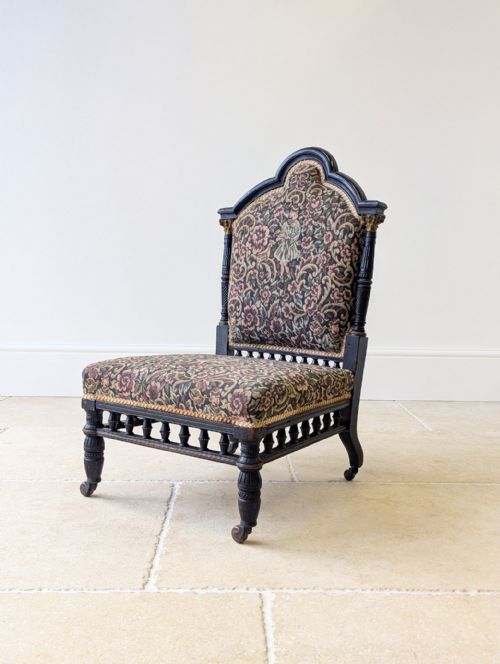
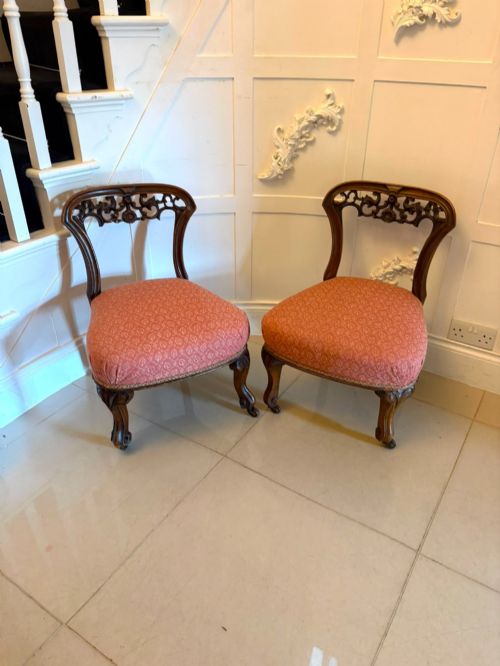
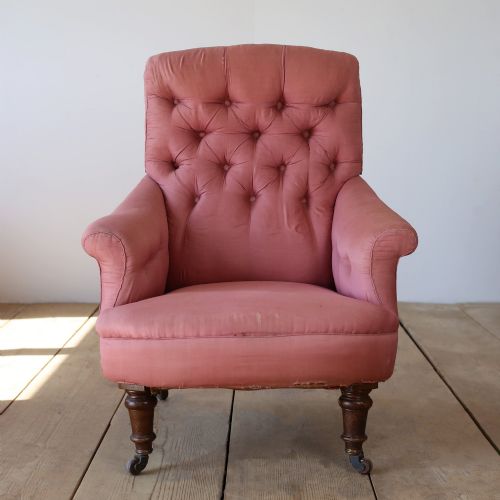
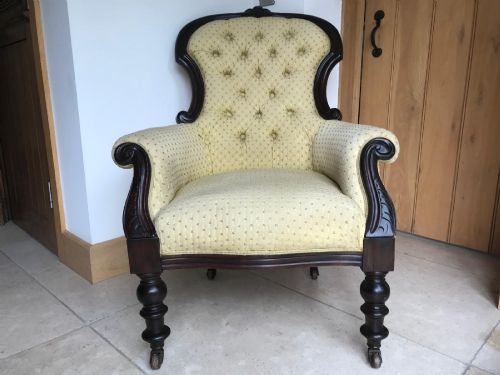
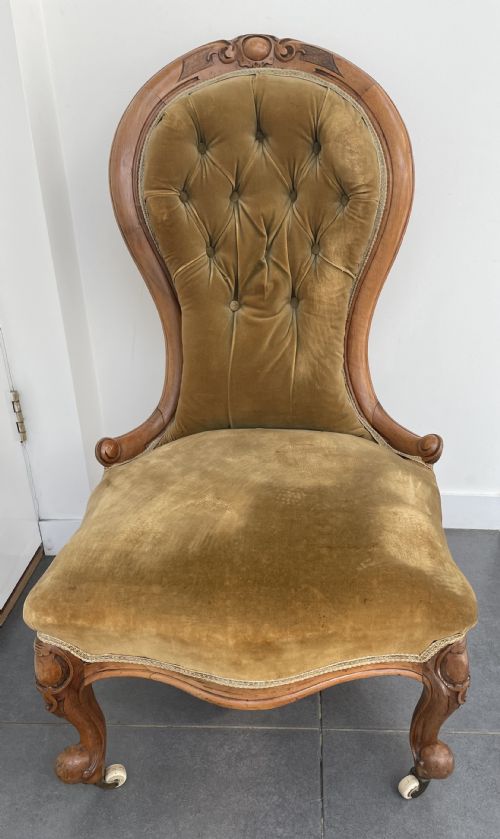
The chair you'll meet again and again is a Victorian one in walnut or mahogany, with a polished show-wood frame around an upholstered seat and back. Walnut leads the timbers on Sellingantiques, mahogany follows, rosewood third. Around a fifth of titles name a buttoned back, which is the most-named feature after the wood itself.
Nursing is only one of the names it travels under. Bedroom chair does the same job in 55 titles, and ladies' chair, slipper, spoon-back, salon, occasional, fireside, prie-dieu and even gossip chair all describe small upholstered chairs of much the same character. Slipper and spoon-back forms account for roughly one in ten; prie-dieu and prayer chairs are a small, steady presence.
Dates are broad more often than exact. Only 140 of 481 listings carry a clean year, the rest filed simply as Victorian or 19th Century, and where decades are given they pile into the 1850s to 1880s. Edwardian examples make a later tail. A few titles reach back to Regency and William IV, but that is a handful, not a strand.
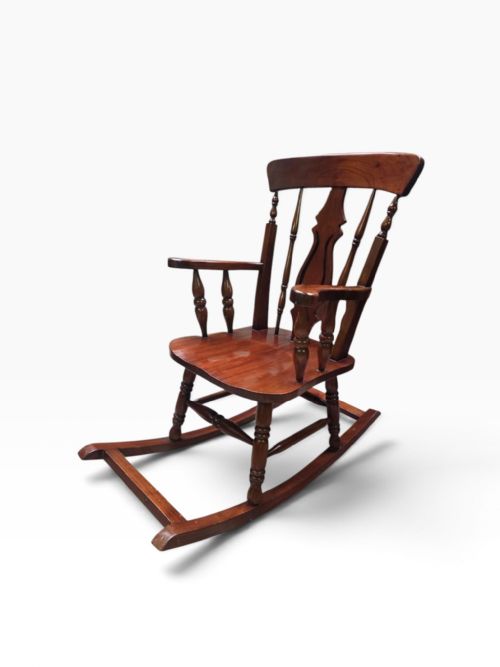
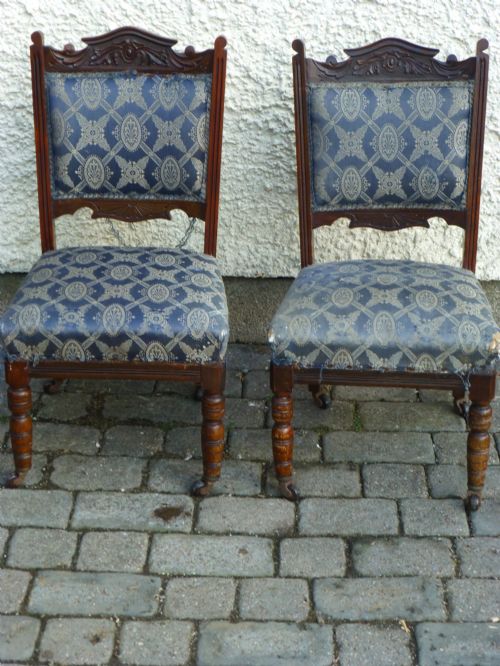
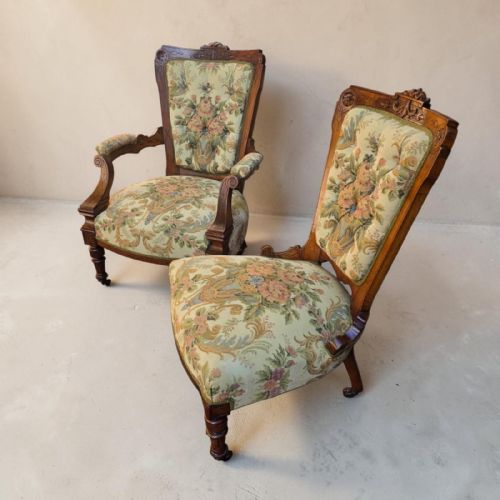
Away from the mainstream sit rocking, bobbin and turned country examples, Welsh oak among them, and ebonised chairs in the Aesthetic Movement taste. Pairs turn up throughout, often a ladies' and gentleman's chair sold together or two matched salon chairs.
Where The Range Sits
Timber sets the floor. Walnut and rosewood cluster at the upper end of the range, plain mahogany lower, and beech and pine lower still. Then the frame: carved walnut appears in 22 titles, inlay in 13, and carving is the feature that separates a decorated show frame from a plain moulded one.
Pairs do more work than anything else. They account for 35 titles and most of the top of the range, while single chairs fill out the bottom. A named or attributed workshop pushes hard upward too, though attributions are uncommon across the archive.
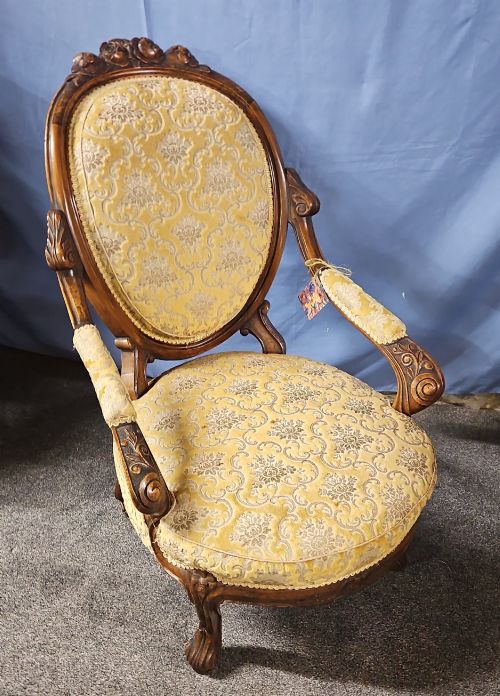
Upholstery is the last axis, and dealers advertise it plainly. Newly covered chairs and those in a named furnishing fabric sit above ones offered for re-covering or ready to upholster. Original decorative work, needlework, woolwork, beadwork or tapestry, sits high when it survives.
Antique Nursing Chairs Retail Price Guide 2026
Typical UK retail prices for nursing chairs, calculated from the Sellingantiques database of over a million retail prices indexed since 2003. This retail price guide relies exclusively on Sellingantiques data; no external sources or auction records are used, so the figures do not describe the wider market.
Walnut leads the timbers named in nursing chair titles on Sellingantiques, with mahogany next and rosewood third. Oak and pine are the outliers.
Gillows
The Antique Nursing Chairs Glossary
- Nursing chair
- A low-seated single chair, usually armless, for bedroom or parlour use. The low seat suits a seated adult nursing an infant or dressing.
- Button back
- Upholstery drawn into a grid of buttons. Named in 44 titles, with 'button' appearing in 53.
- Show wood
- Polished timber left visible around the upholstery, as in 'show wood button upholstered high back nursing chair'. Also written show frame.
- Spoon back
- A back curved in profile like a spoon bowl. Fourteen titles use it, sometimes run together as spoonback.
- Slipper chair
- A low armless chair with a tall back, in 36 titles. It overlaps with nursing so often that some titles use both.
- Prie-dieu
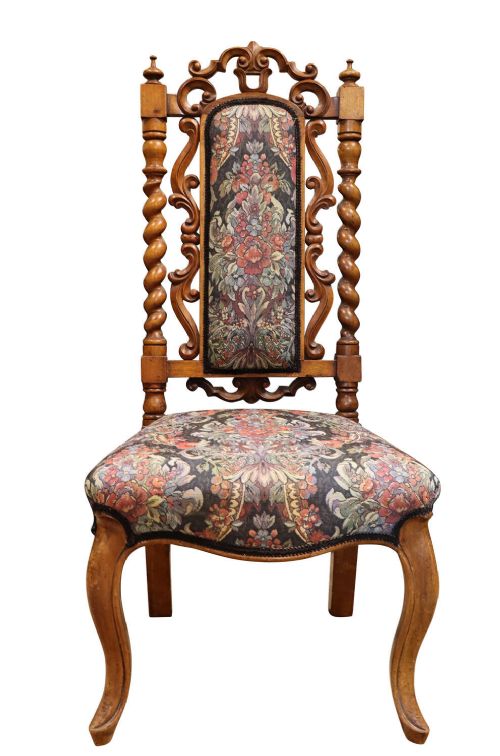
- A tall-backed prayer chair with a low seat, in 10 titles, and sold elsewhere as a prayer chair.
- Iron frame
- A metal-framed upholstered back, as in 'Walnut Iron Framed Nursing Chair'. A quiet sub-species of the button back, surfacing perhaps half a dozen times.
Antique Nursing Chairs: Frequently Asked Questions
What is a nursing chair?
A low single chair, usually armless or with very short arms, made for bedroom and parlour use. The low seat suited a seated adult nursing an infant or dressing.
They were made from the early 19th century and produced in large numbers by the Victorian period as part of general bedroom and salon furnishing.
Is a bedroom chair the same thing?
On Sellingantiques the two names are all but interchangeable. Bedroom chair appears in 55 titles for the same low upholstered form.
Ladies' chair, slipper, spoon-back, salon, occasional and fireside cover much the same ground. The heading gathers a family of small upholstered chairs rather than one fixed pattern.
Which woods were used?
Walnut leads at 138 titles, mahogany follows at 78, rosewood at 34.
Oak turns up nine times and there is a single pine example. Ebonised frames account for 16 titles, usually the Aesthetic Movement ones.
How common are pairs?
Pairs run to 35 titles, so they are a regular but not a dominant part of the category. Ladies' and gentleman's pairs and matched salon chairs are the usual arrangement.
They sit at the top of the range more often than singles do.
When were most of these chairs made?
The centre of gravity is the mid-Victorian bedroom. Where dealers give a decade, the 1860s lead, then the 1850s, 1870s and 1880s.
Most listings carry no exact year at all, filed instead as Victorian or 19th Century. Edwardian examples form a later tail, and the dated fields as a whole run from 1830 to 1940.
What does button back mean on these chairs?
It describes upholstery drawn into a grid of buttons across the back. The word button appears in 53 titles and button back in 44.
After the timber, it is the single most-named feature in the category.