
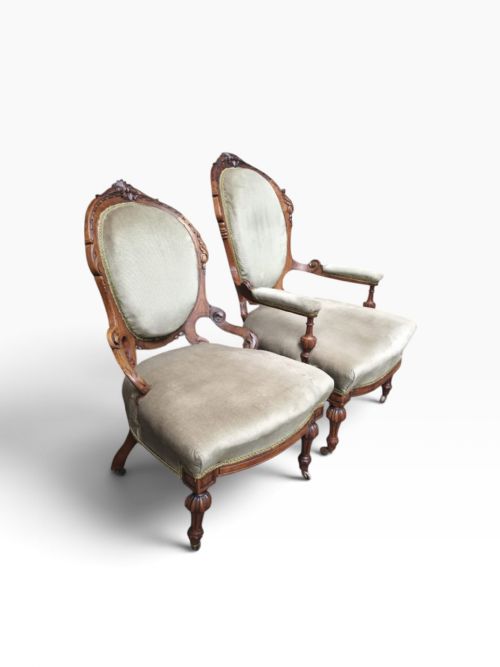
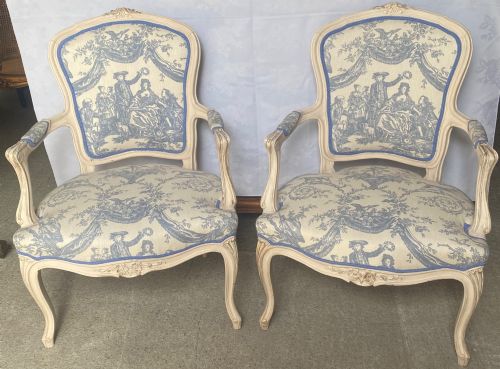
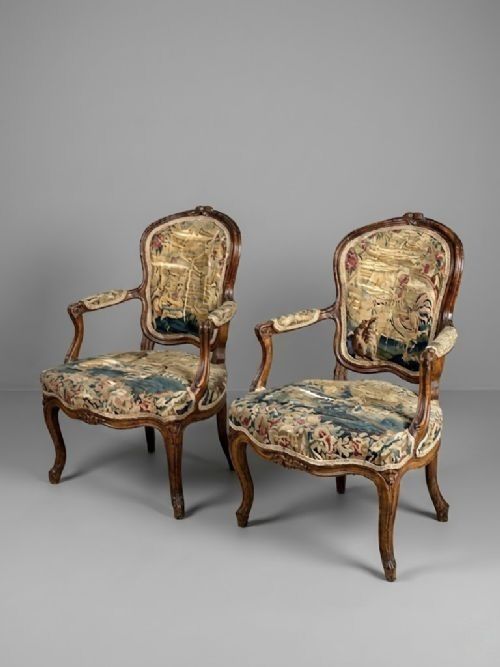
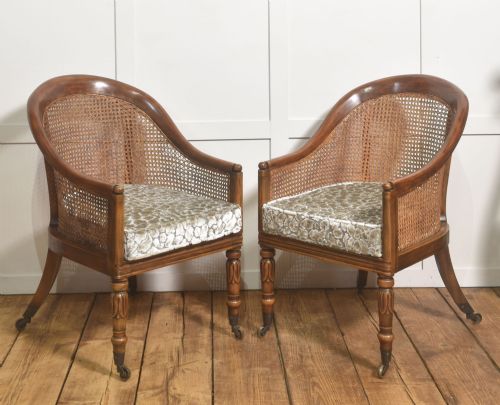
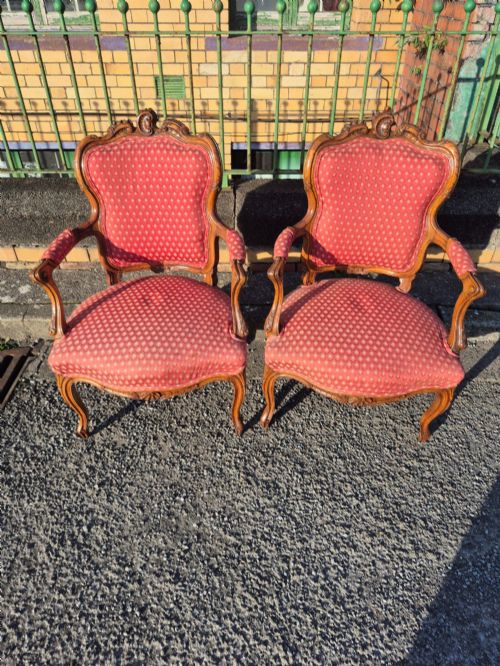
Antique Pair of Chairs
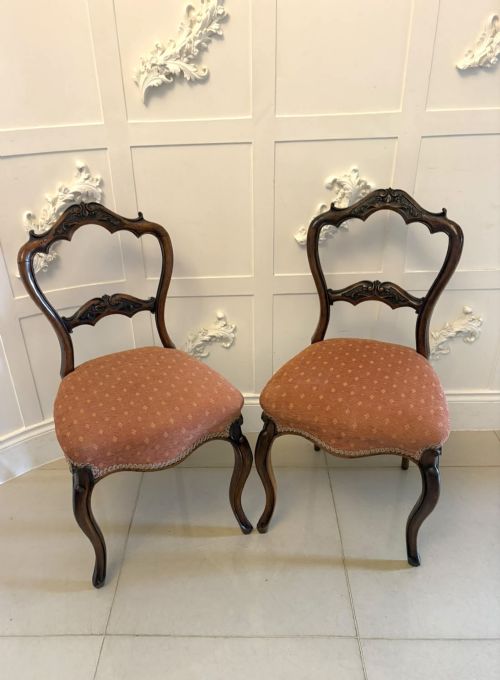
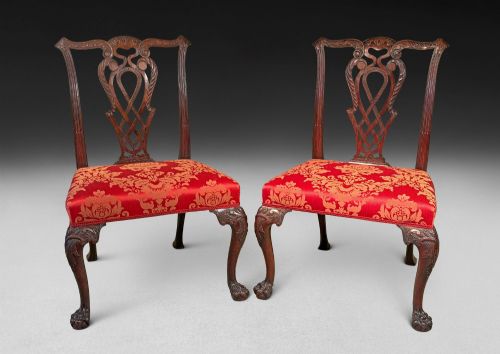
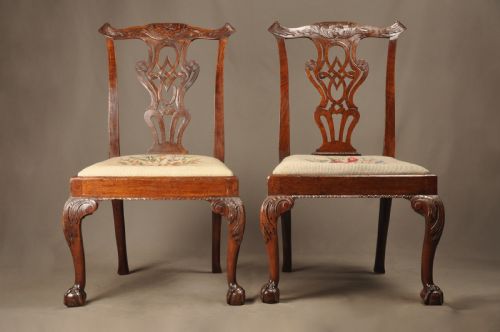
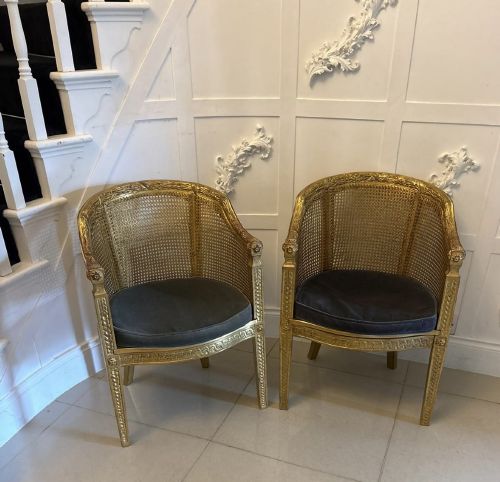
Two chairs sold together, matched or near-matched, made to flank a hall doorway, sit either side of a fireplace, or survive as the pair left from a larger set.
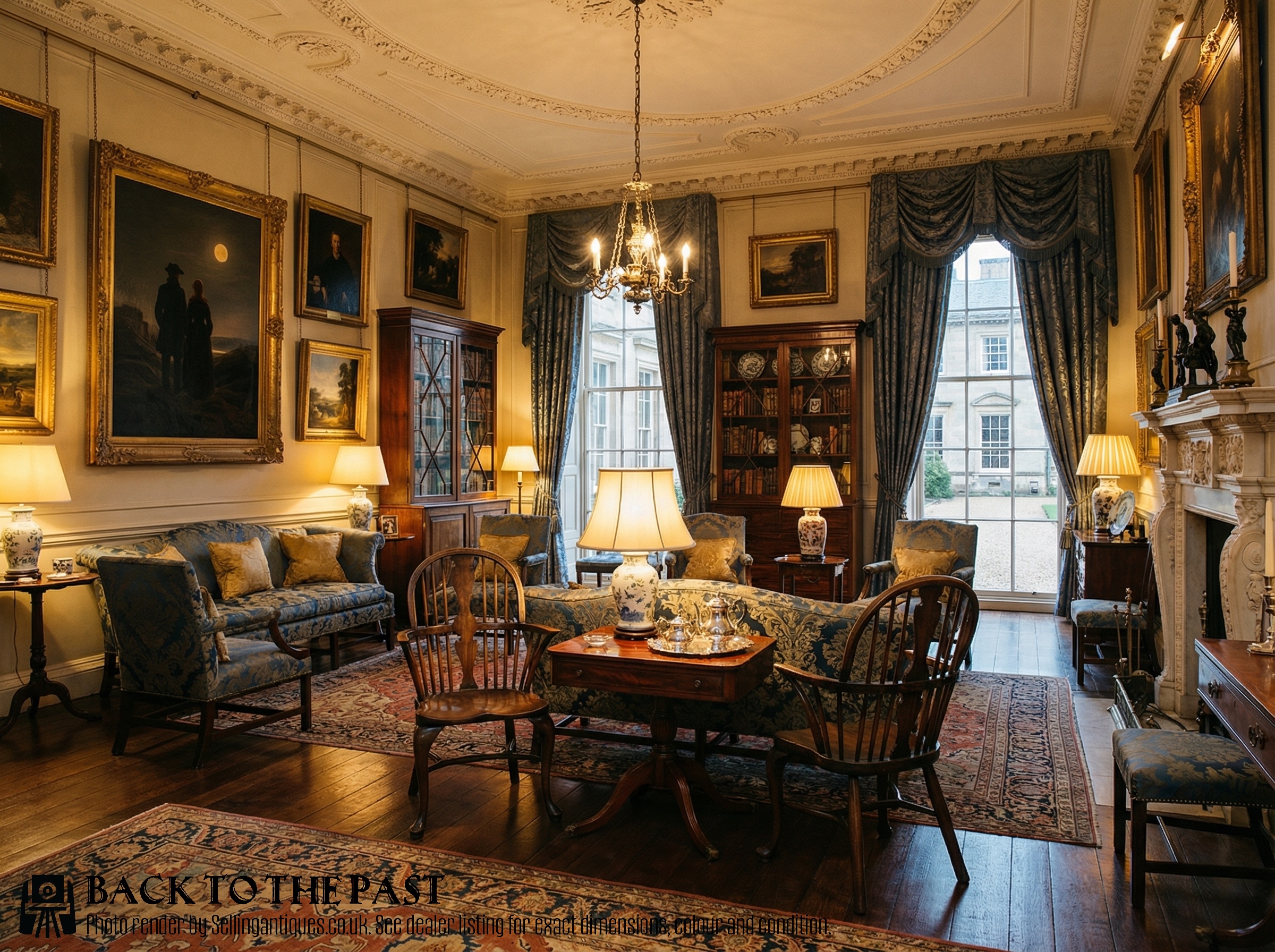
Antique Pair of Chairs
Armchairs dominate. Of 7,236 titles on Sellingantiques, 3,040 say "armchairs", and within that the recurring names are open armchairs, French armchairs, and armchairs in mahogany or walnut. Against that block sit the forms without arms: side chairs, hall chairs, tub, club, library, salon and desk chairs.
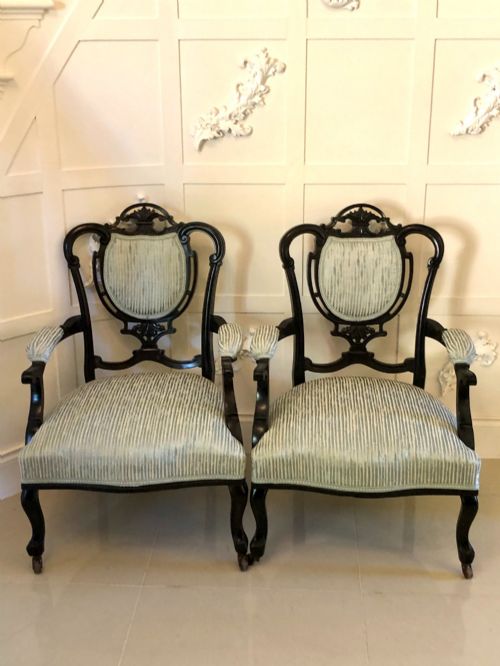
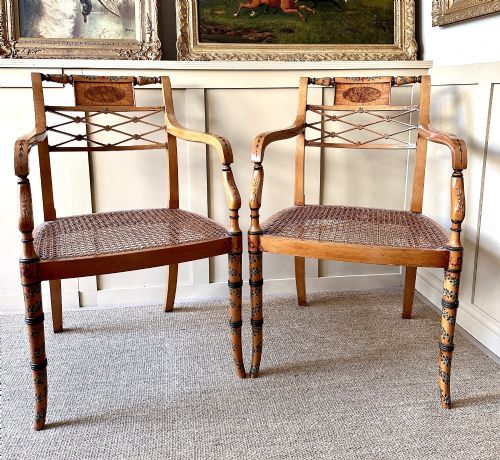
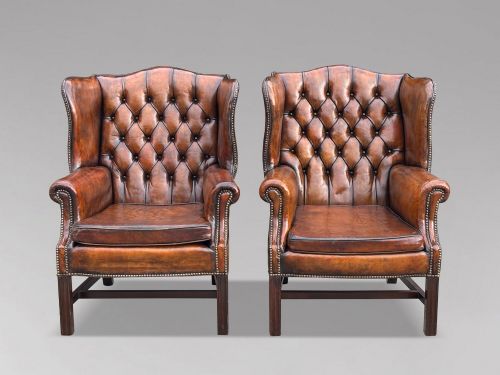
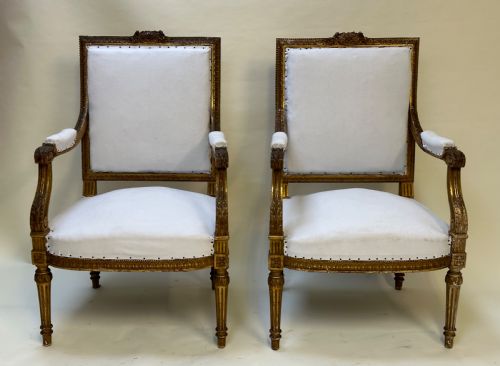
The upholstered group is the largest a buyer meets - leather club chairs, wing chairs, tub chairs and caned bergères. Behind it come English hall and side chairs in mahogany or oak, named by their back shape: balloon, shield, crown, splat, ladder, spindle, bar. French pairs are the next block, with fauteuils, Louis XV and XVI styles, Napoleon III, Empire and Directoire all appearing by name.
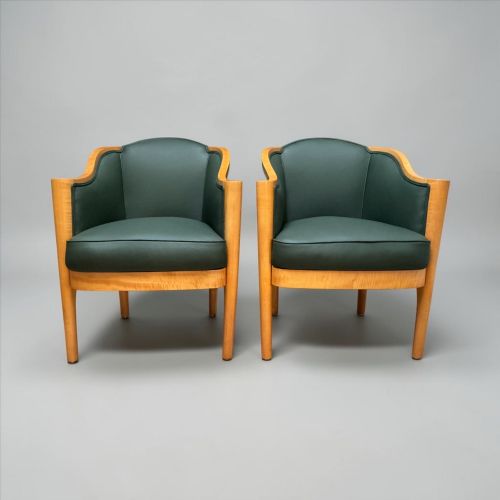
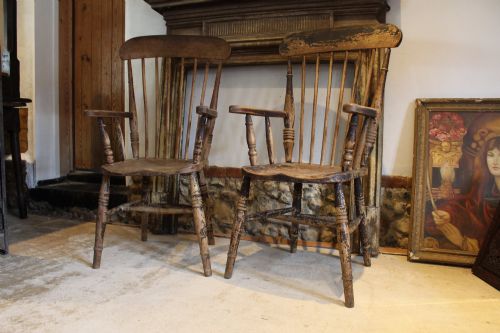
Two smaller streams run through. Country and Windsor chairs bring wheelbacks, smoker's bows, captain's chairs, Welsh oak farmhouse chairs, rush and dish seats. Art Deco and Swedish satin birch make up a further slice, the birch usually paired with bergère or club shapes and dated to the 1920s and 1930s.
Dating is often loose. The biggest single bucket is simply "19th Century", with Victorian, Regency and Edwardian doing similar work; where decades are given they cluster in the 1920s, 1900s, 1930s and 1910s. Eighteenth-century pairs are a small fraction, and seventeenth-century ones scarcer still, entered as Carolean backstools or Italian Renaissance forms.
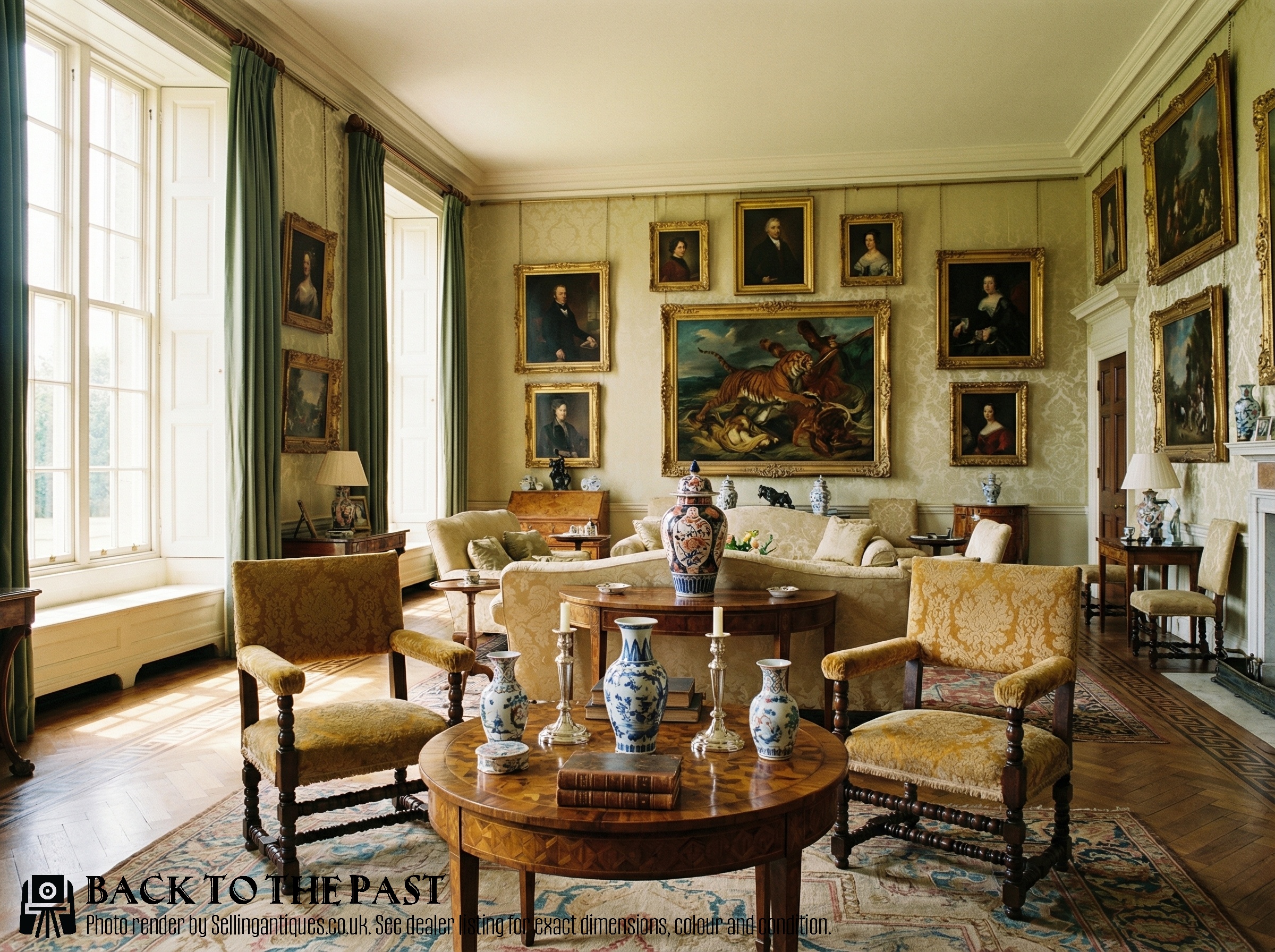
Top To Bottom
A name does the most work. Pairs carrying a London firm's stamp or label, and hall and library chairs attributed to Gillows, sit at the top of the range; an unattributed "pair of armchairs" sits at the bottom of it. Provenance sometimes attaches to the chairs rather than the maker, with York Minster, Kings College London, an Oxford college and a ship's dining room all cited.
The pairing itself is priced. Titles volunteer the distinction between a true pair, a matching pair, a matched or close matched pair and a near pair, and the qualifier is there because it matters. Some pairs are sold as "ladies and gentlemen's" chairs, two chairs that were never identical to begin with.
Then it comes down to ambition in the making. Deep buttoned leather, giltwood, carved walnut and brass-inlaid rosewood sit well above plain examples of the same date and form, as do the large shapes - wing, library, Gainsborough, porter's and throne chairs. Plain caned or rush seats, nursing chairs and children's chairs occupy the lower ground.
Antique Pair of Chairs Retail Price Guide 2026
Typical UK retail prices for pair of chairs, calculated from the Sellingantiques database of over a million retail prices indexed since 2003. This retail price guide relies exclusively on Sellingantiques data; no external sources or auction records are used, so the figures do not describe the wider market.
Pairs of chairs have been listed on Sellingantiques since 2008, and more than 6,100 have gone through since.
Gillows of Lancaster·Maple & Co·Waring & Gillow·Hille·Harry and Lou Epstein·Thonet
The Antique Pair of Chairs Glossary
- Pair, near pair, matched pair
- A true pair was made together. Near, matched or close matched signals two chairs brought together later, and the qualifier is usually stated in the title.
- Side chair
- A chair without arms, for dining or general use. Around 650 titles use the term.
- Hall chair
- Hard-seated chair with a carved or crested back, made for a hall or passage. Made in twos to flank a doorway, which is why the form recurs so persistently in pairs.
- Open armchair
- An armchair where the space between arm and seat is left unupholstered, as against the enclosed sides of a bergère.
- Fauteuil
- French open armchair, running through the French block alongside Louis XV and Louis XVI descriptions.
- Satin birch
- Pale figured birch. In this archive it is almost always attached to Swedish pieces, and often to bergère and club shapes.
Antique Pair of Chairs: Frequently Asked Questions
What does near pair mean?
It means the two chairs were not made together. Dealers use near pair, matched pair and close matched pair to say the chairs were brought together later, and a true pair to say they weren't.
The distinction turns up in the titles rather than buried in the text, so it's part of what's being sold.
Which type turns up most often?
Armchairs. Of 7,236 titles on Sellingantiques, 3,040 contain the word, covering leather club chairs, wing chairs, tub chairs, bergères and salon chairs.
Hall chairs and side chairs make the next largest group, mostly in mahogany or oak and mostly Victorian, Regency or Georgian.
Are French chairs common in this category?
Yes. Around 1,142 titles say french, against 271 saying swedish, so France is the main non-British source by a wide margin.
The samples name fauteuils, Louis XV and XVI, Napoleon III, Empire, Second Empire, Directoire, Restauration and crapaud forms. Giltwood and carved walnut recur through them.
Non-European pairs are the rarity: Chinese yoke-back and horseshoe chairs, Anglo-Indian bergères, Burmese, Moorish and Portuguese examples appear only a handful of times.
How old do these pairs get?
The dated field runs 1700 to 1960. The earliest entries are a pair of early oak hall chairs at 1700 and Queen Anne period dining chairs at 1710.
Seventeenth-century pieces appear as backstools and Carolean side chairs, entered by reign rather than year. Most listings sit in the nineteenth and early twentieth centuries.
What woods are named in the titles?
Wood is named in about half of all titles. Mahogany leads with 1,281, then walnut at 771 and oak at 690.
After those come birch, elm and rosewood, with satinwood, yew, ash, pine, teak and pollard oak all recurring.
Do unusual forms come up?
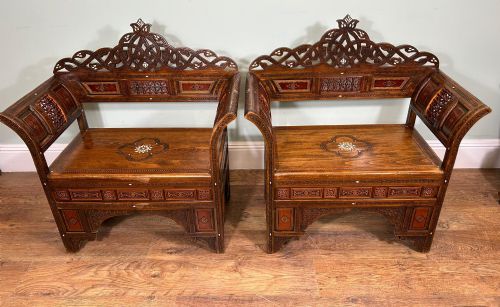
Occasionally. In 800 samples, several forms appeared exactly once: Swiss Alpine Stabellen chairs, Scottish armorial clan chairs, Irish famine chairs, elephant-form Art Deco chairs, Syrian Damascus inlaid armchairs and wrought-iron Savonarola chairs.
Folding fishing chairs and a pair of RAF Bomber Command armchairs were among them too.