


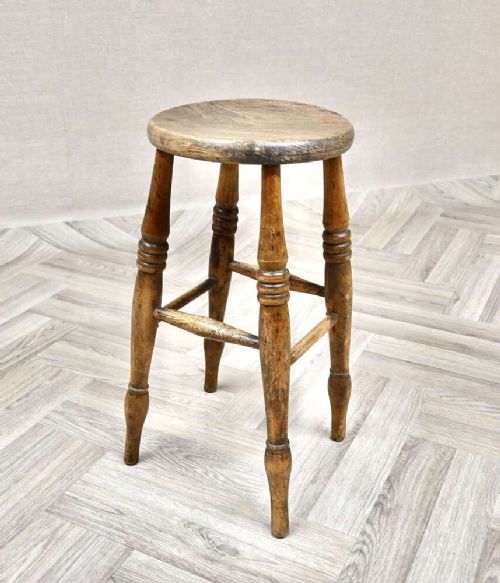
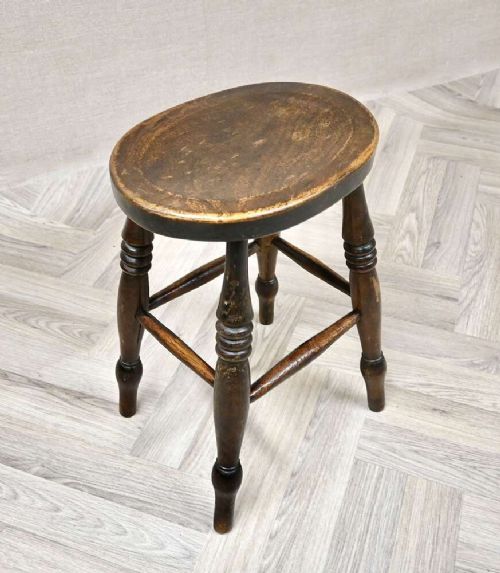
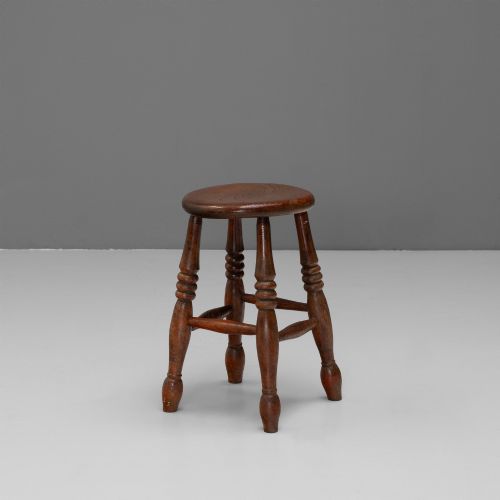
Brown Oak Stool
A brown oak stool brings the dense grain and honest joinery of centuries past straight into a modern room.
Brown Oak Stool
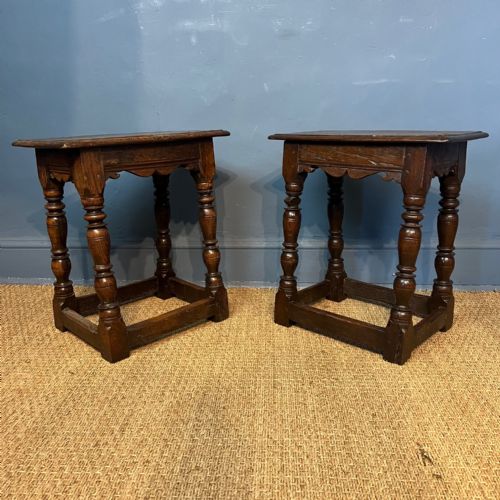
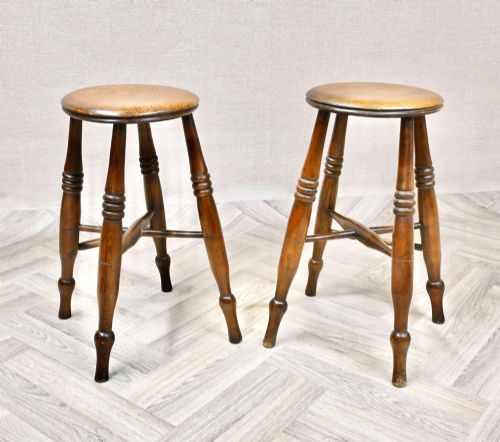
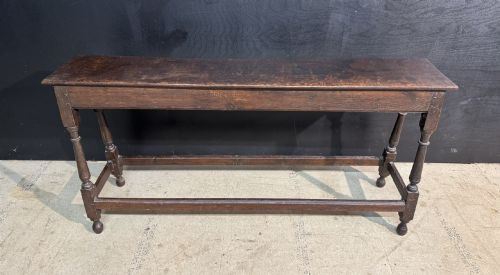
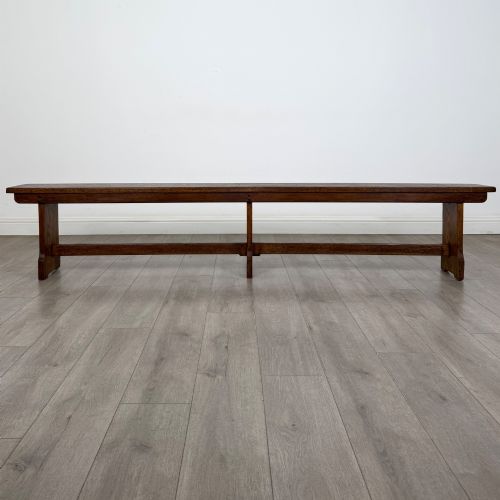
A brown oak stool encompasses a range of utilitarian seating, from seventeenth-century joint stools to nineteenth-century tavern benches and provincial country variants. These pieces serve practical household needs while displaying the rich, varied tones characteristic of aged timber.
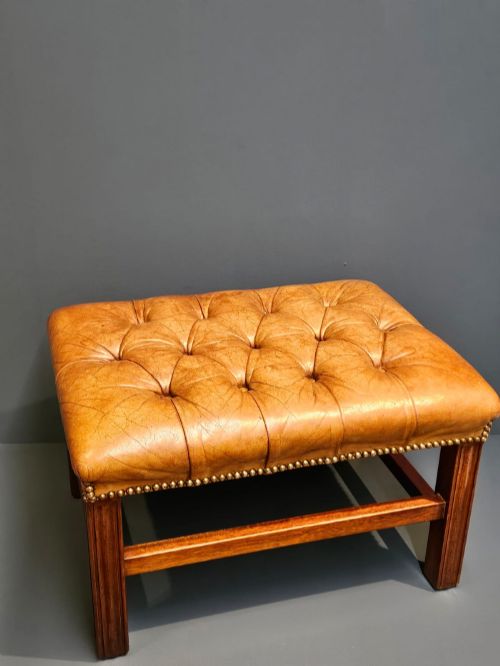
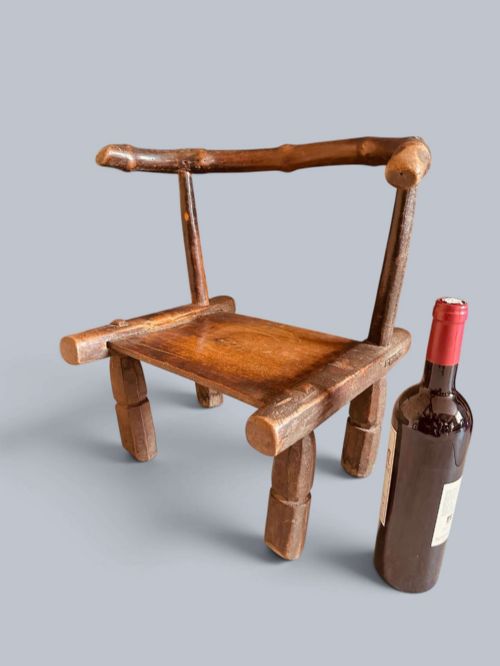
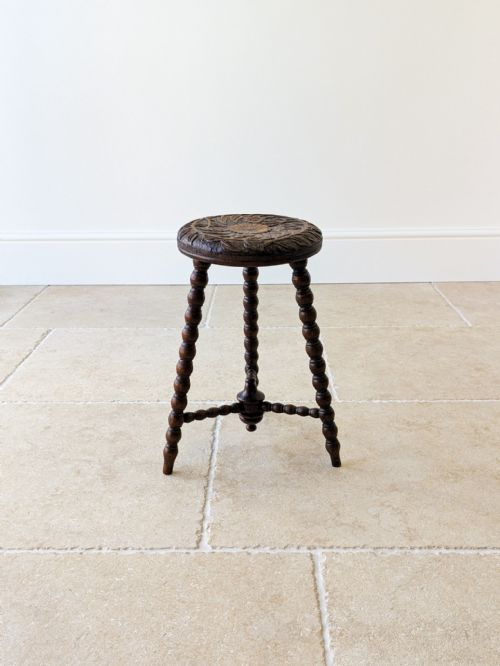
Most examples found here date from the seventeenth, eighteenth, and nineteenth centuries, alongside regional vernacular items and revival pieces. Forms vary from simple round-seated milking stools and clerk's seats to low footstools and carved joint stools.
How they were made
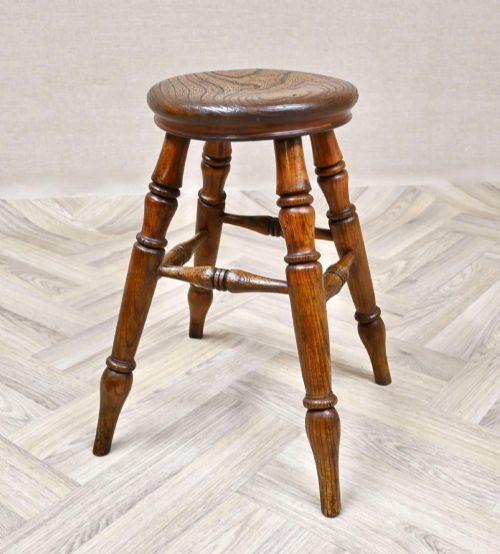
Craftsmen built these brown oak stools using solid timber planks, often combining oak with secondary native hardwoods such as elm, ash, and sycamore for seats and underframes. Joinery relied on mortise and tenon joints, sometimes pegged for extra rigidity, alongside splayed legs driven directly into thick wooden seats.
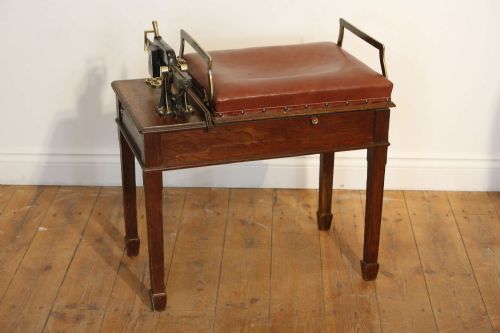
Hardware played a secondary structural role, limited to blacksmith-made iron brackets, braces, and occasional brass fittings on specialised items like luggage racks and industrial seating. Surfaces finished naturally through daily handling, wax application, and centuries of exposure.
Brown Oak Stool Retail Price Guide 2026
Typical asking prices for brown oak stool among the pieces listed under this phrase on Sellingantiques today, from the lower quarter to the upper quarter. They describe what is for sale here now, not the wider market.
Listings feature oak, elm, ash, and sycamore across periods spanning the seventeenth century through the Edwardian era.
What varies in quality
Quality rests in the integrity of the timber and the honesty of the construction, where substantial oak thicknesses and minimal replacement parts elevate a piece. Evidence of original pegging, uncompromised splayed legs, and depth of surface tone distinguish superior examples from heavily restored or later constructed items.
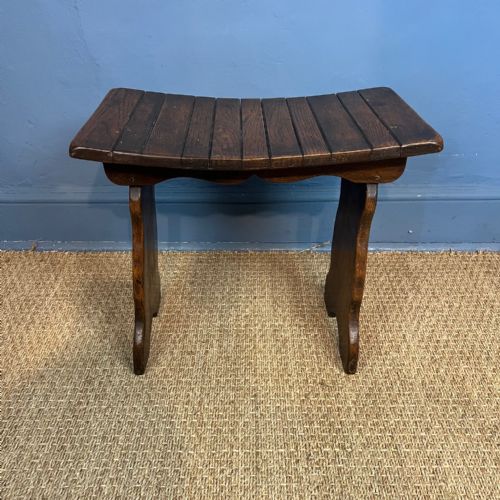
Proportion and utility guide the measure of better pieces, with finely turned legs or sculptural saddle seats demonstrating greater artisan skill. Items retaining their authentic structural fabric carry more presence than those altered for modern stability.
Arthur Simpson Of Kendal·James Shoolbred And Co
The Brown Oak Stool Glossary
- Joint stool
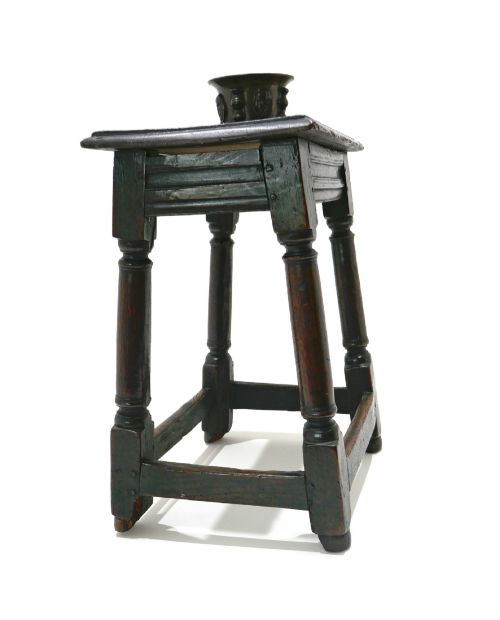
- A sturdy wooden stool constructed with mortise and tenon joints rather than turned legs driven into a seat. These seventeenth and eighteenth-century forms served multiple household purposes.
- Splayed legs
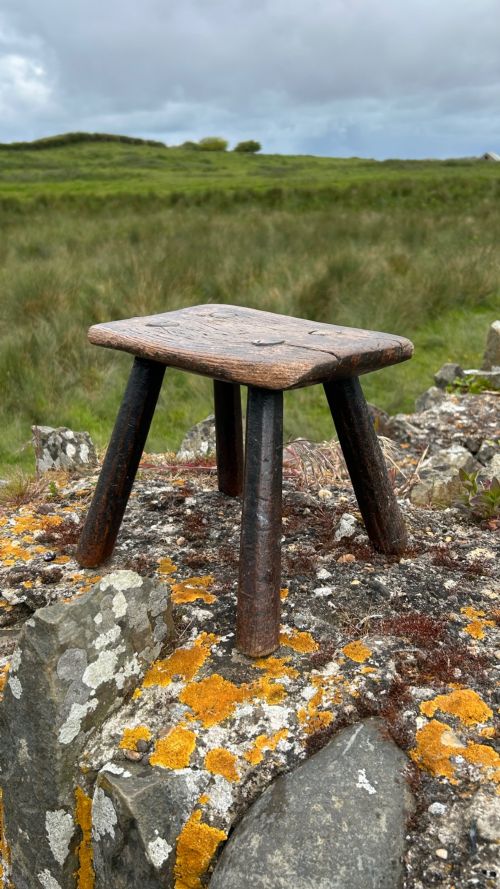
- Legs that angle outward from the underside of the seat to provide greater stability on uneven floors. This technique appears frequently on vernacular country seating.
- Close stool
- An enclosed wooden box stool designed to contain a chamber pot, often resembling a small bedside chest or cabinet. Examples date across the seventeenth and eighteenth centuries.
- Vernacular
- Objects made by local craftsmen following regional traditions rather than formal London design patterns. These pieces utilise readily available timbers like oak and elm.
- Tavern bench
- A long, sturdy seating form intended for public house use, constructed to withstand heavy daily wear. They feature heavy oak frames and durable wooden seats.
Brown Oak Stool: Frequently Asked Questions
What is a brown oak stool?
A brown oak stool is a solid wooden seat created in centuries past for domestic, trade, or tavern use. These items range from formal joint stools to vernacular country seating.
The defining characteristic is the use of oak timber that has developed a deep, warm brown coloration over decades or centuries of exposure and use.
How were joint stools used?
Joint stools served primarily as seating around the dining table in early households. Their sturdy frames also allowed them to function as small tables or steps when needed.
Because they stack easily and offer robust construction, they remained practical furnishings across the seventeenth and eighteenth centuries.
How do I date an oak stool?
Dating relies on examining the construction methods, tool marks left by makers, and the natural wear of the timber. Hand-cut pegs, pegged mortise and tenon joints, and board thickness provide key clues to the period.
Earlier pieces from the seventeenth century display heavy oak frames and distinct joinery, whereas nineteenth-century versions often incorporate turned elements or simpler splayed legs.
Where can I use an antique stool today?
These compact wooden pieces fit easily into modern interiors as side tables, bedside surfaces, or extra seating in hallways and living spaces. Their neutral timber tones blend well with various design schemes.
Placing them away from direct heat sources helps preserve the antique wood and its historical finish.