



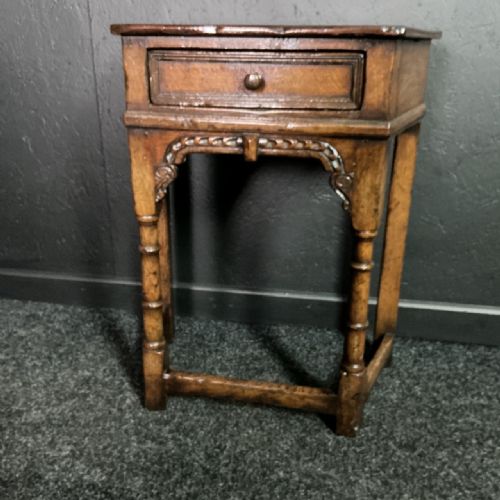
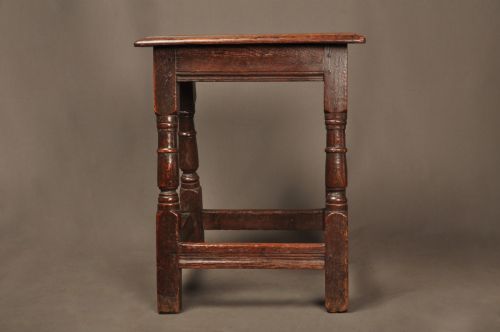
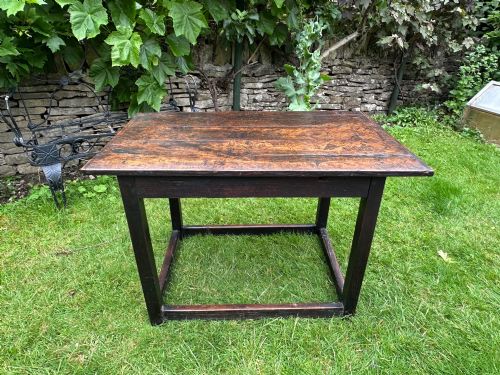

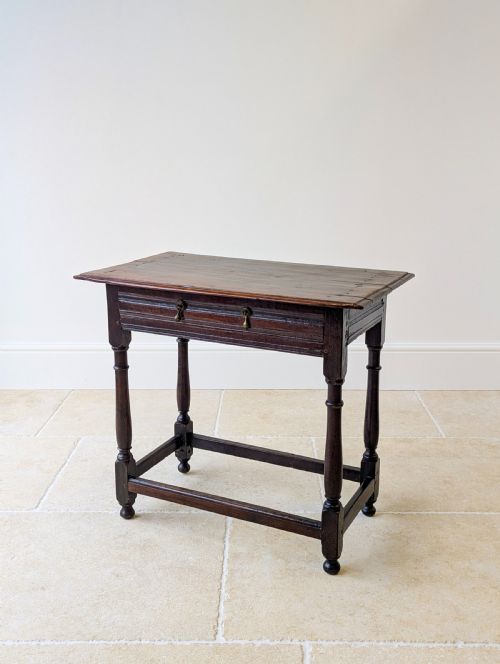
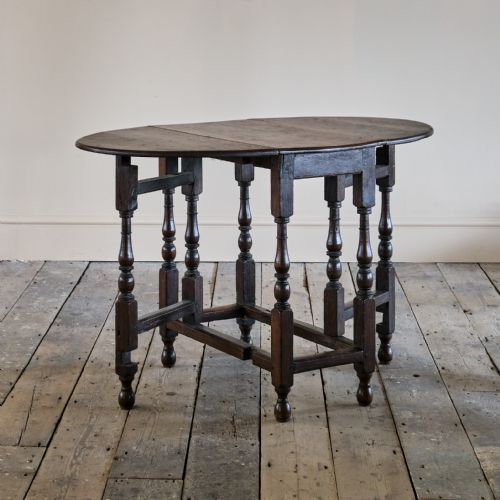
Dark Oak Joint Stool
A dark oak joint stool brings heavy timber and rigid pegged joinery straight into a room, offering sturdy utility that survives centuries.
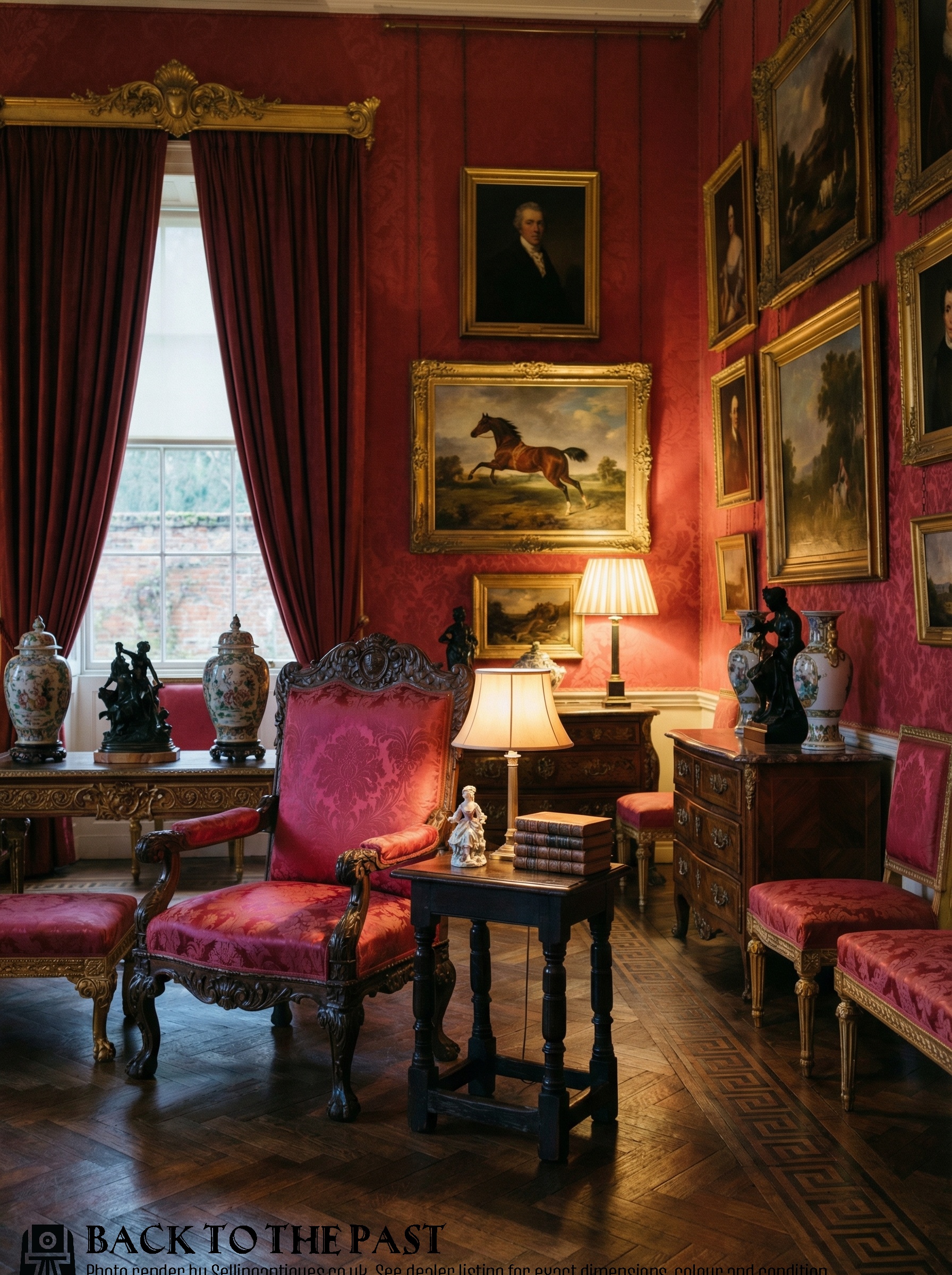
Dark Oak Joint Stool
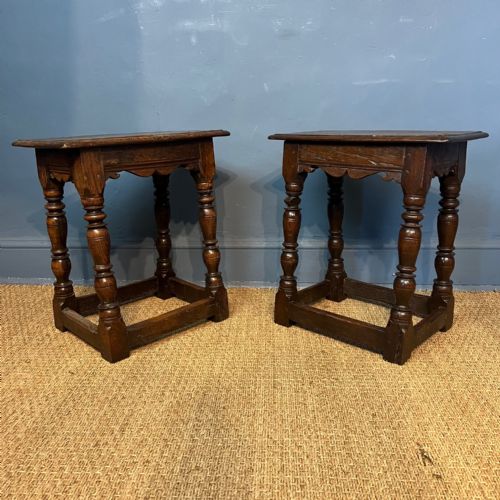
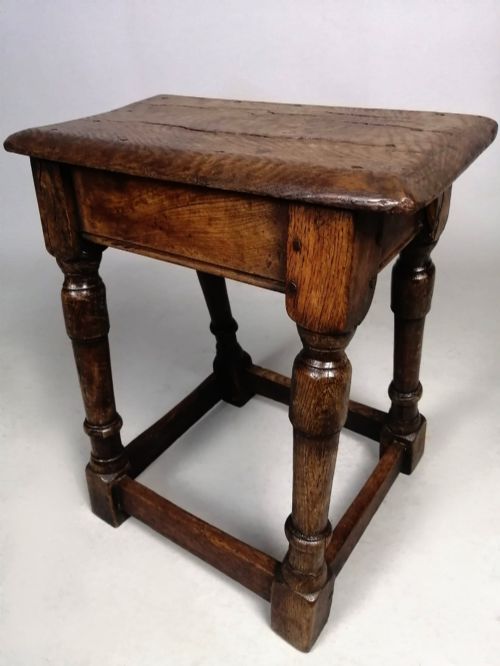
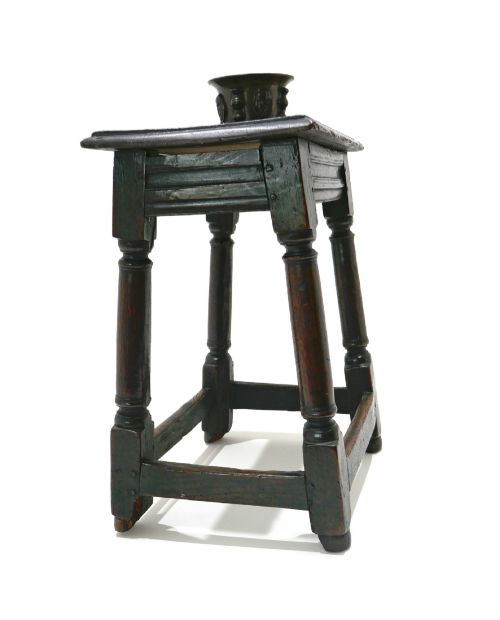
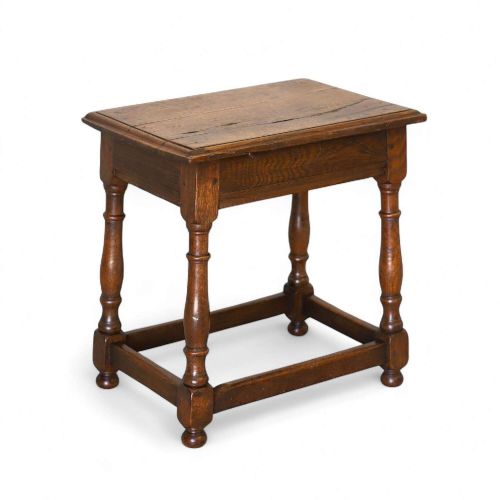
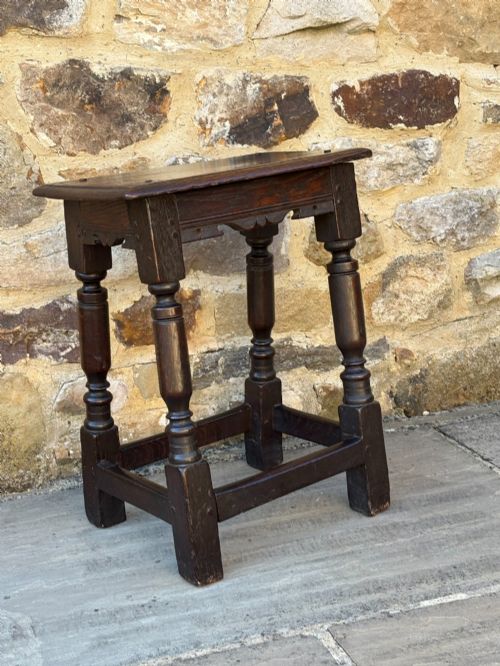
A dark oak joint stool is a sturdy wooden seat built with pegged mortise and tenon joints rather than simple glue or nails, designed to stand firm on uneven floors. When you search for this phrase, you find low seating built from solid timber designed to bear heavy weight in domestic spaces.
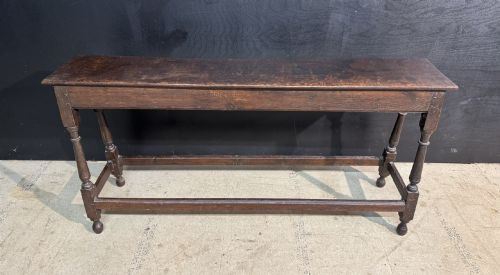
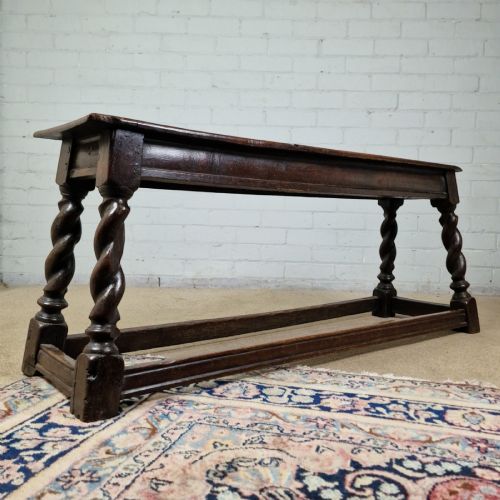
The versions most common here span from authentic seventeenth-century examples down to nineteenth-century revivals and later interpretations. Alongside standard single seats, the selection includes long stools, box stools, and occasional tables sharing the same timber and construction.
Most pieces show simple rectangular tops supported by turned or straight legs connected by low stretchers. Their origins stretch from provincial English workshops to later revivalist benches made to echo earlier centuries.
How they were made
Makers relied primarily on English oak, sometimes paired with elm for tops, shaping the heavy timber with hand saws and adzes. Pegged construction forms the backbone of these pieces, utilising wooden dowels to lock the joints firmly in place without metal fixings.
Surface finishing involved hand planing and polishing, which allowed the natural grain of the dark oak to absorb wax over generations. Structural strength came from low underframe stretchers that braced the legs against outward pressure.
Dark Oak Joint Stool Retail Price Guide 2026
Typical asking prices for dark oak joint stool among the pieces listed under this phrase on Sellingantiques today, from the lower quarter to the upper quarter. They describe what is for sale here now, not the wider market.
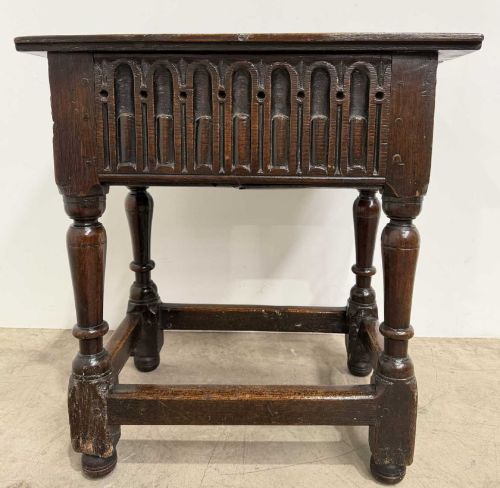
Box stools occasionally doubled as close stools, keeping domestic comforts discreetly hidden beneath a solid wooden lid.
What varies in quality
The division between average and exceptional pieces rests on the proportion of original timber remaining intact versus later replacement parts. Original pegging and untouched surface patination separate authentic early examples from heavily restored or later revival pieces.
Subtle details in the turning of the legs and the crispness of edge mouldings distinguish provincial workshop output from standard production. A well-preserved surface with deep natural tone carries far more character than a stripped or overly refinished timber frame.
The Dark Oak Joint Stool Glossary
- Joint stool
- A wooden stool constructed using fine joinery techniques, particularly pegged mortise and tenon joints, rather than being nailed together. The name derives from the joined timber frame.
- Box stool
- A variant form featuring a compartment beneath the seat lid, historically used for storage. These double as small tables or close stools.
- Stretcher
- A horizontal wooden brace connecting the legs of a stool to provide structural rigidity. They often double as footrests.
- Plank top
- A solid wooden seat constructed from one or more thick boards joined side by side. These form the primary surface of early benches and tables.
- Jacobean
- A design style spanning the early seventeenth century characterised by sturdy proportions and geometric carving. Revivals of this style appeared frequently in later centuries.
Dark Oak Joint Stool: Frequently Asked Questions
What is a joint stool used for?
These low wooden seats served everyday domestic functions around the house, primarily for sitting at tables or near hearths. Their sturdy frames also allowed them to double as small side tables or stands for household items.
In modern rooms, they function well as occasional seats, bedside surfaces, or simple display stands for plants and lamps.
How do I identify a seventeenth century stool?
Authentic seventeenth century pieces show hand-cut peg construction, dense English oak timber, and natural wear patterns accumulated over centuries. The grain often appears dark and dry from age, with tool marks visible beneath the surface.
Later nineteenth century revivals tend to feature more uniform machine tooling and lighter timber colour unless heavily stained to mimic earlier periods.
Are all these stools made of solid oak?
The majority of listings consist of solid oak, though secondary woods like elm appear frequently in table tops and seat panels. Some examples incorporate iron or brass hardware such as metal studs on box stools.
Check individual descriptions to confirm timber types, as provincial makers often combined local hardwoods depending on workshop availability.
How do I care for antique oak furniture?
Maintain the timber by applying a traditional beeswax polish sparingly to nourish the dry wood and preserve the surface sheen. Avoid placing the stool near direct heat sources or strong sunlight, which can cause the old oak to split.
Dust regularly with a soft dry cloth and handle the joints gently to protect the original pegged construction.