

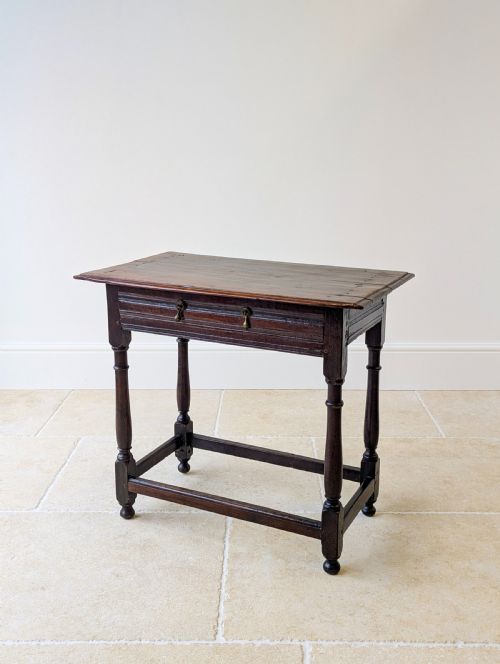
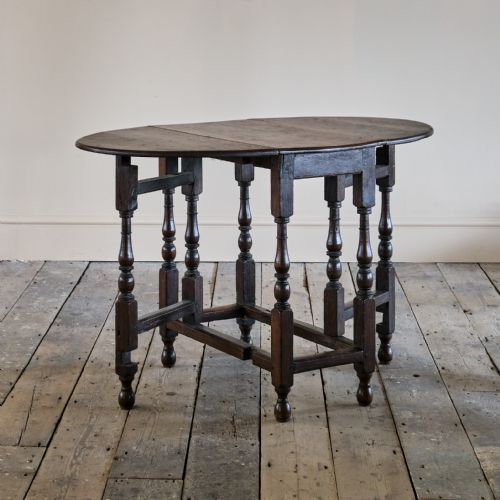


17th Century Oak Stool
A 17th century oak stool offers robust carpentry and straightforward domestic utility, holding a lasting place in historical English interiors.
17th Century Oak Stool
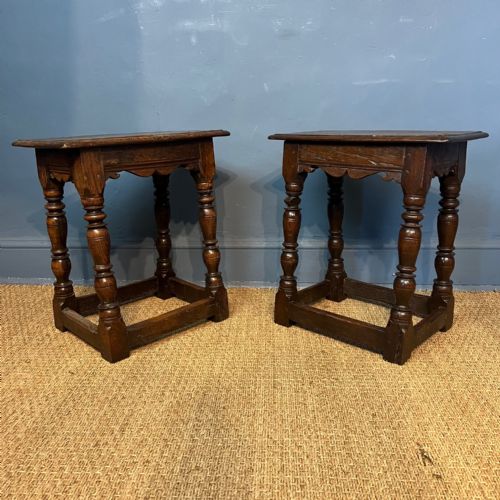
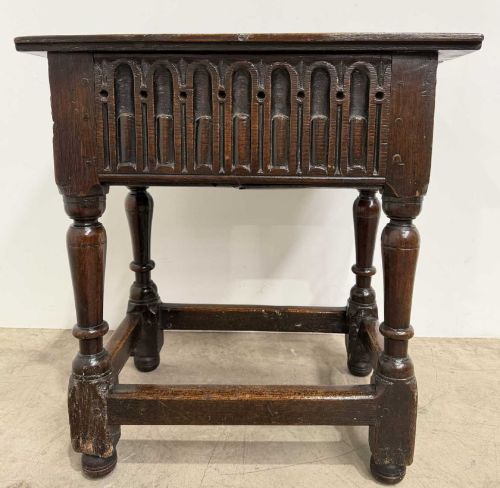
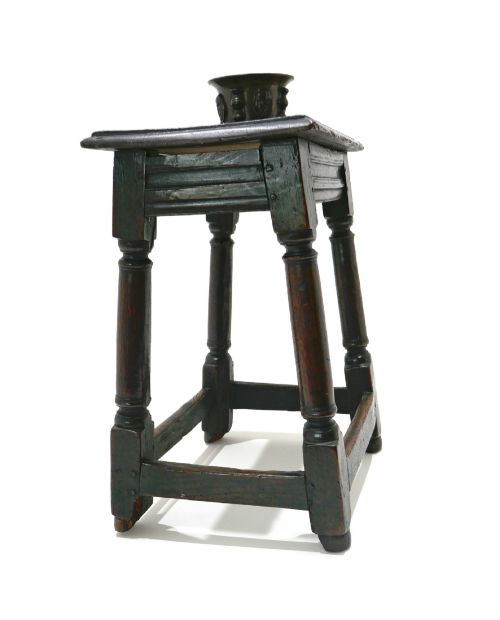
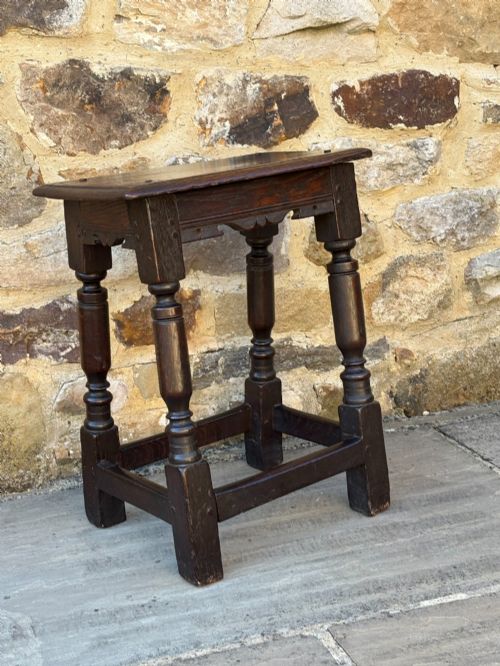
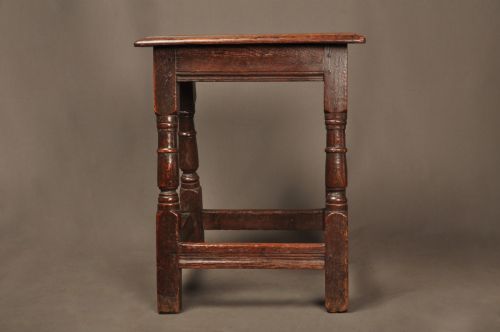
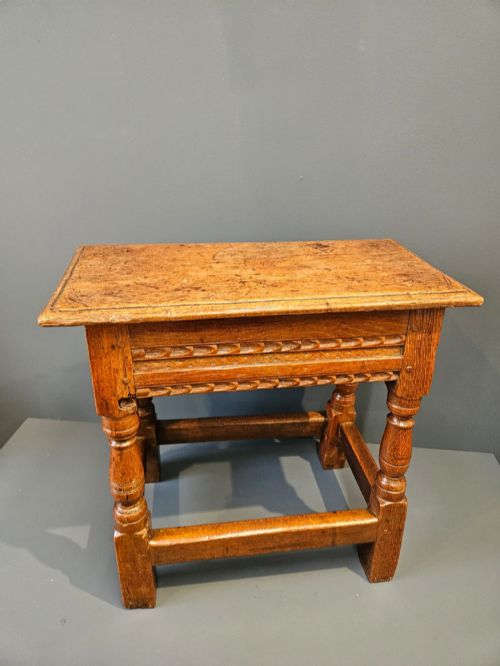
When searching for a 17th century oak stool, buyers typically encounter the traditional joint stool, characterised by pegged mortise and tenon joinery and upright rectangular proportions.
The inventory also spans functional variations such as box stools, commode stools, and back stools featuring low wooden backs.
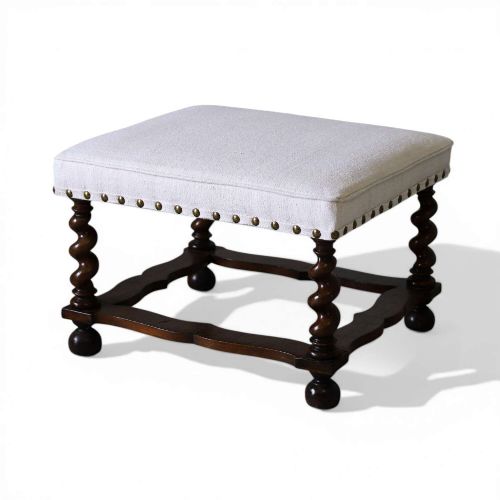
While many examples originate directly from the seventeenth century, later revival periods including the Victorian era and the early twentieth century also produced substantial numbers in matching styles.
How they were made
Carpenters relied principally on native timber, selecting durable oak supplemented occasionally by elm or fruitwood for secondary components.
Construction depended on rigid pegged joints rather than metal nails, creating a stable frame capable of withstanding heavy daily use.
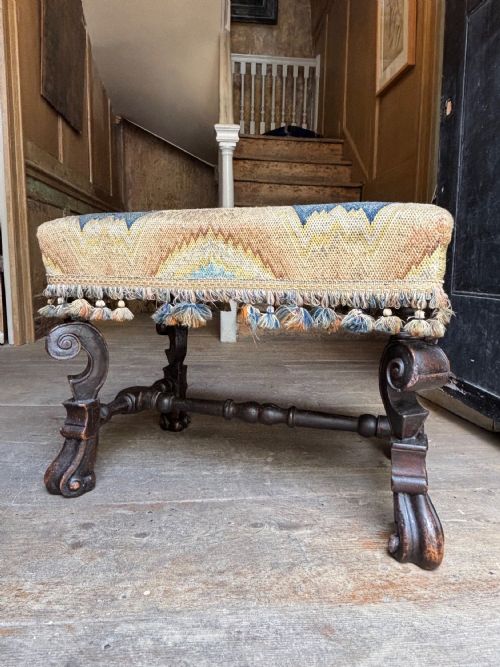
Selected pieces incorporate secondary decorative elements such as turned legs, carved rails, or applied upholstery with fabric and tapestry.
17th Century Oak Stool Retail Price Guide 2026
Typical asking prices for 17th century oak stool among the pieces listed under this phrase on Sellingantiques today, from the lower quarter to the upper quarter. They describe what is for sale here now, not the wider market.
Miniature versions occasionally appear on the market, originally made as salesman samples or children's toys.
What varies in quality
Quality rests upon the integrity of the original construction and the degree of survival among primary timbers over centuries of use.
Examples display differing levels of ambition in ornament, ranging from plain functional forms to exuberant carved motifs and shaped stretchers.
The balance between original historic material and subsequent structural intervention ultimately determines the standing of an individual piece.
The 17th Century Oak Stool Glossary
- Joint stool
- A sturdy wooden seat constructed using pegged joints rather than simple nailing. These items served multiple household purposes including seating and serving.
- Back stool
- An early form of side chair featuring a low upholstered or solid wooden back atop a compact seat. They bridge the gap between stools and standard chairs.
- Box stool
- A seat featuring a hollow compartment beneath the lid for concealed storage. Historical versions often doubled as close stools.
- Carolean
- The stylistic period spanning the reign of King Charles II, known for baroque forms and turned legs. Pieces from this era often show richer ornamentation than earlier iterations.
- Stretcher
- The horizontal wooden member connecting the lower legs to provide structural rigidity. Elaborate examples utilise shaped or barley-sugar turning.
17th Century Oak Stool: Frequently Asked Questions
What is a joint stool?
A joint stool is a solidly built wooden seat constructed by joiners using pegged mortise and tenon joints. These items were common in early households for sitting and reaching high places.
Their sturdy frames allowed them to double as small side tables when required.
How do I spot a reproduction?
Distinguishing period items from later revivals involves examining the tool marks, timber shrinkage, and wear patterns on the wood. Revivals from the nineteenth and twentieth centuries often employ different sawing techniques.
Comparing structural joinery helps clarify the likely age of the timber.
Were these used as chairs?
In early domestic settings, standard stools provided seating for most household members while chairs were reserved for heads of the household. Back stools eventually introduced low supports for added comfort.
They functioned flexibly around the room as movable seats.
How do I care for old oak?
Maintaining historical timber requires stable indoor humidity away from direct heat sources and sudden temperature shifts. Regular dusting with a dry cloth protects the surface without chemical buildup.
Applying traditional wax occasionally helps nourish dry wood over time.