

17th Century Oak Furniture
17th century oak furniture brings domestic history into a room through solid timbers, sturdy joints and centuries of tactile use.
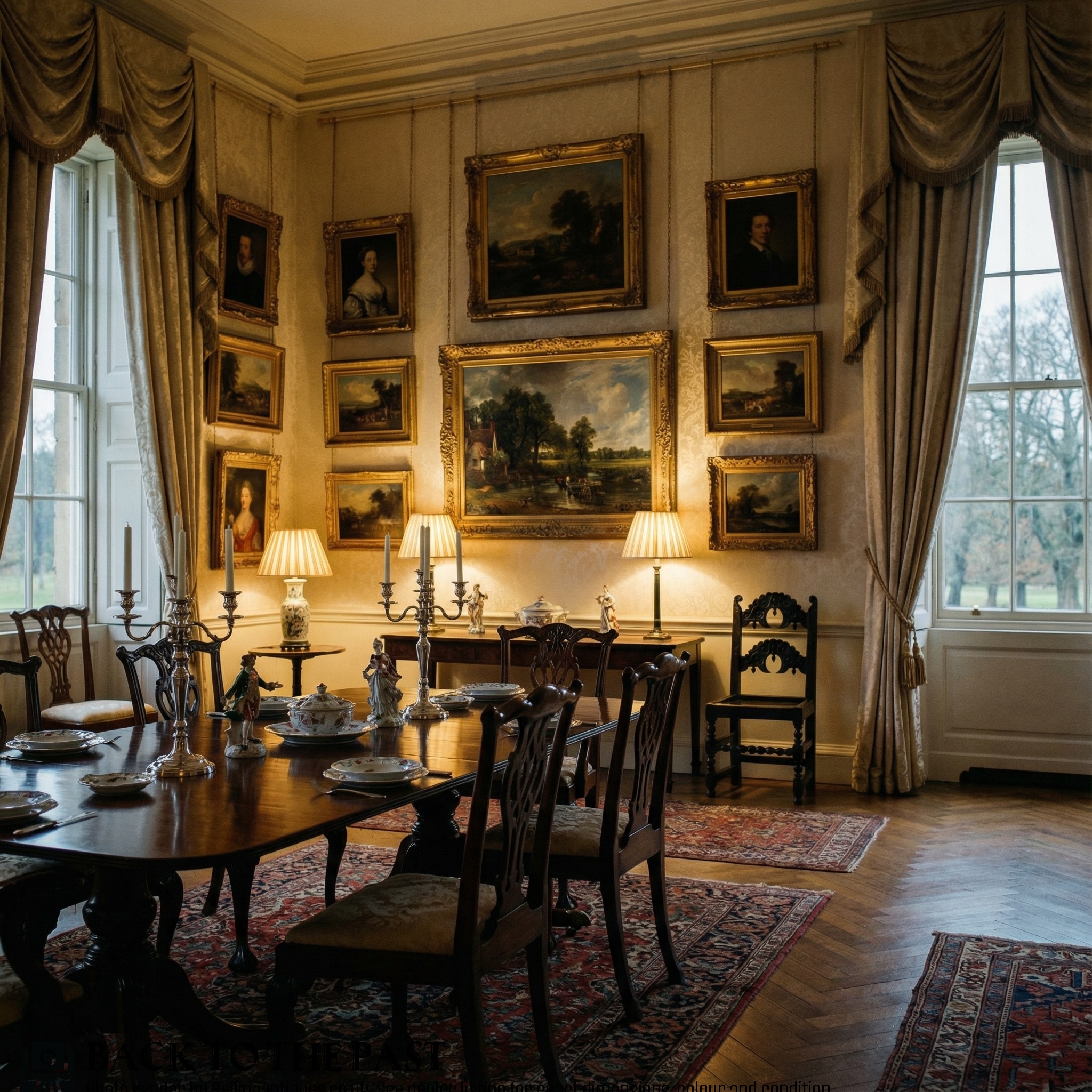
17th Century Oak Furniture
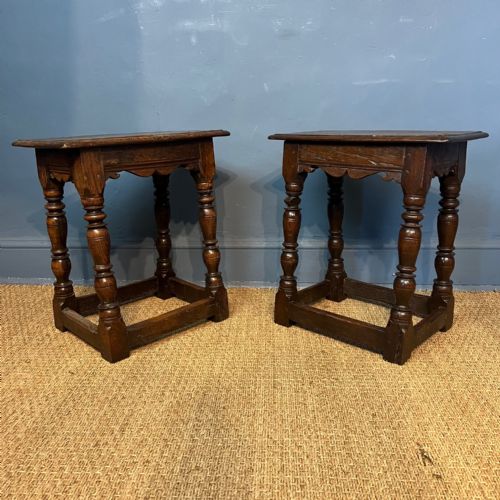
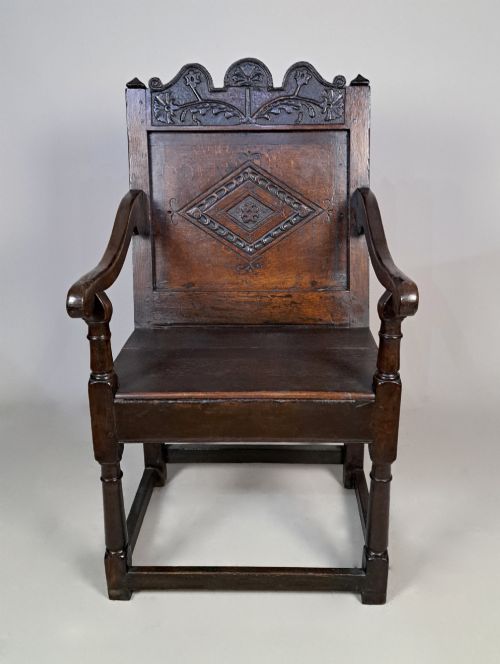
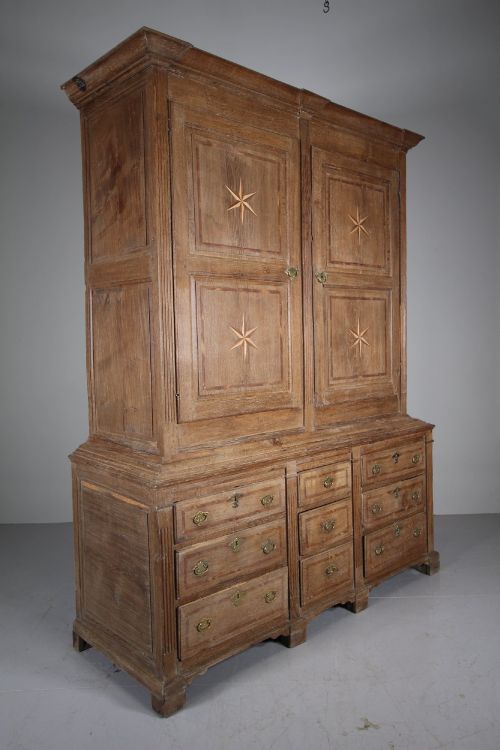
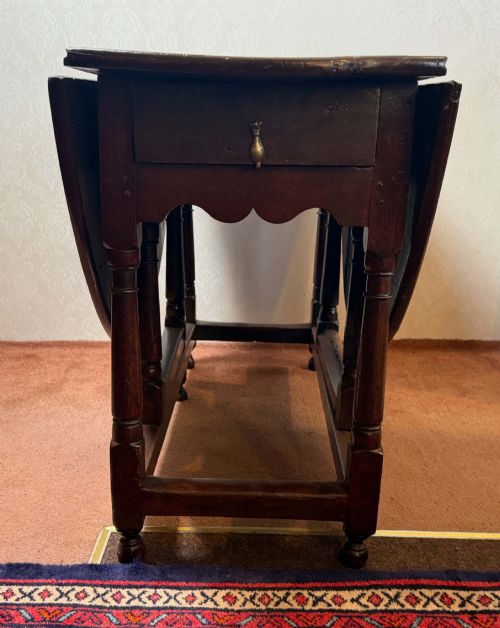
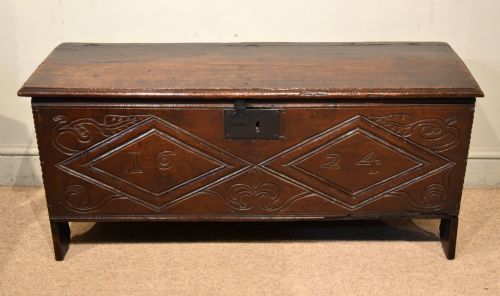
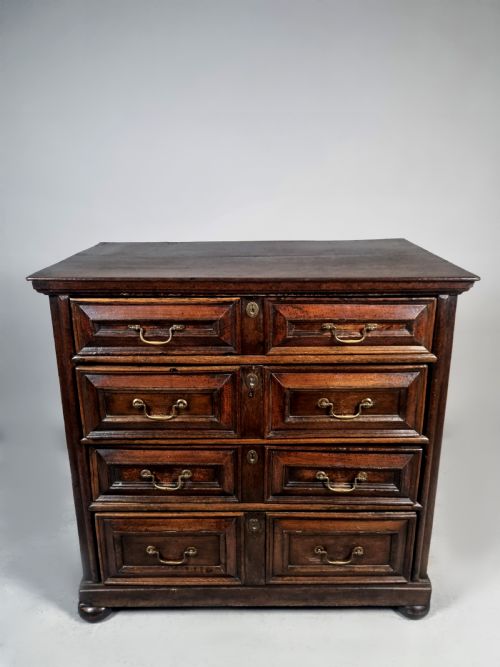
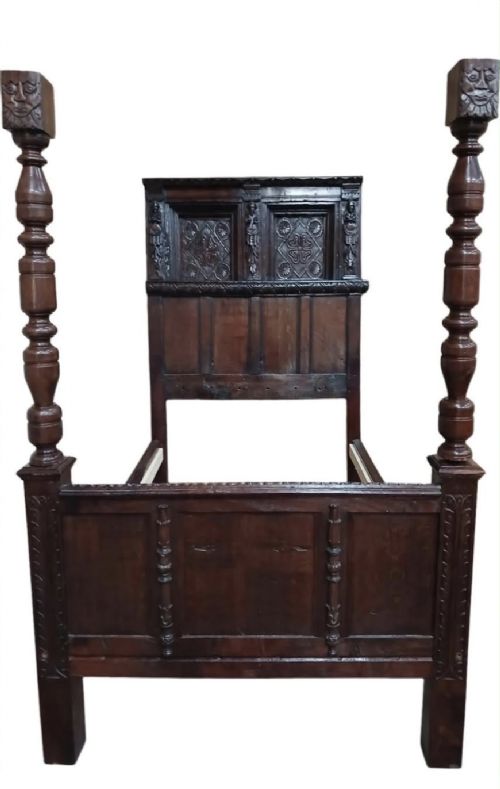
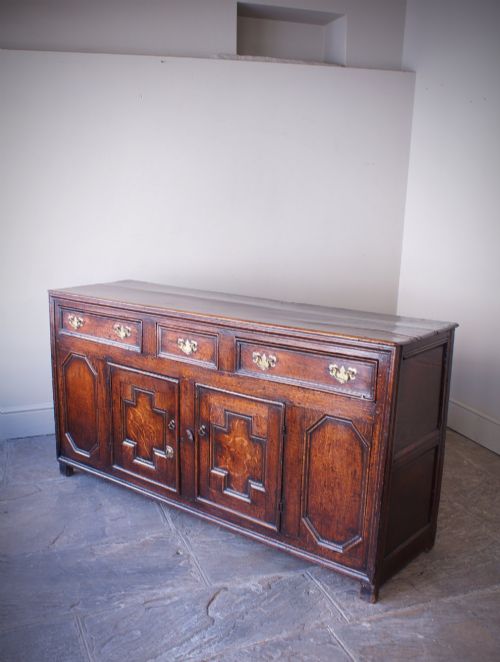
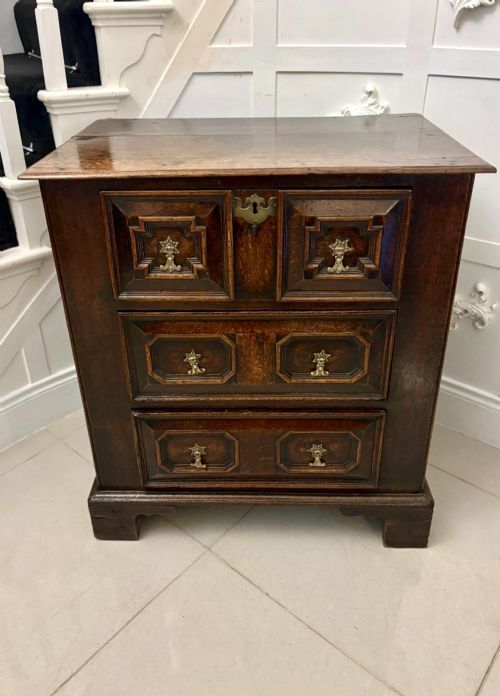
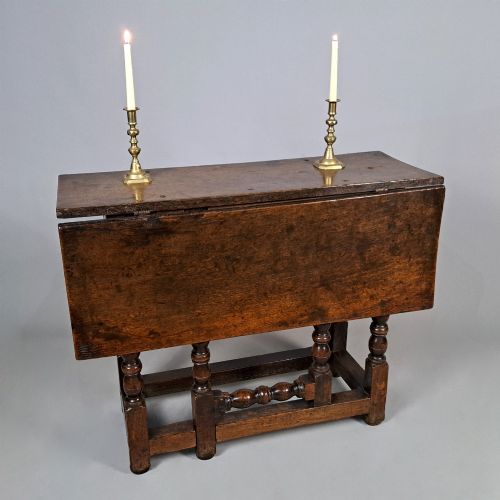
17th century oak furniture encompasses practical domestic items built for storage, seating and dining in early modern homes. Buyers searching for 17th century oak furniture frequently encounter robust chests of drawers, panelled coffers, joint stools and gateleg tables.
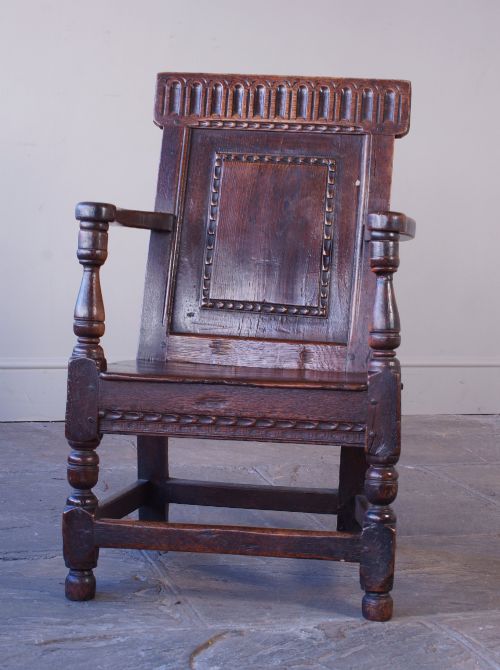
The selection spans periods from the Jacobean era through Charles II and William and Mary reigns, originating from English regional workshops as well as Dutch, Spanish and Welsh makers. Surviving examples range from simple joint stools in oak and elm to elaborately carved armchairs and geometric moulded cupboards.
Materials and Construction
Woodworkers built these pieces using sturdy timbers of oak, supplemented by fruitwood, elm, walnut, rosewood and ebony for contrast and detail. Joinery relied on pegged mortise and tenon joints, creating rigid frames without relying on metal fasteners.
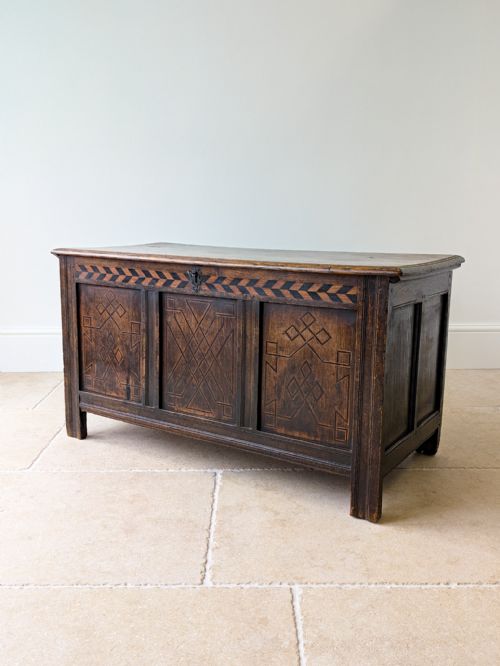
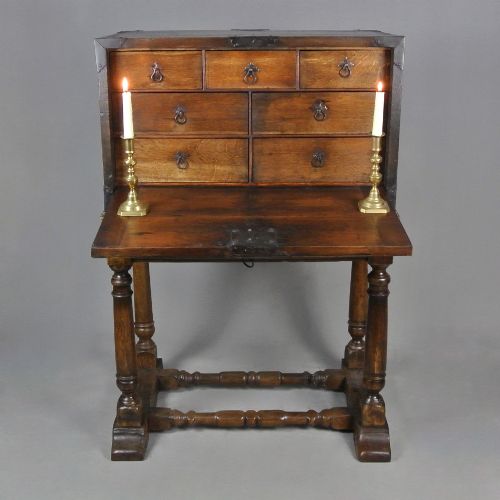
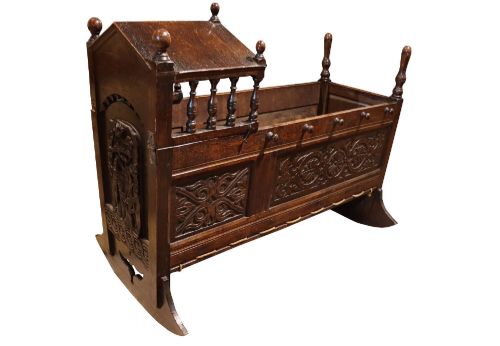
Surfaces often display decorative techniques including geometric moulding, marquetry inlay, oyster veneering and hand carving. Iron and brass hardware such as hinges and strong box mounts secured lids and doors.
17th Century Oak Furniture Retail Price Guide 2026
Typical asking prices for 17th century oak furniture among the pieces listed under this phrase on Sellingantiques today, from the lower quarter to the upper quarter. They describe what is for sale here now, not the wider market.
Listings feature primary materials including oak, elm, fruitwood and walnut, alongside decorative marquetry inlay and brass hardware.
Gradations in Quality
Quality rests in the crispness of hand-carved details, the complexity of geometric mouldings and the preservation of original timber surfaces. Pieces retaining genuine patination and early construction details stand apart from heavily altered examples.
The integration of secondary timbers and the precision of joinery separate standard utility pieces from exceptional commissions bearing intricate marquetry inlay or specialised regional characteristics.
The 17th Century Oak Furniture Glossary
- Joint stool
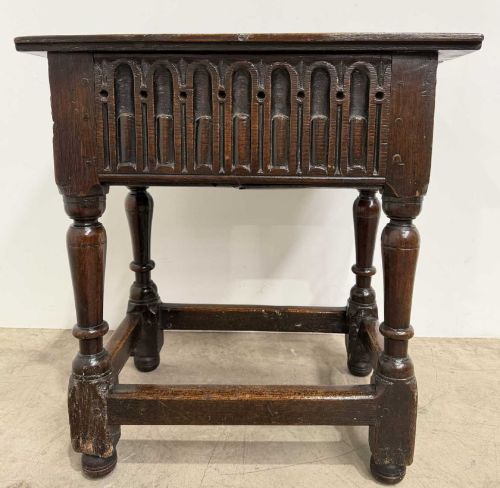
- A sturdy wooden stool constructed with pegged mortise and tenon joints rather than turned legs inserted into a seat. These items served multiple household purposes for sitting or reaching high shelves.
- Coffer
- A large wooden chest used primarily for storing textiles, valuables and documents. Early examples often feature heavily carved front panels and sturdy boarded lids.
- Gateleg table
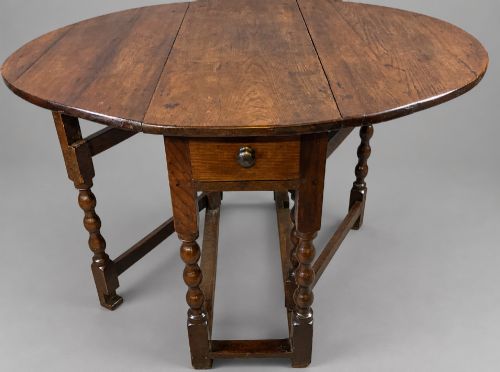
- A drop-leaf table featuring hinged flaps supported by pivoted legs that swing outward like a gate. This clever mechanism allowed tables to expand for dining and fold down against walls when not in use.
- Wainscot armchair
- A heavy wooden chair constructed with panelled backs and solid wooden seats, typical of affluent 17th century households. They required considerable woodworking skill to produce.
- Marquetry inlay
- A decorative technique of applying fitted pieces of contrasting wood veneer to create elaborate pictorial or geometric patterns on furniture surfaces.
17th Century Oak Furniture: Frequently Asked Questions
How do I identify a joint stool?
A joint stool stands on four vertical legs connected by stretcher rails near the base, built entirely with pegged wooden joints. The flat top usually consists of solid oak boards with moulded edges.
Unlike later domestic seating, these stools were heavy utility objects designed to support substantial weight during daily household tasks.
What is a gateleg table used for?
Gateleg tables provided flexible surface space in 17th century rooms for dining, writing or administrative tasks. The hinged leaves dropped down to save floor space when meals concluded.
Their sturdy timber frames and swinging leg supports allowed large families to gather around a stable surface that could be stowed against a wall.
How should I care for old oak?
Keep wooden surfaces away from direct heat sources and dramatic humidity fluctuations to prevent timber from splitting or warping. Natural beeswax applied sparingly helps nourish the grain without building up heavy chemical residues.
Dust surfaces gently with a dry cloth and avoid modern silicone polishes that can permanently alter the historic finish.
How do I spot regional styles?
Regional pieces often display distinct carving motifs, local timber preferences and construction quirks tied to specific parts of Britain or Europe. For example, Welsh pieces from areas like the Gower Peninsula exhibit unique vernacular traditions.
Comparing moulding profiles and secondary woods helps pinpoint whether a piece originated in northern workshops or southern counties.