

Jacobean Oak Dining Table
A jacobean oak dining table brings solid construction and historic presence to a room, offering sturdy surfaces for everyday meals and gatherings.

Jacobean Oak Dining Table
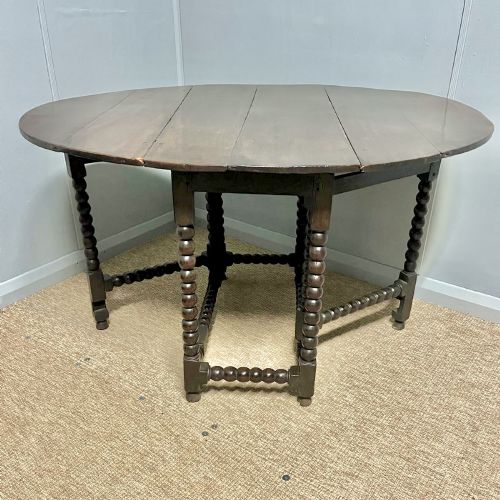
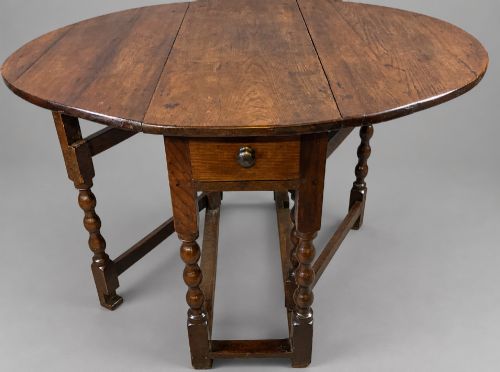
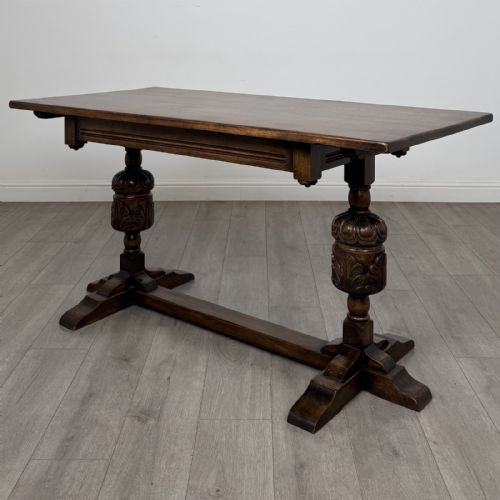
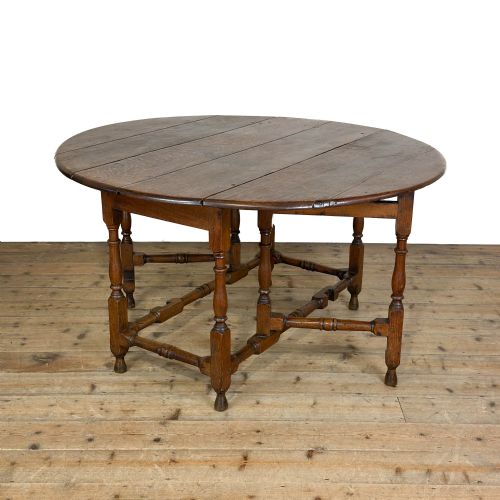
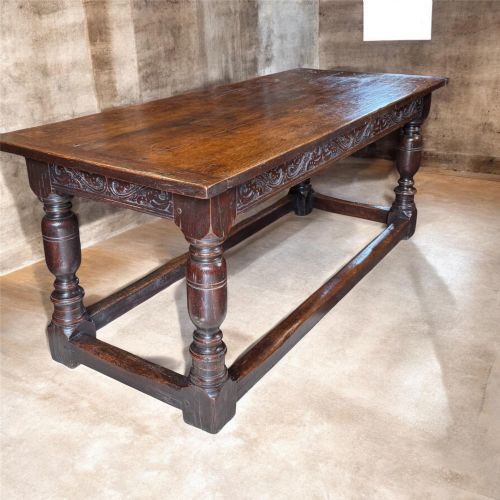
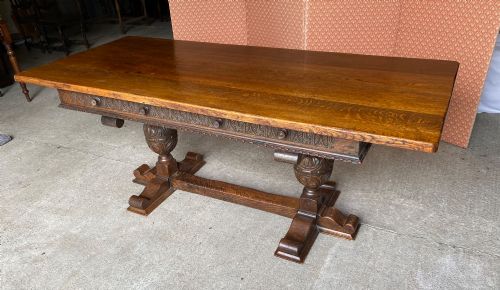
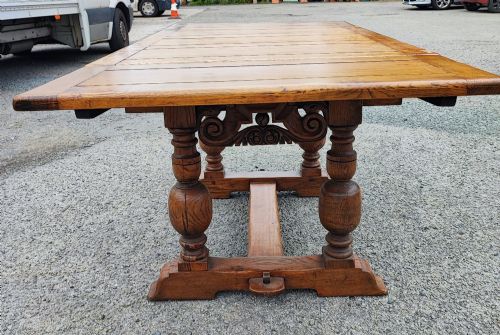
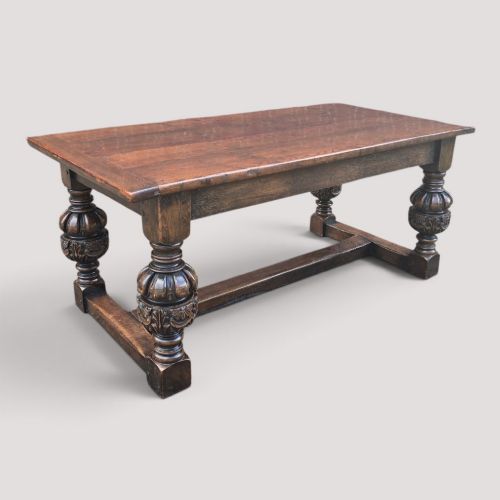
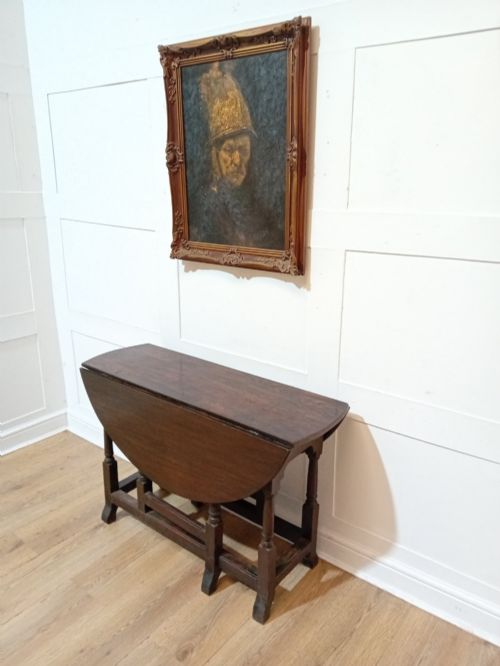
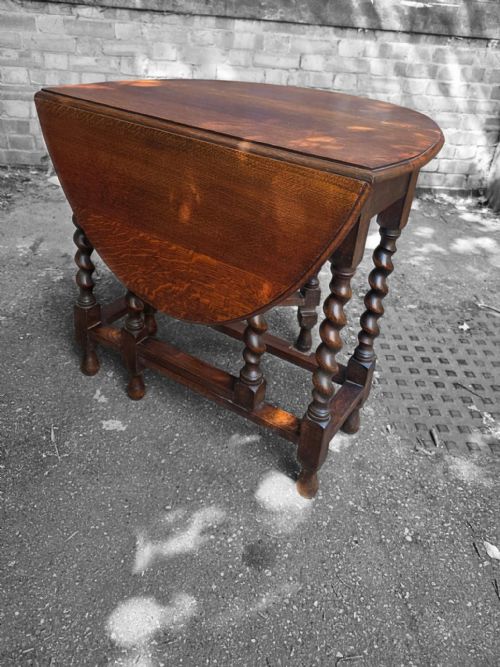
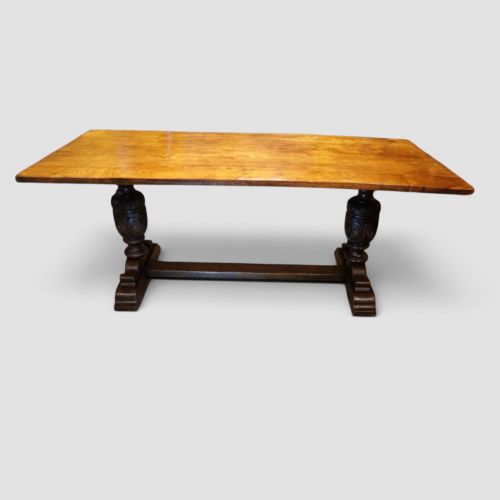
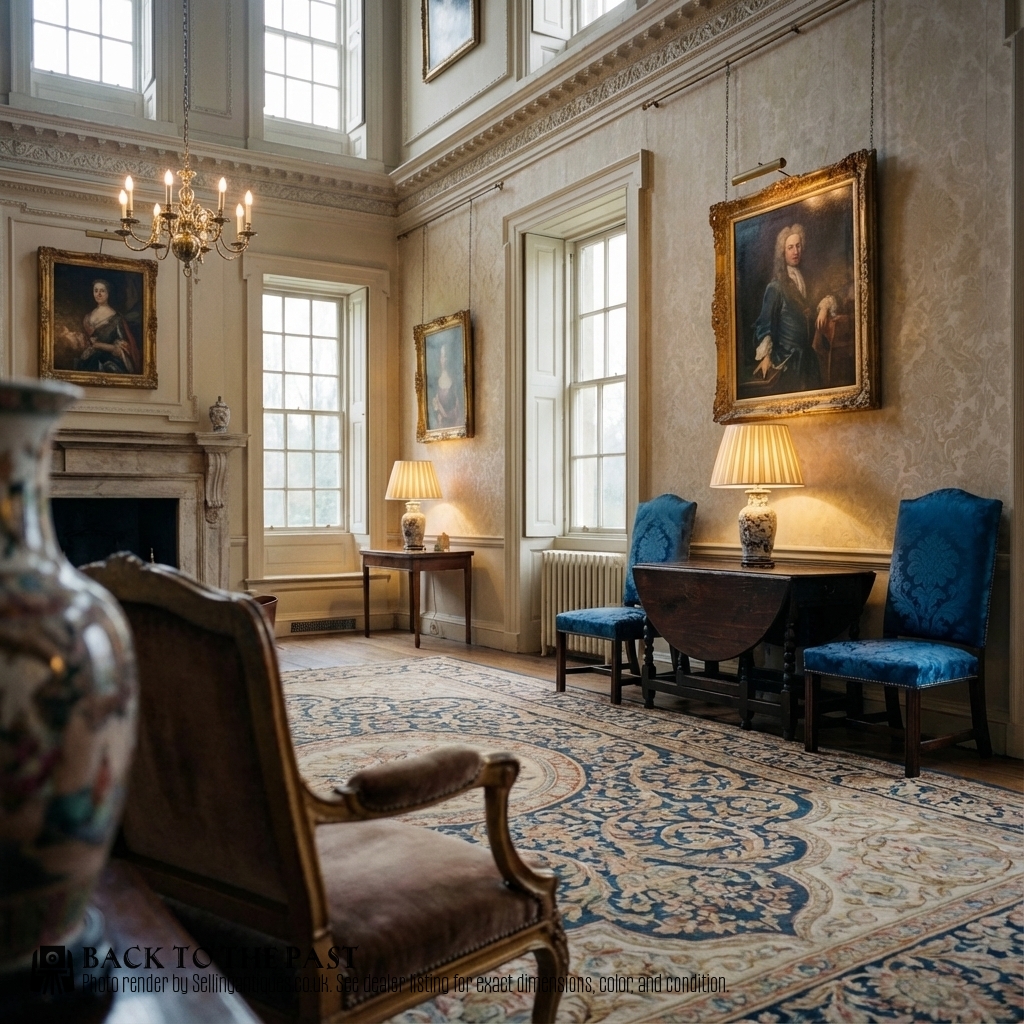
A jacobean oak dining table typically appears as a substantial refectory form or a versatile gateleg design, rooted in seventeenth century traditions. Buyers meet many twentieth century revivals alongside pieces originating from the seventeenth century itself.
The selection ranges from long plank top dining tables designed for larger groups to smaller drop leaf variants. These forms suit both formal dining rooms and country farmhouse kitchens.
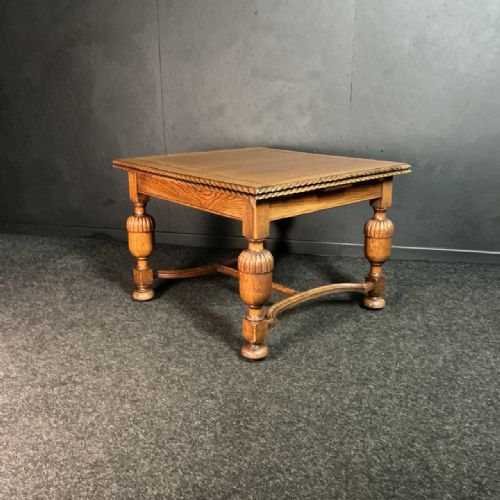
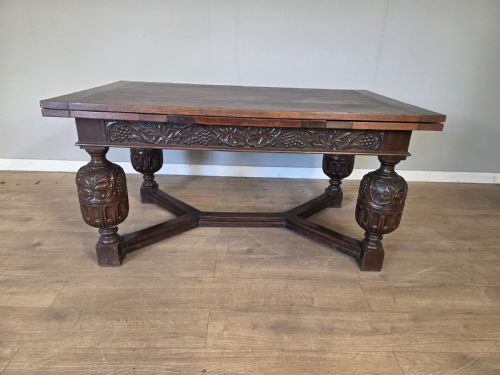
Makers often incorporated draw leaf mechanisms or extension leaves, allowing the surfaces to expand when needed. Alongside the tables, related pieces like chairs, sideboards and occasional tables frequently appear.
How they were made
Solid oak forms the primary structural material, occasionally supplemented by elm for specific top planks or secondary woods in frames. Joinery relied on traditional pegged mortise and tenon joints to secure the heavy timbers.
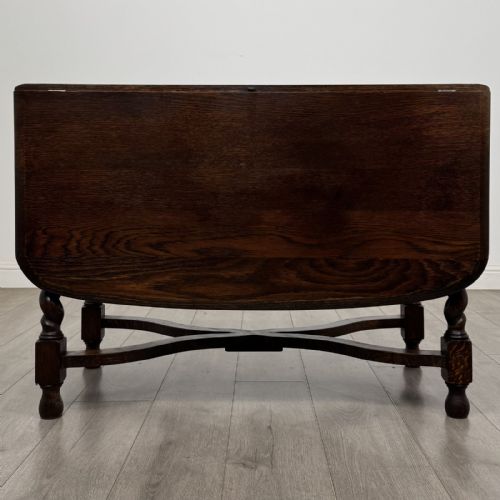
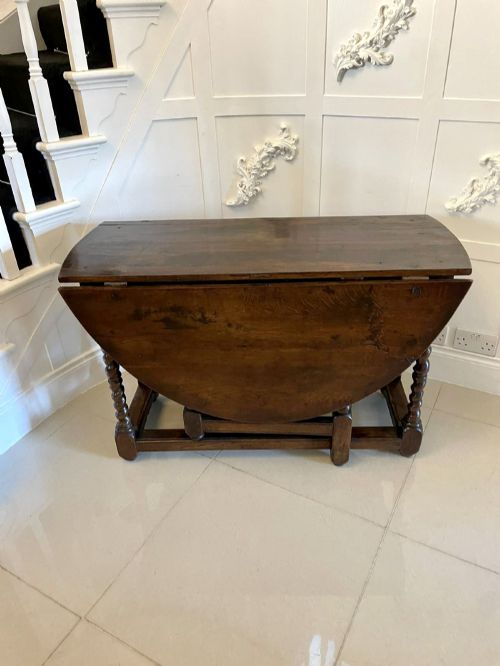
Turned elements such as barley twist, bobbin turned, or baluster posts shape the legs and stretcher bases. Carved details on friezes and rails display period motifs executed by hand or specialised machinery in revival eras.
Jacobean Oak Dining Table Retail Price Guide 2026
Typical asking prices for jacobean oak dining table among the pieces listed under this phrase on Sellingantiques today, from the lower quarter to the upper quarter. They describe what is for sale here now, not the wider market.
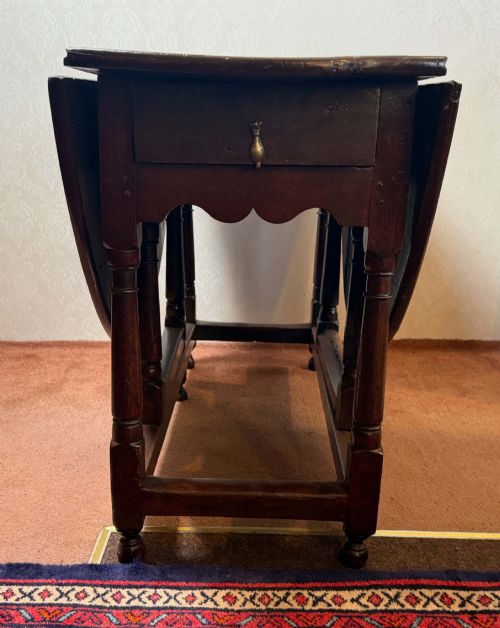
Some gateleg tables manage to fold down small enough to hide away, ready to reappear whenever unexpected guests arrive for supper.
What varies in quality
The integrity of the timber and the depth of the original patina distinguish exceptional examples from simpler revival pieces. Tables retaining single plank tops or untouched seventeenth century surfaces command greater interest.
Proportion and the crispness of turned details define the visual balance of the piece. Substantial framing and tight joints without excessive modern intervention mark superior construction across all periods.
The Jacobean Oak Dining Table Glossary
- Refectory table
- A long, narrow dining table traditionally used in monasteries and large halls, featuring strong legs connected by stretchers. They provide generous seating along the sides.
- Gateleg table
- A drop leaf table where hinged legs swing out like a gate to support the folded leaves when raised. This design allows the table to occupy less space when closed.
- Draw leaf table
- An extending table with pull out leaves stored beneath the main top, which slide out to lengthen the surface area. It permits quick adjustment for extra diners.
- Barley twist
- A spiral turning resembling a twisted rope, carved into furniture legs and uprights. This decorative technique became popular during the seventeenth century and later revivals.
- Patina
- The surface sheen and mellow colour developed on wood through age, handling and polishing. It serves as an indicator of period authenticity.
- Baluster
- A moulded vertical column or post supporting a table top or stretcher. They often feature swelling profiles characteristic of early English furniture.
Jacobean Oak Dining Table: Frequently Asked Questions
How do I seat more guests?
Many examples feature draw leaf mechanisms or pull out extensions hidden beneath the main surface. Gateleg versions also allow drop leaves to lift up for expanded dining space.
Selecting a refectory form provides long unhindered sides where benches or multiple chairs slide underneath easily. This accommodates larger gatherings without crowding the room.
Are seventeenth century and revival tables different?
Original seventeenth century examples show period tool marks, timber shrinkage, and centuries of handling reflected in the patina. Revival pieces made around nineteen hundred often use machine turning and cleaner internal fixings.
Both types utilise solid oak and traditional forms, but period pieces carry historical wear while revivals offer sturdier daily utility.
How do I care for solid oak surfaces?
Solid oak benefits from application of appropriate wax polish to nourish the wood and maintain the patina. Avoid placing tables near direct heat sources to prevent timber splitting.
Using coasters and mats protects the historic or polished finish from moisture rings and heat marks. Regular dusting with a soft cloth preserves the grain.
Where did gateleg tables get used?
Gateleg tables served versatile functions in country houses and farmhouses where rooms required multi-purpose layouts. Their folding leaves allowed them to sit against a wall when not in use.
They functioned as dining tables for meals and supper, then folded down to clear floor space. This practical adaptability made them enduring household fixtures.