

Heavy Oak Dining Table
A heavy oak dining table anchors a room with solid timber, spanning centuries of craftsmanship from provincial farmhouses to grand school libraries.

Heavy Oak Dining Table
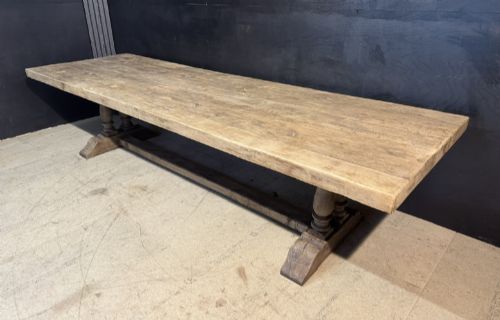
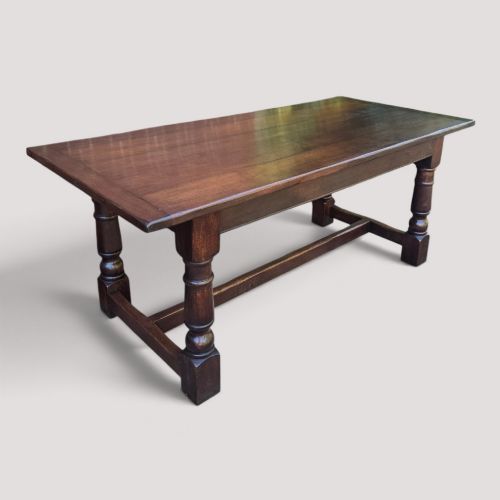
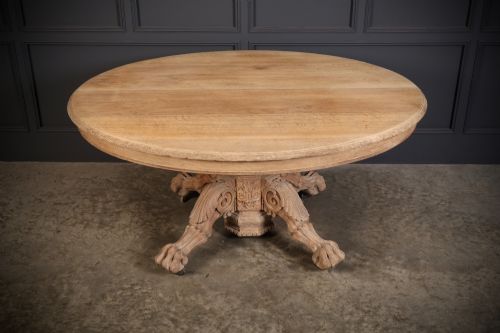
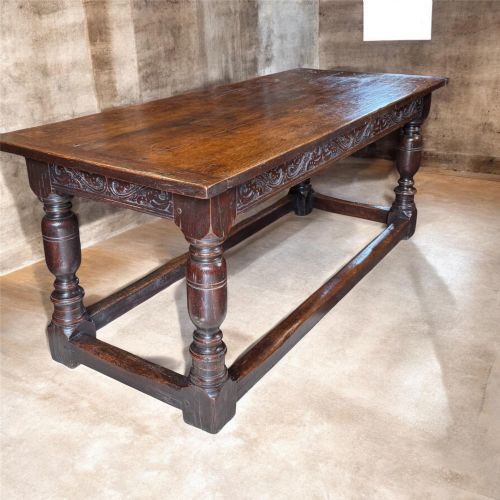
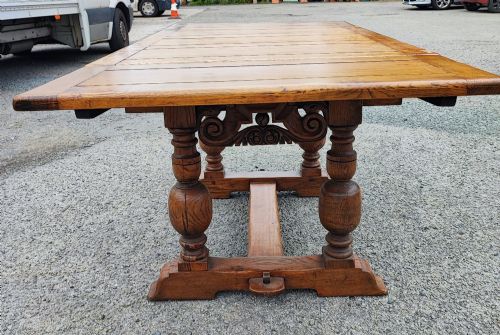
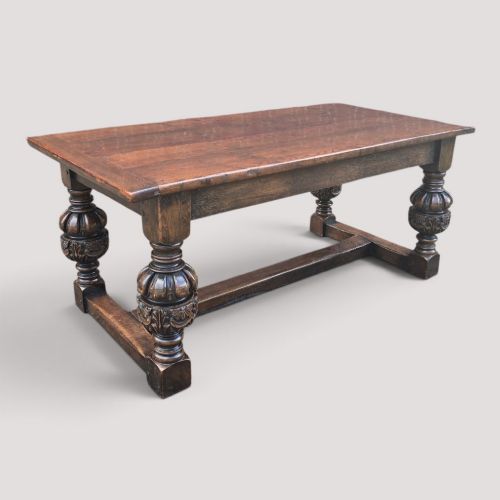
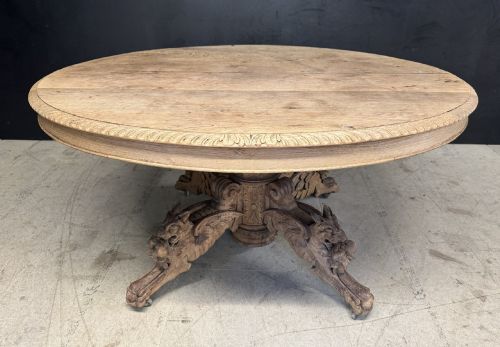
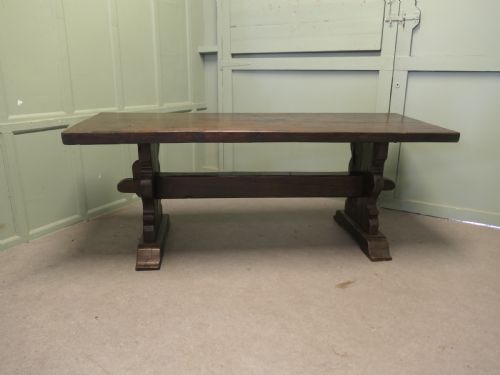
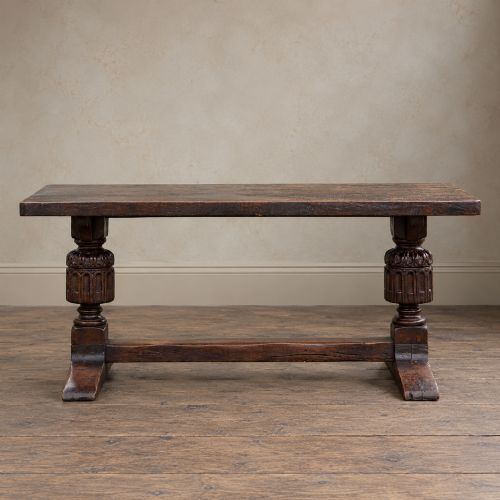
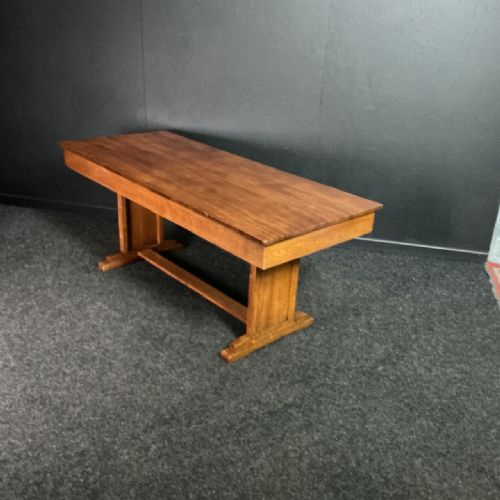
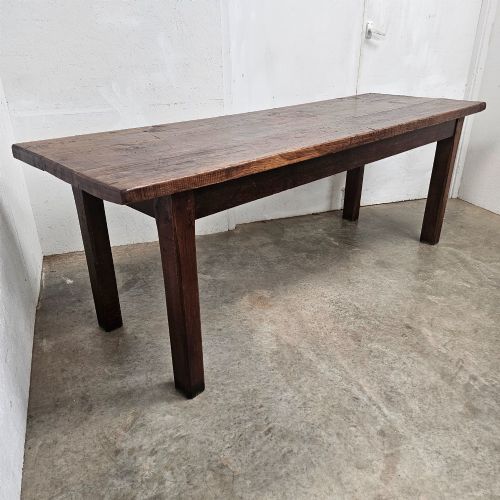
A heavy oak dining table takes many forms across this selection, most commonly appearing as a refectory or farmhouse table designed to seat large numbers. These pieces span centuries, drawing on 17th-century vernacular traditions as well as Victorian, Edwardian, and later revivals.
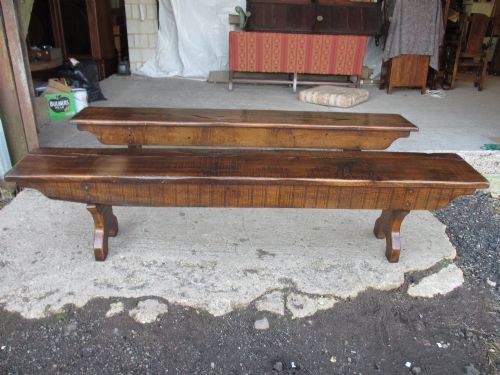
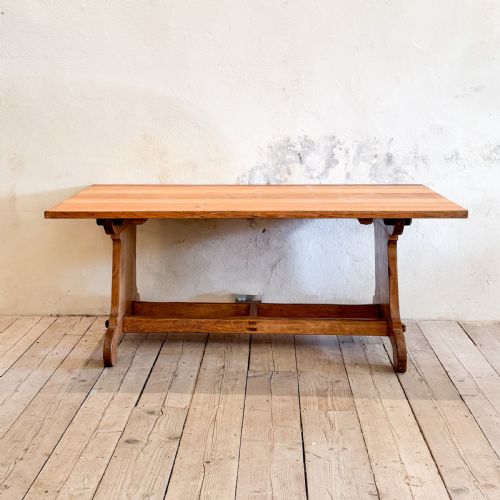
Beyond standard refectory formats, the listings include draw leaf mechanisms, trestle ends, and gateleg frames alongside associated benches and serving pieces. French and English origins dominate, utilising local hardwoods and sturdy joinery built for daily communal use.
Materials and construction
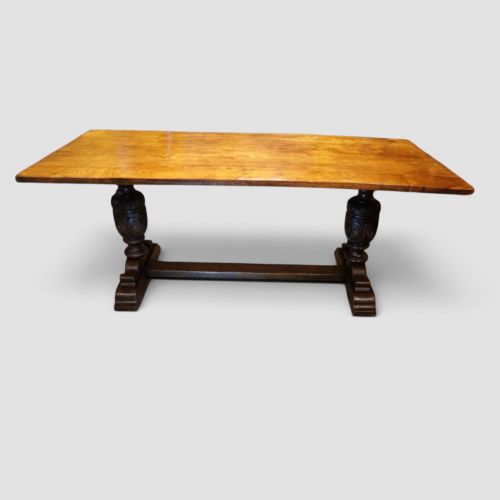
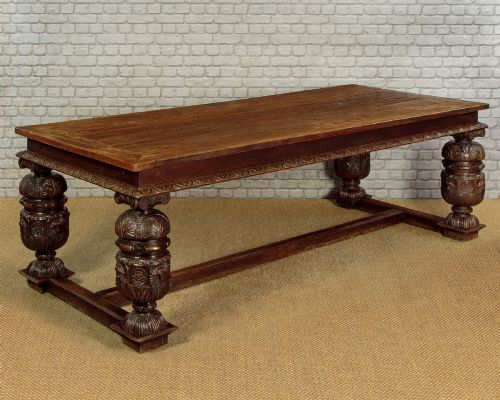
Construction relies heavily on solid oak timbers, often paired with elm top planks, red walnut accents, and structural elements of cast iron and metal. Joinery methods prioritise stability, utilising thick planks, trestle bases, and heavy bulbous supports to bear substantial weight.
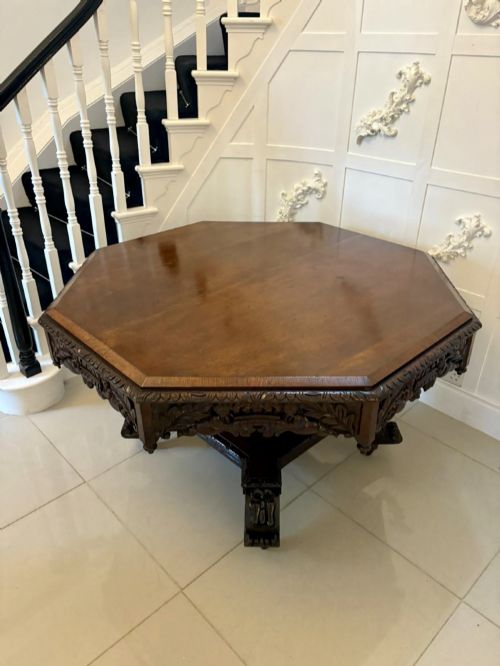
Surfaces frequently display carved friezes, shaped trestle ends, and single-plank or multi-plank tops joined without modern adhesives. The integration of iron fittings and sturdy peg construction ensures structural endurance across centuries of heavy service.
Heavy Oak Dining Table Retail Price Guide 2026
Typical asking prices for heavy oak dining table among the pieces listed under this phrase on Sellingantiques today, from the lower quarter to the upper quarter. They describe what is for sale here now, not the wider market.
Periods represented range from the seventeenth century through the Victorian and Edwardian eras up to nineteen thirty.
Judging quality
Quality separates tables built with single-plank or thick timber tops from those assembled with thinner veneers or joined boards. The integrity of the underframe, whether carved trestles, bulbous legs, or cast iron supports, determines the overall stability and proportion of the piece.
The degree of hand carving, the authenticity of period joinery, and the depth of natural patina acquired through historic use distinguish exceptional examples. Original hardware and matching benches add considerable integrity to the ensemble.
Mouseman Oak
The Heavy Oak Dining Table Glossary
- Refectory table
- A long, narrow dining table traditionally used in monasteries and large halls. These pieces feature stretcher bases for added stability.
- Draw leaf table
- A dining table with leaves stored beneath the main top that pull out to extend the surface length. This mechanism increases seating capacity without removing the central top.
- Trestle base
- A support system consisting of horizontal feet connected to vertical uprights or beams. It provides robust support for long, heavy tabletops.
- Bulbous support
- A heavy, swelling leg or pedestal turned on a lathe, common in Jacobean and revival furniture. This decorative feature adds mass and presence to the table base.
Heavy Oak Dining Table: Frequently Asked Questions
How many people do these tables seat?
Many of these tables accommodate six to twelve diners comfortably, depending on the length of the top and the placement of the trestles or legs.
Long refectory formats and extending variants offer flexible seating arrangements for large gatherings.
Are these tables suitable for daily use?
Solid oak and elm construction provides exceptional durability for everyday family dining and heavy communal service.
Their robust timber frames withstand regular daily wear while maintaining structural integrity over generations.
How do I care for a historic timber top?
Maintenance involves minimal intervention, relying on soft cloths and natural waxes to preserve the aged surface patina.
Avoiding excessive moisture and direct heat sources protects the historic grain and prevents timber movement.
How do I distinguish a revival piece from an earlier period?
Examination of tool marks, timber shrinkage, and joinery techniques reveals whether a table dates to the seventeenth century or a later nineteenth-century revival.
Revival pieces often incorporate period motifs like carved friezes while utilising nineteenth-century structural standards.