

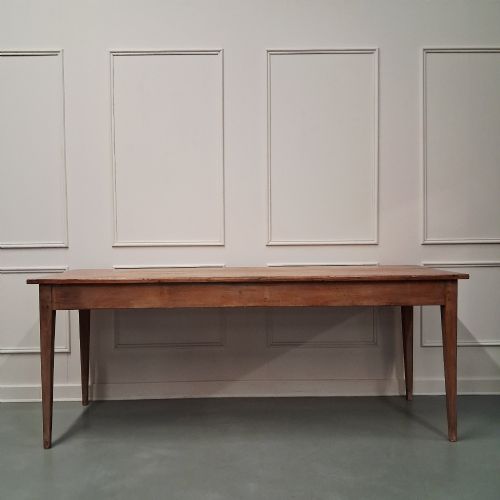
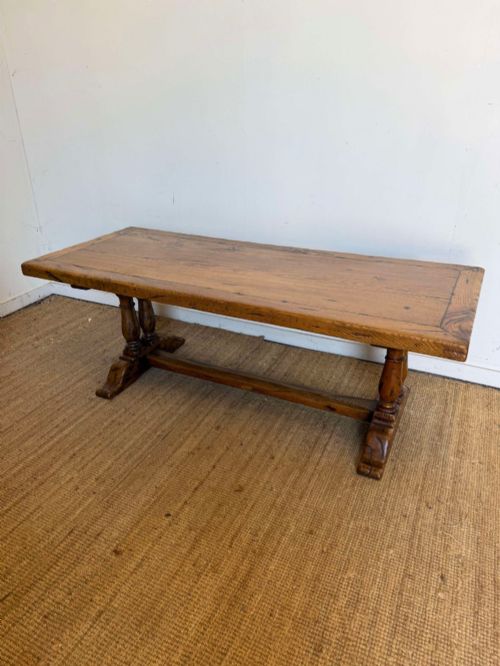
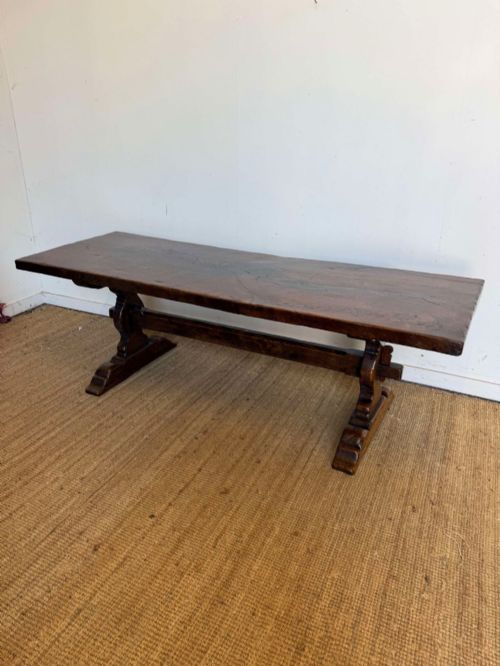
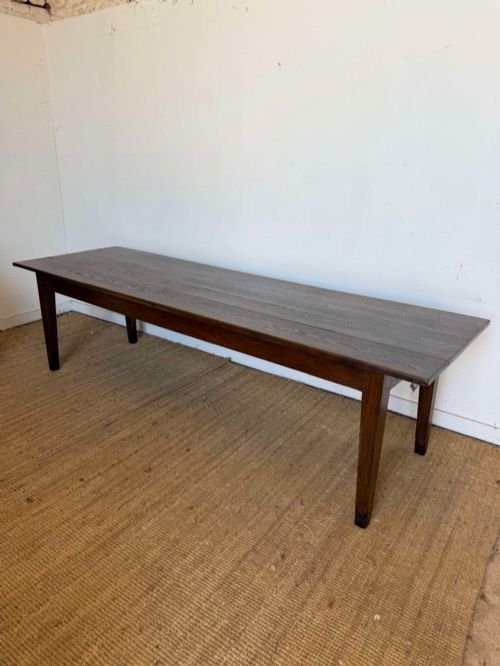
Wooden Refectory Dining Table
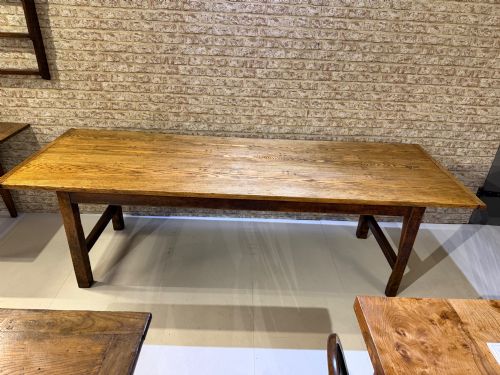
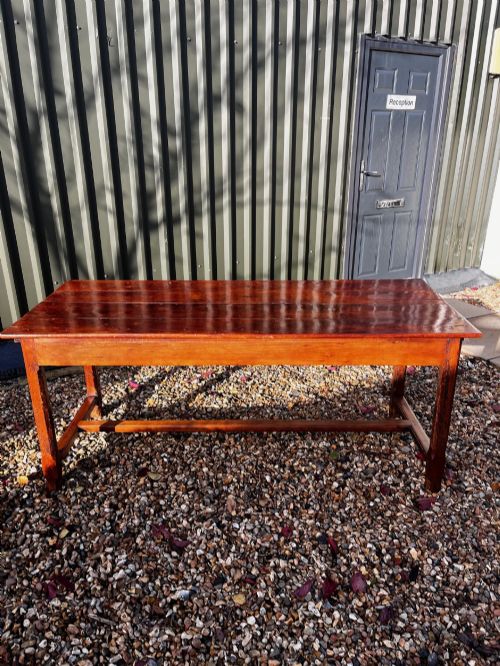
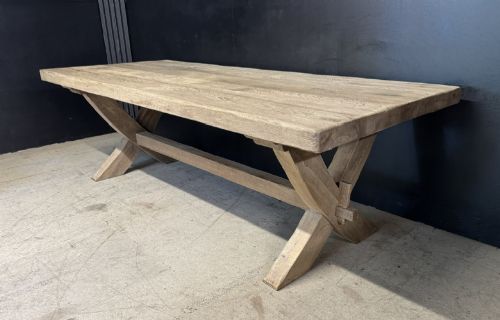
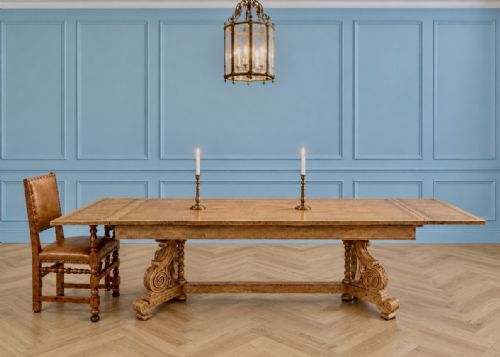
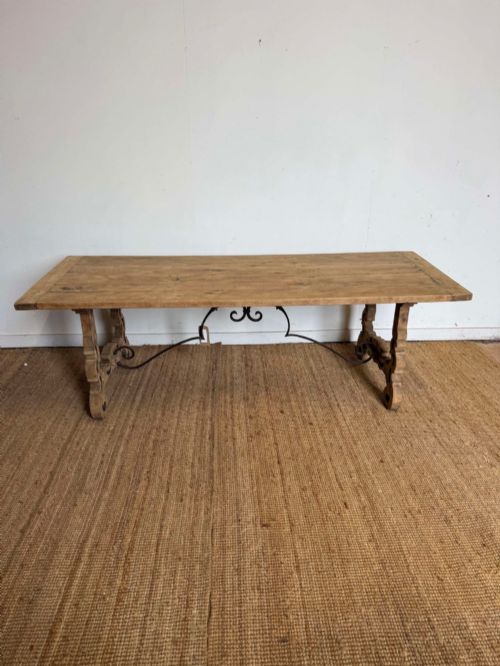
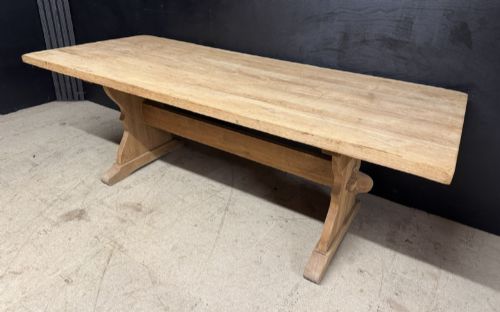
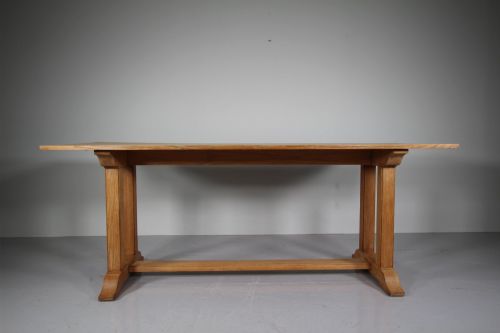
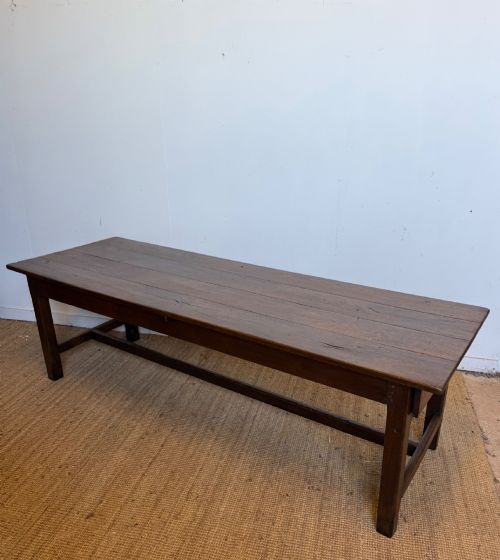
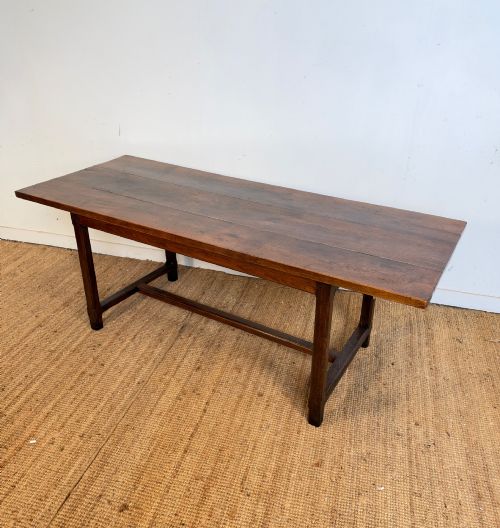
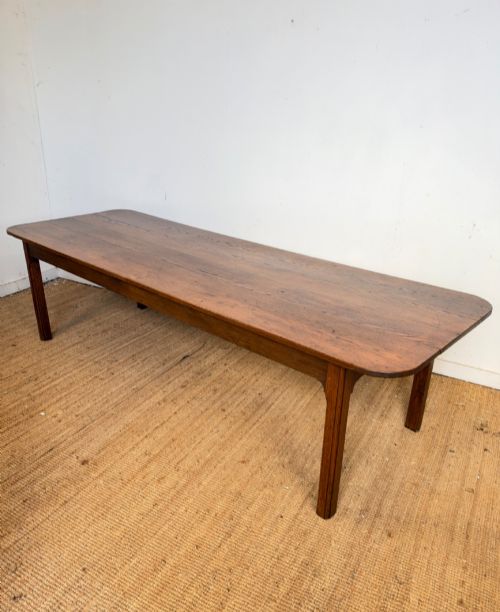
A wooden refectory dining table brings solid timber construction and generous proportions to the centre of the room.

Wooden Refectory Dining Table
When searching for a wooden refectory dining table, buyers encounter substantial boards designed for communal dining and heavy daily use. These forms stem from centuries of domestic and institutional traditions, spanning simple country boards to elaborate revival designs.
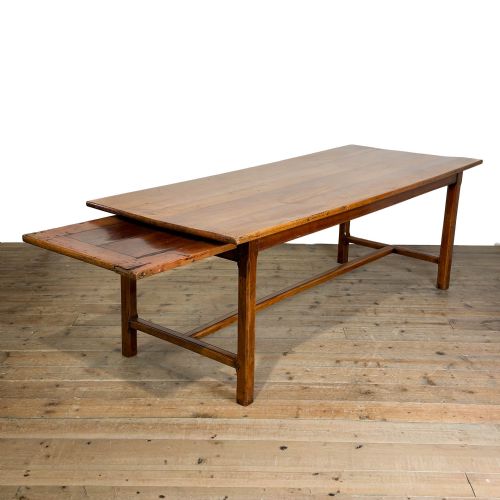
The pieces appearing on this page most commonly trace back to the nineteenth and early twentieth centuries, alongside select examples from the seventeenth and eighteenth centuries. Formats range from standard timber boards to extendable draw leaf versions and sets paired with matching benches.
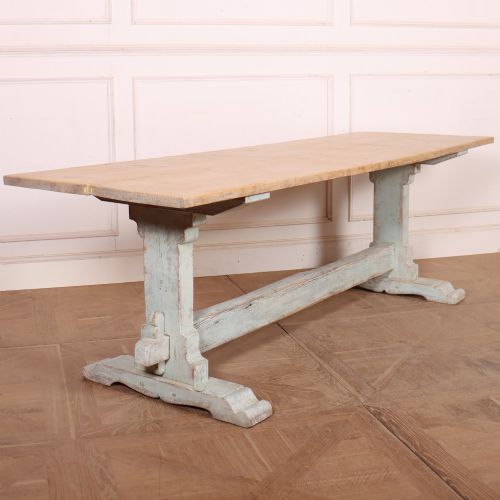
Origins vary between English and continental workshops, incorporating regional woods such as French cherrywood, Spanish elm and domestic oak. Buyers often find variants featuring trestle ends, tapered legs or bobbin turnings suited to both rustic and formal interiors.
Materials and Construction
Carpenters relied principally on native hardwoods, building tops and frames from solid oak, fruitwood, elm and pine. Joinery prioritised structural durability, employing pegged mortise and tenon joints to secure heavy tops to substantial underframes.
Surface preparation involved hand planing and oiling or waxing the timber, preserving the natural grain and allowing the wood to acquire a deep patina over generations. Mechanisms on extendable variants utilised sliding interior leaves supported by stout wooden bearers.
Wooden Refectory Dining Table Retail Price Guide 2026
Typical asking prices for wooden refectory dining table among the pieces listed under this phrase on Sellingantiques today, from the lower quarter to the upper quarter. They describe what is for sale here now, not the wider market.
Arnold School produced specific dining tables that now sit in modern kitchens, proving that even strict educational institutions appreciated a solid place to eat.
Distinctions in Quality
Quality rests upon the selection of timber and the integrity of the original construction rather than decorative embellishment. Pieces built with thick, single-board solid oak or fruitwood tops demonstrate superior structural honesty compared to later assembled constructions.
Proportion and stability separate standard utility pieces from finer examples, particularly where trestle ends, shaped supports or carved details are executed with precision. The retention of original surface finishes, uncompromised by aggressive stripping, preserves the historical integrity of the piece.
The Wooden Refectory Dining Table Glossary
- Refectory table
- A long dining table traditionally used in monasteries and large institutions for communal meals. These pieces typically feature linear proportions and sturdy underframes.
- Draw leaf table
- An extendable table fitted with sliding leaves stored beneath the main surface. Pulling the ends outward extends the top seamlessly.
- Trestle ends
- Supporting uprights positioned at each end of a table rather than four corner legs. They provide robust load-bearing support for heavy timber tops.
- Mortise and tenon
- A traditional woodworking joint where a projecting tongue fits snugly into a matching cavity. This method secures wooden frames without relying on metal fasteners.
- Patina
- The surface sheen and colour developed by timber over years of handling, polishing and exposure to light. It serves as an indicator of age and careful maintenance.
Wooden Refectory Dining Table: Frequently Asked Questions
How do I choose the right size?
Measure your dining space carefully, allowing ample clearance around all sides for chairs and movement. Consider whether you need an extendable draw leaf mechanism to accommodate extra guests.
Matching the length of the board to the scale of the room ensures the furniture anchors the interior without obstructing daily circulation.
Can I use these tables daily?
Solid timber boards were built for robust, everyday use and withstand the demands of modern family life comfortably. Regular maintenance with appropriate wax or oil protects the surface from moisture and daily wear.
Using mats and clearing spills promptly preserves the historic timber while keeping the surface functional for meals.
Are benches original to these tables?
While many tables survive independently, period sets occasionally include matching benches sharing identical timber and support structures. Benches designed with shaped trestle ends reflect the architectural styling of the main dining board.
Pairing antique benches with a refectory table recreates traditional communal seating arrangements.