
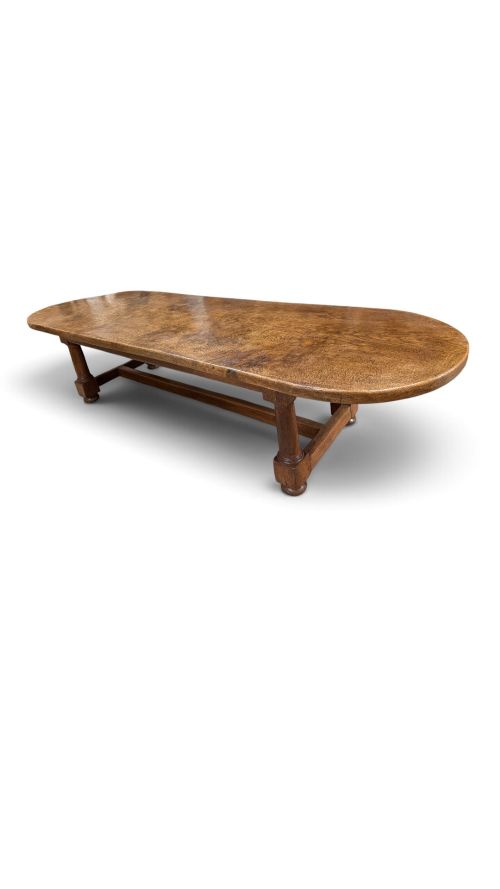
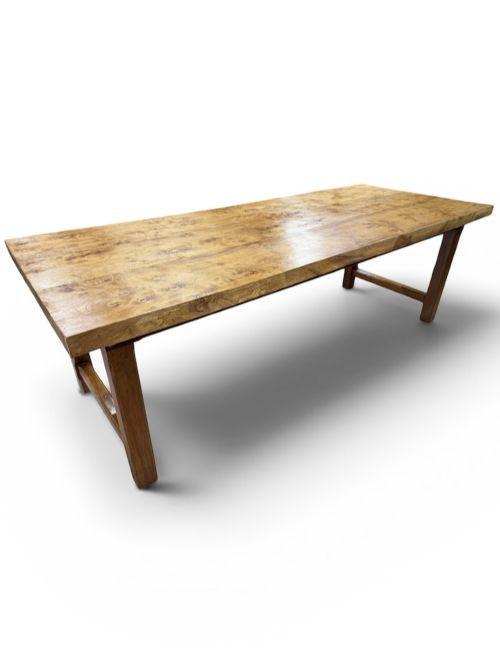
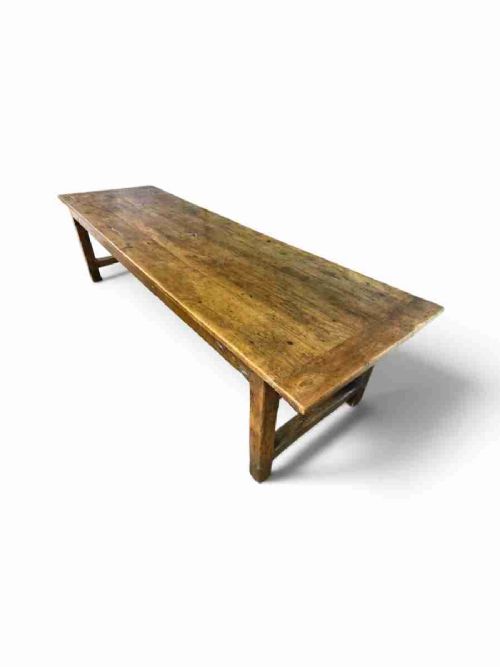
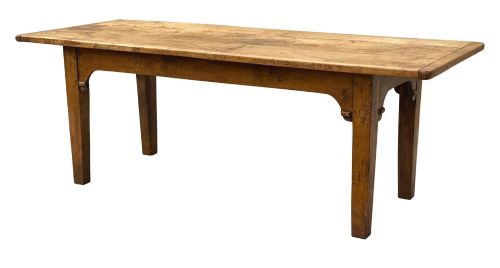
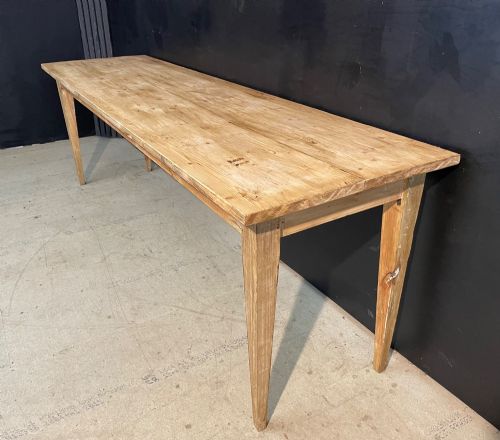
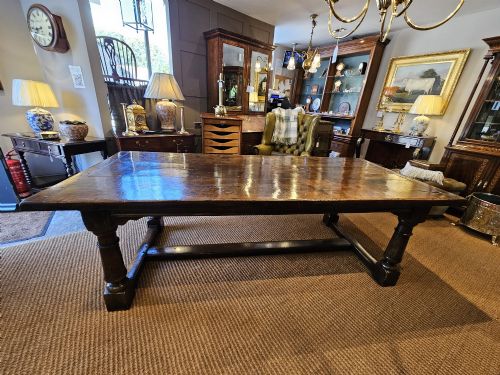
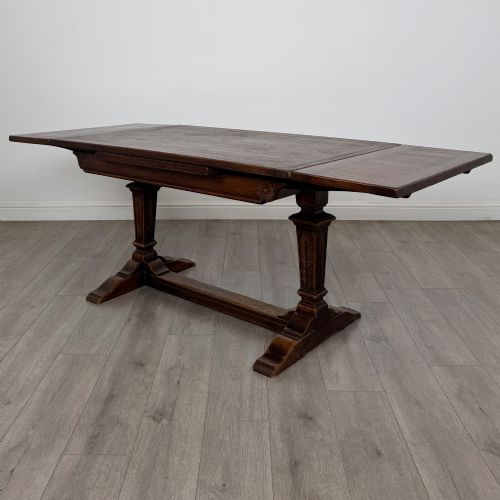
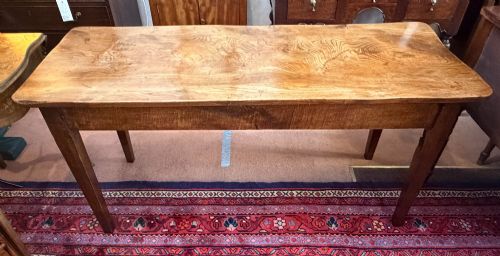
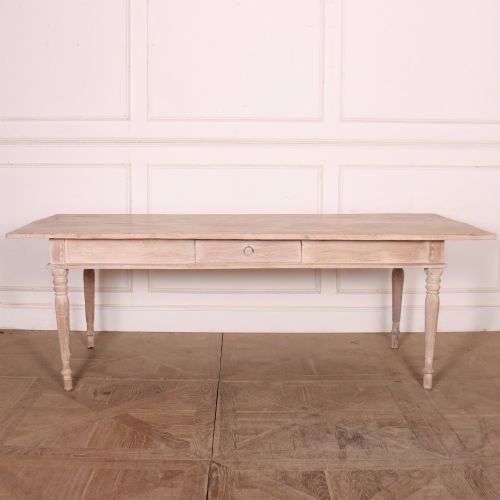
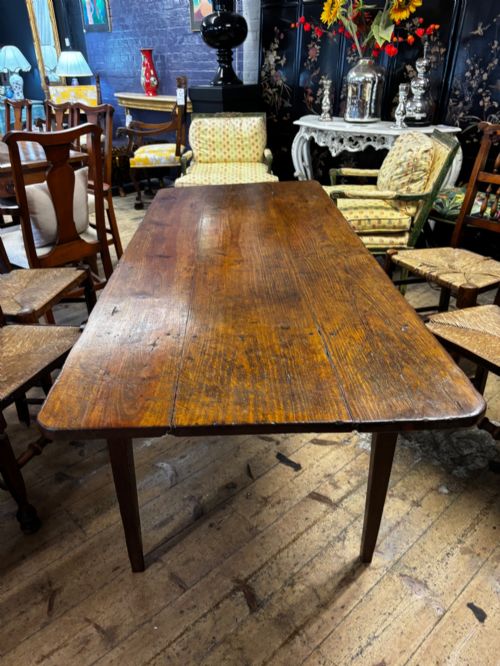
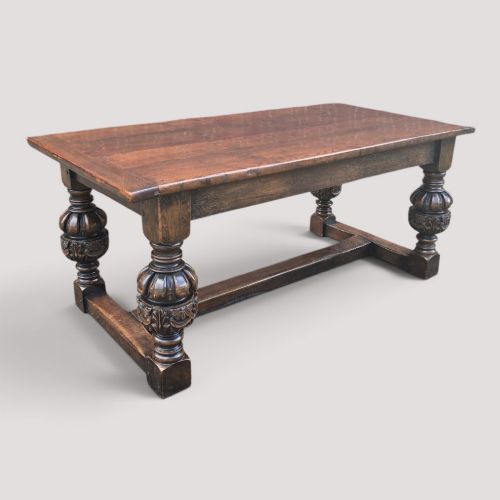
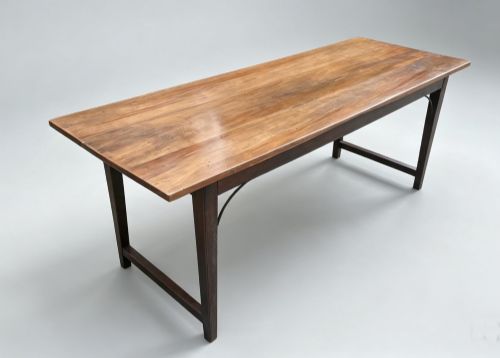
Refectory Dining Table
A refectory dining table brings grounded utility and communal space to a room, offering sturdy length built for gathering.
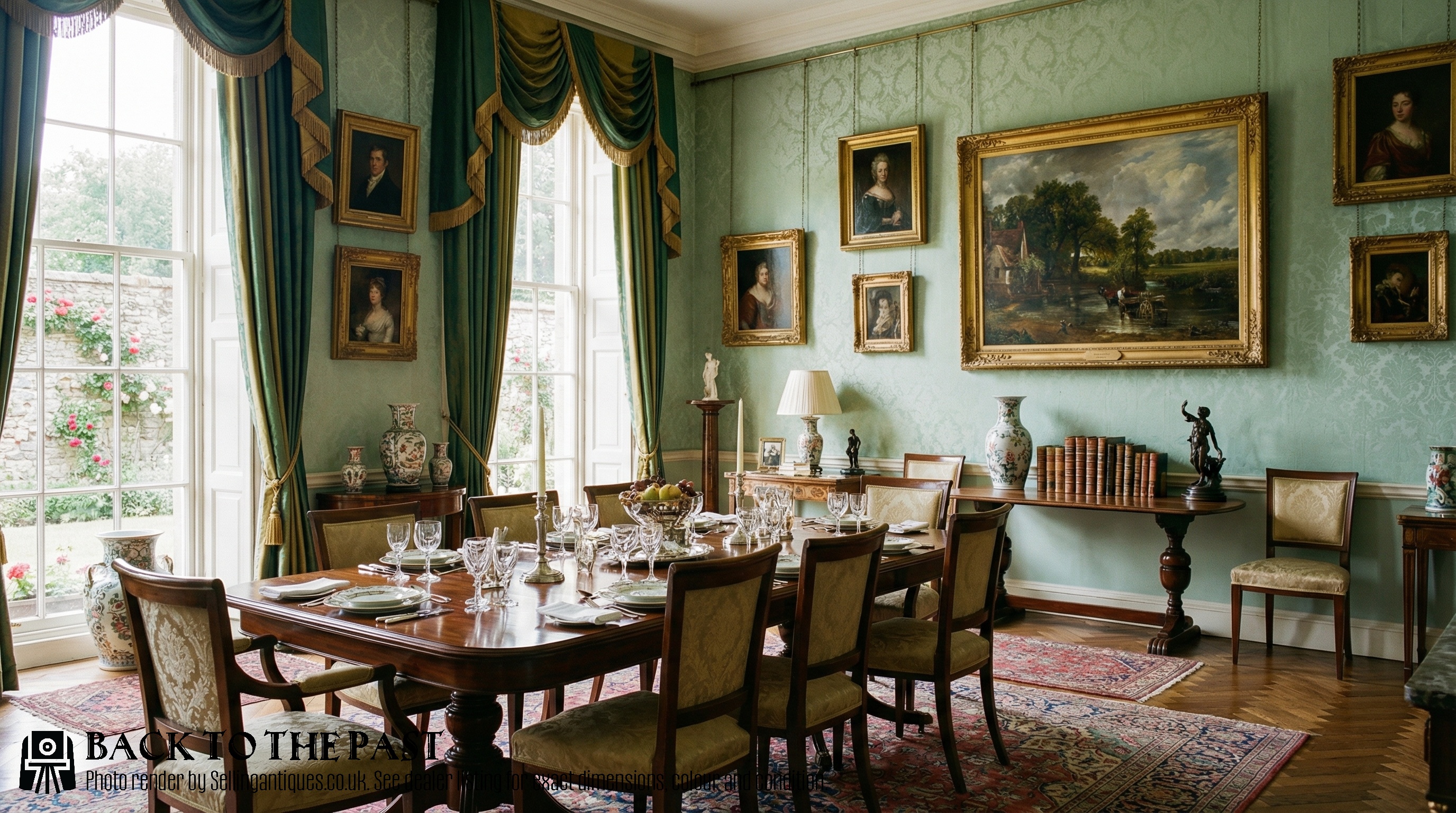
Refectory Dining Table
The refectory dining table originates from long communal eating surfaces, adapting into domestic settings with substantial rectangular proportions. When exploring this phrase, buyers encounter examples spanning from the seventeenth century through the Edwardian period and the early twentieth century.
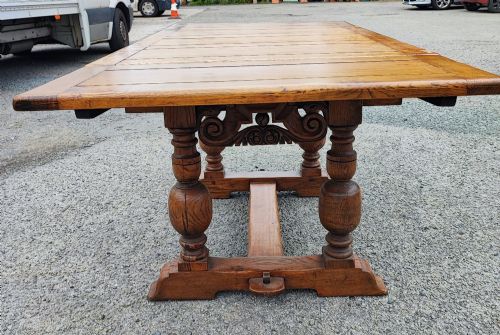
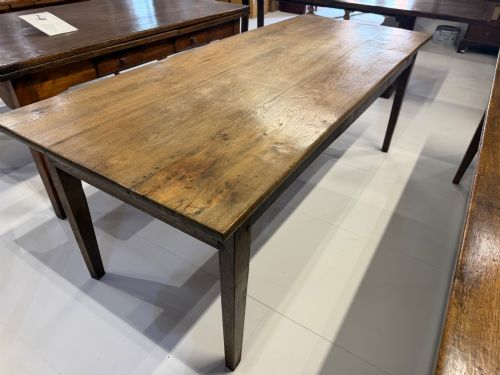
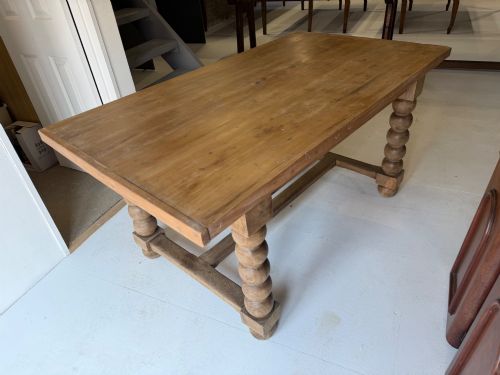
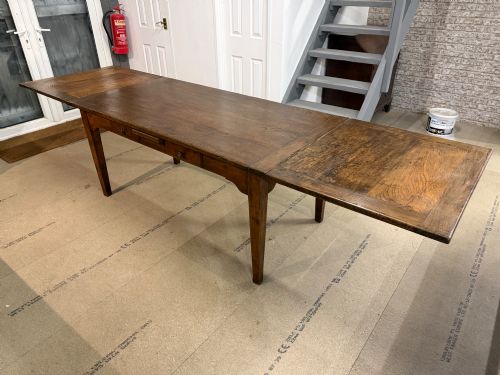
Most pieces met here display robust timber construction, often configured with trestle ends, slab ends, or sturdy legs connected by stretchers. Forms range from simple plank tops to elaborate draw leaf mechanisms designed to extend the surface area.
Origins stretch across English workshops as well as French provincial traditions, bringing variations in wood tone and edge profiling. These tables serve large dining spaces, functioning as the visual anchor of a room.
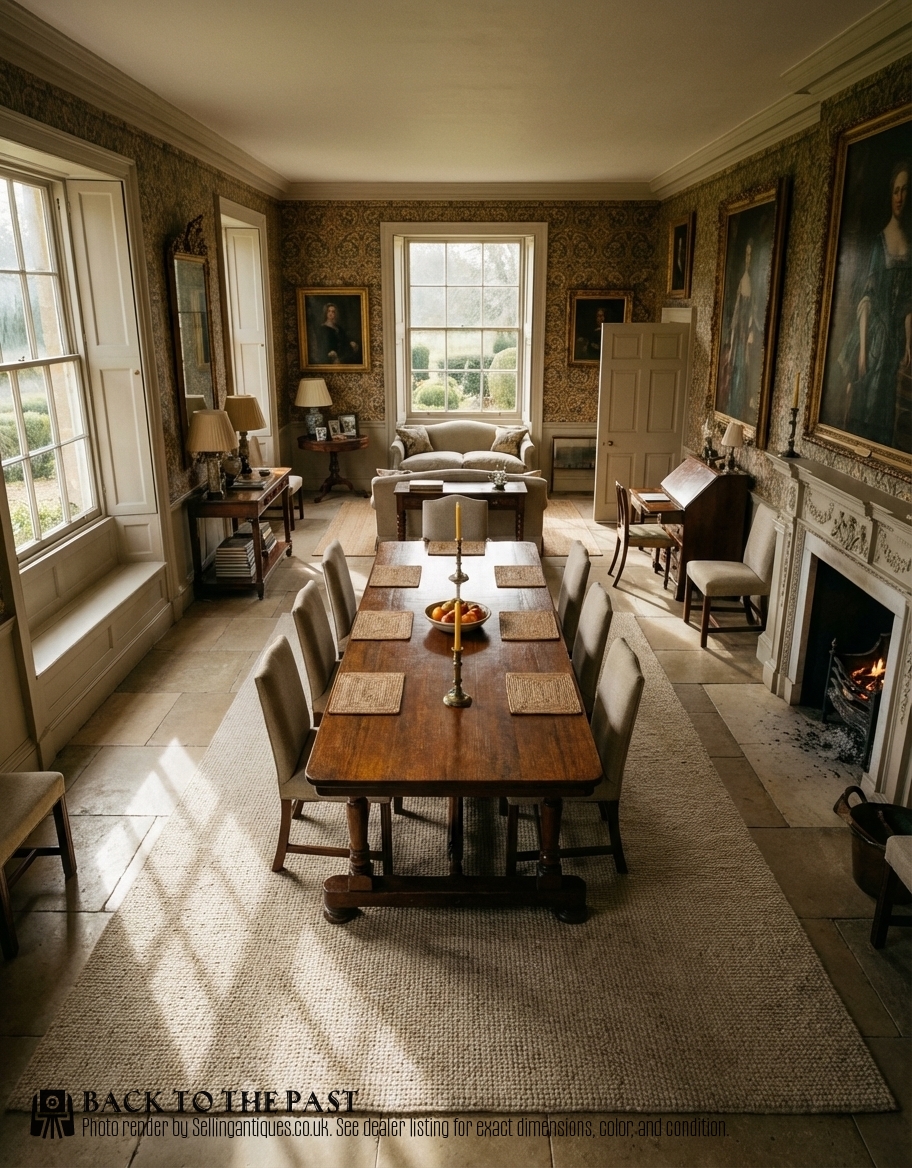
Materials and Construction Methods
Timber selection focuses heavily on native hardwoods, predominantly solid oak, alongside elm, beech, sycamore, and fruitwood. Carpenters utilised pegged mortise and tenon joints to secure the heavy frames, ensuring structural rigidity across long spans.
Surface preparation involved hand planing and joining single or multiple planks together, sometimes incorporating draw leaf systems beneath the main top. Legs and trestle ends frequently display turned bobbin details, tapered profiles, or carved ornamentation characteristic of revival styles.
Refectory Dining Table Retail Price Guide 2026
Typical asking prices for refectory dining table among the pieces listed under this phrase on Sellingantiques today, from the lower quarter to the upper quarter. They describe what is for sale here now, not the wider market.
Certain tables carry centuries of dinner party debates quietly embedded within their sturdy oak stretchers.
Evaluating Construction and Proportion
Quality rests in the integrity of the timber selection and the weight of the timber used for the top and underframe. Heavier gauge oak and well-matched grain patterns separate standard production from superior examples.
The execution of joinery, such as visible pegged joints and stability in the stretcher base, dictates longevity. Tables retaining original surface patination and balanced proportions command greater appreciation among collectors.
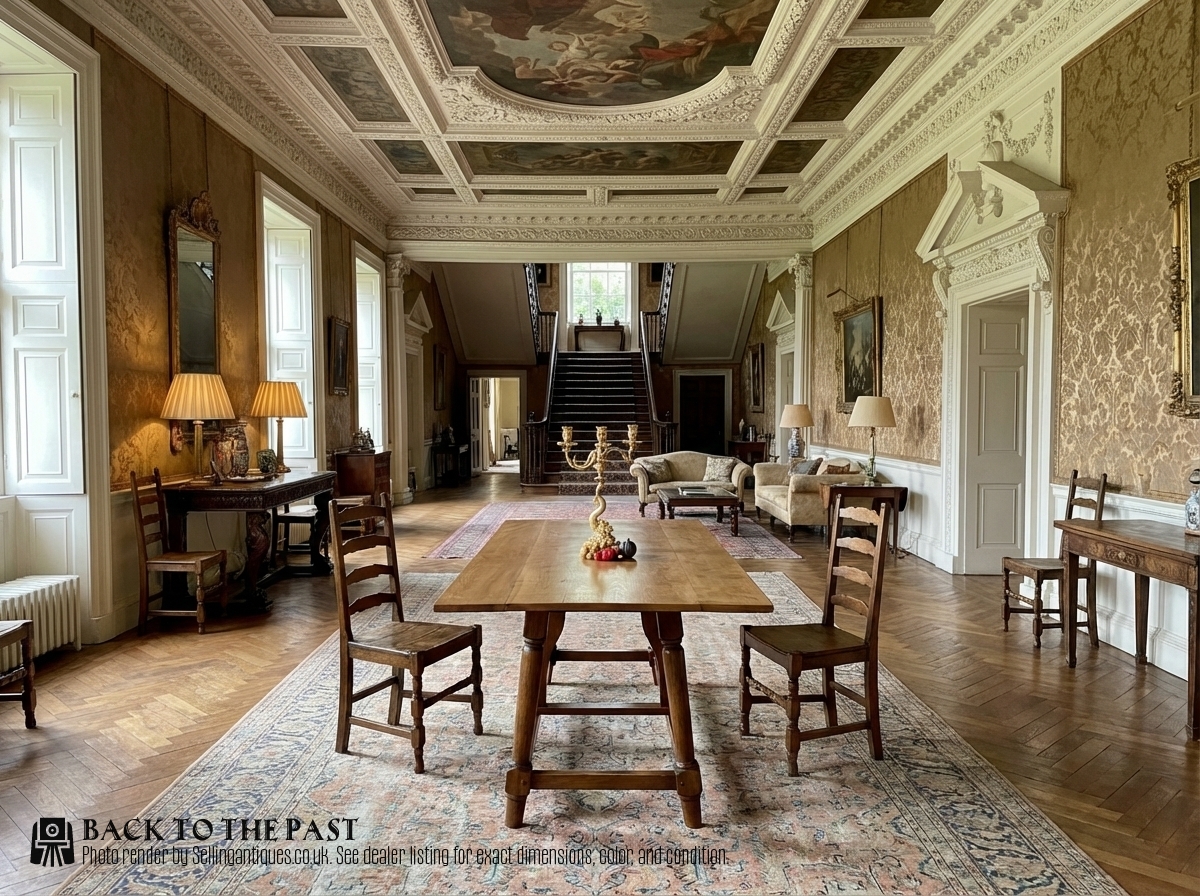
Heals·Waring and Gillow·Gordon Russell
The Refectory Dining Table Glossary
- Draw leaf
- A table featuring two sliding leaves stored beneath the main top that pull out to extend the surface length. This mechanism allows the table to accommodate more diners without requiring separate storage leaves.
- Trestle ends
- Upright supports placed near the ends of the table rather than conventional corner legs. They often feature shaped profiles and provide generous legroom along the length of the top.
- Stretcher
- A horizontal timber rail connecting the legs or trestles to reinforce the structural stability of the base. These elements often show wear consistent with foot placement over generations.
- Single plank
- A table top constructed from one wide board rather than multiple joined sections. This feature indicates the use of mature timber sourced from large ancient trees.
- Patina
- The surface sheen and colour developed through years of handling, polishing, and natural ageing. It reveals the history of use on the wood.
Refectory Dining Table: Frequently Asked Questions
How many people do these tables seat?
Capacities generally range from six to twelve diners, depending on the overall length and the presence of extension mechanisms.
Longer formats often exceed eight feet, providing ample clearance between legs or trestle ends for seating arrangements.
What is the difference between a refectory table and a farmhouse table?
Refectory tables typically feature linear trestle bases or stretcher-supported legs designed originally for monastic dining halls.
Farmhouse tables frequently lean towards domestic vernacular styles with four corner legs, though terminology often overlaps in the trade.
Can I use a draw leaf system easily?
The extending leaves slide smoothly on internal wooden runners beneath the main surface when constructed with traditional joinery.
Users simply pull each end outward to drop the leaves into place, increasing table length within seconds.
How do I care for antique wood surfaces?
Regular dusting with a dry cloth and occasional application of appropriate wax preserves the finish and moisture balance of the timber.
Avoiding direct heat sources and excessive sunlight protects the natural grain and historic patination from fading.