
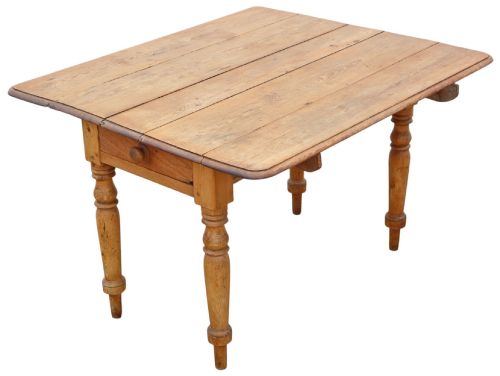
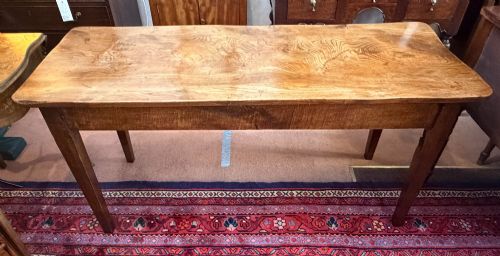
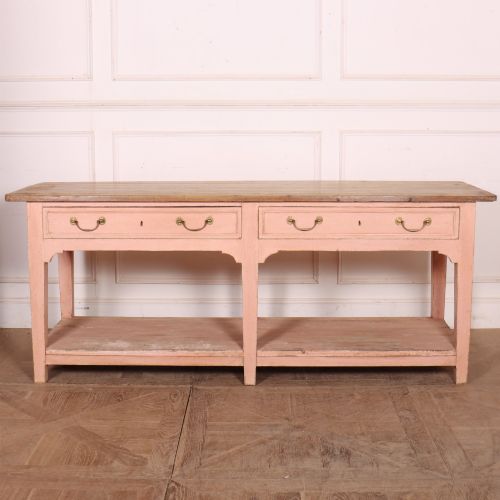
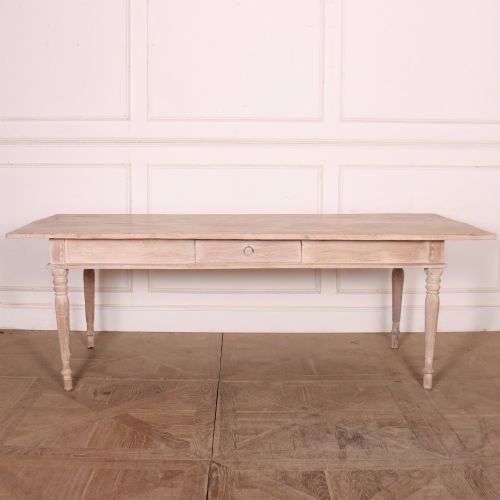
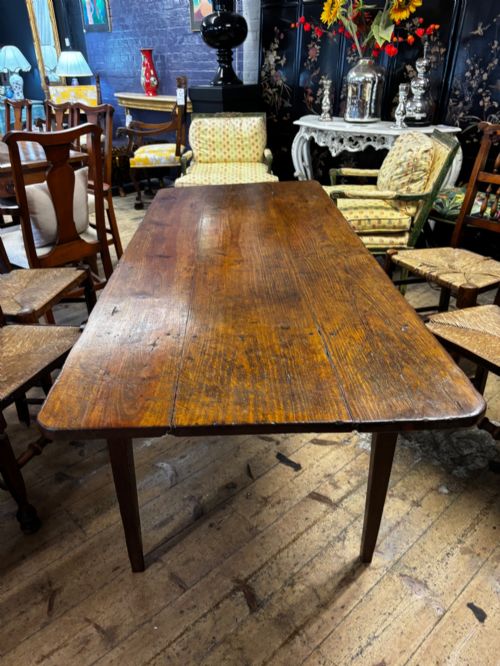
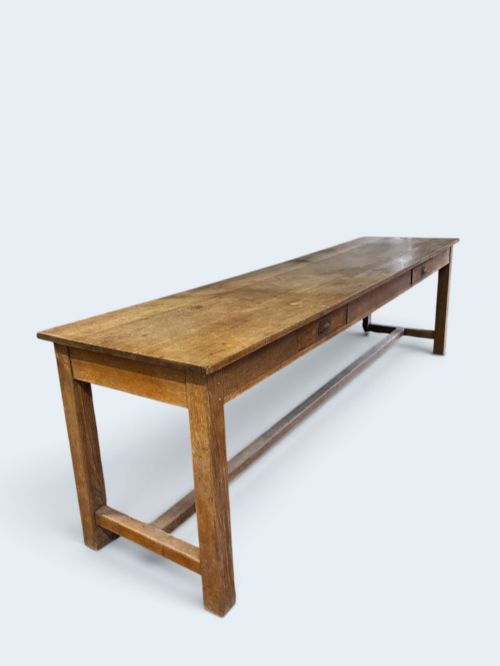
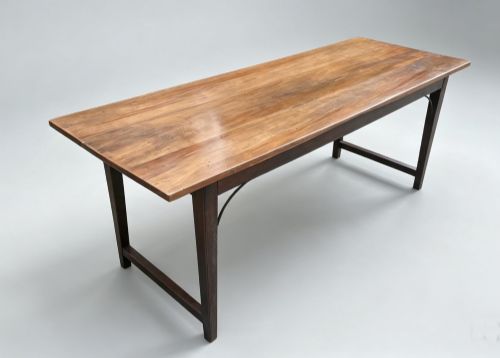
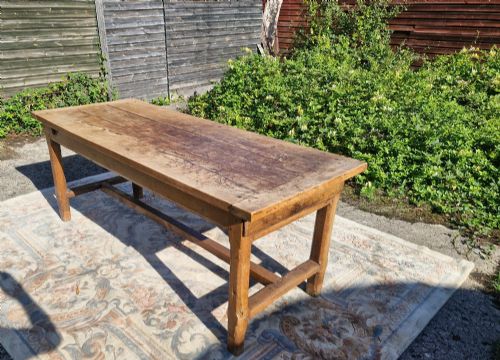
Country Farmhouse Table
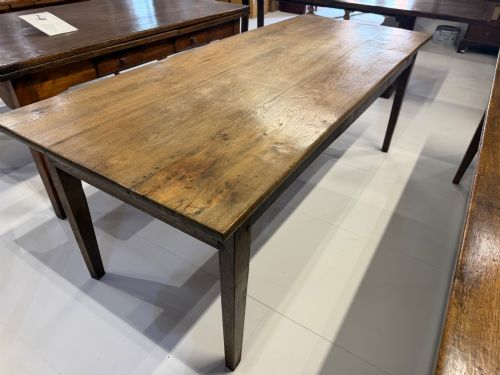
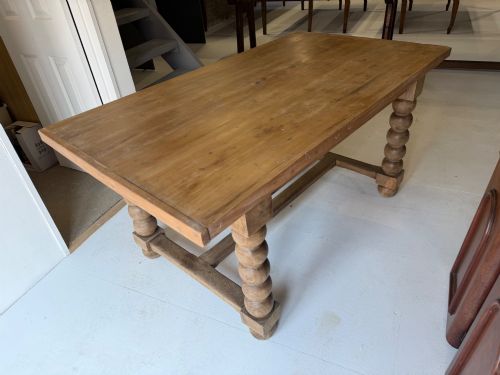
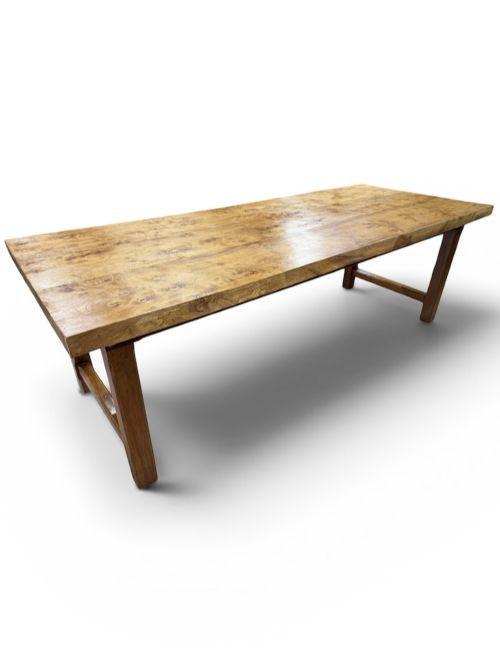
A country farmhouse table brings solid timber utility into the modern kitchen, offering generous proportions for daily dining.

What a country farmhouse table is
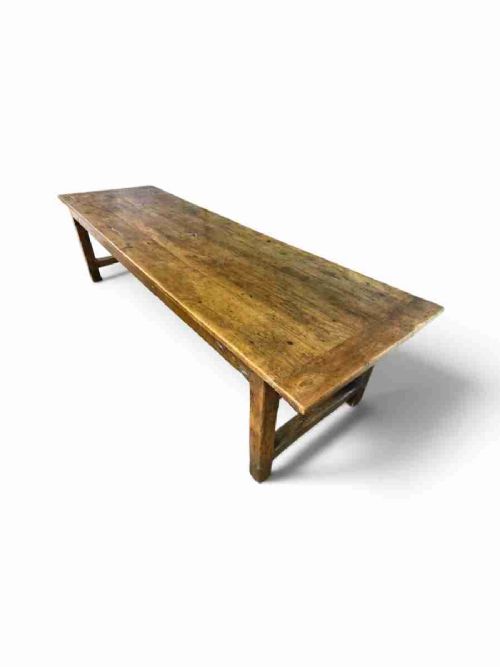
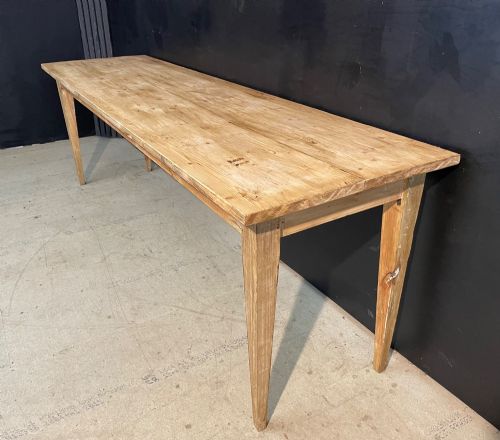
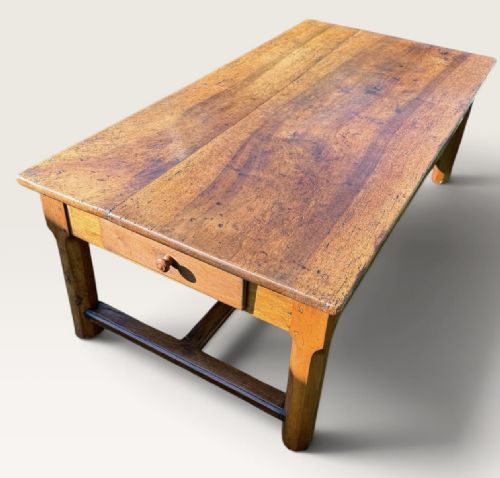
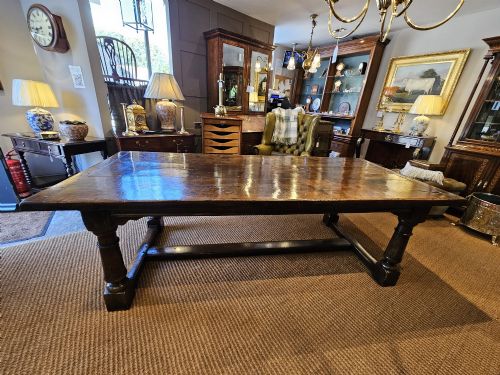
A country farmhouse table serves as the central gathering surface in domestic spaces, built to handle heavy daily use. When searching for a country farmhouse table, buyers encounter large dining forms designed for kitchens and dining rooms.
The pieces on this page span the 17th century through to the 1930s, encompassing Victorian, Edwardian, and earlier periods. Common configurations include refectory styles, gateleg drop-leaf versions, and trestle designs originating from England and France.
Pine and oak predominate among the surviving examples, alongside elm, cherrywood, walnut, ash, and fruitwood. These surfaces often show the marks of historical food preparation and family meals over generations.
How they were made
Carpenters constructed these tables using solid hardwoods and softwoods like oak, pine, and elm, relying on traditional joinery to build rigid frames. Tops were frequently fashioned from thick planks joined together to withstand considerable weight and daily wear.
Many tables incorporate sturdy stretcher bases, trestle supports, or folding gateleg mechanisms to balance long spans of timber. Surface finishes evolved naturally through decades of polishing, scrubbing, and general domestic use rather than applied factory lacquers.
Retail Price Guide 2026
Typical UK retail prices for country farmhouse table, calculated from the Sellingantiques database of over a million retail prices indexed since 2003. This retail price guide relies exclusively on Sellingantiques data; no external sources or auction records are used, so the figures do not describe the wider market.
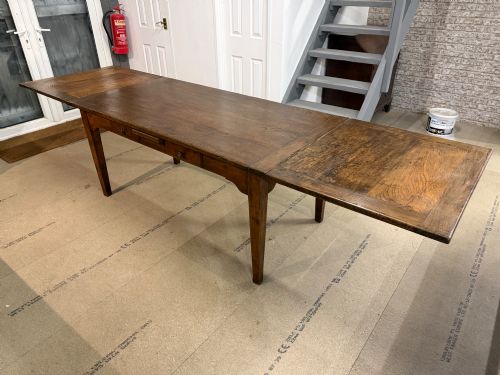
The selection spans compact drop-leaf tables up to massive extending refectory dining pieces stretching over eight feet long.
What varies in quality
Quality rests in the selection of timber and the integrity of the original framing, where thicker planking and sound joinery distinguish finer examples. Tables retaining their original base construction without excessive structural timber replacement command greater appreciation from collectors.
The balance between scale and proportion dictates the visual weight of the piece within a room. Greater refinement appears in examples displaying honest patination on the timber top while maintaining stable legs and aprons.
The Country Farmhouse Table Glossary
- Refectory table
- A long, narrow dining table traditionally used in monastic refectories and later adopted in domestic country kitchens. These pieces often feature stretcher rails running low between the legs for added stability.
- Gateleg table
- A drop-leaf table where one or more hinged legs swing out like a gate to support the raised flaps. This construction allows the table to expand or contract according to space requirements.
- Trestle table
- A table consisting of two or more support frames connected by a longitudinal beam or stretcher. This design provides robust support for long wooden tabletops without corner legs obstructing seating.
- Patina
- The deep surface sheen and colour acquired by wood over decades of handling, cleaning, and exposure to light. It serves as a visual indicator of age and continuous domestic use.
- Drop leaf
- A hinged panel attached to the main tabletop that can be folded down when not in use. This mechanism offers flexibility in room layouts and daily dining capacity.
Frequently Asked Questions
How do I clean a wooden farmhouse table?
Wipe the surface with a damp cloth and mild soap, avoiding harsh chemical sprays that can strip the historic finish. Dry the timber thoroughly afterwards to prevent moisture damage.
Apply natural beeswax periodically to nourish the wood and maintain its protective barrier against everyday spills.
Can I use these tables outdoors?
These antiques are designed for indoor domestic environments and lack weather-resistant treatments. Exposure to rain, direct sun, and fluctuating outdoor humidity will warp the timber and ruin the historic joints.
Keep them inside climate-controlled rooms to preserve the structural integrity of the wood.
How do I tell pine from oak?
Oak is a heavy hardwood showing prominent grain patterns and medullary rays, while pine is a softer conifer with a lighter weight and tighter, linear growth rings. Oak generally darkens deeply over centuries, whereas pine maintains a warmer yellow or honey tone.
Touch also reveals a difference, as oak feels denser and cooler to the hand than pine.
What is a gateleg mechanism?
A gateleg mechanism uses hinged wooden legs that pivot outward from the central frame to hold up drop leaves. This clever engineering allows a compact console or side table to transform into a full-sized dining surface.
Inspect the hinges and pivot points to ensure the swinging leg moves smoothly without binding against the floor.
How do I seat guests comfortably around them?
Measure the clearance between the underside of the table apron and the floor to ensure chairs slide underneath easily. Refectory and trestle designs offer more legroom along the sides because their supports are set inward.
Match the length of the table with appropriately proportioned seating to maintain comfortable elbow room for every diner.