
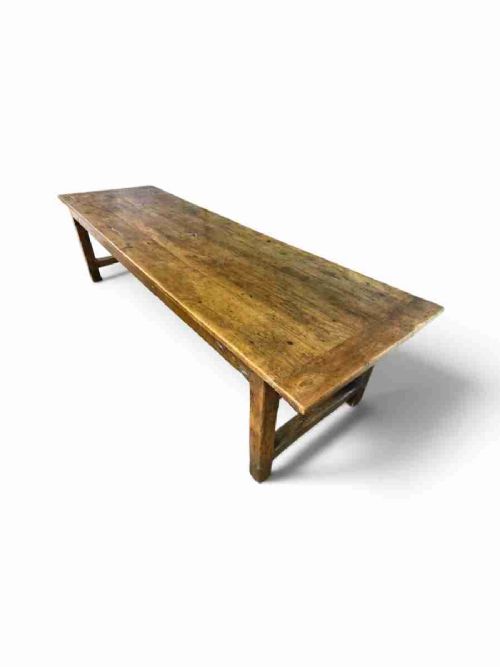
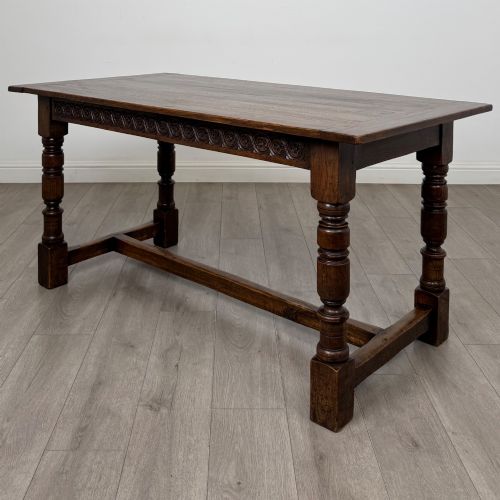
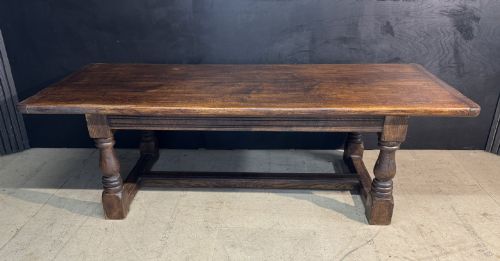
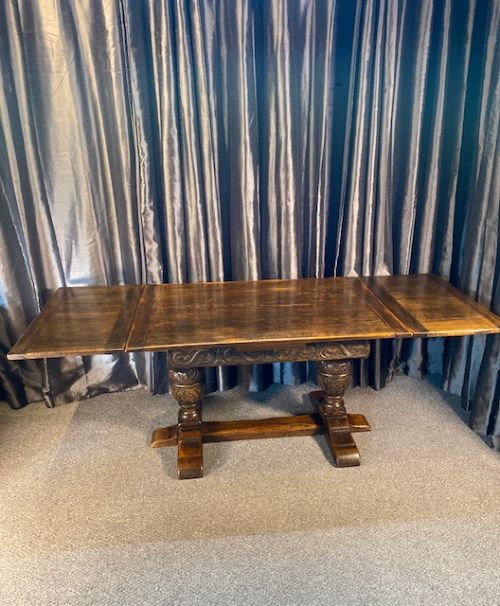

English Oak Dining Table
An English oak dining table brings centuries of sturdy domestic craftsmanship and rich timber grain directly into a modern dining room.

English Oak Dining Table
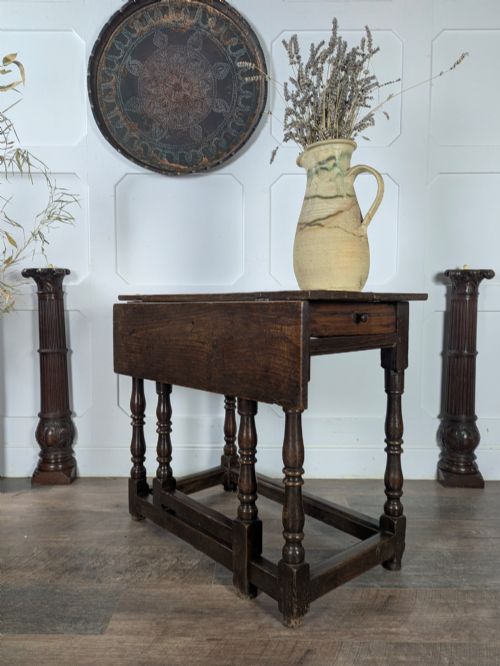
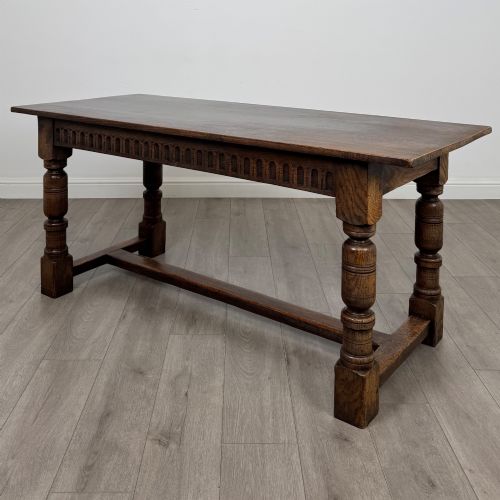
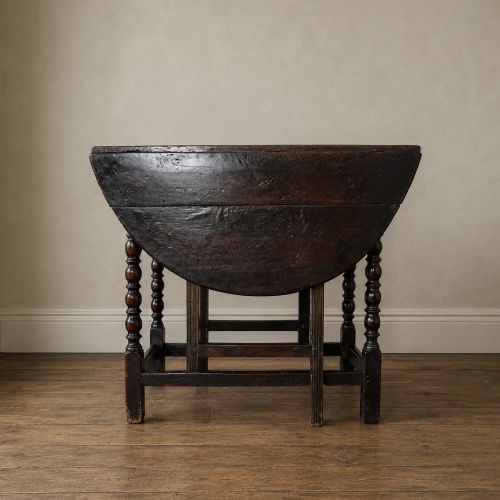
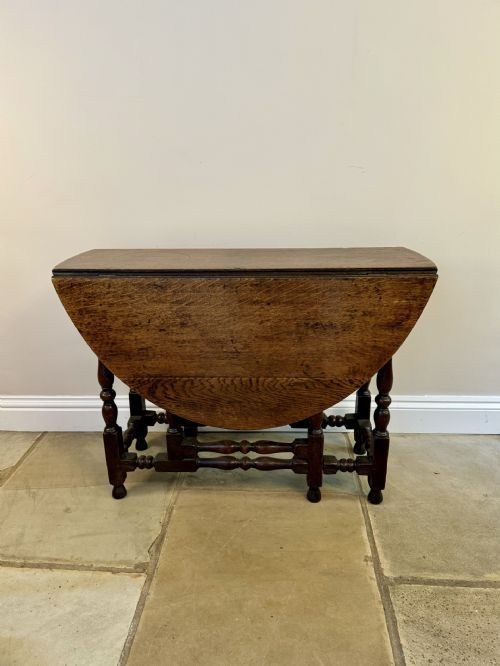
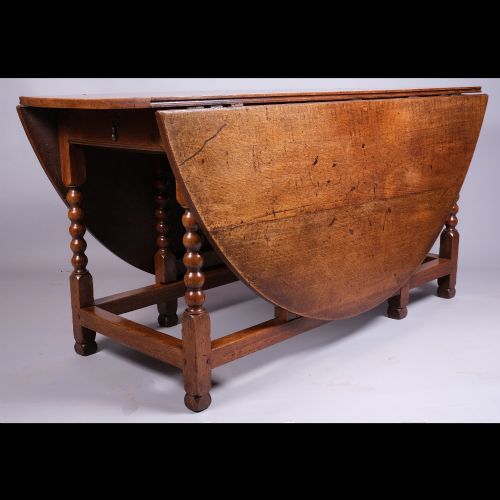
An English oak dining table encompasses robust forms built for communal dining, stretching from seventeeth-century gateleg and refectory designs to twentieth-century farmhouse adaptations. Buyers search for these pieces to anchor a room with utilitarian history, finding formats that range from drop-leaf mechanisms to long boards resting on trestles.
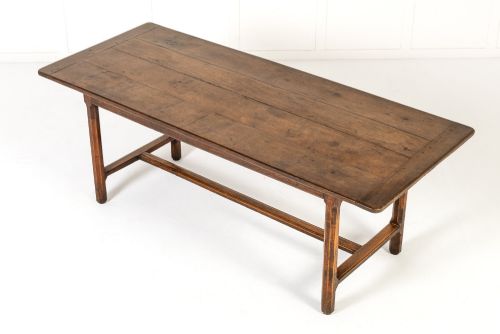
The versions most commonly met on this page span the seventeenth, eighteenth, and early twentieth centuries, reflecting both original period construction and later revivals. Farmhouse refectory tables and gateleg variants dominate the selection, offering substantial seating capacities paired with turned legs or plain stretchers.
How they were made
Cabinet makers built these tables primarily from solid English oak, often supported by secondary timbers like beech, elm, or pitch pine for structural elements such as stretchers and drawer linings. Boards were joined using traditional pegged mortise and tenon construction, allowing the dense timber to move naturally with changes in humidity.
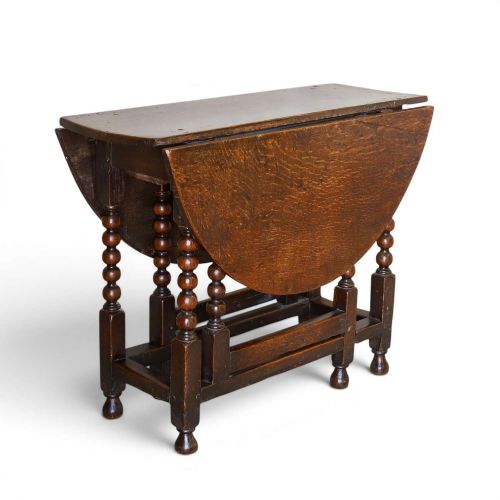
Surface details emerged from hand-working methods, utilising adzed tops, plain sawn planks, and turned components like barley twist or bobbin legs. Draw-leaf and drop-leaf mechanisms relied on carefully fitted sliding bearers and rule joints to expand the functional surface area without compromising the frame.
English Oak Dining Table Retail Price Guide 2026
Typical asking prices for english oak dining table among the pieces listed under this phrase on Sellingantiques today, from the lower quarter to the upper quarter. They describe what is for sale here now, not the wider market.
Listings span multiple centuries, uniting seventeenth-century joined refectories with twentieth-century oak gatelegs.
What varies in quality
Quality separates along the integrity of the timber selection and the degree of original construction retained across the centuries. Tables fashioned from quarter-sawn oak displaying pronounced medullary rays sit above those made from plain timber, showing superior resistance to warping and a more striking grain pattern.
The proportion and weight of the structural members dictate the caliber of the piece, with thick, uncompromised tops and substantial undercarriages representing the higher end of surviving examples. Alterations to height or replaced boards subtract from historical consistency, whereas untouched framing preserves the integrity of the maker's original intent.
The English Oak Dining Table Glossary
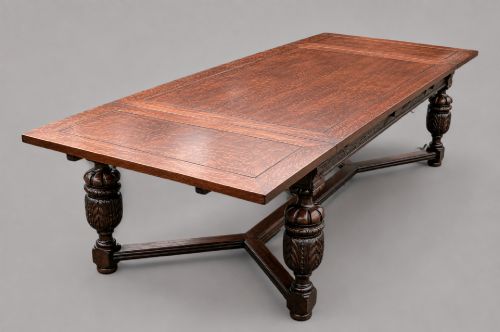
- Refectory table
- A long, narrow dining table originally designed for monastic dining halls and later adapted for domestic use. These pieces typically feature sturdy trestle or four-leg bases connected by low longitudinal stretchers.
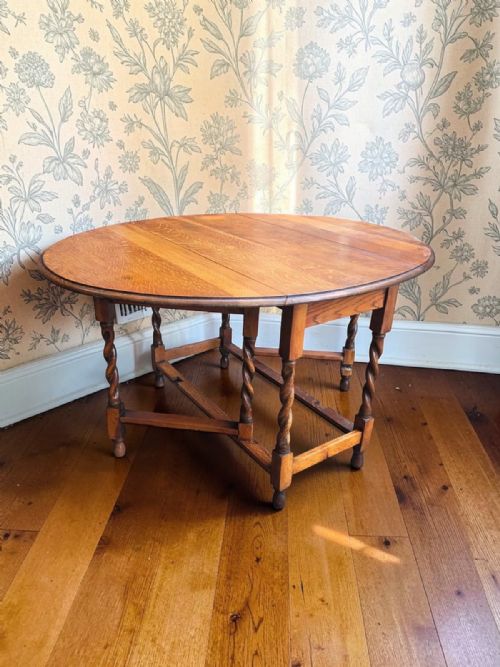
- Gateleg table
- A drop-leaf table with hinged flaps supported by legs that swing outward like a gate. This construction allows the table to fold down into a compact footprint when not in use.
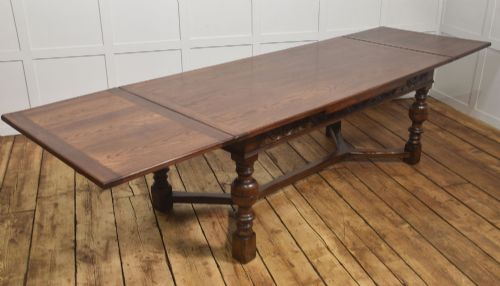
- Draw-leaf table
- An extending table equipped with two sliding leaves concealed beneath the main top. Pulling the end leaves outwards causes the central top to drop into place, creating an extended surface.
- Barley twist
- A decorative turning technique resembling a spiralling rope column. Craftsmen carved this profile into table legs during the seventeenth century and again in later revival periods.
- Pollard oak
- Timber taken from trees that were pollarded, producing a dense wood marked by clustered growth rings and intricate swirling patterns. Cabinet makers utilised this decorative grain for tabletops and cabinet facades.
English Oak Dining Table: Frequently Asked Questions
How do I seat six people comfortably?
Refectory tables with straight trestle bases offer the most legroom for six diners because chairs slide completely underneath the top. Gateleg versions require checking the clearance between the open swing legs and the seated guests.
Selecting a table length of at least six feet generally provides enough linear space for proper place settings along the sides.
Are these tables suitable for daily use?
Solid oak surfaces withstand regular family meals because the dense hardwood resists everyday wear and tear. Applying appropriate natural oils or waxes helps protect the timber grain from moisture rings and spills without sealing the wood permanently.
Using placemats and coasters preserves the historical patina while allowing the table to function as the centre of a busy kitchen or dining room.
How do I distinguish seventeenth-century oak from later revivals?
Seventeenth-century examples display tool marks from hand-adzing, pegged joinery securing hand-cut mortises, and timber shrinkage that creates uneven contours across the top boards. Revival pieces from the Victorian and Edwardian eras often feature more uniform machine sawing and standardised fixings beneath the frame.
Examining the underside of the tabletop reveals the oxidation and wear patterns accumulated over hundreds of years of use.
What is the difference between a refectory and a farmhouse table?
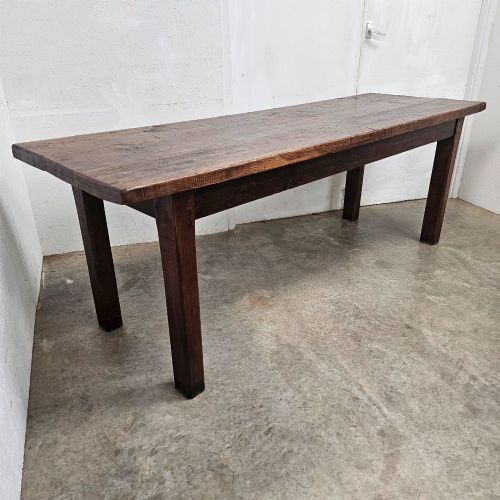
Refectory tables traditionally feature long, narrow proportions supported by heavy trestle ends or multiple pairs of legs linked by low stretchers. Farmhouse tables often display a slightly wider top with standard corner legs and occasionally include drawers integrated into the apron.
Both styles originated to serve communal dining needs but developed distinct undercarriage designs depending on their regional workshops.