

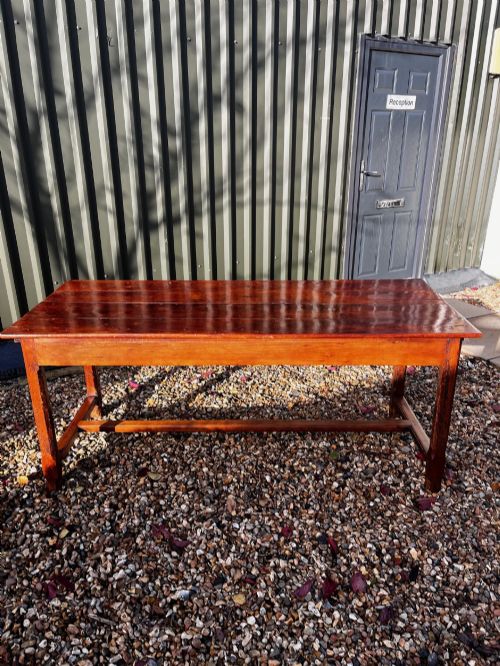
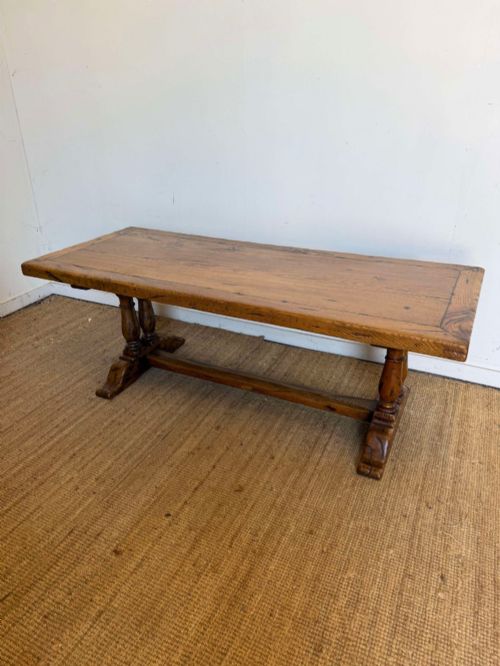
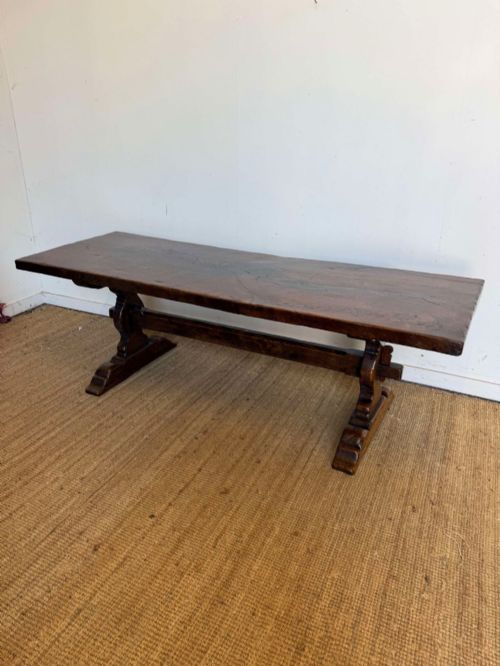
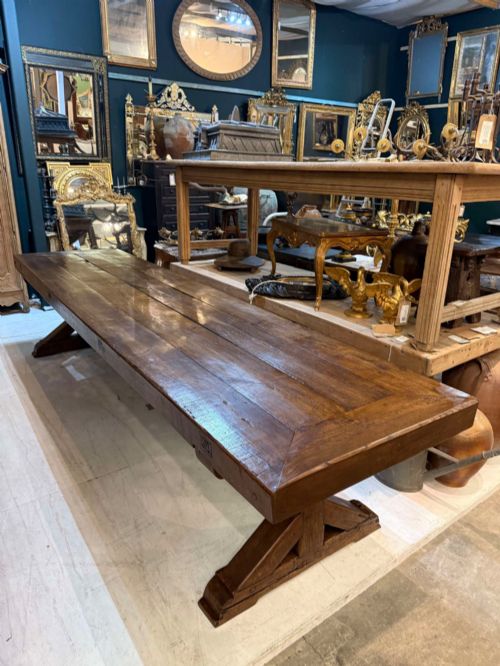
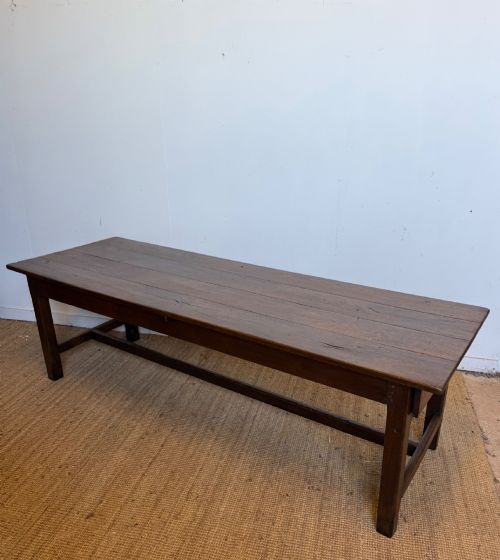
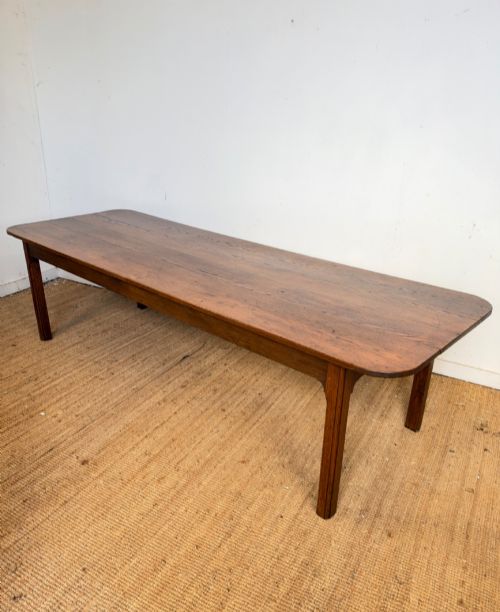
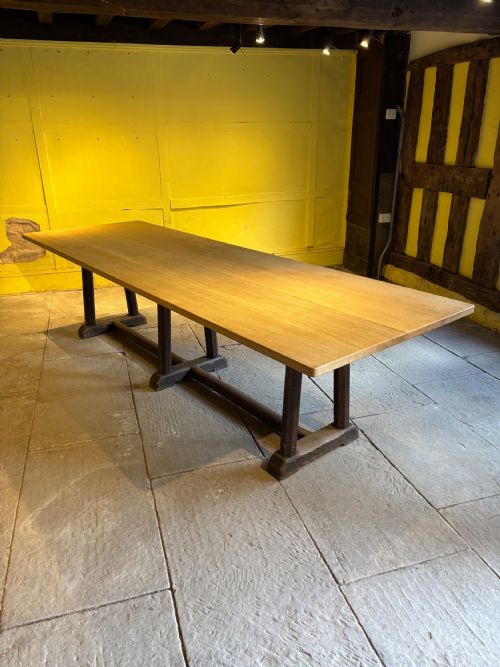
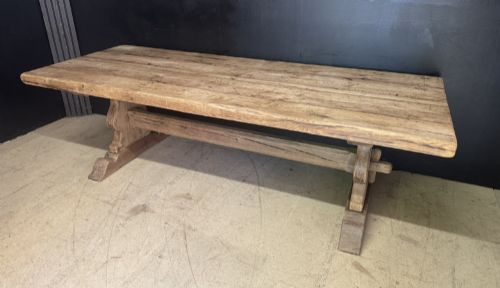
Brown Oak Refectory Table
A brown oak refectory table brings historic presence and deep timber warmth to a room, offering a long surface built for gathering.
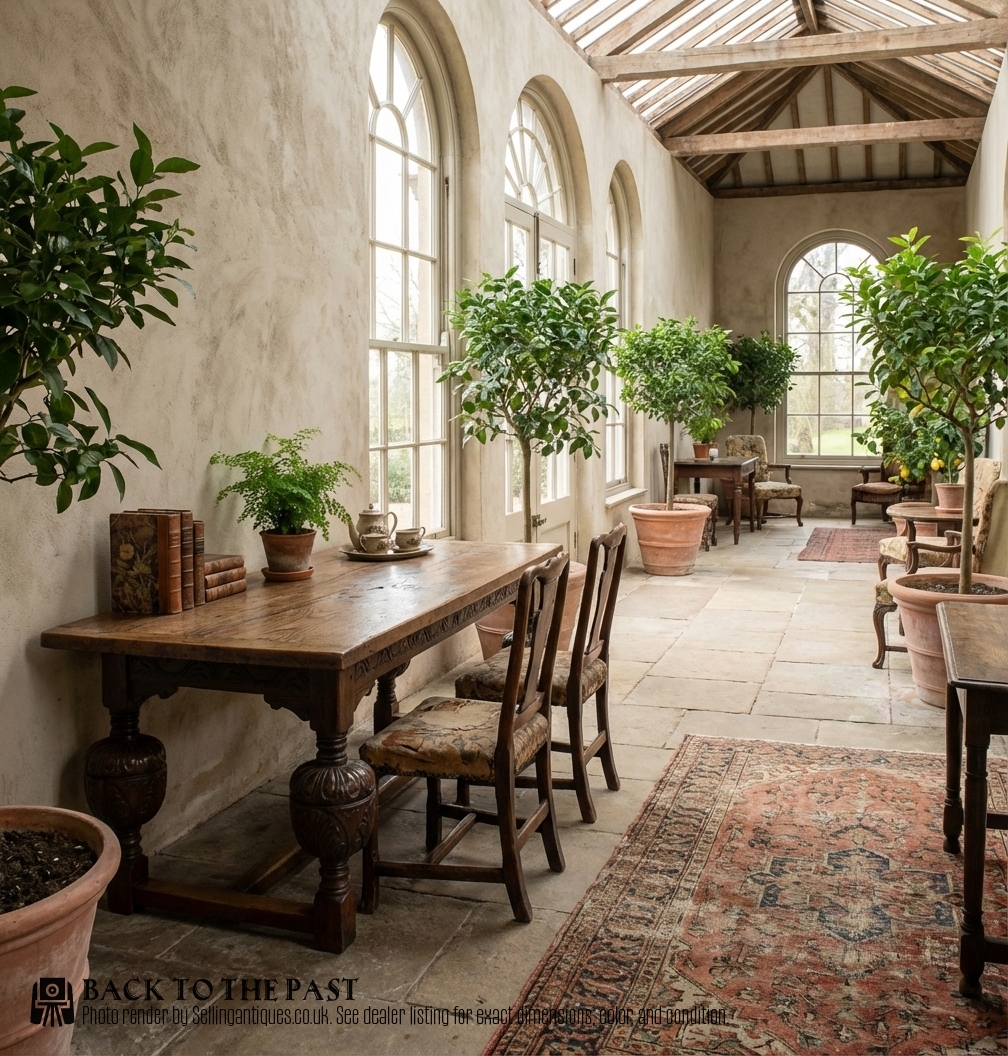
Brown Oak Refectory Table
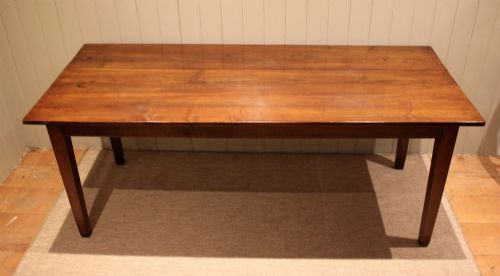
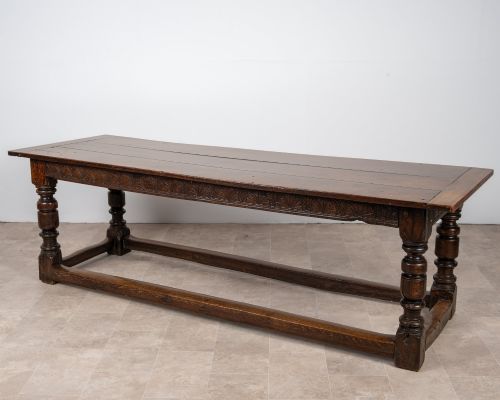
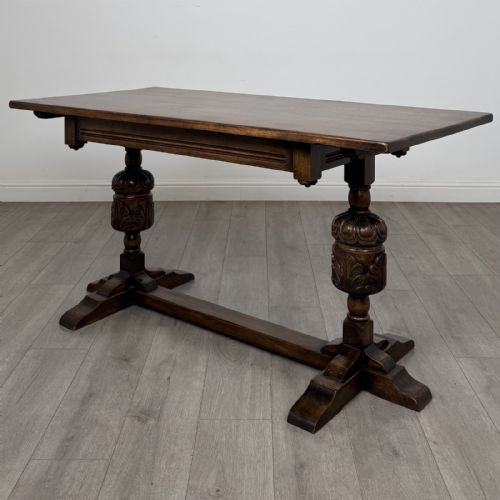
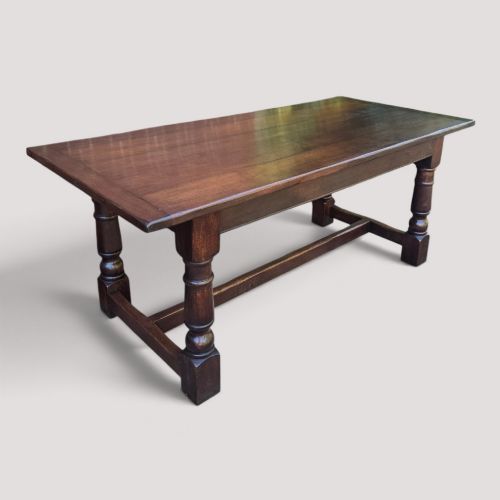
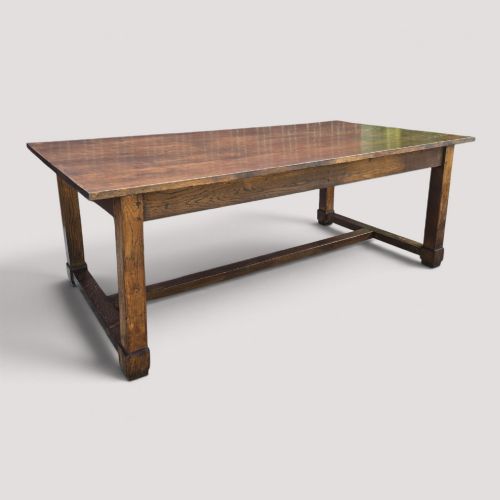
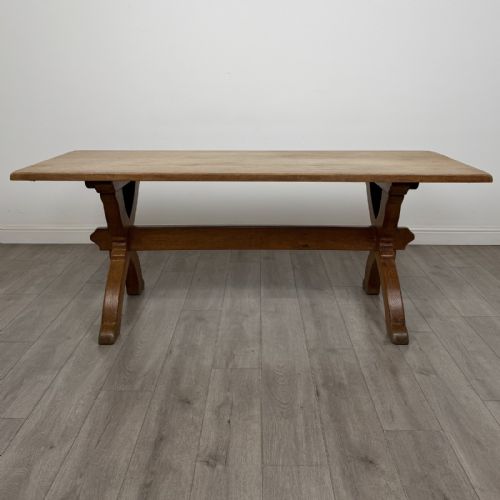
When you search for a brown oak refectory table, you encounter long, sturdy timber surfaces designed originally for communal dining in large halls and monasteries. The examples available here span centuries of craftsmanship, ranging from seventeenth-century originals to twentieth-century revivals.
Most pieces you meet on this page lean towards farmhouse, Jacobean revival, and Arts and Crafts styles. They appear frequently as dining tables, draw-leaf extending tables, and long serving boards intended for practical daily use.
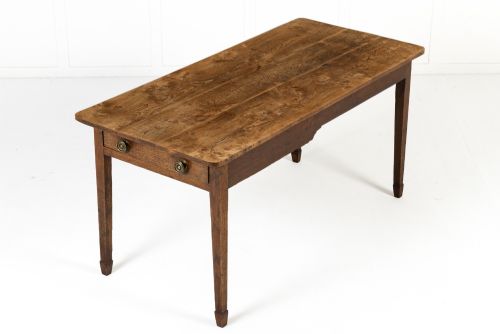
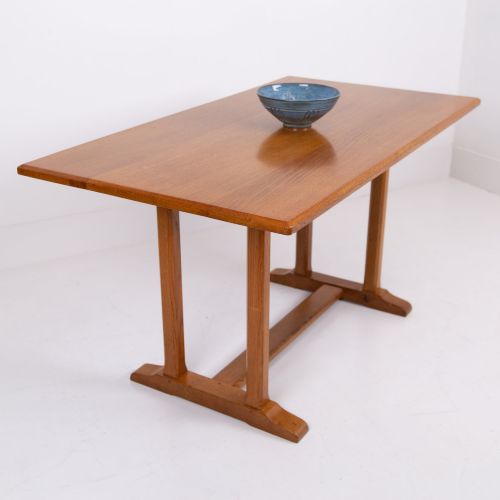
Makers utilised solid timber construction, incorporating elm, beech, and fruitwood alongside primary oak frames. The resulting forms present substantial rectangular tops supported by heavy legs, stretchers, and occasional drawers.
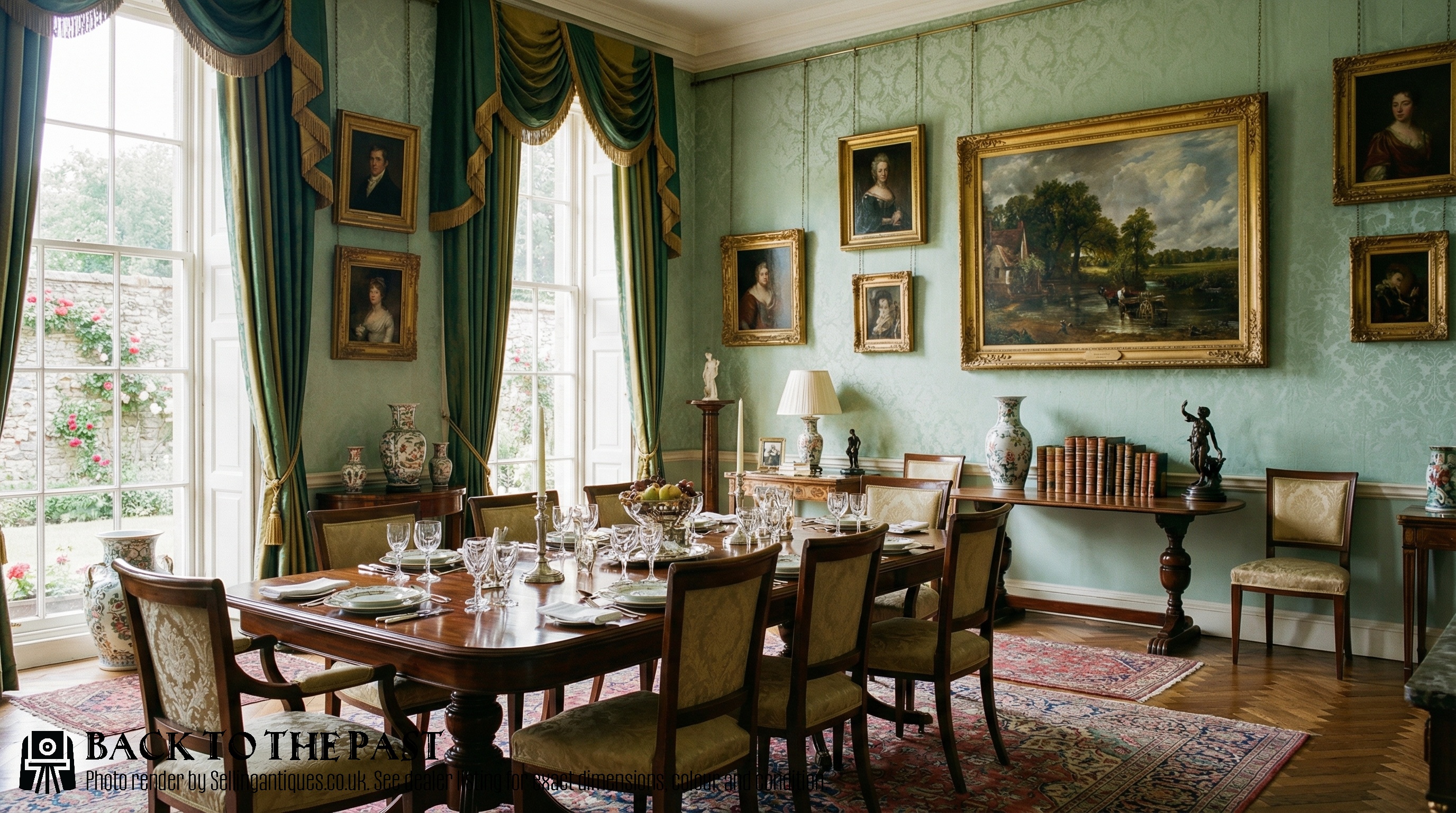
What varies in quality
The distinction between ordinary and exceptional pieces lies in the choice of timber and the integrity of the original construction. Tables featuring single-plank oak tops or period draw-leaf mechanisms demonstrate superior joinery compared to later revival pieces.
Proportion and patination dictate the visual success of a table. Desirable examples display a rich, warm colour developed through decades of use, with structural elements that remain balanced and true without excessive modern intervention.
Brown Oak Refectory Table Retail Price Guide 2026
Typical asking prices for brown oak refectory table among the pieces listed under this phrase on Sellingantiques today, from the lower quarter to the upper quarter. They describe what is for sale here now, not the wider market.
Several tables retain ink stains from centuries of diligent ledger writing, reminding us these dining surfaces often doubled as household desks.

The Brown Oak Refectory Table Glossary
- Refectory table
- A long dining table historically used in monastic dining halls. These pieces are characterised by their elongated proportions and sturdy underframes.
- Draw-leaf
- An extending table mechanism featuring two leaves hidden beneath the main top that pull out from either end. This ingenious design lengthens the surface without removing the centre section.
- Stretcher
- A horizontal wooden bar connecting the legs of a table to provide structural rigidity. They often sit close to the floor and served historically to keep feet off cold flags.
- Patina
- The deep surface sheen and colour developed by timber over centuries of handling and exposure. It represents the authentic physical history of the wood.
- Jacobean revival
- A nineteenth and twentieth-century design style copying seventeenth-century motifs. These pieces typically feature dark timber, turned legs, and geometric carved decoration.
Brown Oak Refectory Table: Frequently Asked Questions
How do I care for a historic oak table?
Feed the timber periodically with a traditional beeswax polish to maintain moisture and protect the surface from everyday wear. Avoid placing the table near direct heat sources or in strong sunlight, which can cause the old wood to split.
Use coasters and placemats for hot dishes and liquids to prevent permanent marking on the historic finish. Gentle dusting with a dry or slightly damp cloth is sufficient for routine maintenance.
Were these tables actually used for dining?
Historic refectory tables served primarily as communal dining surfaces in monasteries, manor houses, and large farmhouses. Their robust construction allowed them to withstand heavy daily use by large households.
Today, they adapt readily to modern family life, functioning as generous dining surfaces, library desks, or kitchen work tables.
How can I tell a seventeenth-century table from a revival piece?
Early seventeenth-century pieces display hand-tool marks, pegged joinery, and timber shrinkage consistent with centuries of age. The colour and grain pattern show a deep, natural integration that mechanical tools cannot replicate.
Revival pieces from the nineteenth and twentieth centuries often feature more uniform machining and standardised hardware. Examining the underside and the method of joint construction usually reveals the true age of the timber.