
Wooden Trestle Table
A wooden trestle table brings sturdy practicality and heritage character to any room, offering long-lasting utility for daily dining.
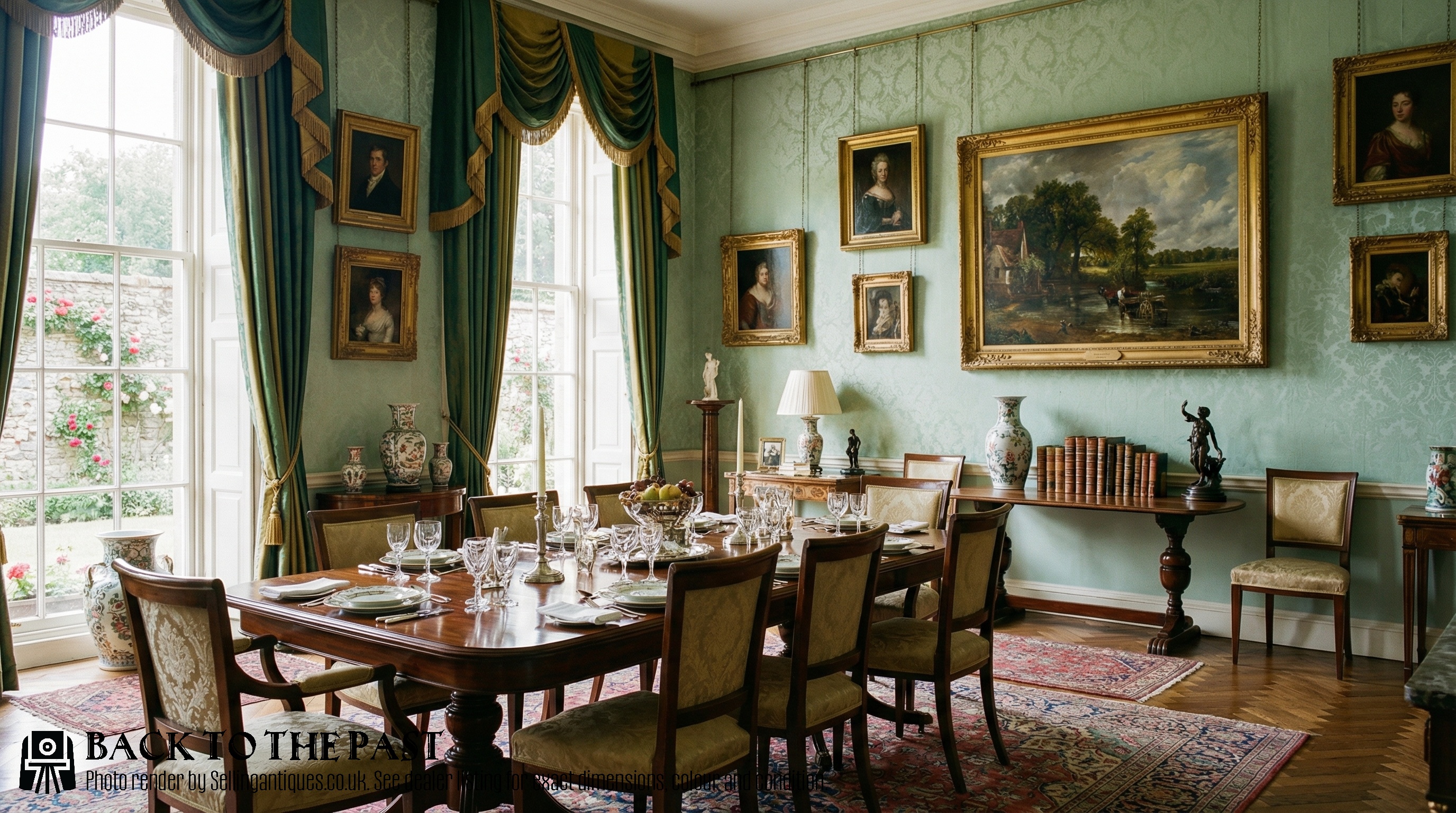
Wooden Trestle Table
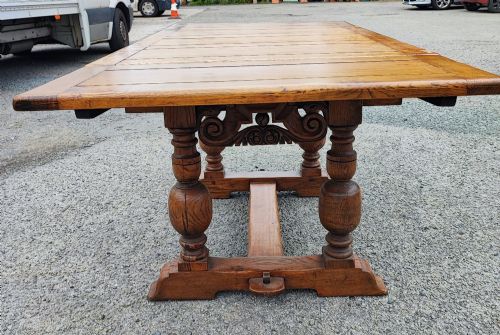
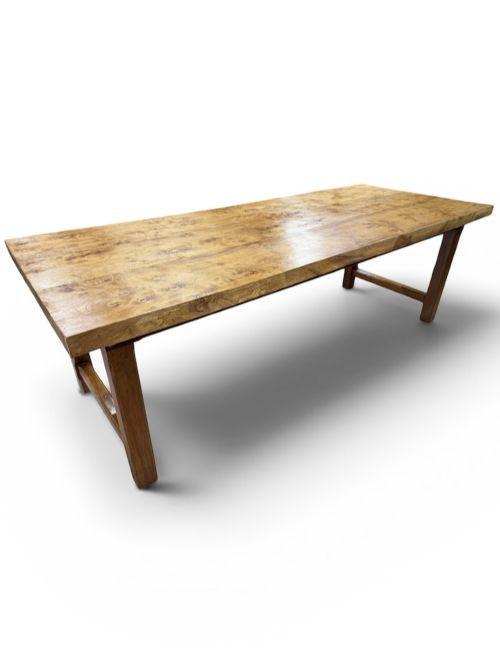
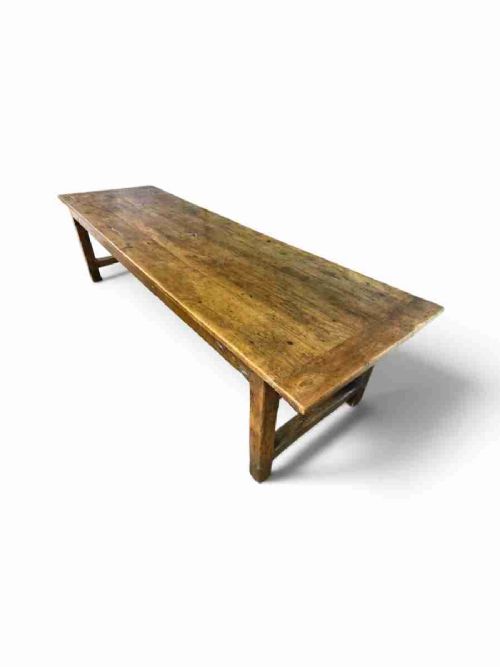
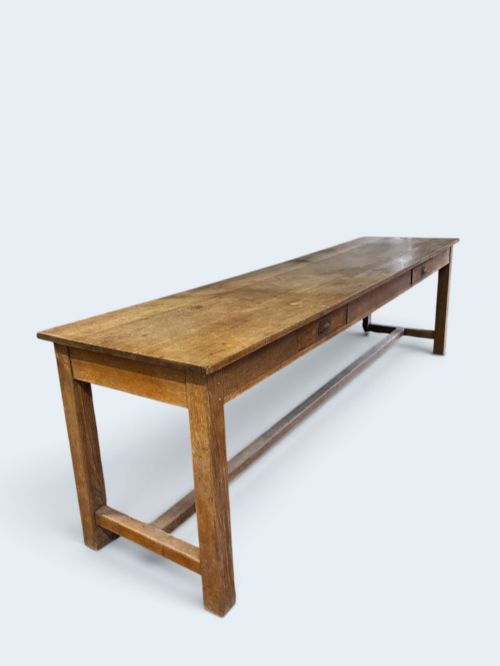
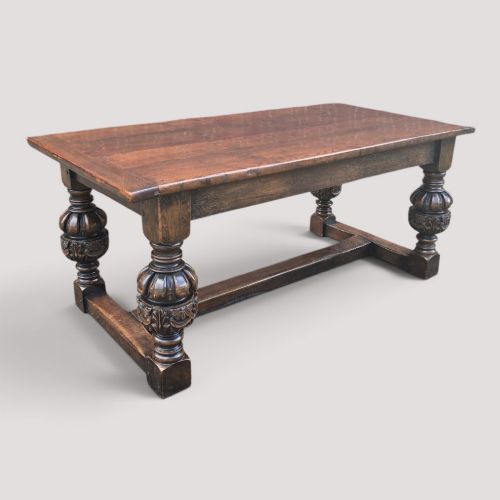
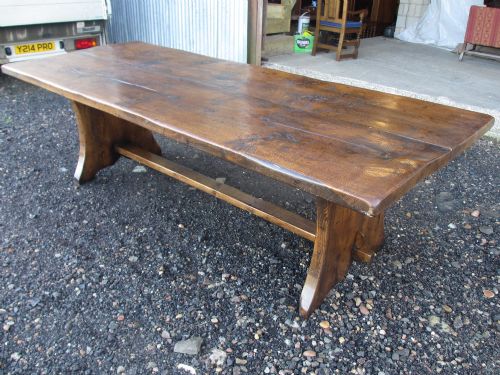
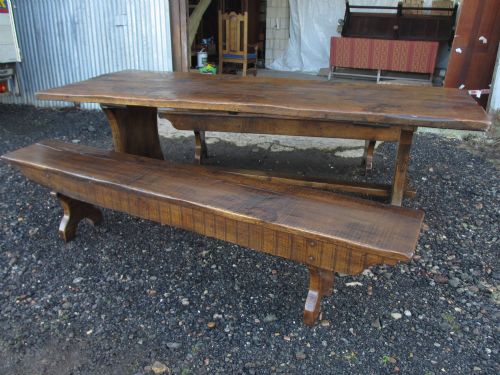
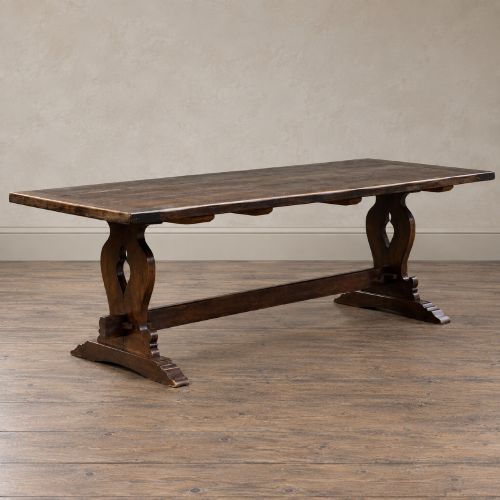
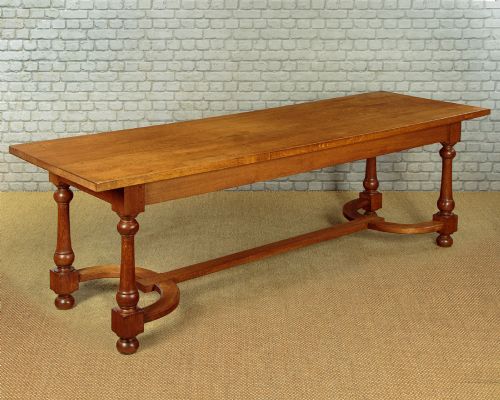
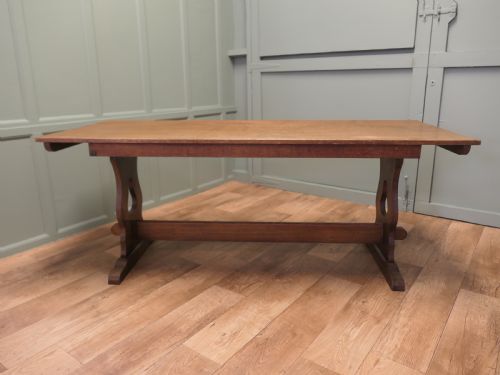
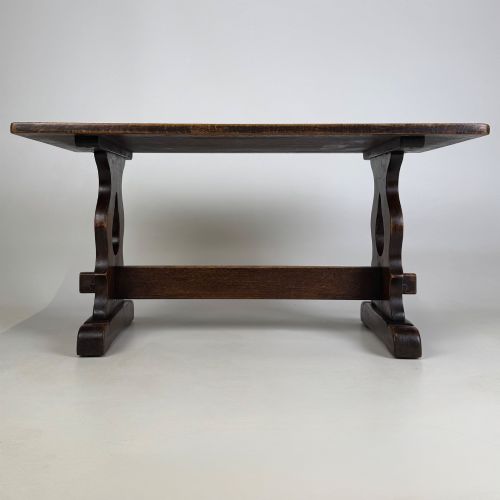
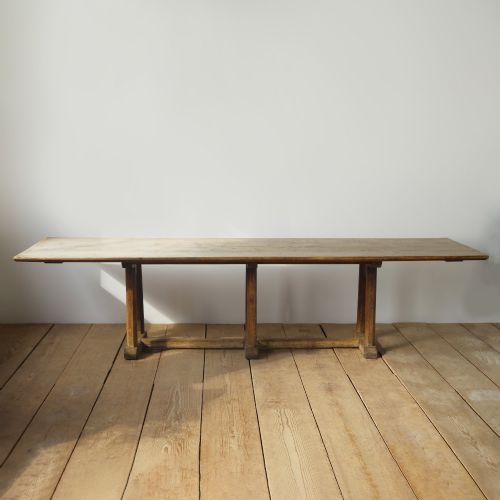
A wooden trestle table is a substantial furniture form defined by a long horizontal top supported by vertical end assemblies or trestles rather than traditional corner legs. These tables appear across multiple periods, including the eighteenth century, nineteenth century, and early twentieth century, taking the shape of dining tables, refectory tables, tavern tables, and serving tables.
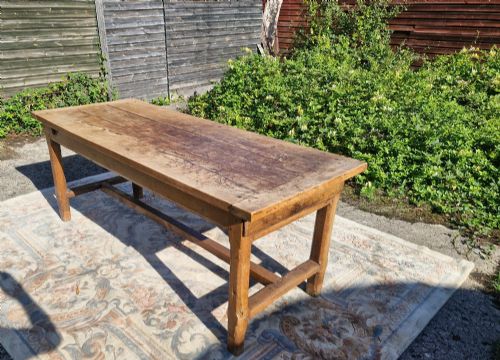
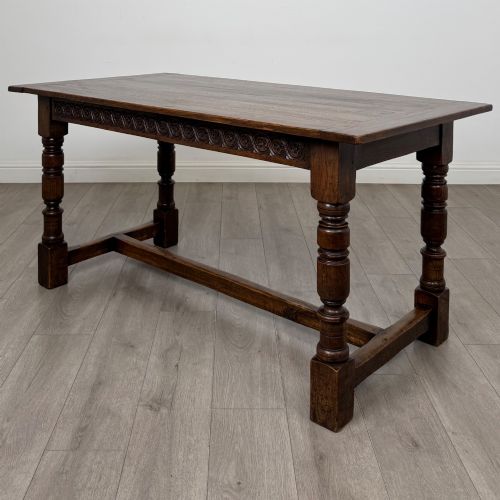
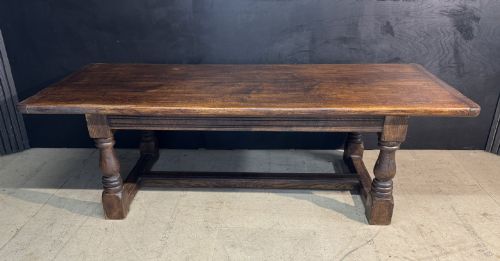
The version most commonly met on this page is the oak refectory table or farmhouse table, often built with solid timber tops and sturdy stretcher bases. Pieces span rustic country styles, French provincial designs, Jacobean revival interpretations, and arts and crafts forms, providing flexible options for both large dining spaces and smaller kitchen settings.
Makers and builders utilised durable timbers to construct pieces that served busy households, resulting in surviving examples that display deep patinas and honest construction. Whether configured as a simple board-top table or a draw leaf extension piece, the fundamental design prioritises legroom and stability.
Factors influencing quality
Quality rests in the selection and preparation of the timber, where prime quartersawn oak or stable single plank elm tops demonstrate superior material choice over ordinary boards. The weight of the timber and the heft of the trestle ends dictate the overall structural solidity of the piece.
The integrity of the underframe joinery separates ordinary examples from finer specimens, with hand-pegged mortise and tenon connections and well-fitted stretchers ensuring long-term stability. Surface finish and natural patina, developed through decades of use, reflect the honesty of the construction and the care given to the wood over time.
Wooden Trestle Table Retail Price Guide 2026
Typical asking prices for wooden trestle table among the pieces listed under this phrase on Sellingantiques today, from the lower quarter to the upper quarter. They describe what is for sale here now, not the wider market.
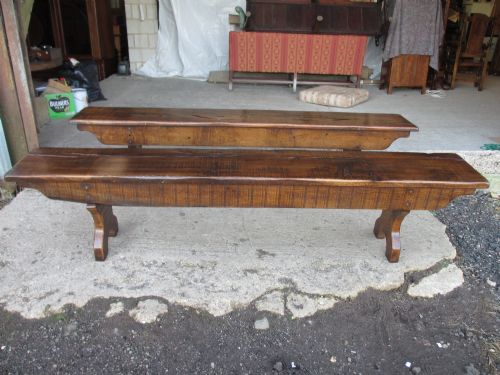
Object forms range from traditional refectory and farmhouse dining tables to tavern tables, coffee tables, serving tables, and benches.
The Wooden Trestle Table Glossary
- Trestle
- A supporting structure consisting of a horizontal beam fixed to two vertical feet or uprights. This design allows maximum legroom along the length of the table.
- Refectory table
- A long, narrow dining table traditionally used in monasteries and large halls. Examples typically feature sturdy wooden legs connected by a low central stretcher.
- Draw leaf table
- A table equipped with two sliding leaves stored beneath the main top that pull out to extend the surface length. This mechanism offers adjustable dining capacity.
- Stretcher
- A horizontal wooden brace running between the legs or trestle ends of a table to provide structural rigidity. It often sits close to the floor to prevent lateral wobble.
- Patina
- The glossy sheen and surface depth developed on wood over years of handling, polishing, and exposure to light. It serves as an indicator of age and genuine use.
Wooden Trestle Table: Frequently Asked Questions
How do I seat people around a trestle table?
The absence of corner legs allows chairs and benches to slide fully beneath the surface along the entire length. This design maximises seating capacity for family gatherings.
Matching benches or loose chairs fit easily into the recessed space between the trestle ends, accommodating varying numbers of guests without obstruction.
Are these tables suitable for everyday kitchen use?
Solid timber construction makes these tables resilient enough for daily meal preparation and family dining. Hardwood surfaces handle routine cleaning and active household routines.
Applying appropriate waxes or oils helps protect the grain from moisture while preserving the natural texture of the wood over time.
How do I identify an older refectory table?
Examining the underside reveals hand-cut joinery, pegged joints, and timber boards showing signs of age such as shrinkage and tool marks. Older tables often use heavy oak or elm planks.
Hardware, surface wear, and the presence of a deep patina point toward earlier periods of craftsmanship rather than modern reproductions.
What is the difference between a refectory and a tavern table?
Refectory tables are generally longer and heavier, designed for communal dining halls with substantial trestle ends and low stretchers. They provide a commanding presence in large rooms.
Tavern tables tend to be more compact, originally intended for smaller hospitality spaces or domestic use, though both share sturdy wooden construction.