
Large Oak Refectory Table
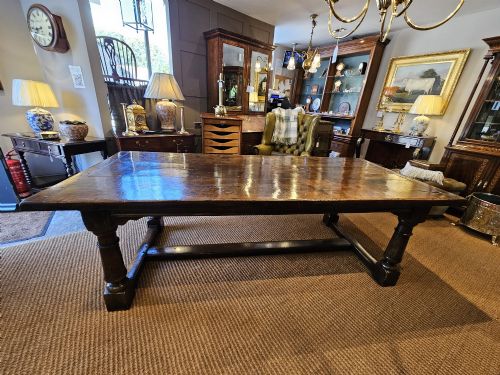
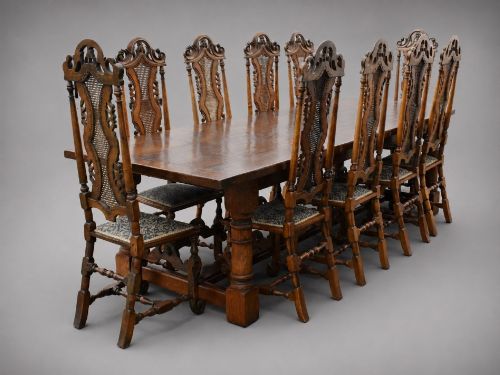
A large oak refectory table grounds a dining room with substantial timber and centuries of social history.
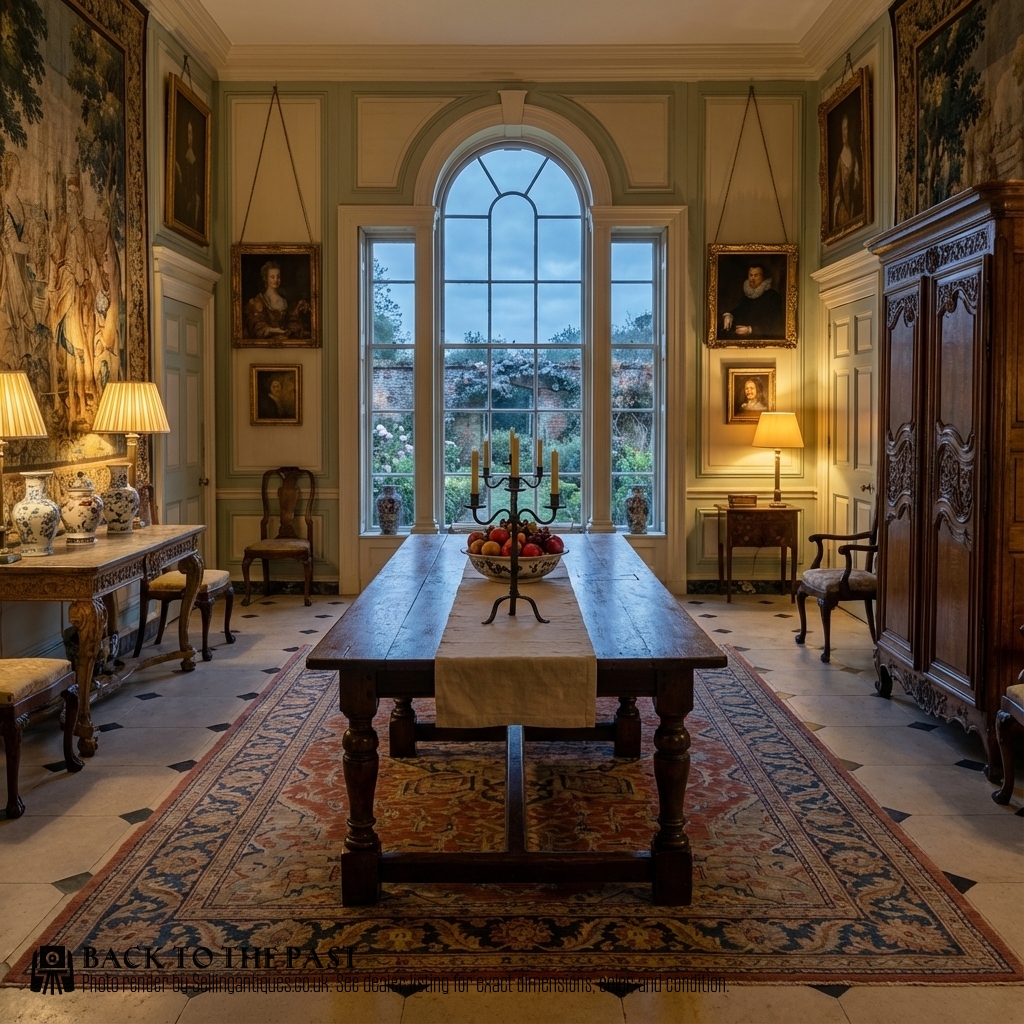
Large Oak Refectory Table
A large oak refectory table provides a long, communal surface originally designed for monastic dining halls and grand English households. Buyers searching this phrase typically require a substantial piece capable of seating eight to twelve people comfortably for modern family meals.
The selections available here range from early eighteenth-century single-plank boards to nineteenth-century vernacular pieces and twentieth-century revival interpretations. Edwardian and 1920s examples frequently appear alongside seventeenth and eighteenth-century antiques, spanning various regional interpretations.
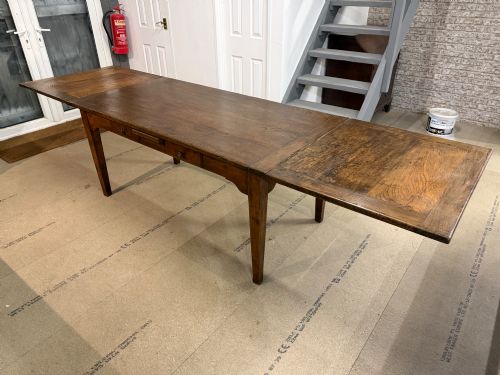
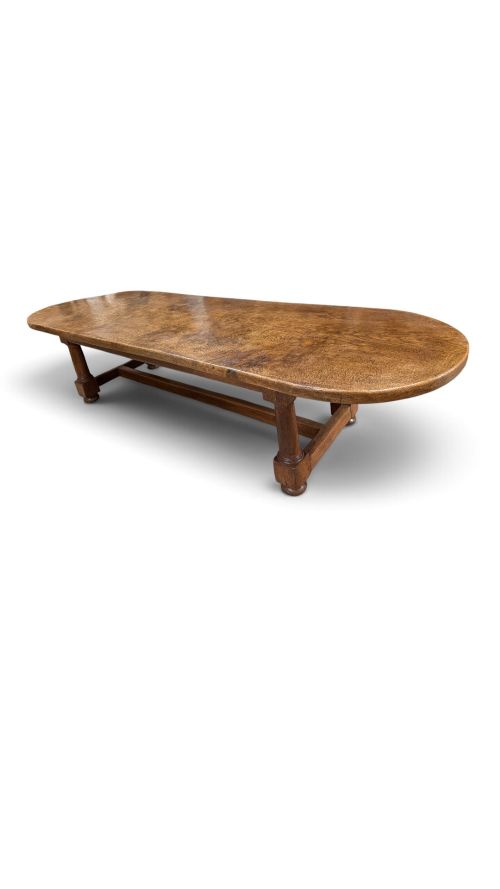
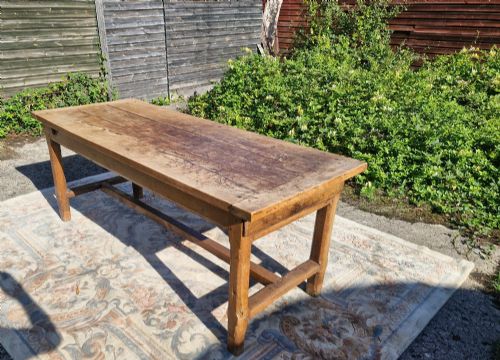
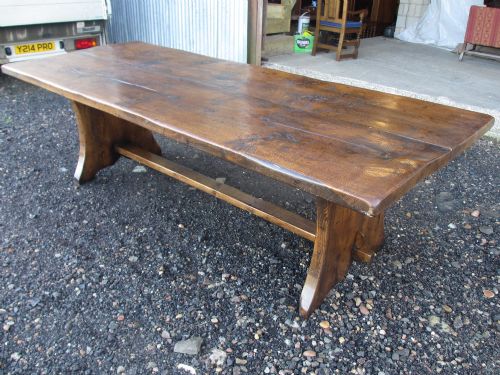
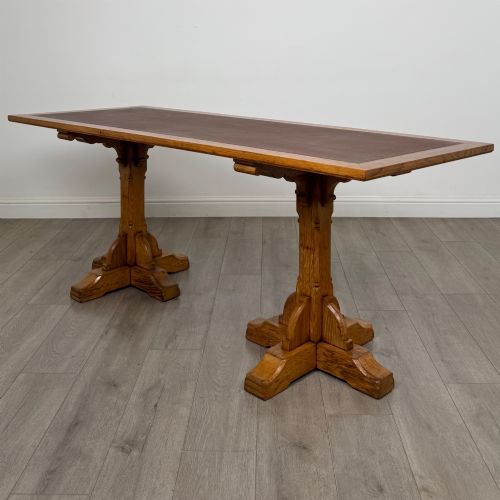
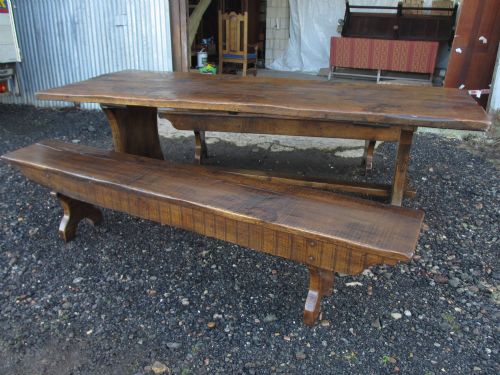
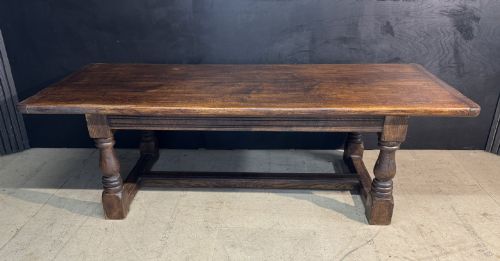
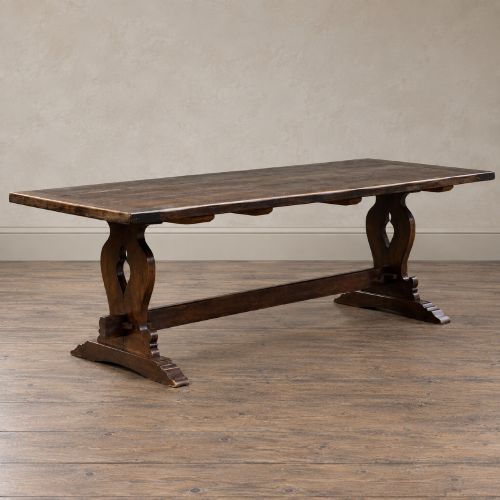
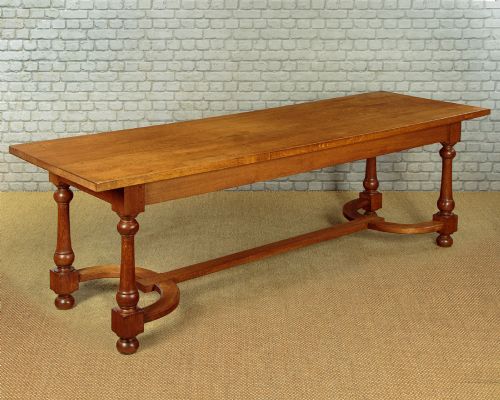
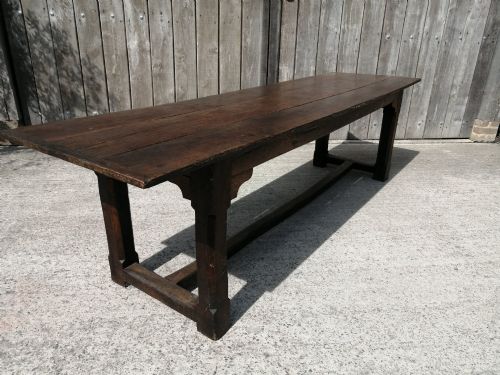
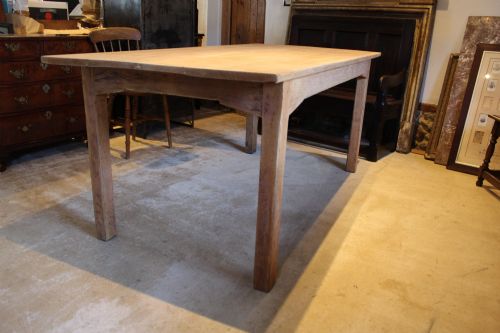
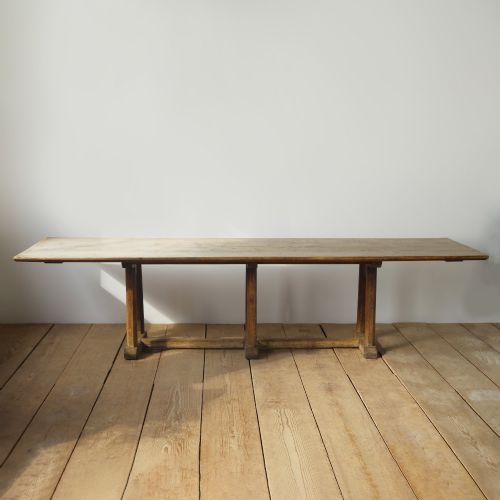
Forms vary from classic trestle and slab ends to heavy four-legged structures, occasionally incorporating draw-leaf mechanisms or matching benches. These tables function primarily as dining surfaces, though library tables and extended farmhouse variations also occur within the category.
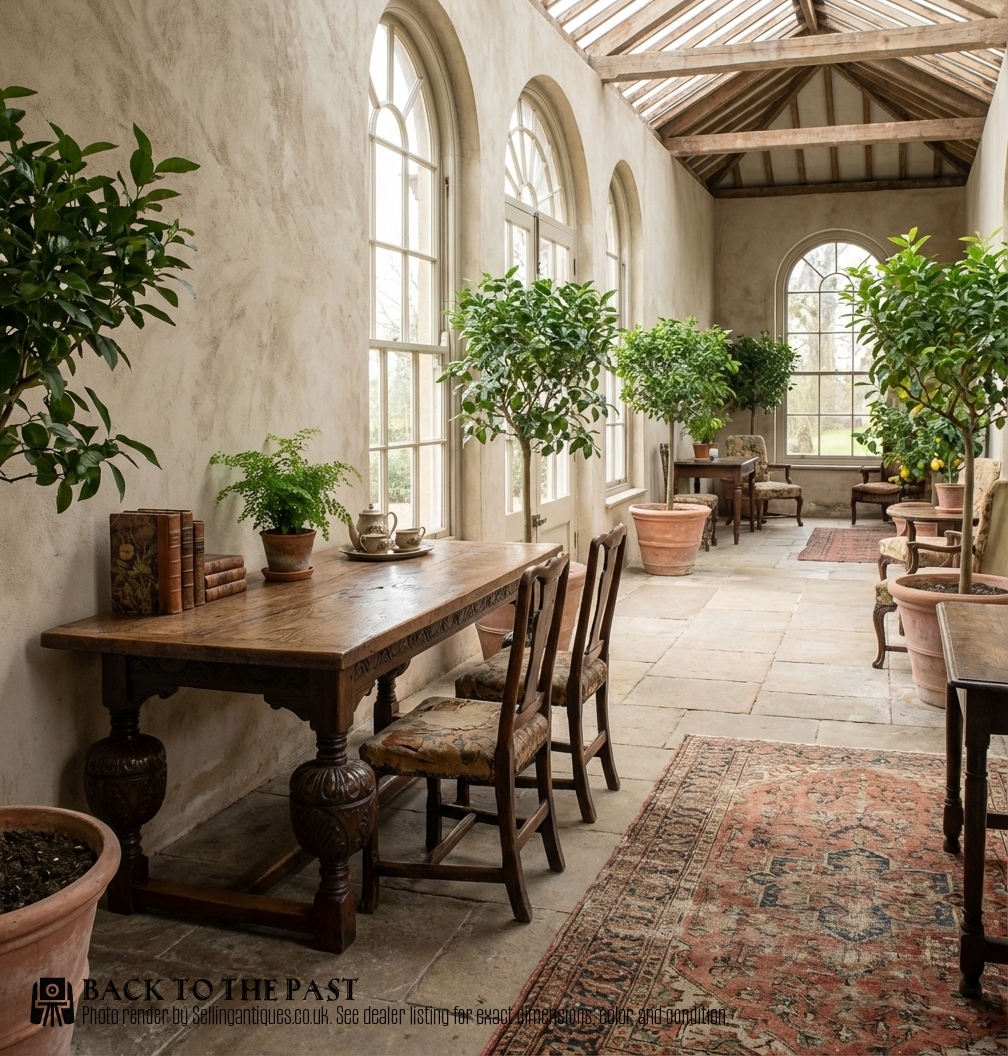
Materials and construction
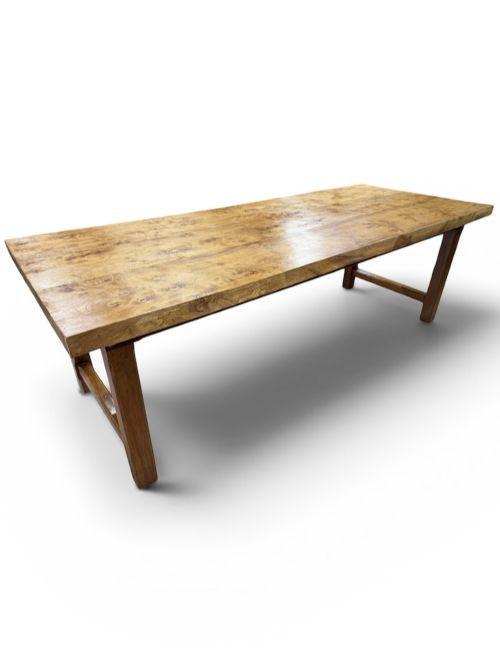
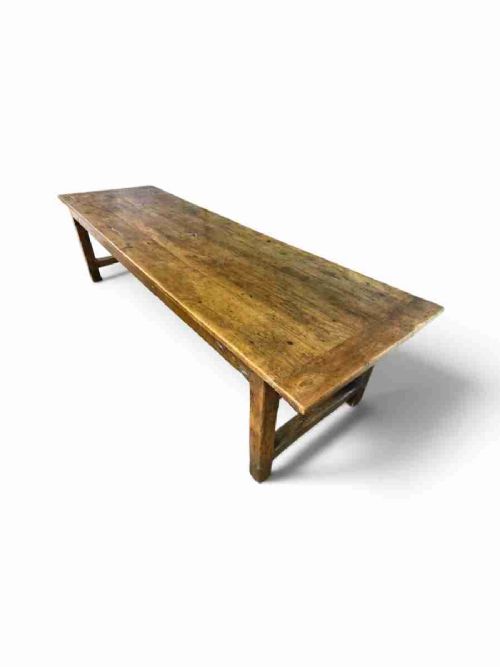
Construction relies heavily on solid oak, selected for durability and strength, frequently supplemented by elm or beech for structural components and secondary framing. Carpenters utilised thick timber planks for the tops, sometimes employing a single wide board across the entire width of the table.
Joints are secured using traditional pegging and mortise and tenon techniques, creating a rigid frame capable of supporting heavy loads without metal fixings. Surface treatments range from historic wax finishes and scrubbed white timber to painted elements and bleached oak finishes.
Large Oak Refectory Table Retail Price Guide 2026
Typical asking prices for large oak refectory table among the pieces listed under this phrase on Sellingantiques today, from the lower quarter to the upper quarter. They describe what is for sale here now, not the wider market.
The inventory records oak refectory tables spanning from the seventeenth century through to the 1940s, alongside pine and elm variants.
Judging quality in historic tables
Quality rests upon the integrity of the timber top and the stability of the underframe. Tables featuring single-plank tops or dense quarter-sawn oak exhibit superior material selection compared to later multi-board assemblies.
Proportion and joinery execution distinguish superior workshops from standard production. Well-balanced trestle ends, crisp moulding profiles, and minimal timber movement over centuries indicate careful initial construction and subsequent preservation.
Heals·Mouseman
The Large Oak Refectory Table Glossary
- Refectory table
- A long dining table historically used in monasteries and large institutions for communal dining. They typically feature long rectangular tops supported by sturdy legs or trestle ends joined by stretchers.
- Plank top
- A table surface constructed from parallel boards running the length of the table. Single-plank examples use one wide board per section and command higher interest among collectors.
- Trestle ends
- Support structures positioned at either end of a table rather than corner legs. These often feature shaped slab timber or pegged uprights connected by a central foot.
- Draw-leaf
- An extending table mechanism featuring concealed leaves beneath the main surface. These pull out from the ends to lengthen the table without removing objects from the centre.
- Jacobean Revival
- A nineteenth or twentieth-century decorative style imitating seventeenth-century English furniture. Pieces in this style utilise heavy turnings, geometric panelling, and dark oak finishes.
Large Oak Refectory Table: Frequently Asked Questions
How many people can sit at these tables?
Most large examples measure over two metres in length and comfortably seat eight to twelve diners.
Extended variations and pieces with accompanying benches provide flexible seating arrangements for larger gatherings.
Are these tables suitable for daily family use?
Solid oak construction and pegged joints provide exceptional structural stability suited to heavy daily dining.
Historic surfaces accumulate patina over time, meaning modern family life adds to the character rather than harming the timber.
How do I distinguish eighteenth-century tables from revival pieces?
Early pieces display hand-cut joinery marks, irregular timber shrinkage, and pegged joints secured without modern machinery.
Revival furniture from the Edwardian period or the 1920s exhibits more uniform milling and machine-cut elements beneath traditional styling.
What is a scrubbed oak top?
A scrubbed top has been cleaned back to the raw timber grain, removing dark historic waxes and polishes.
This treatment reveals the natural pale colour and texture of the oak, creating a casual farmhouse appearance.