
Traditional Oak Table
A traditional oak table brings honest timber and centuries of domestic utility straight into a modern dining room.

Traditional Oak Table
A traditional oak table spans formal refectory boards and utilitarian farmhouse forms built to serve generations of daily meals.
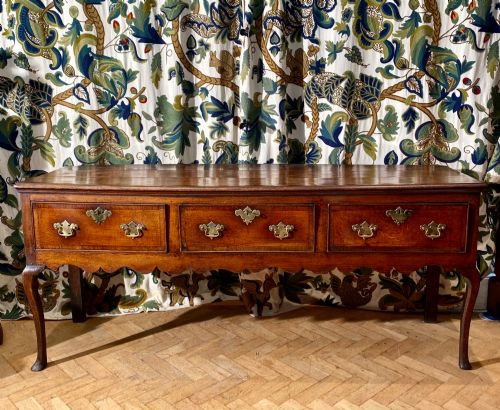
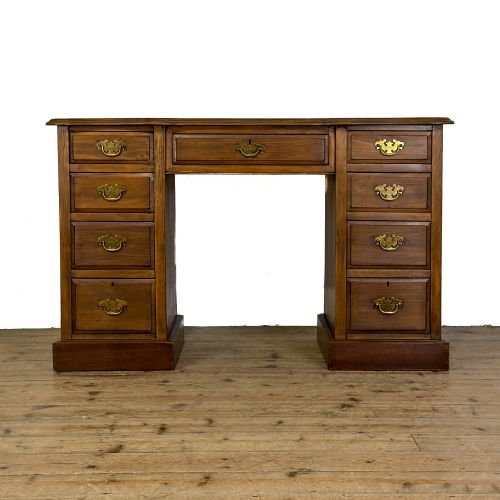
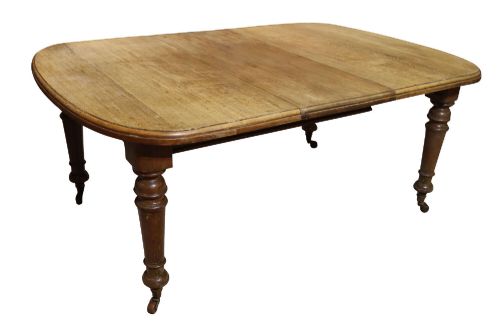
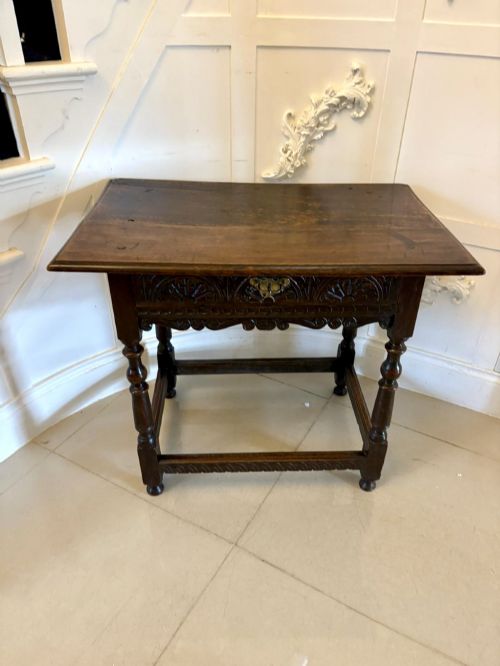
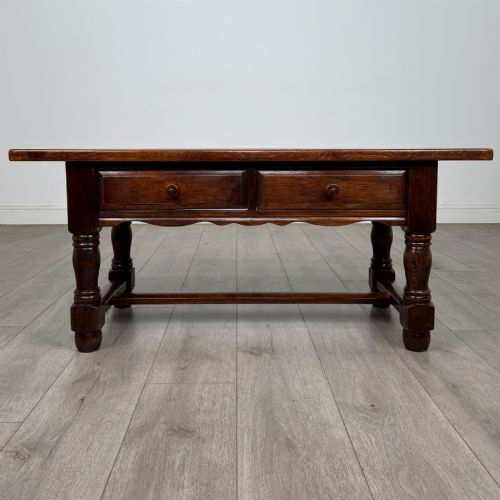
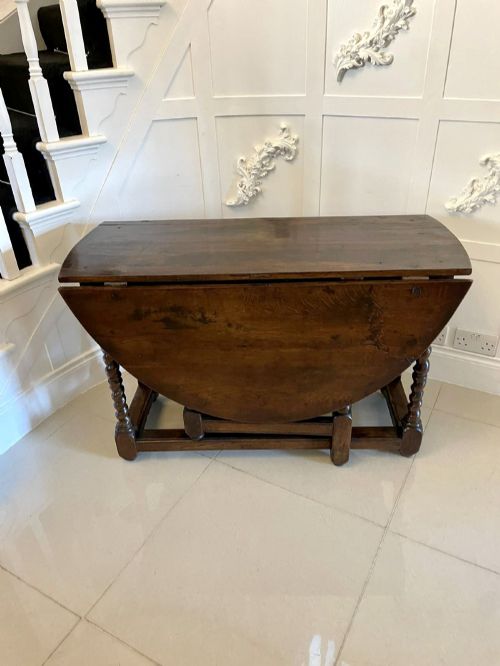
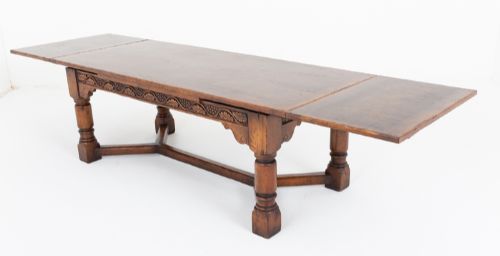
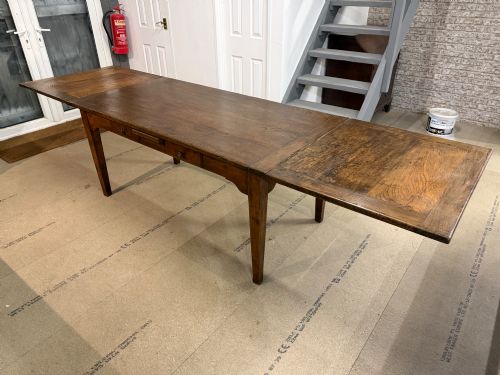
The selections visible here range from eighteenth-century single-plank dining surfaces to Edwardian draw-leaf extensions and sturdy Victorian desks.
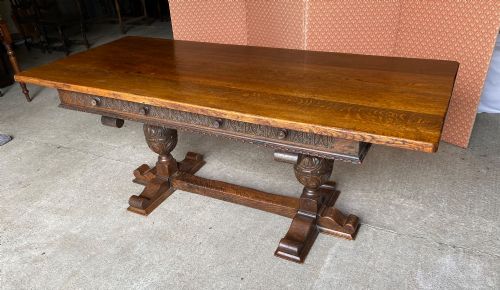
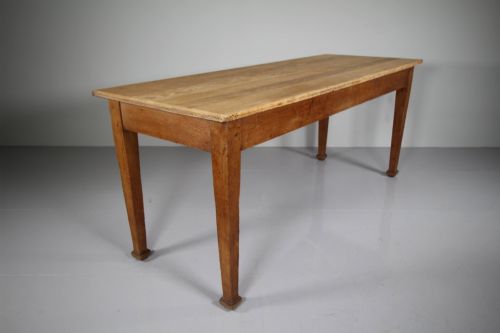
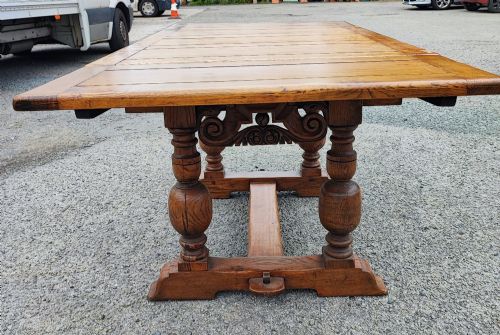
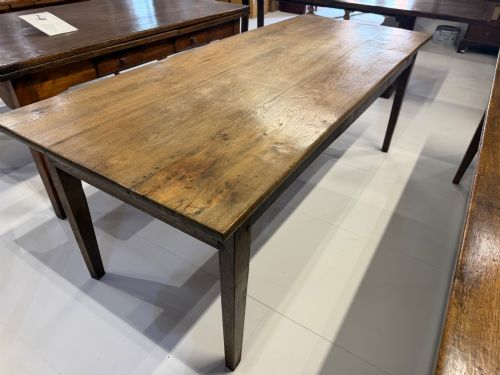
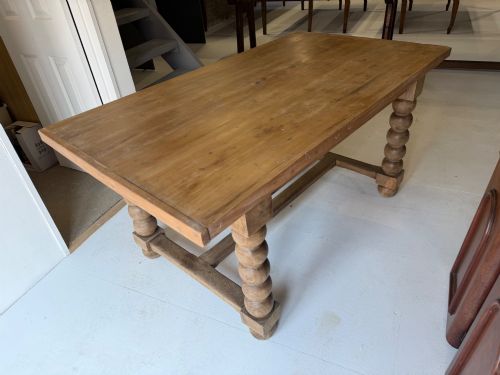
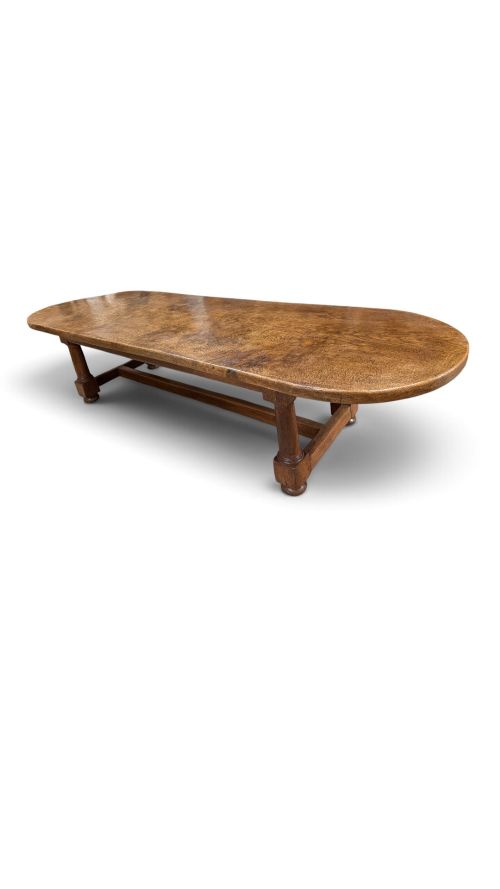
Buyers seeking a traditional oak table will encounter heavy trestle ends, tapered legs, and occasional potboards shaped by regional English craftsmanship.
Materials and Construction
Cabinetmakers built these pieces primarily from solid oak, frequently pairing the durable timber with secondary woods like beech, elm, and chestnut for structural elements.
Joinery relied on traditional pegged mortise and tenon joints to withstand heavy daily use, while hardware additions incorporated cast brass and iron fittings.
Some sturdy benches still bear the quiet scars of eighteenth-century family suppers and generations of spilled tea.
Judging Quality and Character
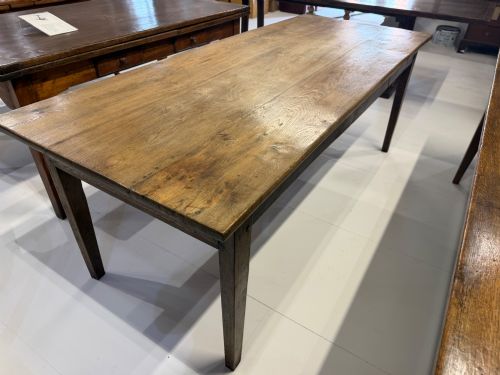
Quality rests in the integrity of the timber selection, distinguishing single-plank surfaces and mature grain patterns from later composite builds.
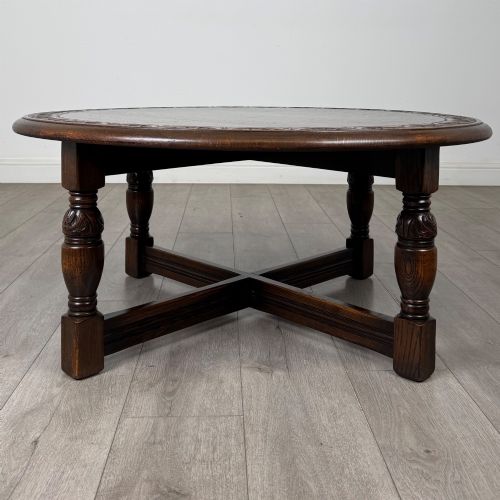
Hand-carved detailing and well-executed mechanical extensions like refectory draw leaves separate standard workshop production from finer cabinet work.
The Traditional Oak Table Glossary
- Refectory table
- A long dining table traditionally used in communal dining halls and characterised by substantial length and stretcher-supported legs.
- Draw-leaf table
- A table fitted with hidden extension leaves beneath the main top that pull out to lengthen the surface.
- Potboard
- An open lower shelf built into the base of a dresser or sideboard, historically used for storing pots and earthenware.
- Linenfold
- A style of wood carving that resembles folded parchment or linen, popular on panels during the medieval and revival periods.
- Trestle
- A structural support consisting of a horizontal beam fixed to two splayed feet, commonly carrying heavy dining boards.
Traditional Oak Table: Frequently Asked Questions
How do I clean a solid wood dining surface?
Wipe the timber gently using a slightly damp cloth to remove daily dust and spills without damaging the aged patina.
Avoid harsh chemical sprays and apply natural beeswax periodically to nourish the dry grain.
Can I seat eight people comfortably for dinner?
Many refectory and extending formats provide generous lengths designed specifically to accommodate large gatherings with ease.
Check the clearance beneath the aprons and between the trestles to ensure adequate legroom for chairs.
What is the difference between an 18th-century piece and an Edwardian revival?
Earlier examples display hand-Hewn tool marks, pegged joinery, and natural timber wear accumulated over centuries of domestic service.
Edwardian reproductions utilise machinery-assisted precision while copying historical Jacobean and Georgian stylistic motifs.
Will an antique timber surface warp near radiators?
Solid wood responds to sudden changes in household humidity and central heating by expanding or contracting slightly.
Keep tables away from direct heat sources and maintain stable room conditions to protect the historical joins.