



Cup and Cover Table
A cup and cover table brings heavy oak presence and historic architectural turnings straight into the modern dining room.
Cup and Cover Table
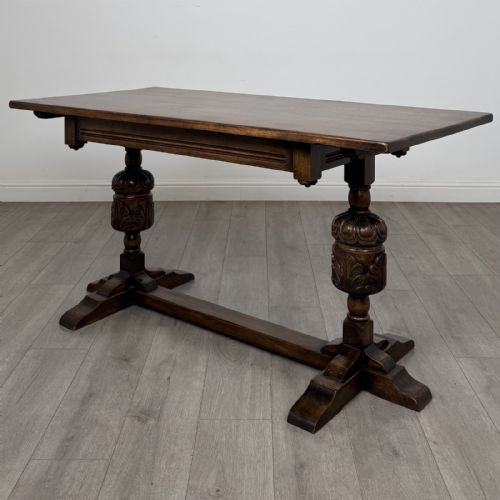
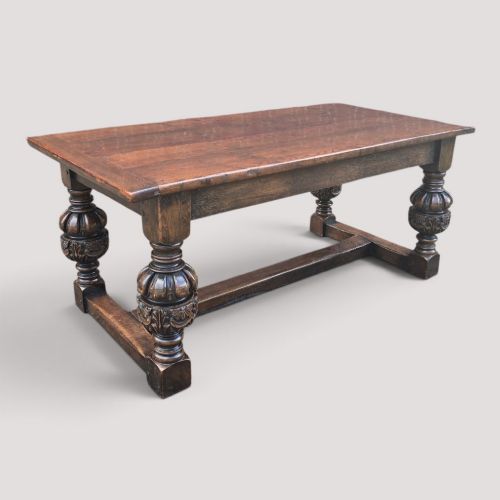
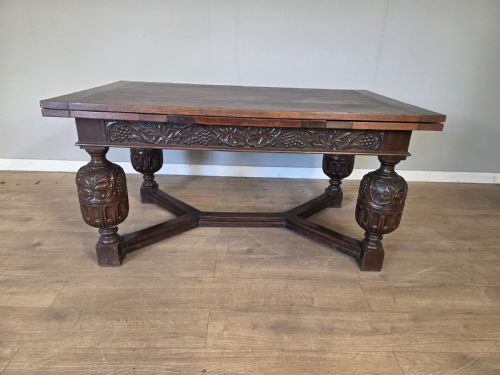
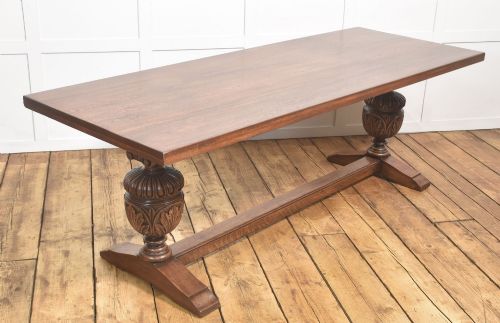
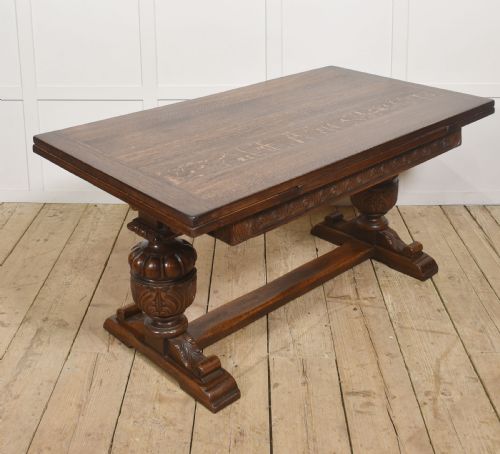
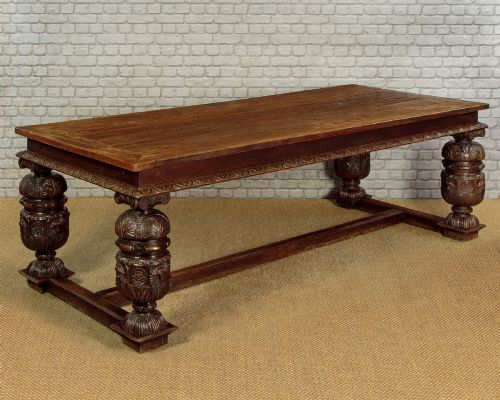
A cup and cover table is a sturdy dining surface rooted firmly in early vernacular forms, interpreted here through twentieth-century revival pieces. Buyers seeking this style find substantial oak furniture designed for communal gatherings and family meals.
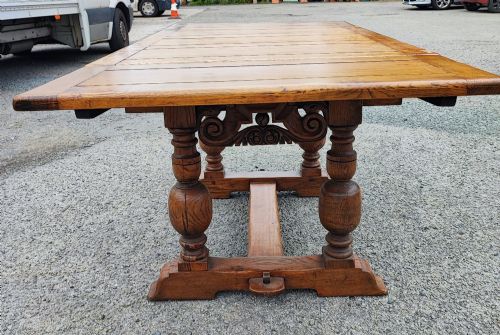
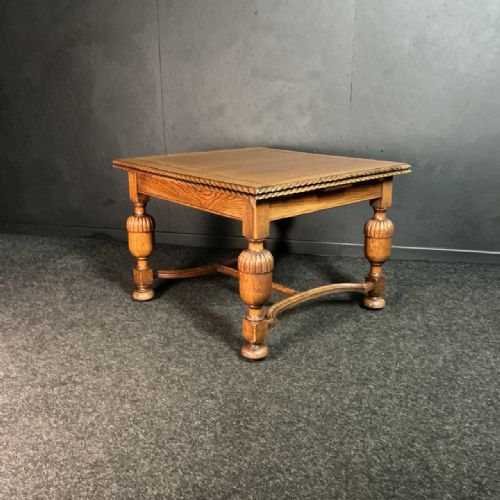
The pieces on this page span the early decades of the twentieth century, specifically drawing on Elizabethan and Jacobean revival designs. They arrive in the form of refectory dining tables, farmhouse tables, and extending variants equipped with pull-out leaves.
Most examples lean into the Jacobean Revival and Elizabethan styles, reproducing the robust proportions and heavy structural timber of sixteenth-century originals. These twentieth-century interpretations offer the visual weight of earlier centuries combined with functional extension mechanisms.
How they were made
Construction relies heavily on solid oak throughout the framework, tabletops, and undercarriages, ensuring enduring structural stability. Timber boards are joined to create expansive surfaces capable of withstanding daily dining use.
Makers utilised traditional woodworking techniques, incorporating carved details into the wooden frames and heavy stretchers. Extension mechanisms such as draw leaves and pull-out ends were integrated directly into the timber framework to allow the surface area to expand cleanly.
Cup and Cover Table Retail Price Guide 2026
Typical asking prices for cup and cover table among the pieces listed under this phrase on Sellingantiques today, from the lower quarter to the upper quarter. They describe what is for sale here now, not the wider market.
Listings span three distinct decades from nineteen-hundred to nineteen-twenty, featuring solid oak and oak construction exclusively.
What varies in quality
Quality reveals itself in the choice of solid timber and the depth of the carved ornamentation on the structural supports. Superior examples display crisply defined carving and well-figured oak grain that has matured with an even tone.
The engineering of the extension mechanism separates simpler farmhouse tables from more elaborate refectory and draw-leaf formats. Smooth operation of pull-out leaves and tight joints across the main tabletop demonstrate superior workshop execution.
The Cup and Cover Table Glossary
- Draw leaf table
- A dining table equipped with two concealed leaves beneath the main top that slide outwards to extend the surface. This ingenious mechanism allows the table to grow in length without removing the central top boards.
- Refectory table
- A long, narrow dining table traditionally used in monastic dining halls and later adopted for domestic spaces. These tables feature sturdy legs connected by low stretcher rails for added rigidity.
- Jacobean Revival
- A nineteenth and twentieth-century design movement that reinterprets the heavy, geometric furniture styles of the early seventeenth century. Pieces from this era often feature deep carving and dark oak finishes.
- Solid oak
- Timber sourced entirely from the oak tree rather than veneered onto a secondary wood core. This material provides exceptional durability and a heavy, tactile surface for antique dining furniture.
Cup and Cover Table: Frequently Asked Questions
How do I use an extending table?
Extending tables on this page typically use draw leaves or pull-out extensions built discreetly beneath the main tabletop. You simply pull the end sections outward to reveal additional surface area for larger gatherings.
This mechanism allows the table to remain compact for daily use while expanding easily when hosting guests.
Are these tables made of solid wood?
The listings on this page are constructed from solid oak and related sturdy timber variants. This natural material ensures the heavy frames support regular dining activity without losing structural integrity.
Solid construction also allows the wood to develop a rich patina across the surface over decades of use.
How do I date an oak revival table?
Dating these pieces involves examining the construction methods, hardware, and stylistic revival cues used by early twentieth-century makers. Tables from this era often blend Elizabethan or Jacobean visual motifs with cleaner internal mechanisms.
Comparing the timber finish and the wear patterns helps distinguish pieces made around nineteen-ten from later twentieth-century iterations.