
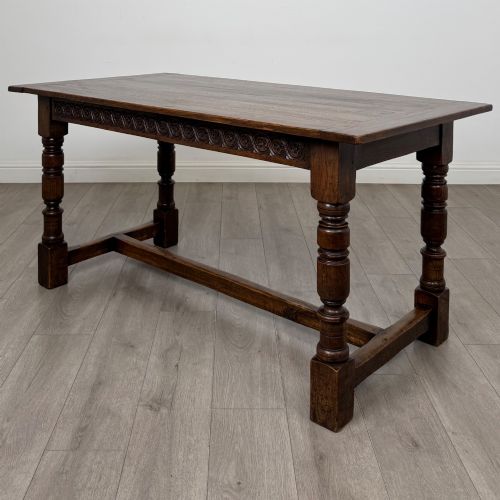
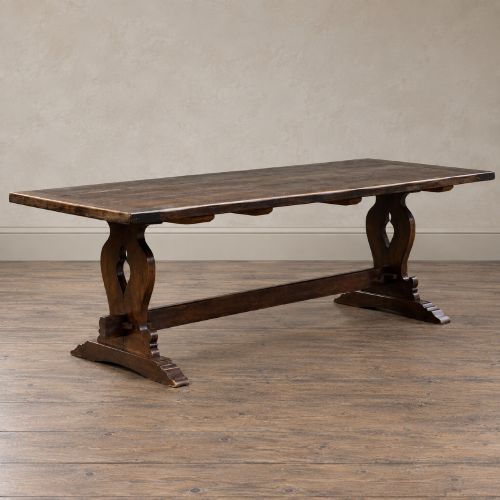
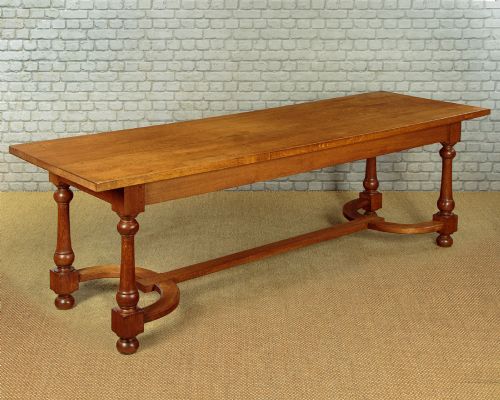
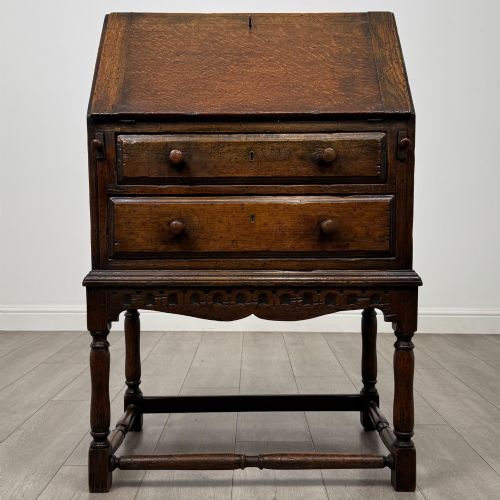
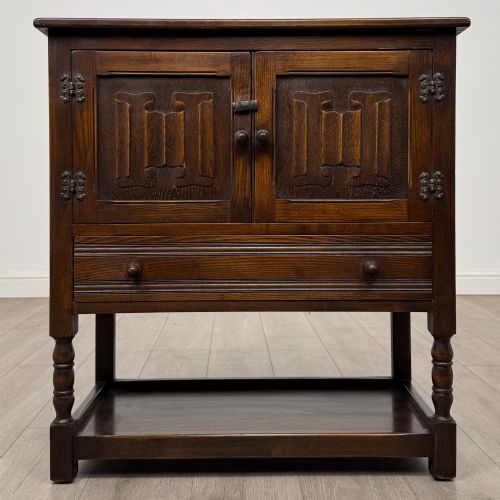


Tudor Revival Oak Table
These pieces are solid oak dining tables and refectory forms built in revival styles, offering the heavy proportions and dark timber of earlier centuries.
Tudor Revival Oak Table
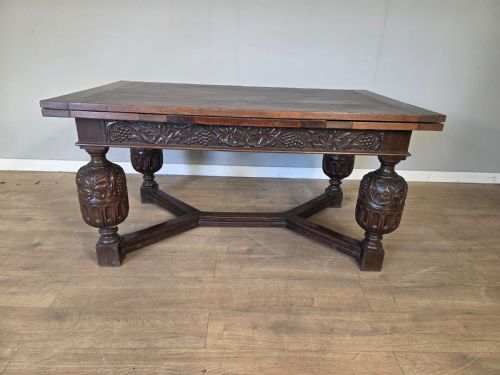
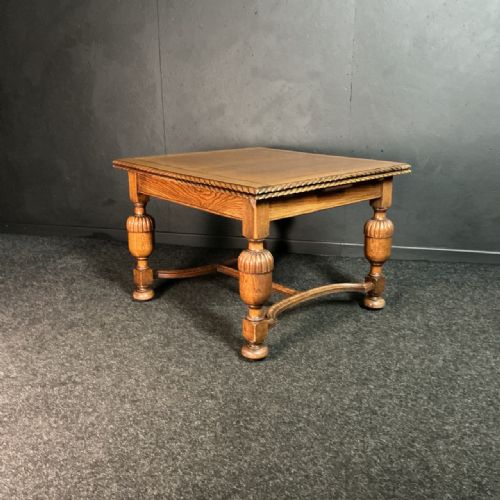
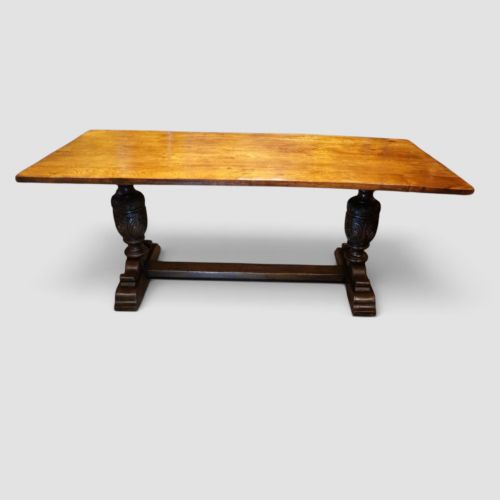
When you search for a tudor revival oak table, you encounter heavy refectory dining tables, draw leaf extending pieces, and occasional farmhouse or side forms. The selection spans the nineteenth century through to the nineteen thirties, with Edwardian and nineteen twenties pieces appearing most frequently alongside Elizabethan and Jacobean styles.
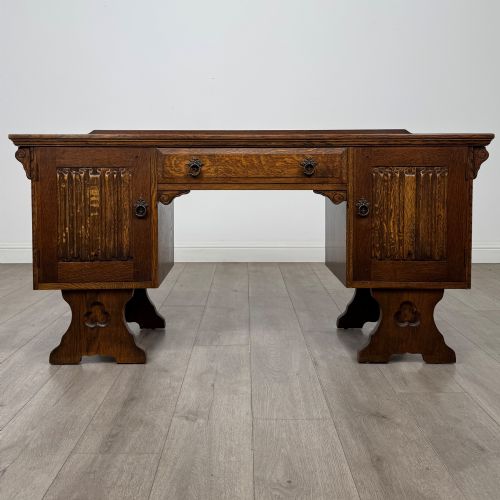
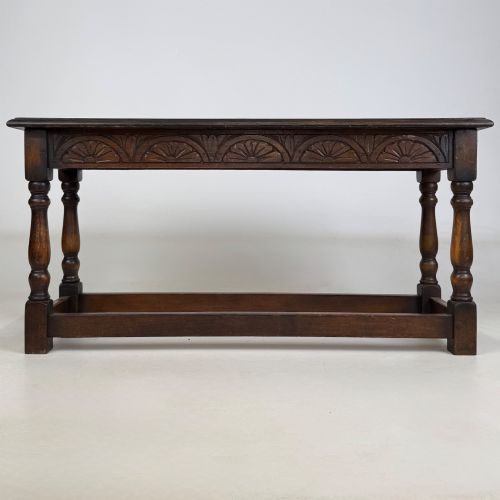
Dining tables and refectory formats dominate the current offerings, though smaller desks, side tables, and benches also emerge from the period workshops. These items adapt historical forms for twentieth century interiors, maintaining the substantial feel of earlier centuries without the fragility of genuine antiquity.
Materials and construction
The primary material across all listed examples is oak and solid oak, chosen for its strength and grain structure. Workshops utilised traditional joining methods alongside mechanical support to create sturdy dining and extending frames.
Iron fittings appear in supporting hardware, whilst surface ornamentation relies on carved details such as linenfold panels and heavily carved borders. These decorative elements emulate sixteenth and seventeenth century craftsmanship within twentieth century production contexts.
Tudor Revival Oak Table Retail Price Guide 2026
Typical asking prices for tudor revival oak table among the pieces listed under this phrase on Sellingantiques today, from the lower quarter to the upper quarter. They describe what is for sale here now, not the wider market.
Some dining tables come with matching stools, ensuring nobody has to sit on an unmatched chair.
Craftsmanship and timber selection
Quality separates pieces through the grade of solid oak selected and the depth and precision of the carved ornament. Finer examples display crisper detailing in linenfold panels and refectory stretchers, whereas simpler versions rely on plain timber surfaces.
The mechanical action of extending mechanisms, such as draw leaf systems, also distinguishes workshops. Well constructed tables operate smoothly while retaining the rigid stability expected of heavy dining furniture.
The Tudor Revival Oak Table Glossary
- Refectory table
- A long narrow dining table traditionally used in monastic refectories and reproduced in twentieth century oak revival pieces. These forms provide substantial seating capacity.
- Draw leaf table
- An extending table with leaves stored beneath the main top that pull out to lengthen the surface. This mechanism allows flexible sizing for dining.
- Linenfold
- A style of relief carving resembling folded parchment or linen, frequently utilised on twentieth century cabinet doors and desk panels. It is a signature motif of the Tudor style.
- Jacobean style
- A decorative manner dating from the early seventeenth century that influences later revival pieces through geometric panels and turned supports. It shares heavy proportions with Tudor design.
Tudor Revival Oak Table: Frequently Asked Questions
How do I date a revival table?
Dating relies on construction methods, timber condition, and stylistic indicators recorded in the workshop output. Pieces from the Edwardian era and nineteen twenties often show specific machine or hand finishing techniques distinct from nineteenth century work.
Examining the underside of the top and the joints reveals the transition between Victorian revivalism and later twentieth century production. Comparison with dated examples helps establish the likely decade of manufacture.
Are these tables suitable for daily dining?
These solid oak refectory and extending tables are built for robust daily use. Their heavy timber frames provide exceptional stability for family dining and gathering.
Care should be taken with hot dishes and moisture, utilising appropriate table protection to preserve the polished oak surface. Regular dusting maintains the timber finish without requiring heavy intervention.
How do I care for solid oak furniture?
Solid oak requires simple maintenance involving occasional dusting with a dry or slightly damp cloth. Avoiding placement near direct heat sources prevents the timber from drying out or splitting.
Natural wax can be applied periodically to nourish the wood and maintain its deep lustre. This preserves the character of the carved details over years of use.