
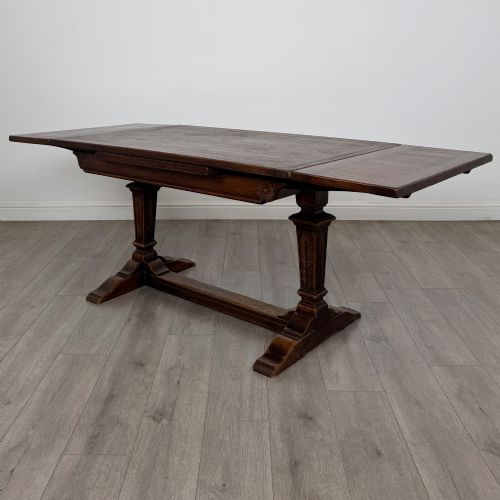
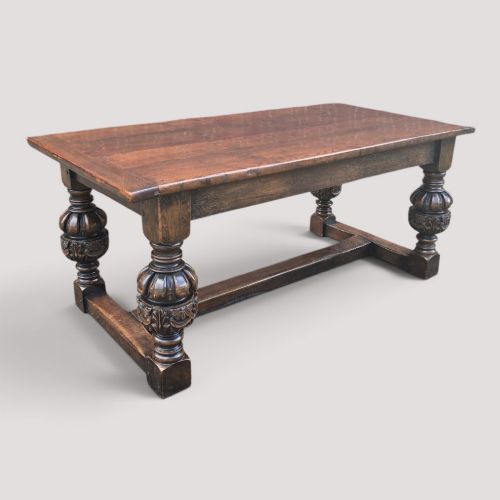
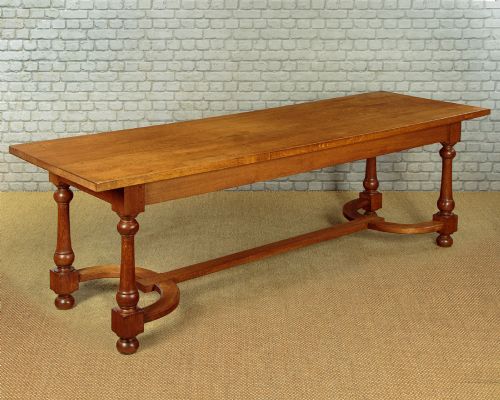
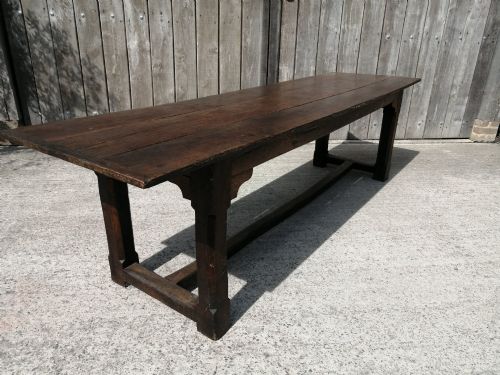
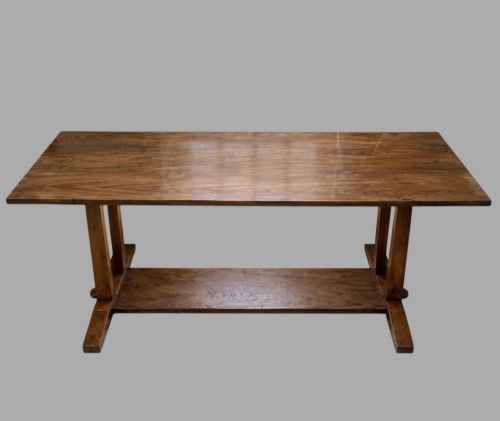
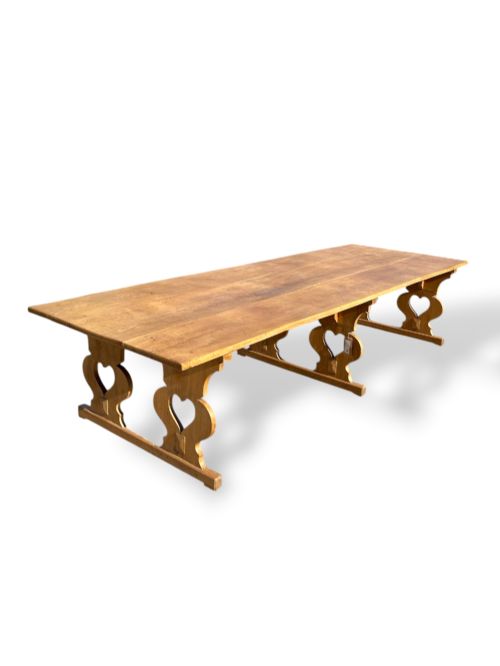
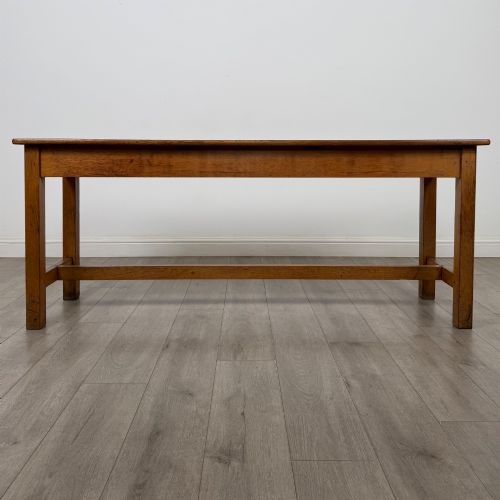
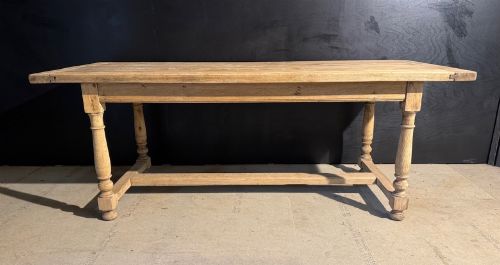
Stretcher Base Oak Table
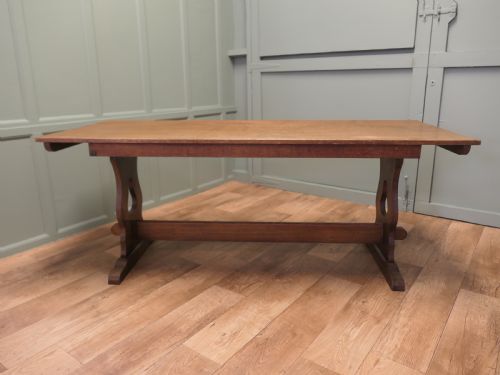
A stretcher base oak table grounds a room with robust timber and centuries of utilitarian design.
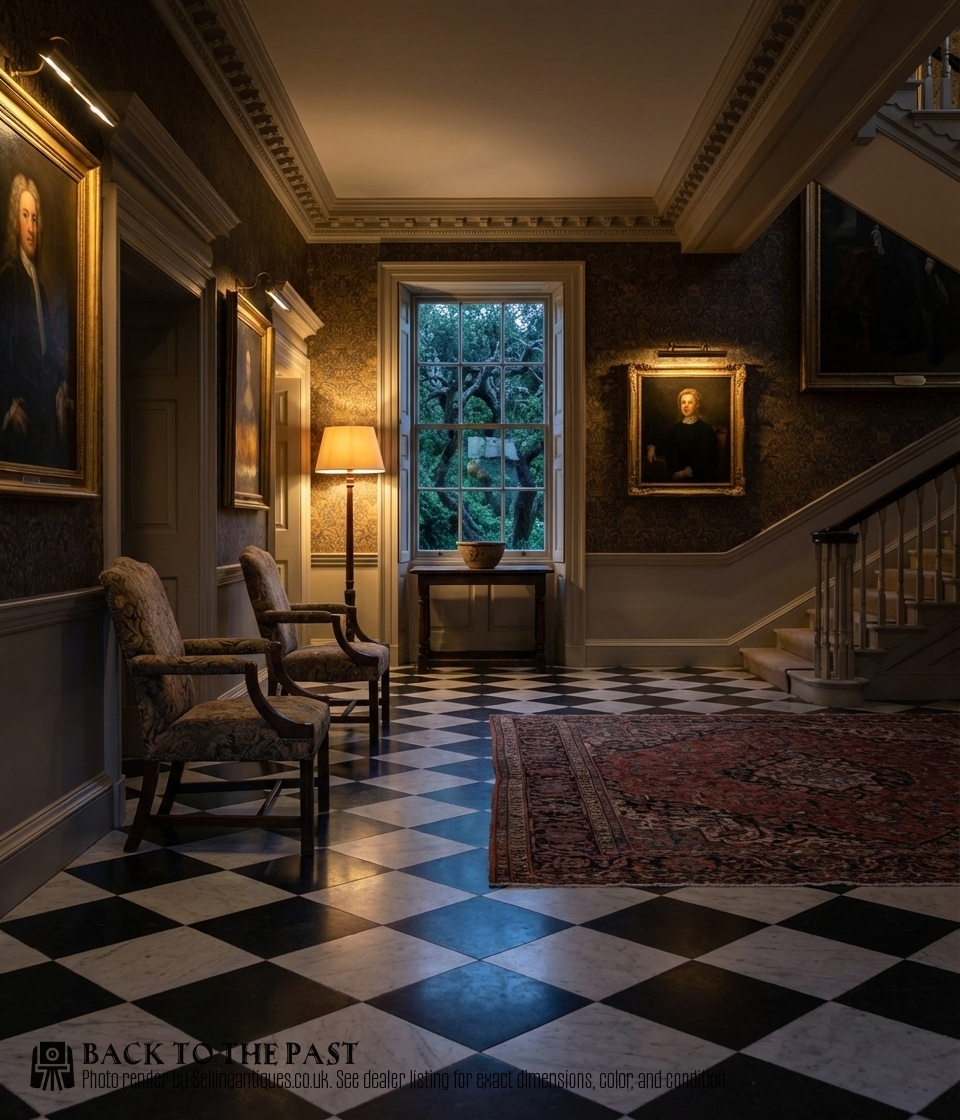
Stretcher Base Oak Table
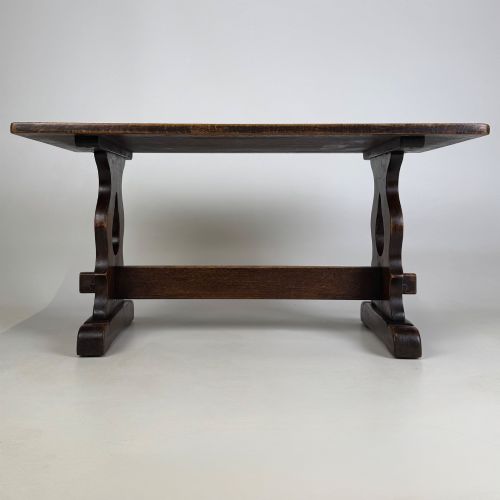
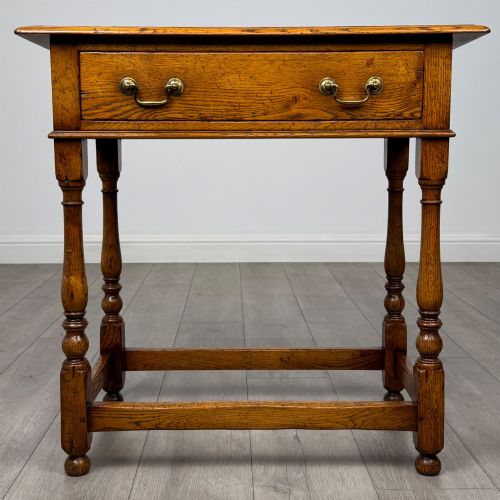
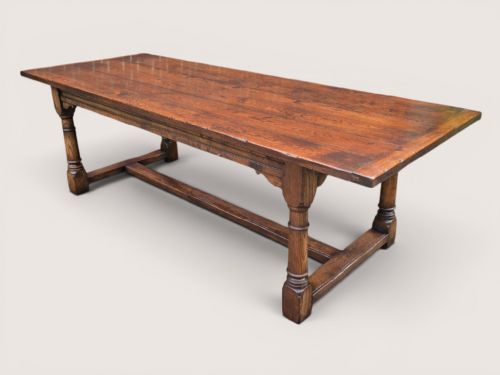
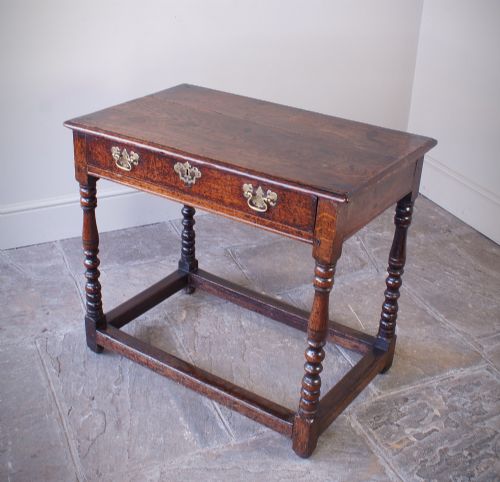
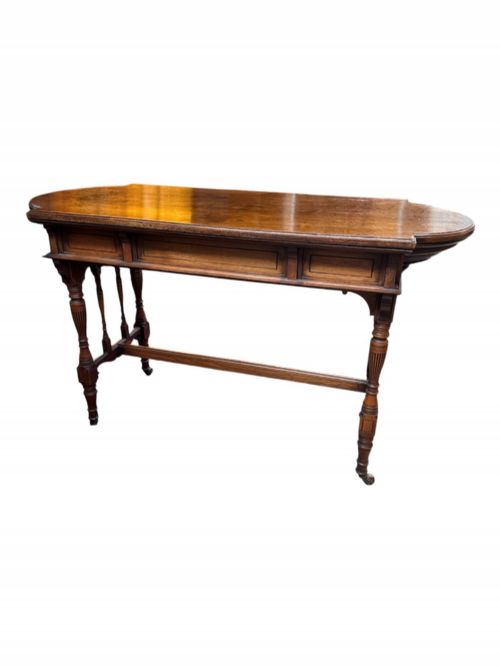
A stretcher base oak table appears primarily as a dining or refectory table, alongside coffee tables, side tables, and writing desks. These pieces span from authentic seventeenth-century examples to later revivals from the Victorian, Edwardian, and nineteen-thirties periods.
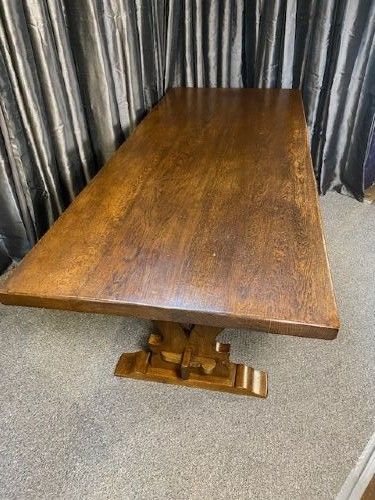
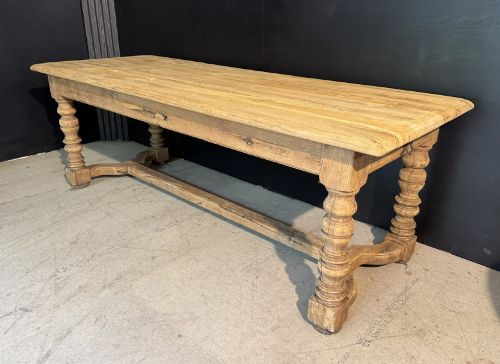
Buyers most frequently encounter large farmhouse or refectory dining tables designed with heavy timber tops and supportive underframes. French, English, and Dutch country styles dominate the selection alongside Arts and Crafts interpretations.
Earlier centuries yield authentic tavern and refectory forms with original timber, while later decades offer draw leaf mechanisms and bleached finishes suited to contemporary domestic spaces.
Assessing quality in construction and material
Quality rests upon the integrity of the timber and the tightness of the joinery connecting the base to the top. Tables retaining their original top-to-base configuration hold greater architectural coherence than married pieces assembled from different eras.
The depth of grain, the handling of the stretcher framework, and the presence of period-appropriate hardware distinguish superior examples. Surface patination achieved through centuries of use creates a distinct visual character absent in later revivals.
Stretcher Base Oak Table Retail Price Guide 2026
Typical asking prices for stretcher base oak table among the pieces listed under this phrase on Sellingantiques today, from the lower quarter to the upper quarter. They describe what is for sale here now, not the wider market.
Listings feature oak alongside elm and pine, supported by hardware in brass, iron, and bronze across eras from the seventeenth century to the nineteen-thirties.
The Stretcher Base Oak Table Glossary
- Stretcher base
- A structural framework of horizontal wooden bars connecting the legs of a table near the floor to provide rigidity and support.
- Refectory table
- A long dining table traditionally used in monasteries and large halls, characterised by a narrow top and substantial underframing.
- Draw leaf
- A dining table construction featuring two pull-out leaves hidden beneath the main top that extend to increase seating capacity.
- Bleached oak
- Timber treated to lighten its natural tone, a finish commonly found on twentieth-century French and Dutch farmhouse tables.
- Patina
- The surface sheen and colour acquired by oak through age, handling, and exposure to light over many decades.
Stretcher Base Oak Table: Frequently Asked Questions
What is a stretcher base oak table?
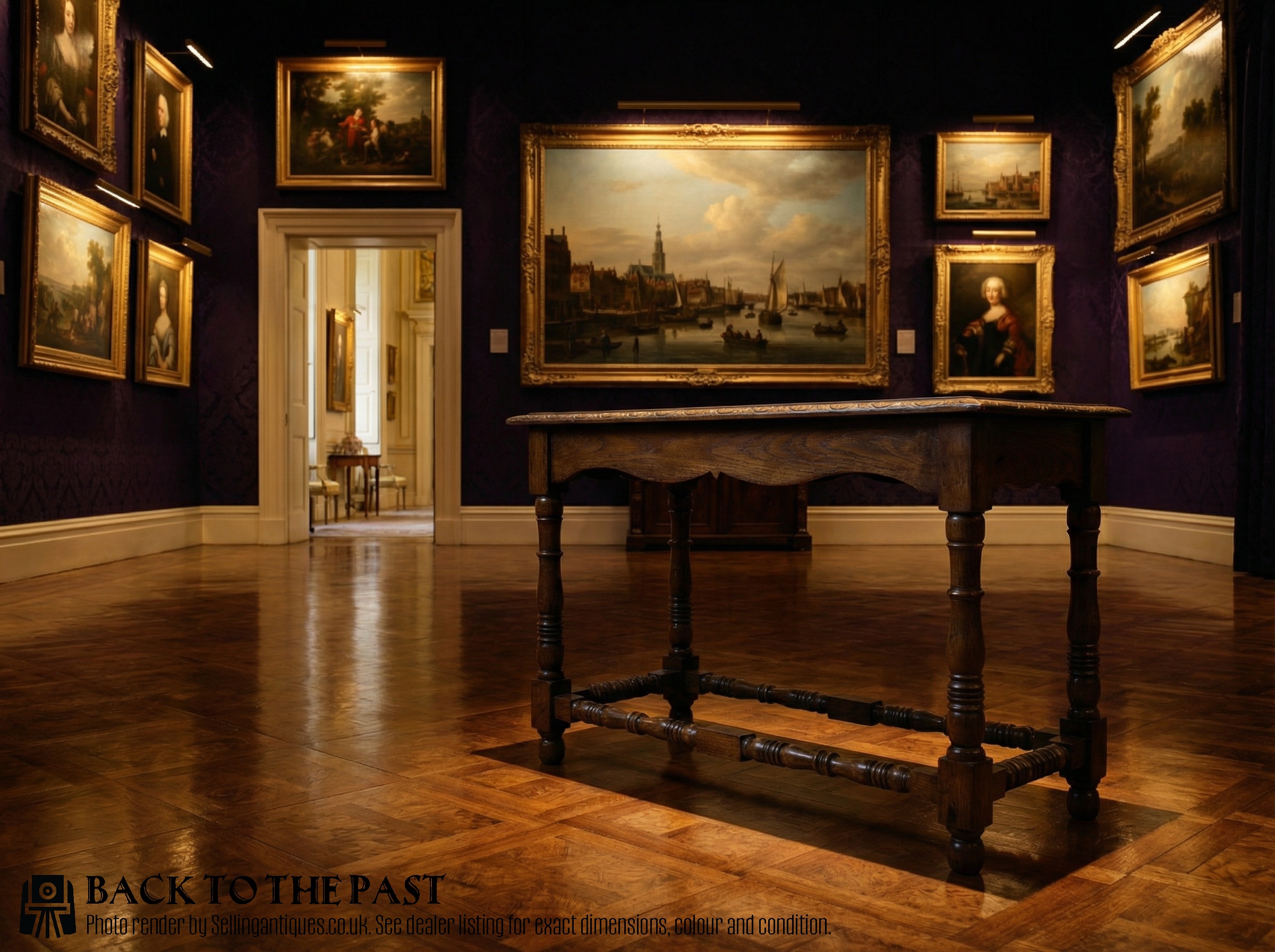
A stretcher base oak table is a piece of furniture featuring solid oak construction supported by horizontal timber bars linking the legs near the base. These bars add structural strength and prevent the legs from wobbling under heavy use.
Such designs appear across various formats, from large seventeenth-century refectory dining tables to compact twentieth-century coffee tables and writing desks.
How do I identify a 17th-century table?
Seventeenth-century examples display deeply patinated solid oak timber, hand-carved details, and pegged joinery rather than modern metal fasteners. The wood shows centuries of wear, shrinkage cracks, and distinct tool marks from manual processing.
Later revivals from the Victorian and Edwardian eras often imitate these early forms but utilise different construction techniques and cleaner timber surfaces.
Are bleached oak tables original?
Bleached oak finishes on farmhouse tables typically date from the twentieth century, reflecting a design preference for lighter, airier interior aesthetics. While the underlying oak timber may originate from earlier nineteenth-century French or Dutch workshops, the pale finish is usually a later decorative treatment.
These tables suit modern dining spaces while retaining traditional rustic proportions and stretcher framing.
How do I care for a solid oak table?
Solid oak requires regular dusting with a dry cloth and occasional application of appropriate beeswax to nourish the timber and maintain its protective barrier. Avoid placing wooden tables near direct heat sources or in fluctuating humidity to prevent warping.
Using mats for hot dishes and immediately wiping up moisture protects the surface finish from staining.