

Large Banquet Table
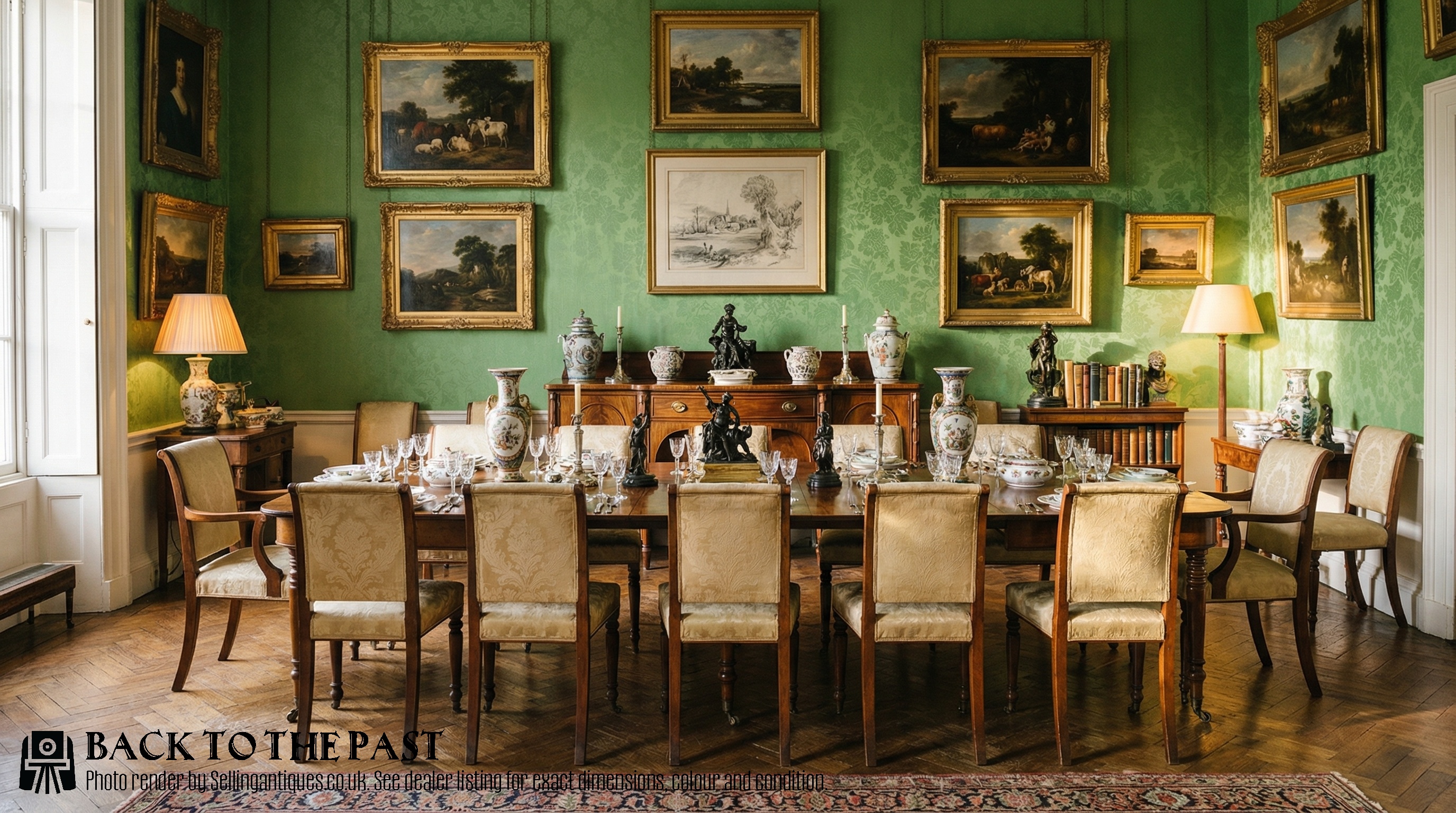
A large banquet table gathers twenty people or more, built from solid mahogany or oak for enduring feasts.
Large Banquet Table
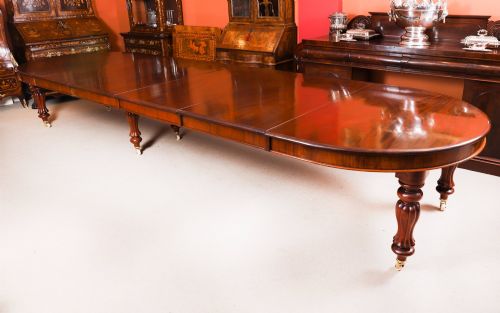
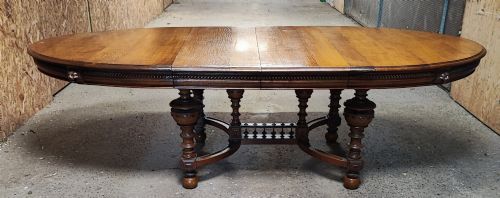
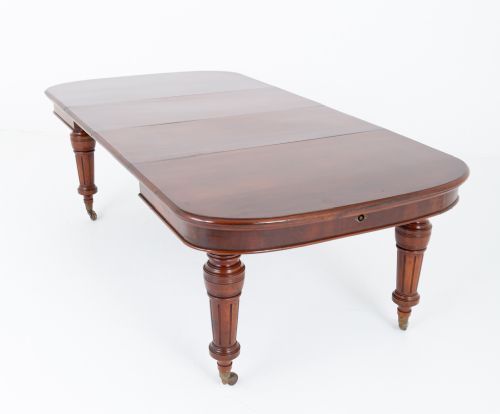
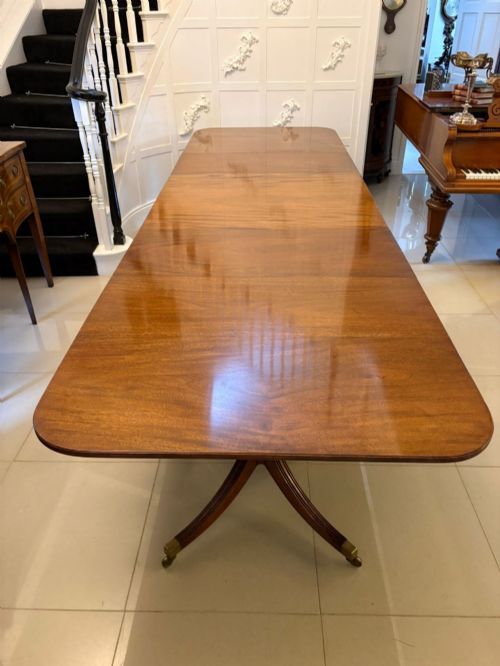
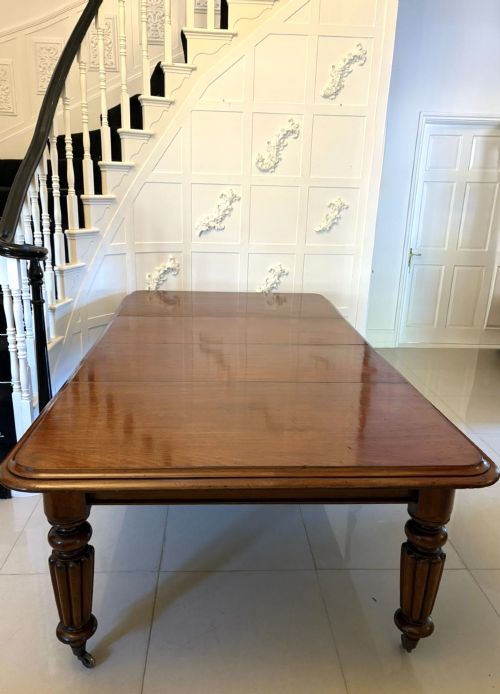
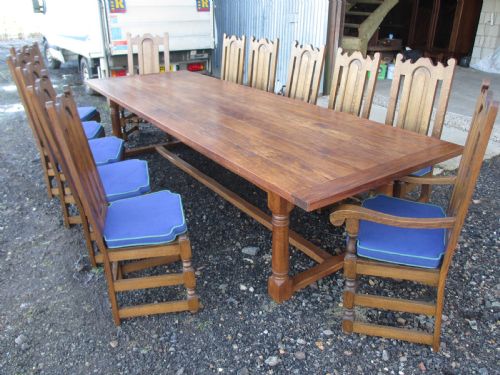
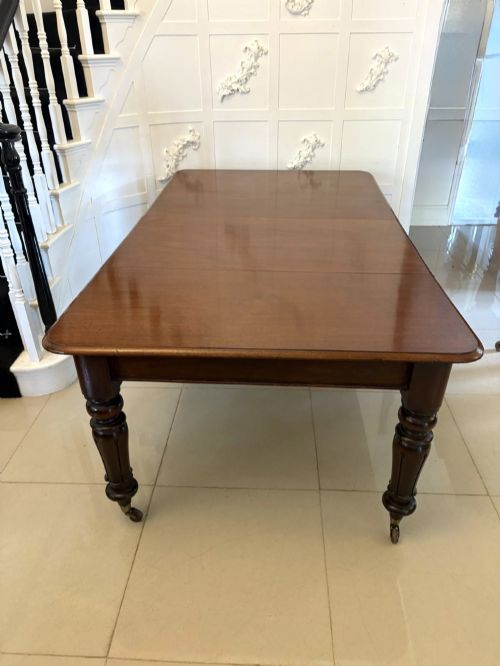
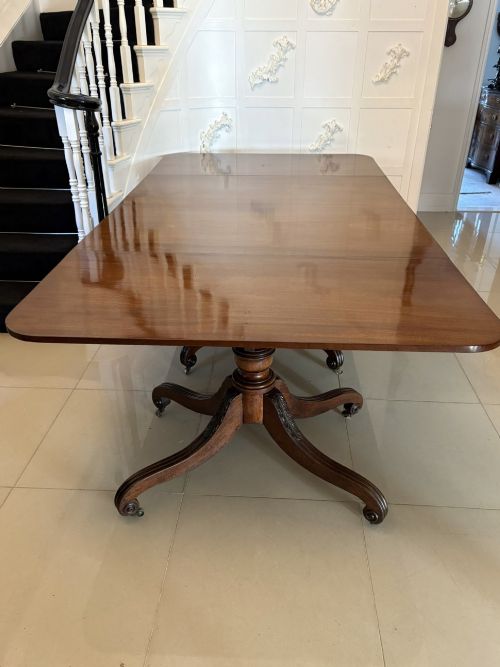
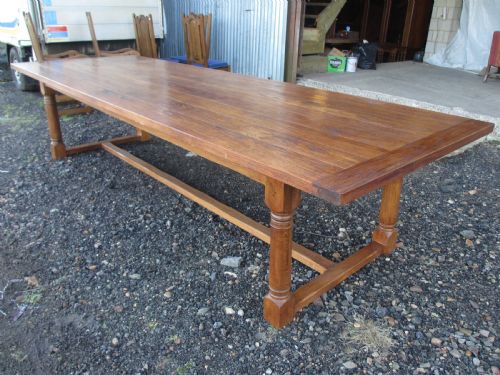
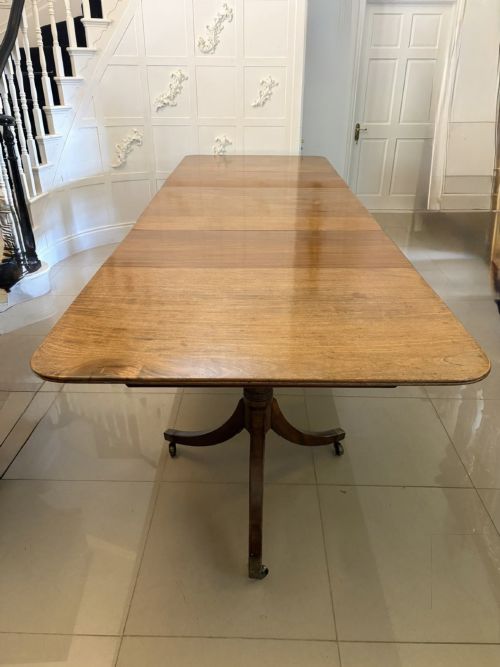
A large banquet table provides exceptional length for hosting large gatherings, frequently measuring twelve to over twenty feet using multiple leaves and pedestals. You will most commonly encounter mahogany examples from the Victorian and Regency periods, alongside substantial oak refectory and draw-leaf designs.
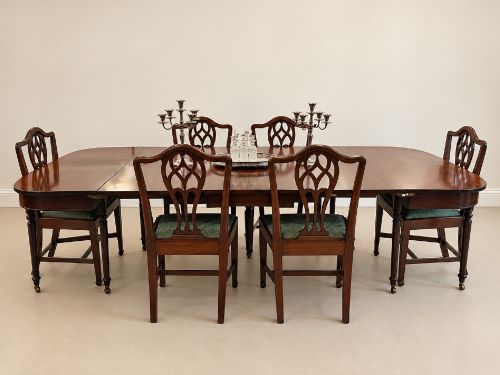
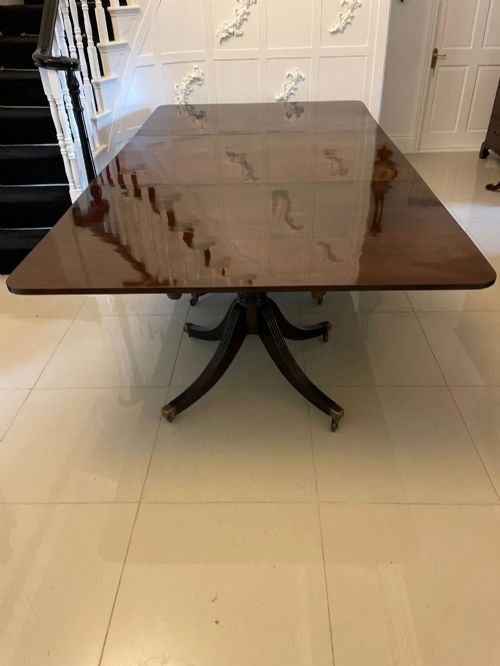
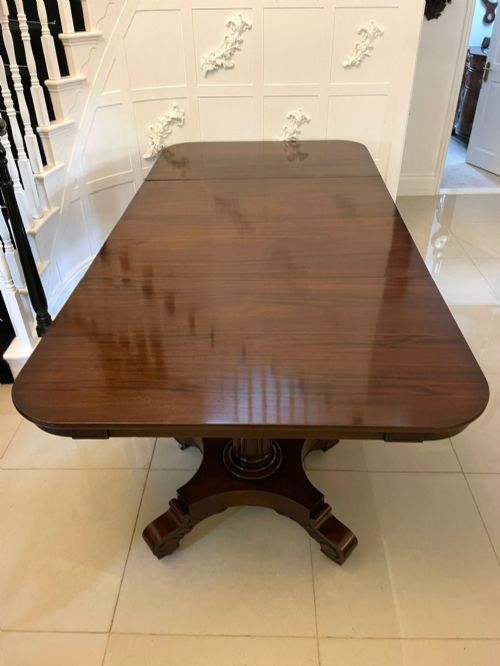
These dining tables utilise multi-pillar or refectory frames to support extreme weight while maintaining stability across the floor. Seating capacity ranges from ten up to twenty-eight diners depending on the number of original leaves inserted into the centre.
Originating to serve grand country houses and formal dining halls, these pieces balance imposing proportions with versatile extension mechanisms. Surviving examples reflect Georgian, Victorian, and Edwardian craftsmanship adapted for substantial hospitality.

Materials and Construction
Cabinet makers selected dense figured mahogany, burr walnut, and solid oak for top surfaces, often incorporating brass castors on pillar feet to ease movement. Timber selection ensured boards could span great distances without sagging under heavy service.
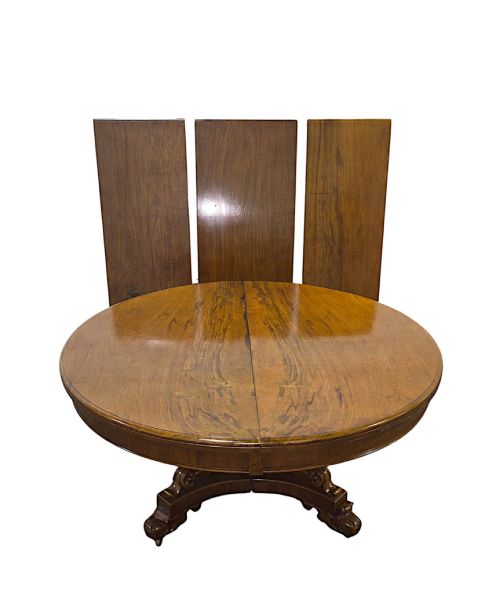
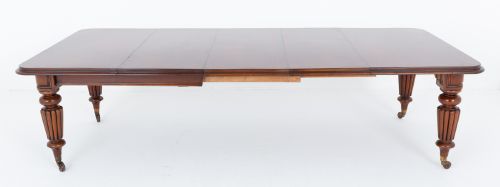
Extension systems rely on robust runner mechanisms and drop-in leaves supported by multiple pedestals, pillars, or trestle bases. Joinery combines pegged tenons, substantial block supports, and reeded edge moulding.
Surfaces receive French polish or protective wax finishes to highlight the natural grain figures of figured mahogany and oak. Brass clips and peg locators secure the removable leaves firmly in place during use.
Large Banquet Table Retail Price Guide 2026
Typical asking prices for large banquet table among the pieces listed under this phrase on Sellingantiques today, from the lower quarter to the upper quarter. They describe what is for sale here now, not the wider market.
Listings feature mahogany, oak, burr walnut, and ceramic elements across Victorian, Regency, and Georgian periods.
Judging Quality
Quality rests upon timber selection, timber thickness, and the integrity of the original pedestal base rather than mere age. Tables utilising matching figured mahogany boards across all extension leaves command greater consideration than those with mismatched grain.
The number of supporting pillars dictates structural stability across extreme lengths, with four-pillar frames offering superior weight distribution compared to extended three-pillar variants. Refinement shows in hand-carved reeding on the legs and solid brass toe castors.
Original matching leaves retained from the date of manufacture determine the historical cohesion of the piece. Tables retaining their full complement of leaves demonstrate superior preservation compared to adapted or marriage pieces.
Gillows·Wylie & Lochead·Maple & Co·Whytock & Reid
The Large Banquet Table Glossary
- Pedestal
- A central column support resting on splayed legs, commonly found in multiple numbers beneath long dining tables.
- Extending
- A table design incorporating a mechanism and removable leaves to increase overall surface length.
- Refectory
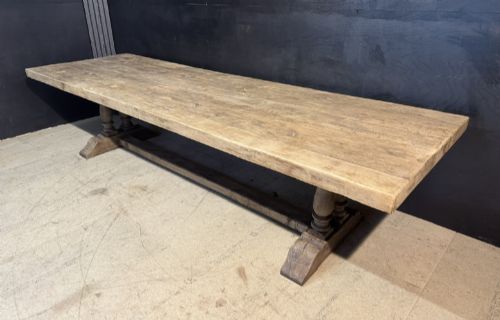
- A long narrow dining table traditionally used in communal halls, supported by trestles or heavy legs with a central stretcher.
- Draw-leaf
- An extension system where two concealed leaves slide out from beneath the main top to lengthen the surface instantly.
- Reeded
- Parallel rounded mouldings carved into table legs or borders for decorative relief.
Large Banquet Table: Frequently Asked Questions
How many people can sit at a banquet table?
These tables accommodate anywhere from ten to twenty-eight guests depending on the length and number of inserted leaves. Multi-pillar formats provide adequate legroom around the base.
Measuring the room alongside the extended length ensures sufficient clearance for chairs and servers on all sides.
How do extension leaves work?
Leaves drop into the centre of the table when the pedestals are pulled apart along internal wooden runners. Brass clips or wooden pegs lock the sections together.
Storing extra leaves flat in a dry environment prevents warping and ensures a tight fit when reinserted.
What is the difference between mahogany and oak tables?
Mahogany tables typically date from the Regency and Victorian eras, bringing a dark reddish-brown hue and formal dining room elegance. Oak examples often follow earlier Jacobean or Elizabethan revival styles with a heavier rustic grain.
Selecting timber depends upon the interior aesthetic and the desired historical period of the furniture.
How do I care for a polished wood surface?
Maintaining the finish requires regular dusting with a soft cloth and occasional application of quality beeswax. Avoiding direct sunlight and extreme heat protects the polished wood from fading or cracking.
Using heat mats and coasters prevents moisture rings and thermal marks on the antique French polish.