




Extra Large Dining Table
An extra large dining table gathers twenty or thirty people around a single board, bringing centuries of scale and hospitality directly into the home.

Extra Large Dining Table
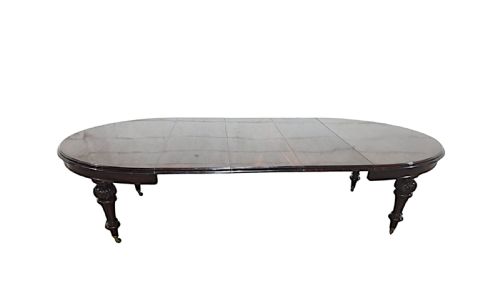
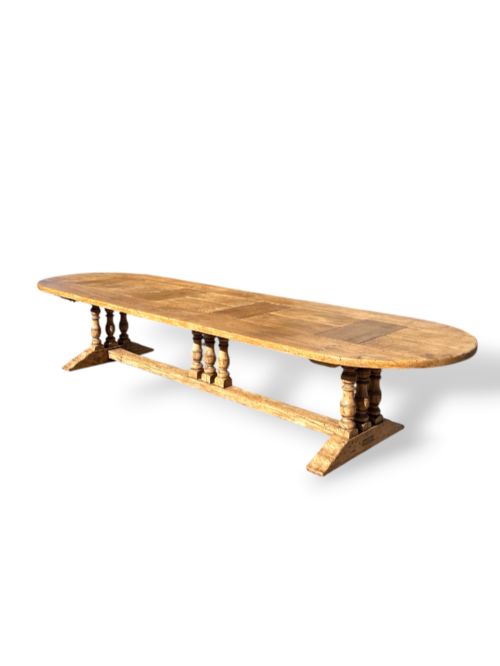
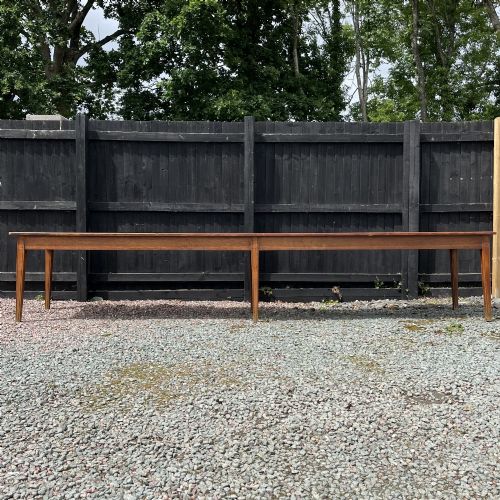
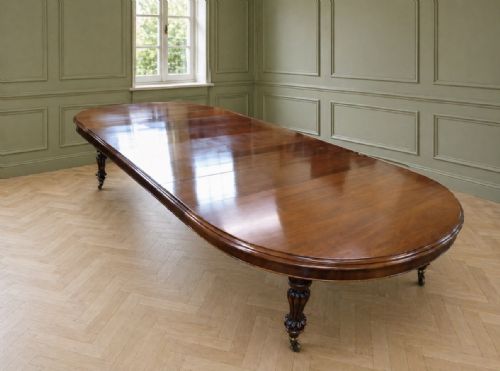
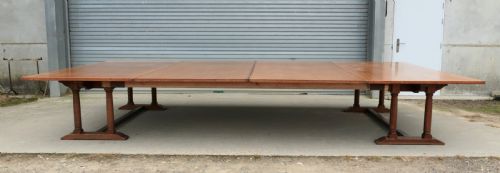
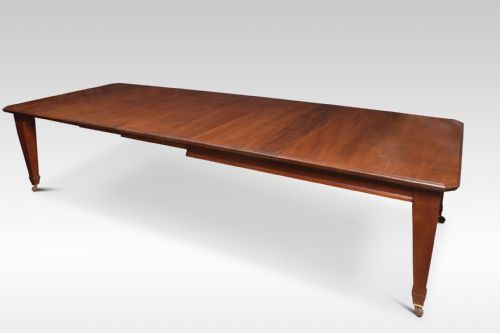
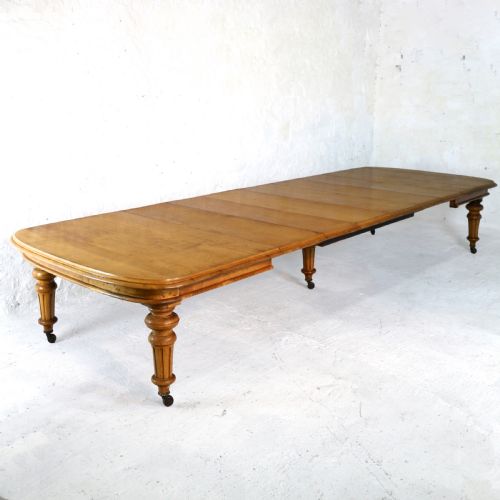
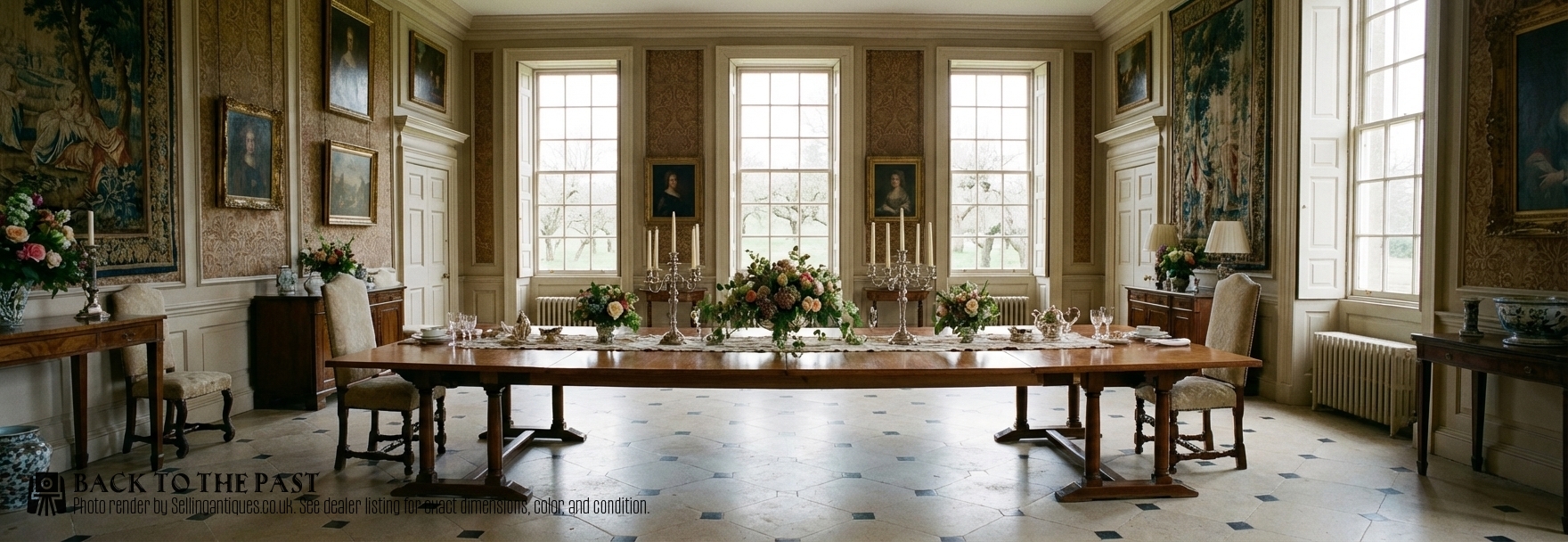
An extra large dining table takes the form of massive banqueting boards, multi-pedestal dining suites, and long refectory tables designed for immense seating capacity. You will frequently encounter nineteenth-century mahogany pieces equipped with multiple extension leaves, alongside substantial oak and pine farmhouse tables built for community dining.
These grand pieces span periods from the Regency era through the Victorian epoch into early twentieth-century boardroom designs. Their primary purpose remains gathering large parties, whether in a formal dining room or a spacious country kitchen.
Makers constructed these expansive surfaces using robust timbers to support immense lengths without sagging. The surviving examples demonstrate how previous generations accommodated large gatherings long before modern open-plan living arrived.
How they were made
Cabinet makers utilised dense hardwoods such as mahogany and oak, building heavy frames supported by multiple pedestals, trestles, or stout legs. Pine and cherrywood also appear frequently, particularly in French farmhouse and community harvest formats.
Extending mechanisms relied on sturdy wooden runners and brass fittings to handle the weight of numerous removable leaves. Joinery techniques ensured that boards spanning three to five metres remained stable and level under daily use.
The listings demonstrate a strong presence of nineteenth-century mahogany and oak, with lengths frequently extending past four metres.
What varies in quality
The distinction between standard utility boards and superior examples lies in the selection of timber grain and the precision of the extending mechanism. Finer pieces display matched mahogany veneers or dense, quarter-sawn oak that age with a deep patina.
Proportion and structural ingenuity separate ordinary long tables from exceptional ones, particularly when supporting lengths exceeding four metres. Superior construction incorporates well-balanced pedestal bases or multiple trestles that distribute weight evenly without cluttering legroom.
The Extra Large Dining Table Glossary
- Pedestal table
- A table supported by one or more central pillars rather than four corner legs. This design allows maximum seating flexibility along the length of the board.
- D-End table
- A dining table whose ends are semicircular, often separating into console tables when the leaves are removed. The configuration offers versatility in formal reception rooms.
- Refectory table
- A long, narrow table traditionally used in monastic dining halls and later adapted for domestic banqueting. They feature stretcher bars near the floor for added rigidity.
- Gateleg table
- A table with hinged leaves supported by swing-out legs that resemble a swinging gate. This construction provides substantial surface area while remaining collapsible.
- Windout mechanism
- A mechanical system operated by a crank handle that expands the frame to insert extra leaves. It allows smooth operation of heavy nineteenth-century dining tables.
Extra Large Dining Table: Frequently Asked Questions
How many people can sit at these tables?
These boards typically seat anywhere from twelve up to thirty diners depending on the length and the inclusion of multiple extension leaves.
Larger configurations often measure four to five metres in length, making them suitable for commercial boardrooms or extensive family dining rooms.
How do extension leaves work?
Many nineteenth-century examples utilise a windout mechanism operated by a handle, parting the main top to drop in additional timber leaves.
Other formats rely on drop-in leaves supported by internal runners or simply rest upon sturdy refectory and trestle bases.
Are these tables suitable for daily use?
Constructed from durable timbers like mahogany, oak, and pine, these surfaces withstand regular family meals and large gatherings.
Using heat mats and protective cloths helps preserve the historic polished or waxed finish against daily wear.
How do I identify a Regency table?
Regency pieces often feature classical proportions, double or quadruple pedestal bases, and rich mahogany grain.
They frequently include brass paw castors and subtle reeded decoration along the edges of the top.