
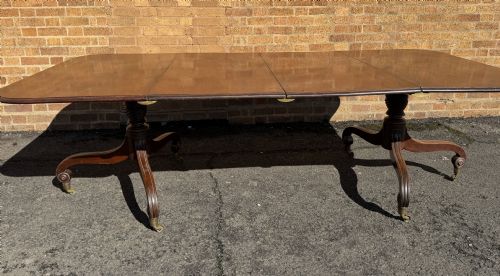
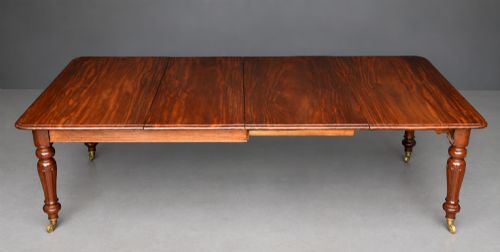
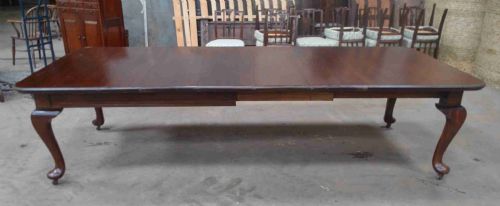
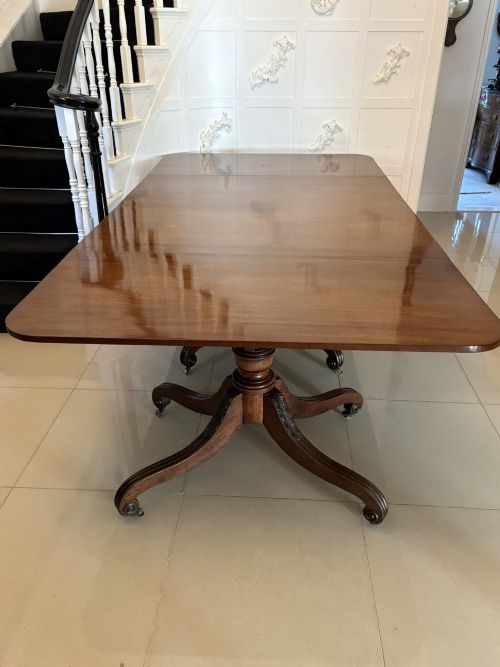
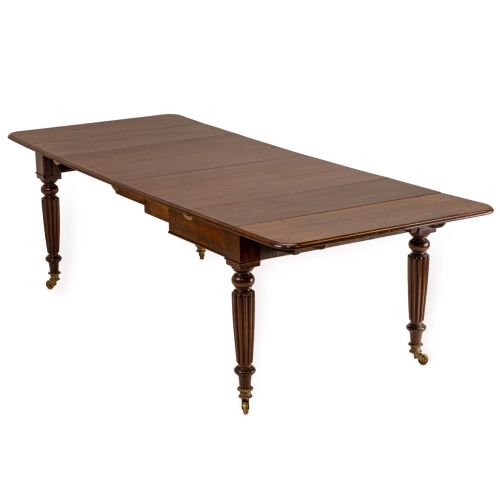
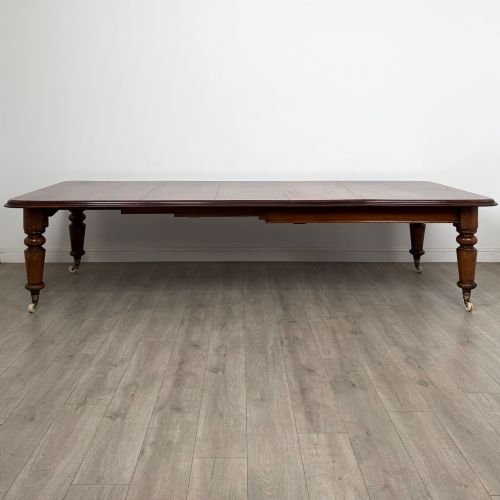


19th Century Conference Table
A 19th century conference table is a substantial timber board room or dining piece suited to large gatherings, providing both presence and scale.
19th Century Conference Table
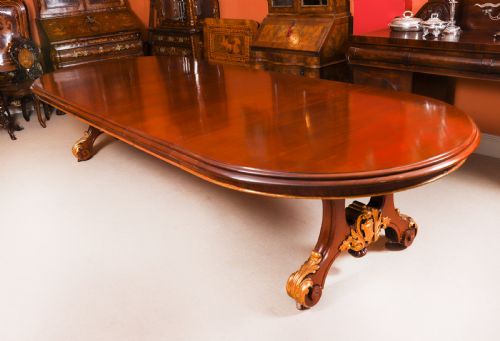
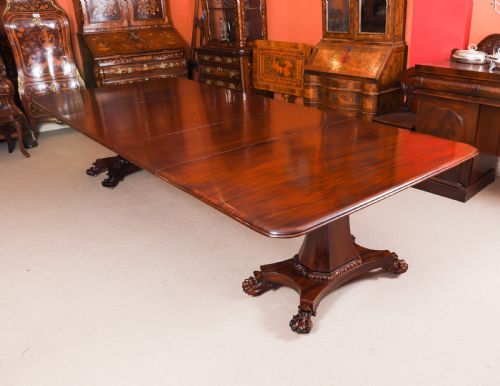
A 19th century conference table serves as a grand meeting or dining surface originating from periods such as the Georgian, Regency, William IV, and Victorian eras. These large boards span lengths suitable for twenty or more seats, often utilising extending mechanisms, leaves, or multiple pedestals to alter their length.
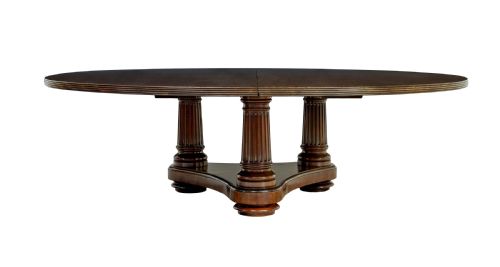
The dominant form met on this page is the twin or triple pedestal dining table adapted for expansive workspaces, alongside wind-out extending tables and robust oak kitchen or Gothic Revival variants. Makers such as Gillows, Wylie & Lochead, and Maple & Co provided cabinet work for these large formats.
What varies in quality
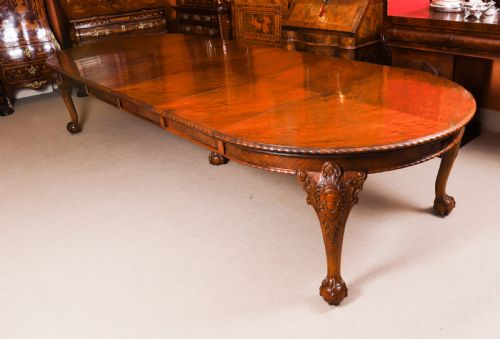
Quality rests in the selection of figured timber veneers, such as flame mahogany or burr walnut, matched across extending leaves to maintain visual continuity when fully expanded. Heavier multi-pillar frames and robust mechanical wind-out systems indicate higher standards of cabinet making.
Proportion and scale separate standard utility examples from grand boardroom or imperial dining tables attributed to recognised makers like Gillows. The integrity of the pedestals, the weight of the timber, and the precision of the joinery define the upper tier.
Listings feature mahogany, oak, walnut, burr walnut, and Cuban mahogany across Victorian, Regency, William IV, and Georgian periods.
Wylie & Lochead·Maple & Co·Gillows
The 19th Century Conference Table Glossary
- Twin pedestal
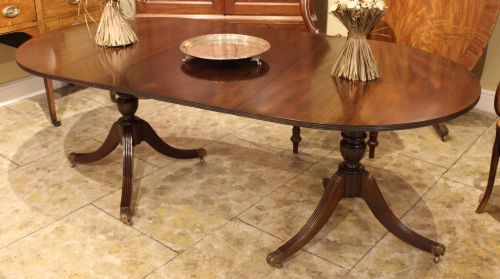
- A table construction supported by two separate column bases, often with splayed legs and brass castors. This configuration allows seated guests ample legroom around the perimeter.
- Wind-out table
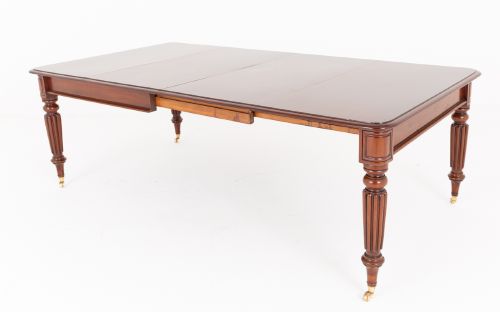
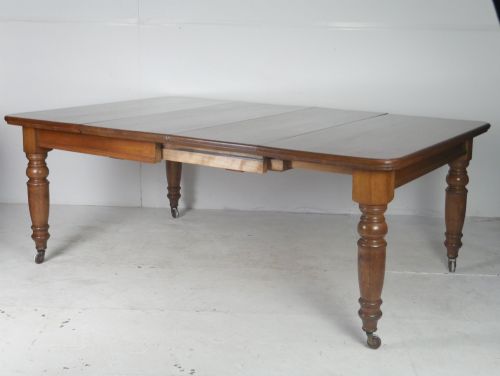
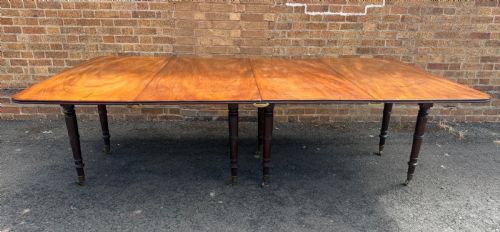
- An extending dining table operated via a mechanical screw mechanism inserted with a handle. This allows the top to part smoothly for the insertion of additional leaves.
- Cuban mahogany
- A dense, dark timber harvested in the Caribbean, utilised in high-status Georgian and Regency cabinet work. It offers a rich grain and deep patina.
- D-end
- A table end shaped in a semicircle resembling the capital letter D. These sections frequently detach or combine to form part of an extending dining arrangement.
- Gothic Revival
- A 19th-century design style drawing on medieval ecclesiastical architecture. It incorporates pointed arches, tracery, and heavy oak construction.
19th Century Conference Table: Frequently Asked Questions
How do I extend a 19th century table?
Many tables utilise a metal winder inserted into a socket beneath the rim. Turning the handle separates the top sections so internal leaves can drop into place.
Larger formats rely on multiple pedestals that glide apart on brass castors to support the extra weight of the extended boards.
How many people can sit at these tables?
Lengths vary from eight feet up to twenty feet or more, accommodating anywhere from eight to twenty-six diners depending on the number of leaves.
Tables featuring triple pedestals or grand proportions provide the necessary stability and seating span for large boardrooms.
What is the difference between Georgian and Victorian tables?
Georgian and Regency examples tend towards restrained lines, twin pillars, and rich Cuban mahogany timbers. They often date from the early part of the century.
Victorian pieces frequently display grander proportions, heavier carving, and extensive extending mechanisms designed for larger dining rooms and boardrooms.