

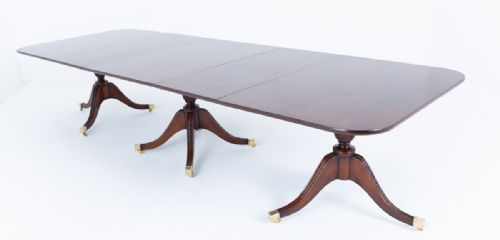


Mahogany Boardroom Table
A mahogany boardroom table brings grand scale and rich timber grain to a large interior, offering substantial seating for meetings or dining.
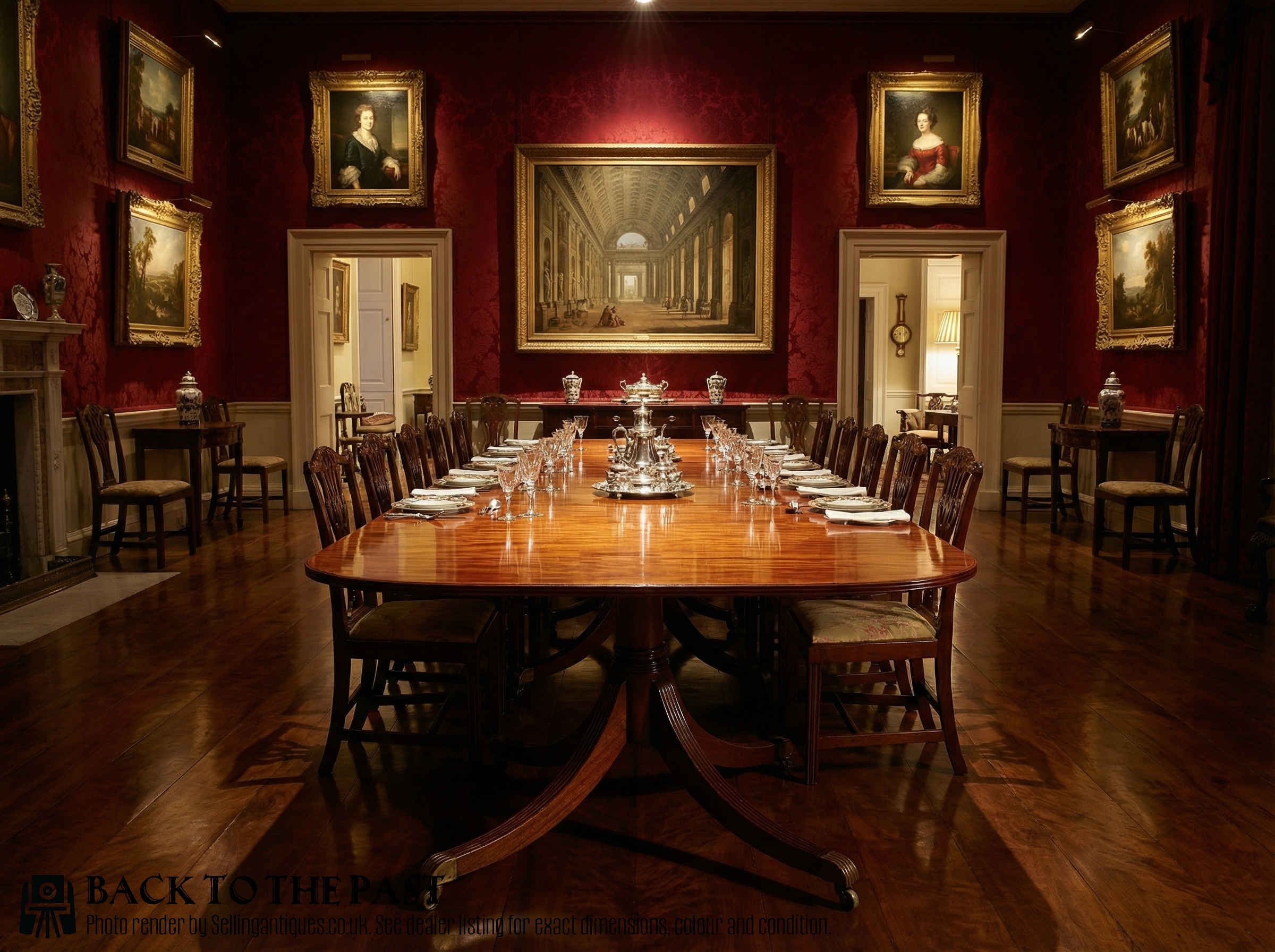
Mahogany Boardroom Table
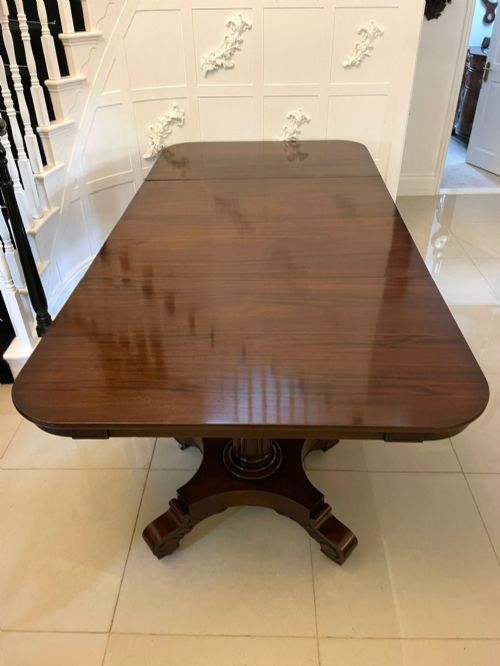
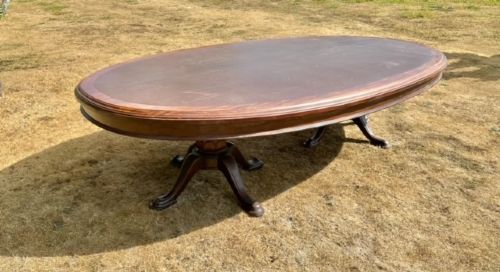
A mahogany boardroom table typically appears as a long, extending dining table or a dedicated library table adapted for large gatherings. These pieces span periods from George III and Regency through to the Victorian and Edwardian eras, often measuring several metres in length.
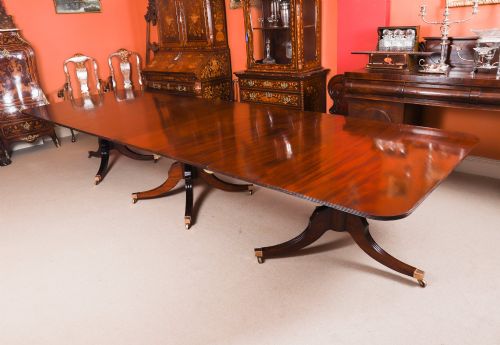
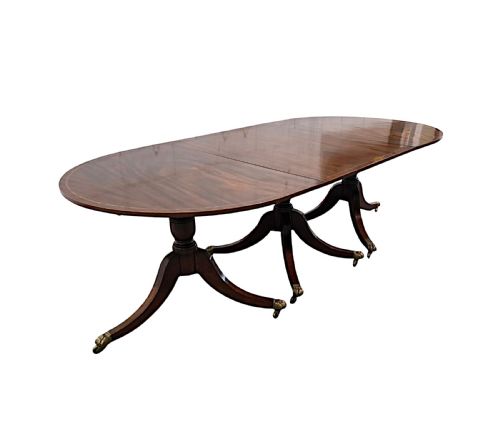
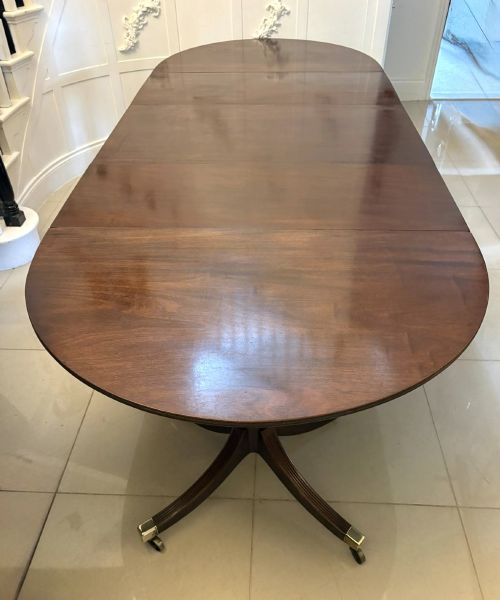
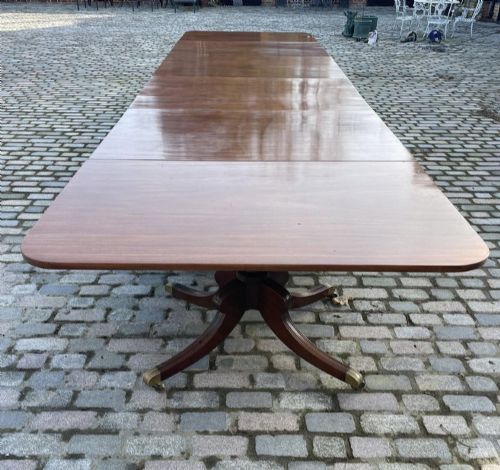
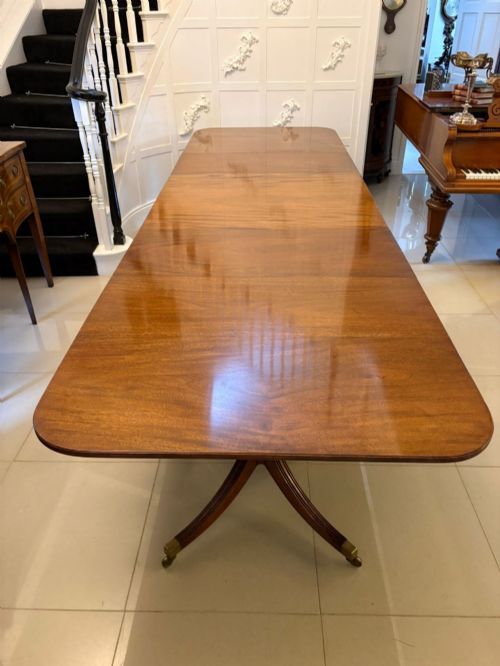
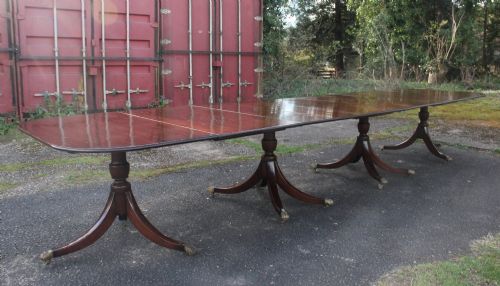
The most common form on this page is the multi-pedestal table, supported by twin, triple, or quadruple mahogany pillars resting on brass-shod castors. These grand formats accommodate upwards of sixteen diners or delegates comfortably.
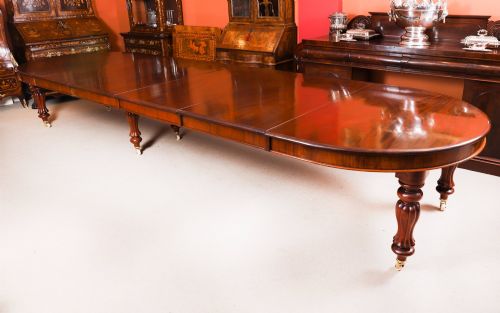
Makers designed these substantial surfaces with removable leaves to alter the length according to the occasion. The timber shows varied grain patterns, from straight ribbon figures to dramatic flame and plum pudding variations.
Materials and Construction
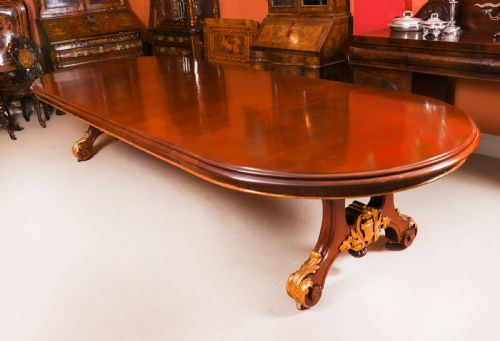
Cabinet makers utilised solid mahogany and Cuban mahogany veneers laid over secondary timbers to construct the heavy tops and pedestals. Many examples incorporate satinwood inlay, brass fittings, and occasionally gold leaf details along the borders.
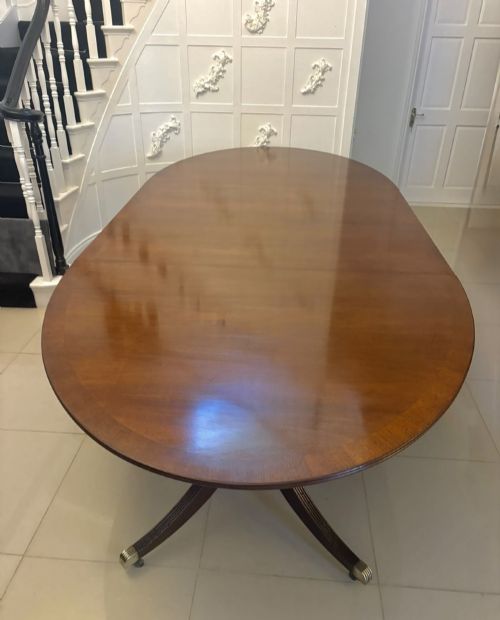
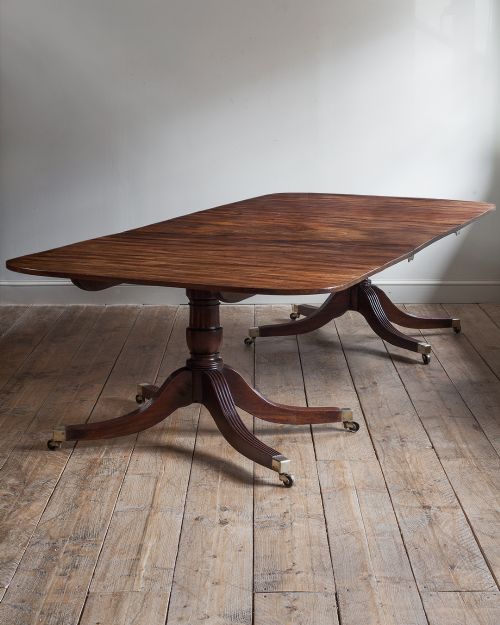
The multi-pillar design relies on robust turned columns connected to reeded or sabre legs. Brass claw castors allow the heavy sections to move smoothly across the floor when reconfiguring the room.
Mahogany Boardroom Table Retail Price Guide 2026
Typical asking prices for mahogany boardroom table among the pieces listed under this phrase on Sellingantiques today, from the lower quarter to the upper quarter. They describe what is for sale here now, not the wider market.
Some twenty-eight seater tables require an entire battalion of guests just to test the legroom.
Evaluating the Build
Quality rests in the selection of the timber and the integrity of the extending mechanism. Superior examples display deeply figured mahogany across every leaf, matching the grain seamlessly when fully extended.
The weight and casting of the brass mounts also define the upper tier of production. Finely carved pedestal bases and robust original runner systems separate workshop masterpieces from later revival pieces.
Gillows·Wylie and Lochead·Whytock and Reid
The Mahogany Boardroom Table Glossary
- Pedestal
- A central column supporting the table top, often dividing into three or four carved legs. Multiple pedestals are necessary to support very long boardroom tables.
- Extending leaf
- A removable section of timber inserted into the centre of the table to increase its overall length. These leaves are stored separately when fewer seats are required.
- Cuban mahogany
- A dense, dark timber harvested in the Caribbean, prized for its rich colour and stability. Cabinet makers favoured it during the Georgian and Regency periods.
- Sabre leg
- A curved, outward-sweeping table leg resembling a cavalry sword, commonly found on Regency pedestals. They usually terminate in brass paw castors.
Mahogany Boardroom Table: Frequently Asked Questions
How many people can sit at a mahogany boardroom table?
These tables frequently seat between twelve and twenty-eight guests depending on the number of inserted leaves. Lengths often exceed five metres to accommodate large assemblies.
Buyers should measure their room carefully, leaving adequate clearance around all sides for chairs to pull out comfortably.
How do I care for a mahogany table surface?
Maintain the timber by dusting regularly with a dry cloth and applying natural beeswax periodically to nourish the grain. Avoid placing hot items or liquids directly onto the polished finish.
Keeping the room at a stable humidity prevents the solid mahogany tops and extension leaves from warping or cracking over time.
Are extension leaves always original to the table?
Many multi-pillar tables retain their matching period leaves, cut from the same board to ensure consistent colour and grain pattern. Some pieces have replacement leaves added later by skilled workshops.
Inspect the underside runners and the alignment pins to see if the timber matches the tone and wear of the main sections.
What is the difference between a dining table and a boardroom table?
While structurally similar, tables designated for libraries or boardrooms often feature wider proportions to accommodate documents and notebooks alongside settings. Many Victorian library tables also incorporated drawers into the frieze.
In practice, large multi-pillar dining tables served both domestic banquets and formal meetings throughout the nineteenth century.