


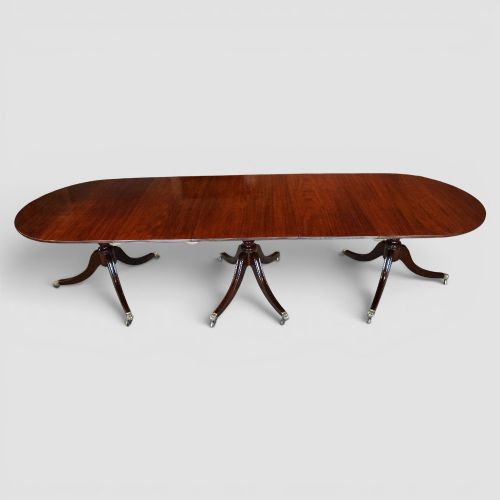
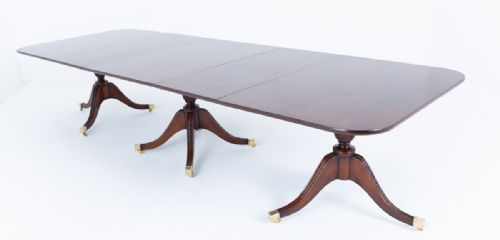
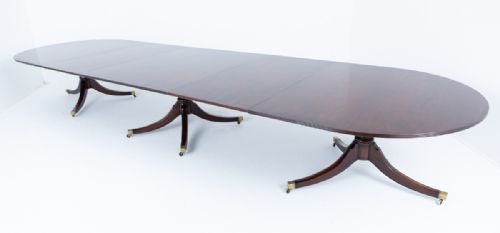
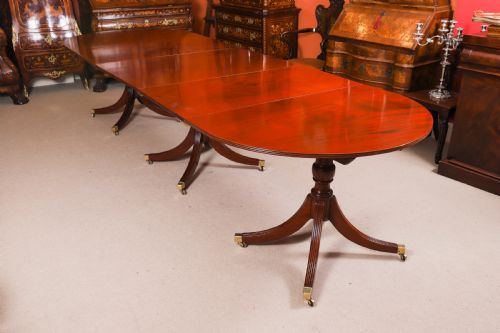


Triple Pedestal Table
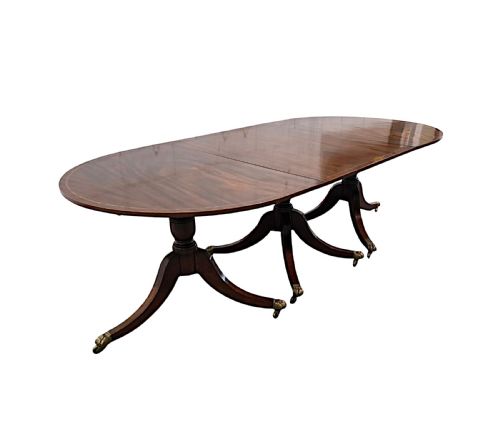
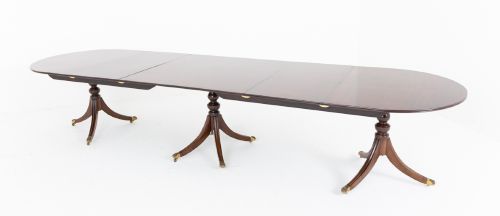
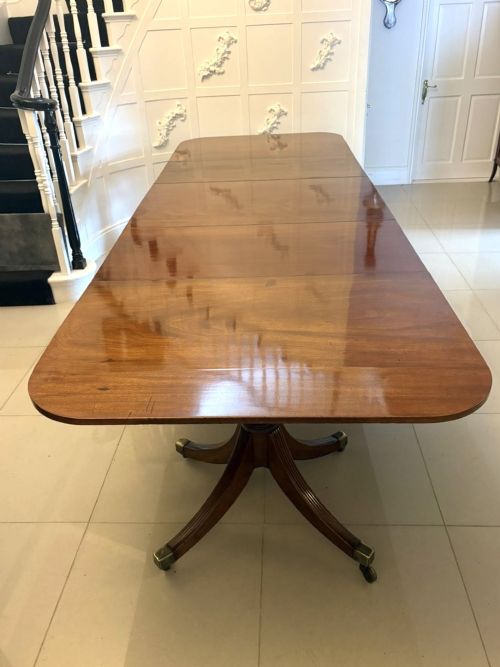
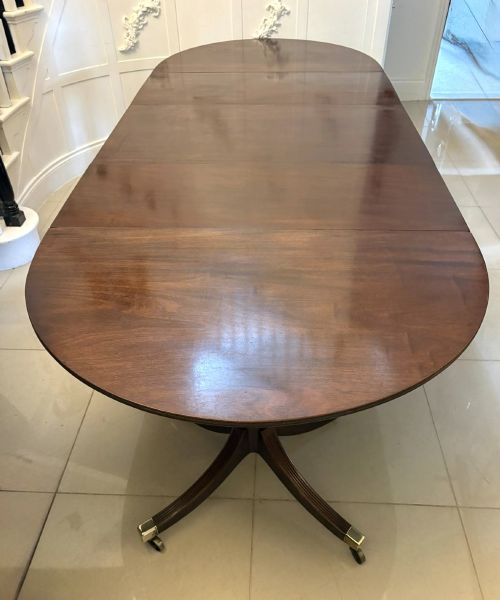
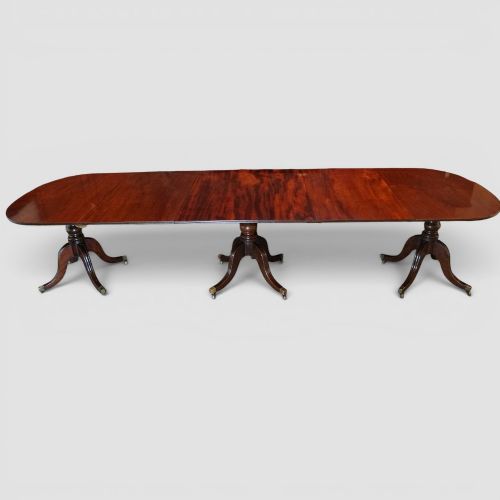
These triple pedestal table examples bring formal dining grandeur into a room, offering generous seating supported by three distinct pillars.

Triple Pedestal Table
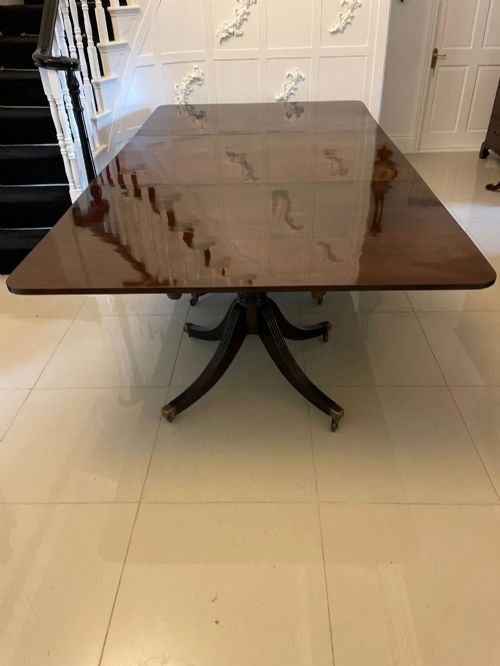
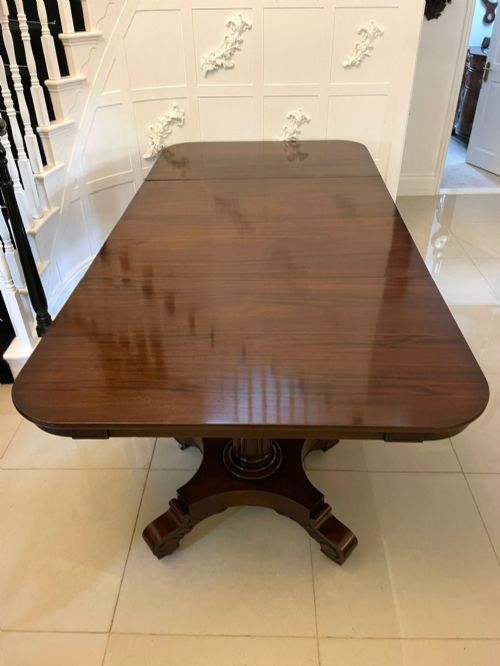
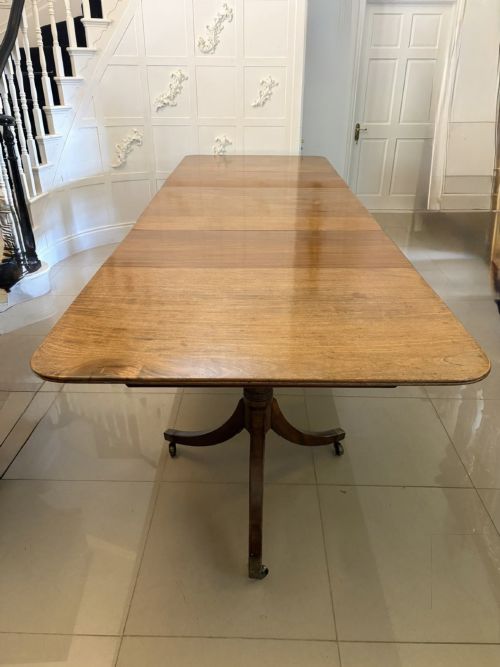
A triple pedestal table is a large dining table supported by three separate central pillars rather than standard corner legs, designed to accommodate significant numbers of diners. Most pieces encountered here stem from the Georgian, Regency, and Victorian periods, alongside later revival iterations from the Edwardian era and the early twentieth century.
The layout allows ample legroom for guests seated along the length of the top. Versions span various seating capacities, ranging from ten-seater formats up to large arrangements exceeding twenty seats.
Materials and Construction
Makers relied predominantly on mahogany and walnut, frequently selecting timber with figured grain patterns to create visual depth on the top surfaces. Brass components, including castors beneath the pillar feet, appear regularly to permit smooth movement of the heavy sections.
Extending mechanisms often integrate additional leaves supported by the three pillars, allowing the length to be adjusted according to dining requirements.
Triple Pedestal Table Retail Price Guide 2026
Typical asking prices for triple pedestal table among the pieces listed under this phrase on Sellingantiques today, from the lower quarter to the upper quarter. They describe what is for sale here now, not the wider market.
Some dining tables incorporate metamorphic designs that conceal extra length.
Judging Quality
The standard of timber selection and the intensity of the figured grain on the top set superior examples apart from standard production. The crispness of carved details upon the pedestals and legs also indicates the level of craftsmanship invested in the construction.
Whytock and Reid
The Triple Pedestal Table Glossary
- Pedestal
- The central pillar supporting the tabletop. It usually stands on splayed legs fitted with brass castors.
- Extending table
- A dining table designed to lengthen through the addition of removable leaves. These inserts are stored separately when not in use.
- Figured mahogany
- Timber exhibiting distinctive, decorative grain patterns such as flame or curl. Cabinet makers prized this wood for formal furniture tops.
- Regency style
- A design aesthetic drawing on classical Roman, Greek, and Egyptian motifs. It spans pieces made during the actual Regency period and later revivals.
Triple Pedestal Table: Frequently Asked Questions
How do I seat guests around a triple pedestal table?
The three pillar format naturally divides the underside space into sections, ensuring diners avoid hitting legs while seated along the length.
Adding extra leaves alters the overall capacity, allowing the table to expand for larger gatherings and contract for daily use.
What periods do these dining tables come from?
Examples originate from Georgian and Regency eras, alongside later Edwardian and early twentieth-century revivals.
Each period brings distinct stylistic nuances to the pedestals and timber finishes.
How are extra leaves fitted?
Extending versions pull apart at the centre to receive removable wooden panels supported by the framework.
Securing latches keep the top aligned once closed.