

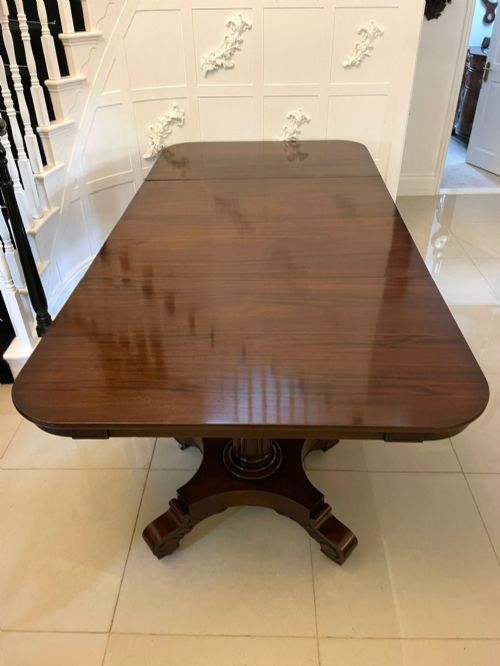
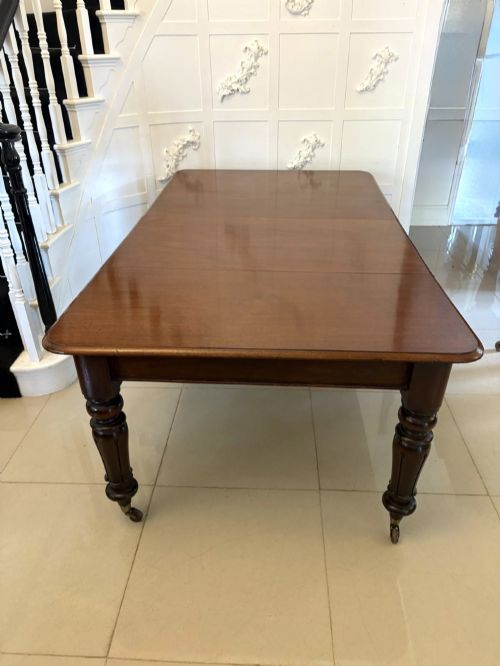
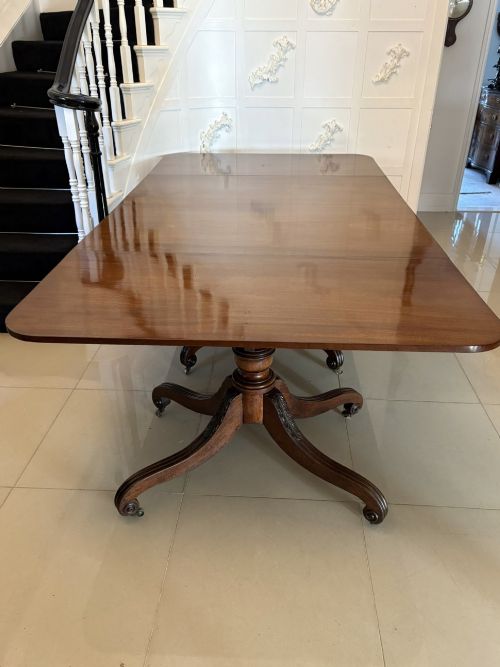
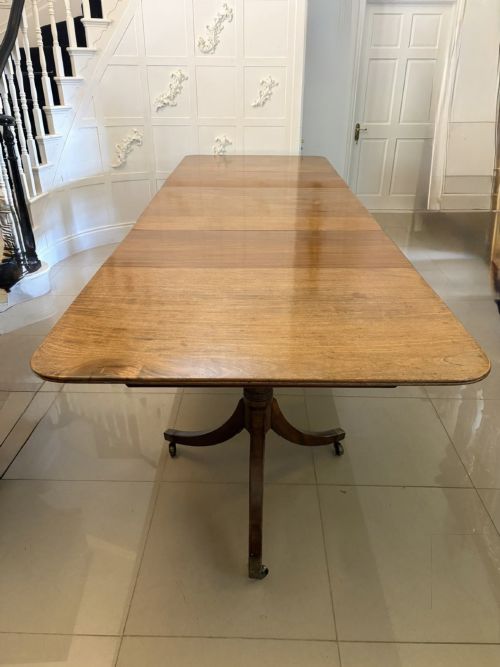
Mahogany Banquet Table
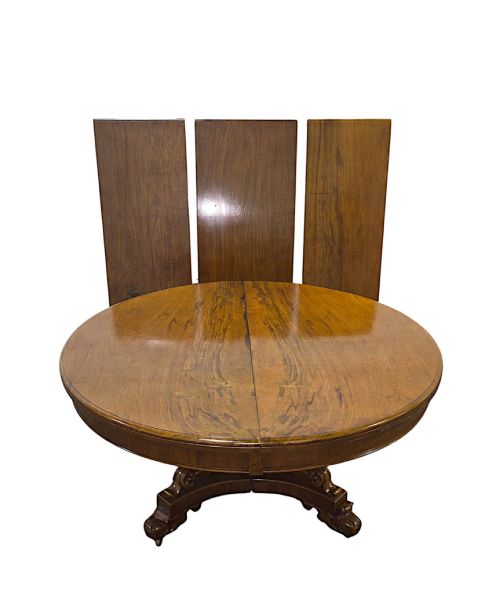
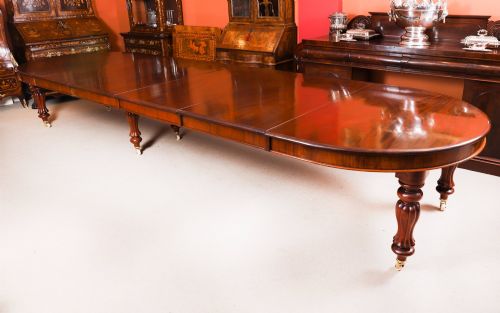
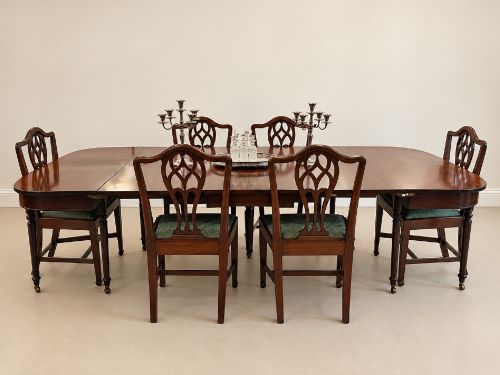
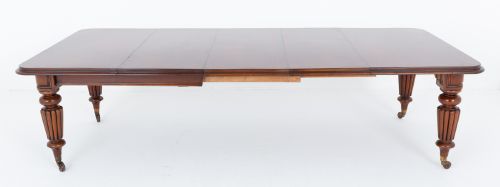
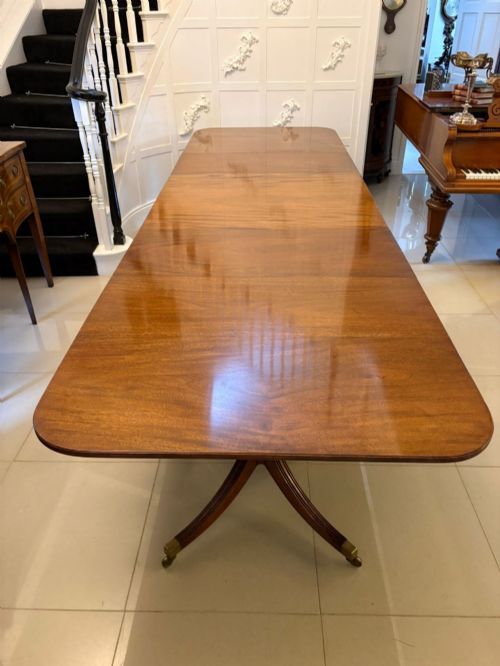
A mahogany banquet table is a substantial extending dining piece designed to seat large gatherings in grand style.
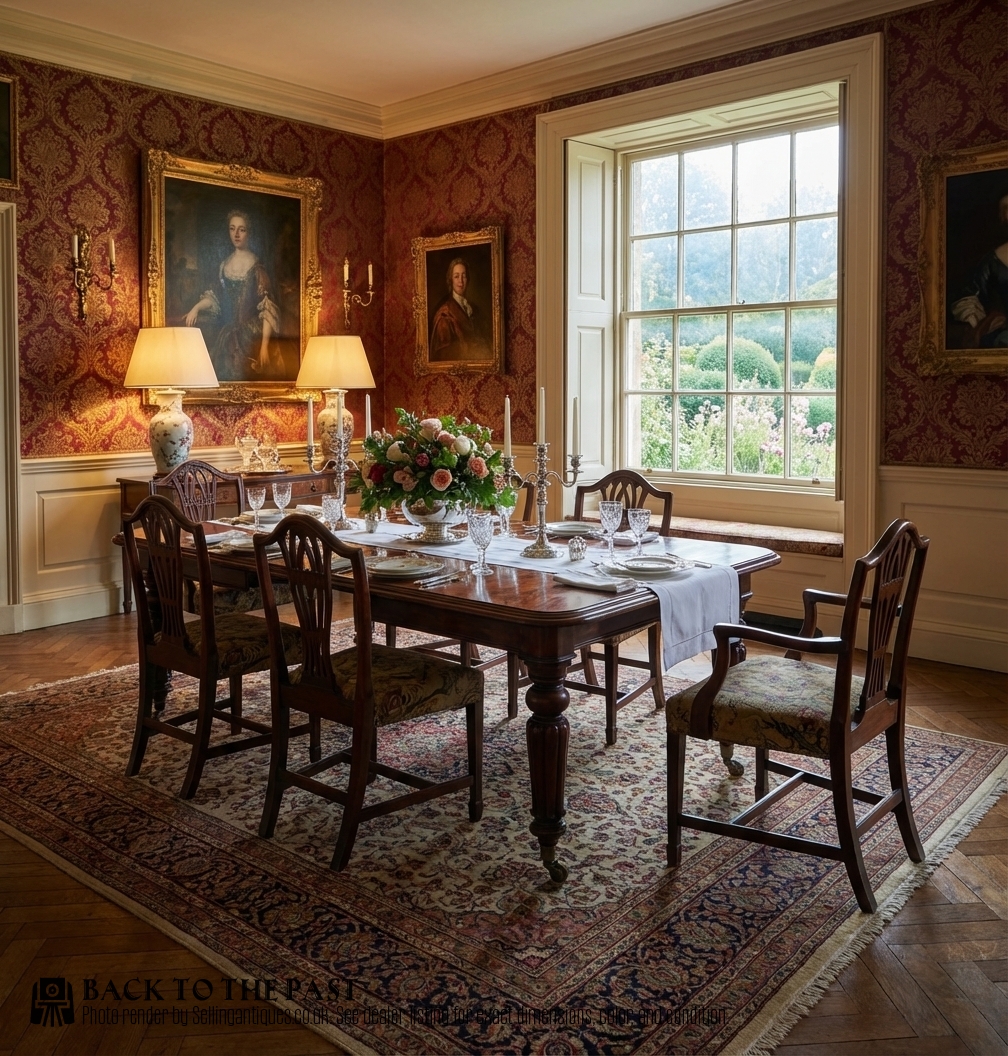
Mahogany Banquet Table
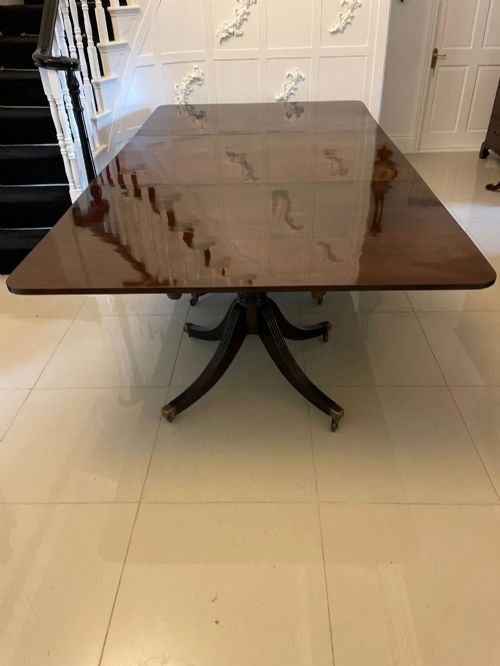
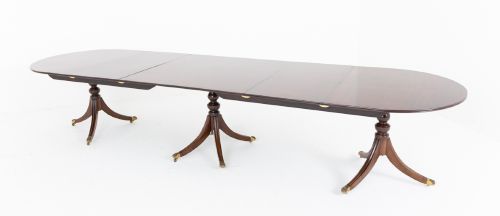
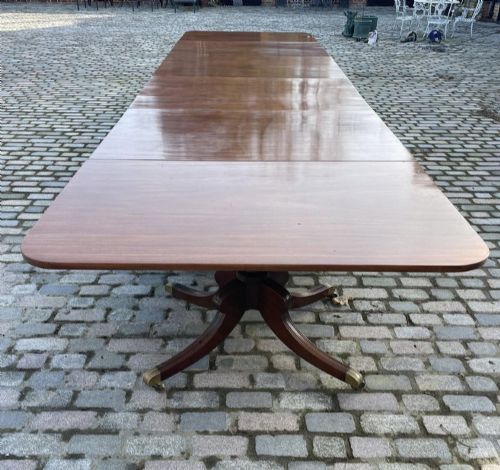
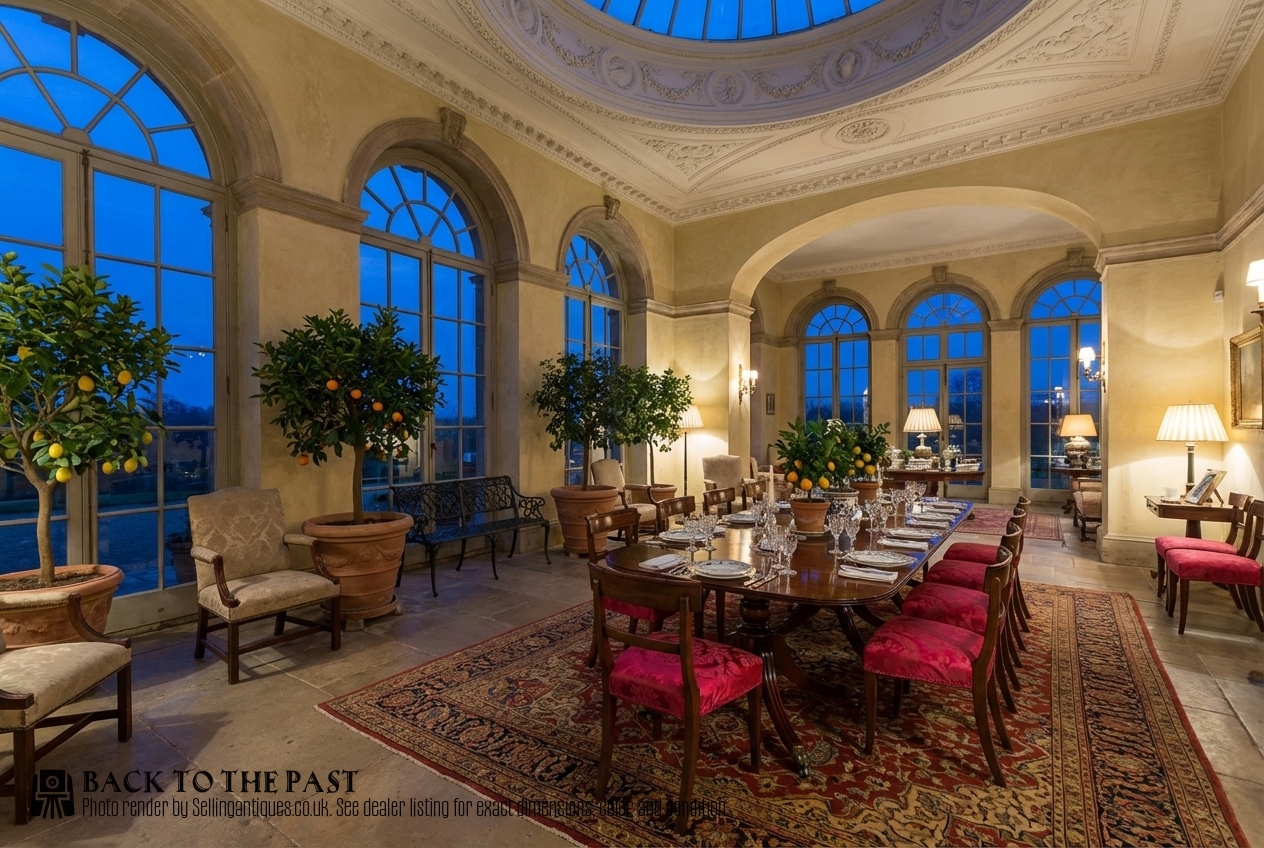
A mahogany banquet table provides the expansive surface required for hosting many guests across multiple leaves. These large dining forms appear in formats ranging from twin pedestal up to four or six pillars.
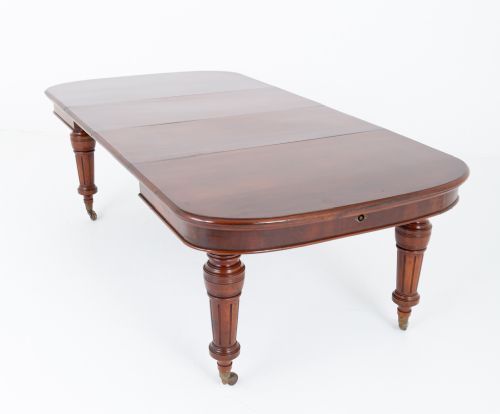
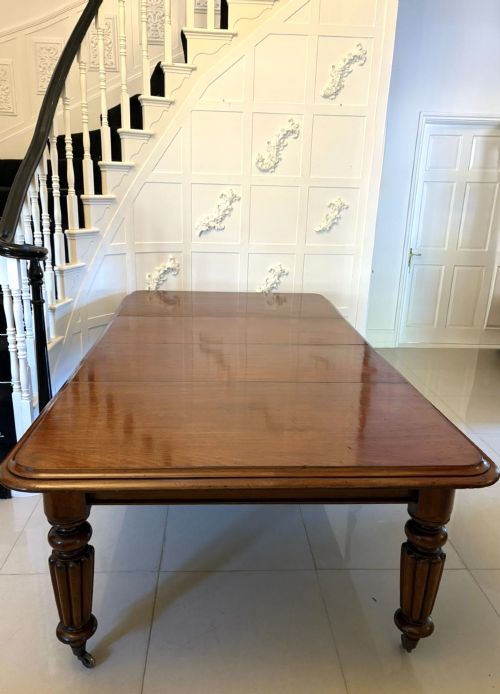
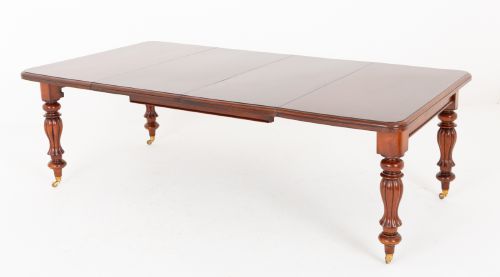
The examples found on this page span several periods, including Georgian, Regency, William IV, and Victorian, alongside later revivals. Most pieces utilise an extending mechanism with removable leaves to adjust the overall length.
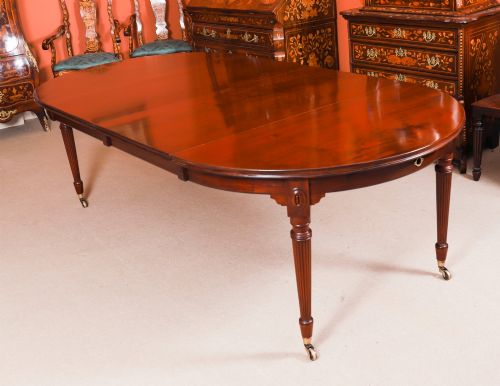
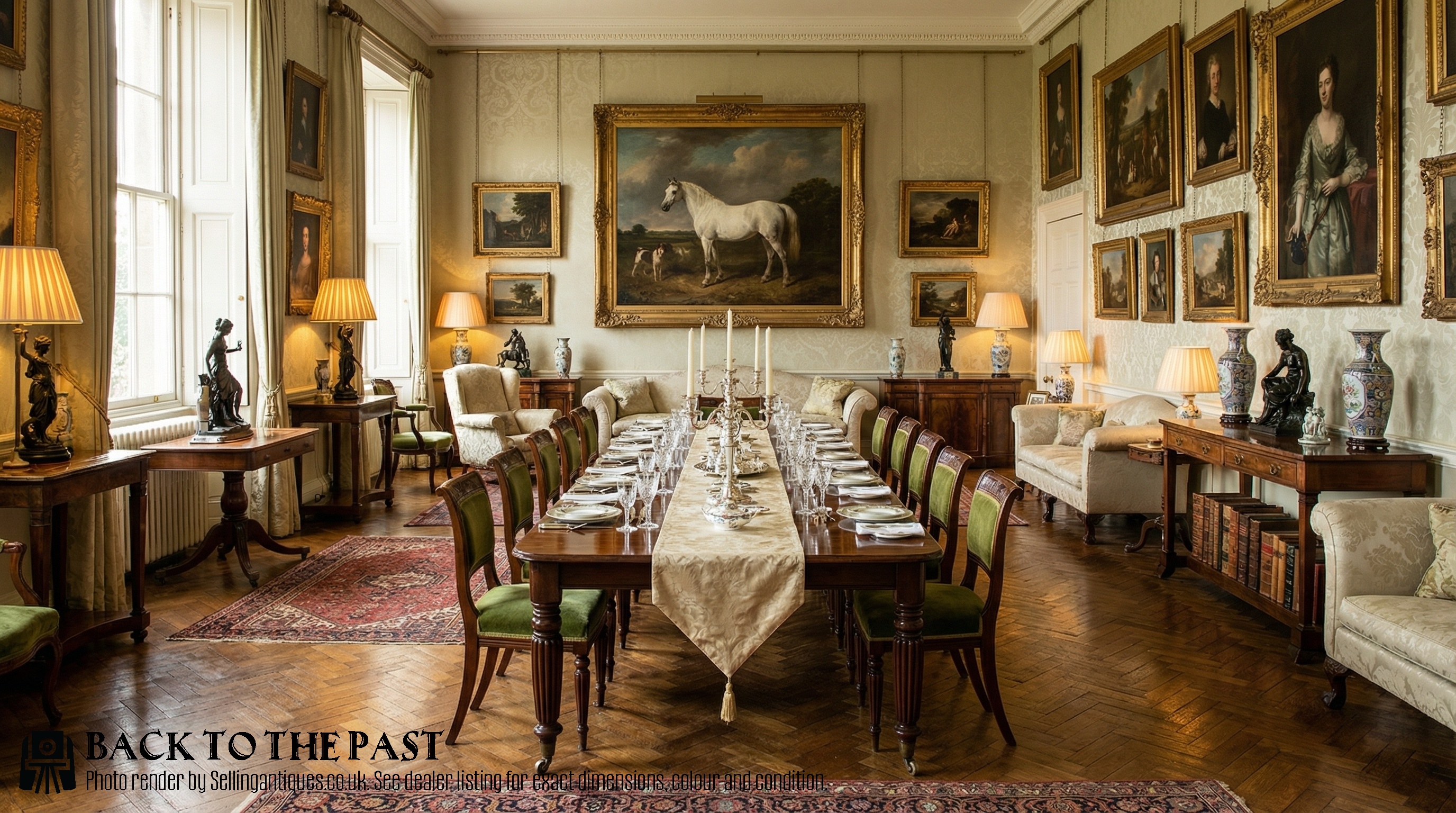
Seating capacities on these tables stretch from ten guests to over twenty-eight. The structural configuration typically relies on pedestals with reeded legs or robust D-ends.
How they were made
Cabinet makers built these tables using solid timber and figured mahogany veneers over secondary woods. Brass fittings, such as castors and connecting clips, support the movement and stability of extending sections.
Internal mechanisms often incorporate wind-out systems operated by handles to separate the pedestals when inserting extra leaves. Turning and reeding decorate the legs, while gold leaf or inlay sometimes accentuates the surface details.
Mahogany Banquet Table Retail Price Guide 2026
Typical asking prices for mahogany banquet table among the pieces listed under this phrase on Sellingantiques today, from the lower quarter to the upper quarter. They describe what is for sale here now, not the wider market.
Some tables stretch long enough to host a small orchestra, provided everyone agrees to pass the salt very carefully.
What varies in quality
The depth of grain figure in the mahogany veneer dictates the visual impact of the top surface. Highly figured timber commands greater appreciation for its rich patterns and warmth.
The stability of the pedestal base and the precision of the extending mechanism govern daily utility. Tables retaining original leaves and well-fitted brass hardware demonstrate superior construction integrity.
Gillows·Wylie and Lochead·Whytock and Reid
The Mahogany Banquet Table Glossary
- Pedestal
- A central column support beneath the table top, often branching into three or four legs. These pillars allow maximum legroom for seated guests.
- D-End
- A semicircular table section resembling the letter D. When separated from the centre leaves, these ends can stand independently against a wall.
- Leaf
- A removable board inserted into the centre of an extending table to increase its length. Multiple leaves allow the table to adapt to different dining capacities.
- Wind-out
- A mechanical extending system operated by a crank handle. This internal screw mechanism parts the table sections smoothly.
- Reeded
- A decorative moulding formed of parallel convex strips carved into the wood. This detail appears frequently on the legs of Regency and Georgian examples.
Mahogany Banquet Table: Frequently Asked Questions
How do you extend a mahogany banquet table?
Most large extending tables utilise a winding mechanism or pull apart manually along brass runners. Extra leaves are then placed into the central gap to lengthen the surface.
Securing clips underneath lock the sections tightly together to keep the table stable during use.
How many people can sit at a banquet table?
Seating capacity depends on the number of pedestals and inserted leaves. Many versions accommodate ten to twelve guests comfortably.
Larger configurations with four or more pillars extend to seat twenty-two to twenty-eight people for formal dining.
What is Cuban mahogany?
Cuban mahogany is a dense, durable hardwood sourced from the Caribbean during the eighteenth and nineteenth centuries. It is prized for its deep colour and intricate grain patterns.
Cabinet makers utilised this timber for high-status furniture due to its exceptional resistance to wear.
How do I care for a polished mahogany surface?
Protect the timber from direct sunlight and excessive heat fluctuations to prevent the wood from drying out. Use placemats and coasters to shield the polish from moisture and hot dishes.
Regular dusting with a soft, dry cloth maintains the natural lustre of the figured grain.