




Edwardian Boardroom Table
These large Edwardian boardroom table pieces offer immense proportions and rich timber character, built to anchor grand spaces with authority and historic presence.
Edwardian Boardroom Table
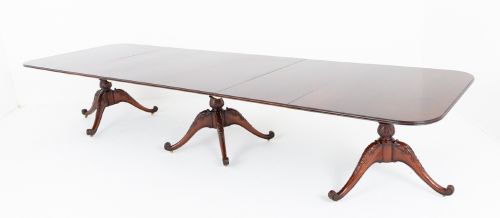
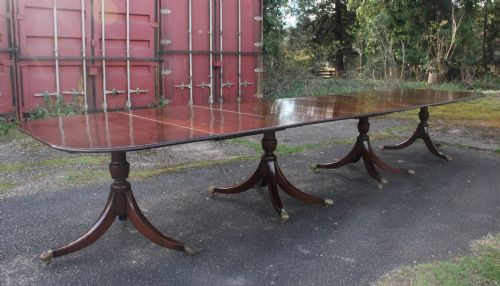
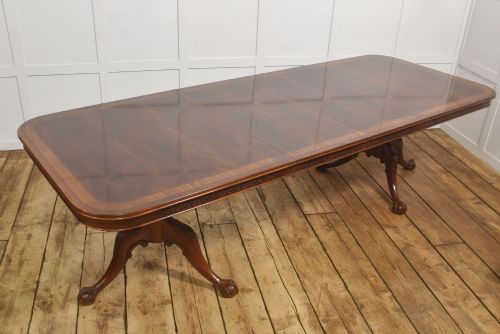
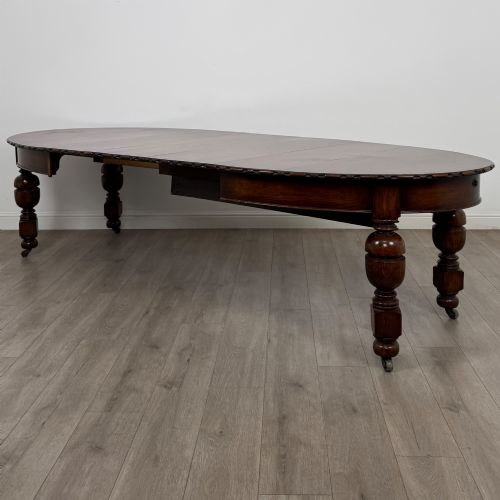
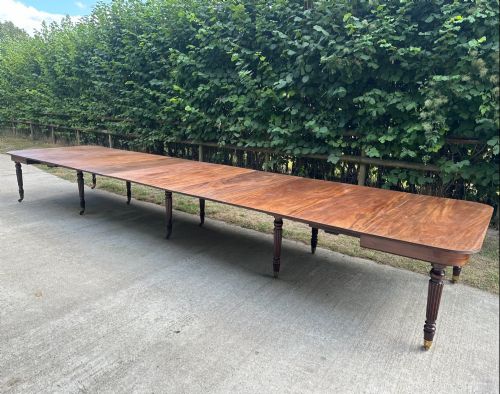
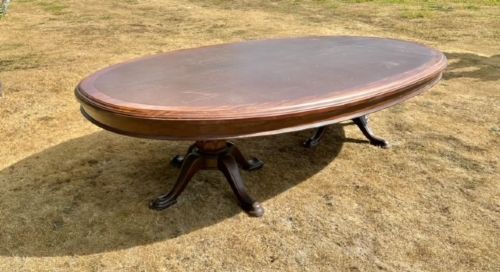
When you search for an edwardian boardroom table, you are looking for substantial timber furniture designed to seat large numbers of people for meetings or banquets. These pieces typically present long rectangular or oval surfaces supported by multiple pedestals or refectory bases.
The versions most commonly met on this page span the Edwardian era, the early twentieth century, and the late nineteenth century, rendered in heavy oak or polished mahogany. They frequently draw upon earlier design vocabularies like the Regency style or the Chippendale revival.
Beyond standard dining formats, the broader category occasionally includes related massive seating arrangements or large timepieces associated with institutional settings. The core of the selection remains the extended timber table built for collective assembly.
Materials and construction
Makers built these large surfaces primarily using solid and veneered mahogany or oak, often finished with brass fittings and inset leather writing surfaces. Timber selection focused on durability and visual weight, ensuring the furniture could withstand heavy daily use in offices and municipal spaces.
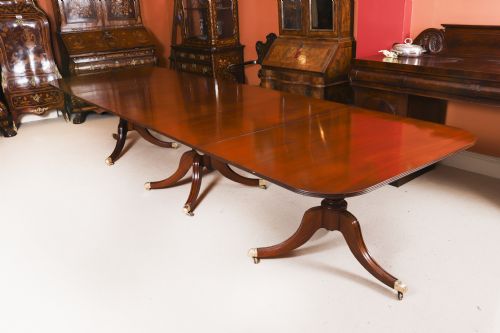
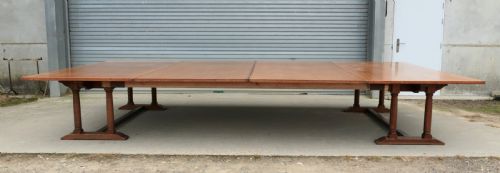
Construction techniques relied on multi-pedestal systems or sturdy refectory frames to support expansive lengths without sagging. Cabinetmakers utilised clever extension mechanisms to allow massive boards to separate smoothly for inserting additional leaves.
One particularly sociable table is large enough to host a small village meeting for thirty people.
Assessing quality and finish
The calibre of an edwardian boardroom table rests upon the density of the timber and the sophistication of its structural support. Superior examples employ thick mahogany or quarter-sawn oak with deeply figured grain patterns that catch the light evenly across expansive surfaces.
Joinery detail and pedestal carving separate utilitarian pieces from finer workshop productions. Stronger items show crisp moulding profiles, solid brass castor fixings, and stable multi-pillar configurations that maintain level alignment across impressive lengths.
Gillows·Whytock & Reid
The Edwardian Boardroom Table Glossary
- Pedestal
- A central column support resting on splayed legs, often used in multiples to hold up very long table tops. These columns distribute heavy weight effectively.
- Refectory
- A long, narrow table style featuring substantial legs connected by low stretchers for extra stability. This form originates from monastic dining halls.
- Satinwood
- A pale, highly reflective hardwood used for contrasting stringing and decorative inlay work on cabinet furniture. It provides a bright visual accent against dark mahogany.
- Bracket clock
- A portable mechanical clock traditionally designed to sit on a bracket or shelf, frequently housed in an architectural wooden case. These pieces often accompanied grand interior schemes.
Edwardian Boardroom Table: Frequently Asked Questions
How many people do these tables seat?
These tables are built on a grand scale, frequently accommodating anywhere from twelve to thirty diners or meeting participants depending on their length.
Their substantial proportions make them practical for large dining rooms, boardrooms, or expansive open-plan spaces requiring a central gathering point.
What woods were used for these tables?
Makers predominantly worked with mahogany and oak, occasionally incorporating satinwood for fine decorative banding and inlay details.
These dense hardwoods provided the necessary structural strength to span great lengths without requiring excessive central leg bracing.
How do I care for a large timber table?
Maintain the polished wood surfaces by dusting regularly with a dry cloth and avoiding direct exposure to strong sunlight or rapid temperature changes.
Applying quality beeswax periodically helps nourish the grain and protects the finish from minor surface moisture.
Are extension leaves standard on these pieces?
Many examples feature multi-pillar designs equipped with mechanisms to insert extra leaves for adjusting the overall length.
This adaptability allowed historic boardrooms to change table sizes depending on the scale of the gathering.