
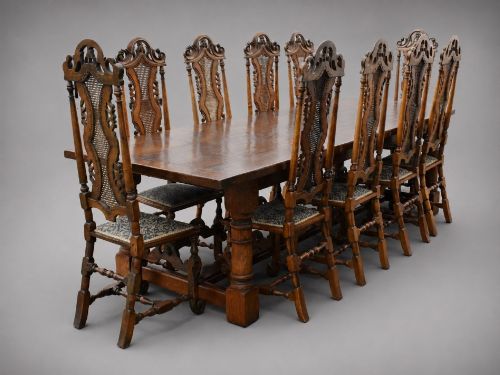
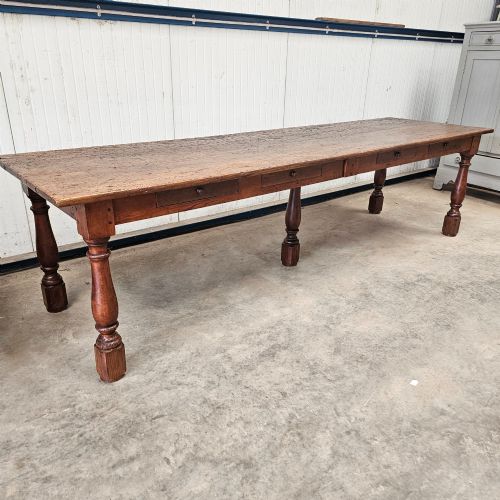
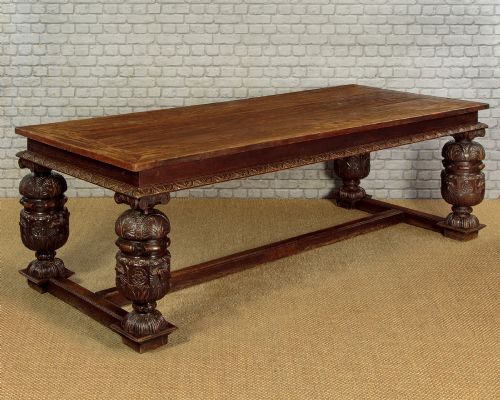


Ten Seater Dining Table
A ten seater dining table brings people together around substantial timber surfaces crafted to host large gatherings with stability and presence.
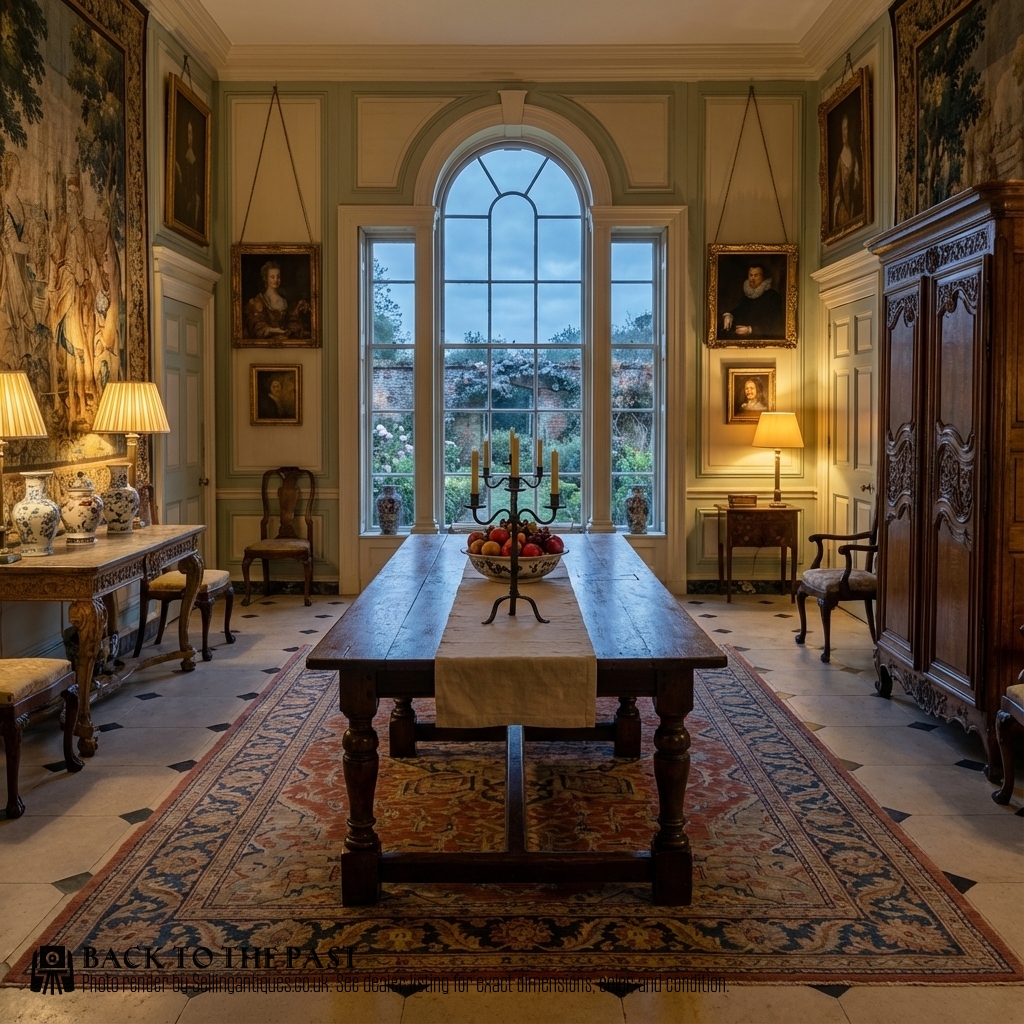
Ten Seater Dining Table
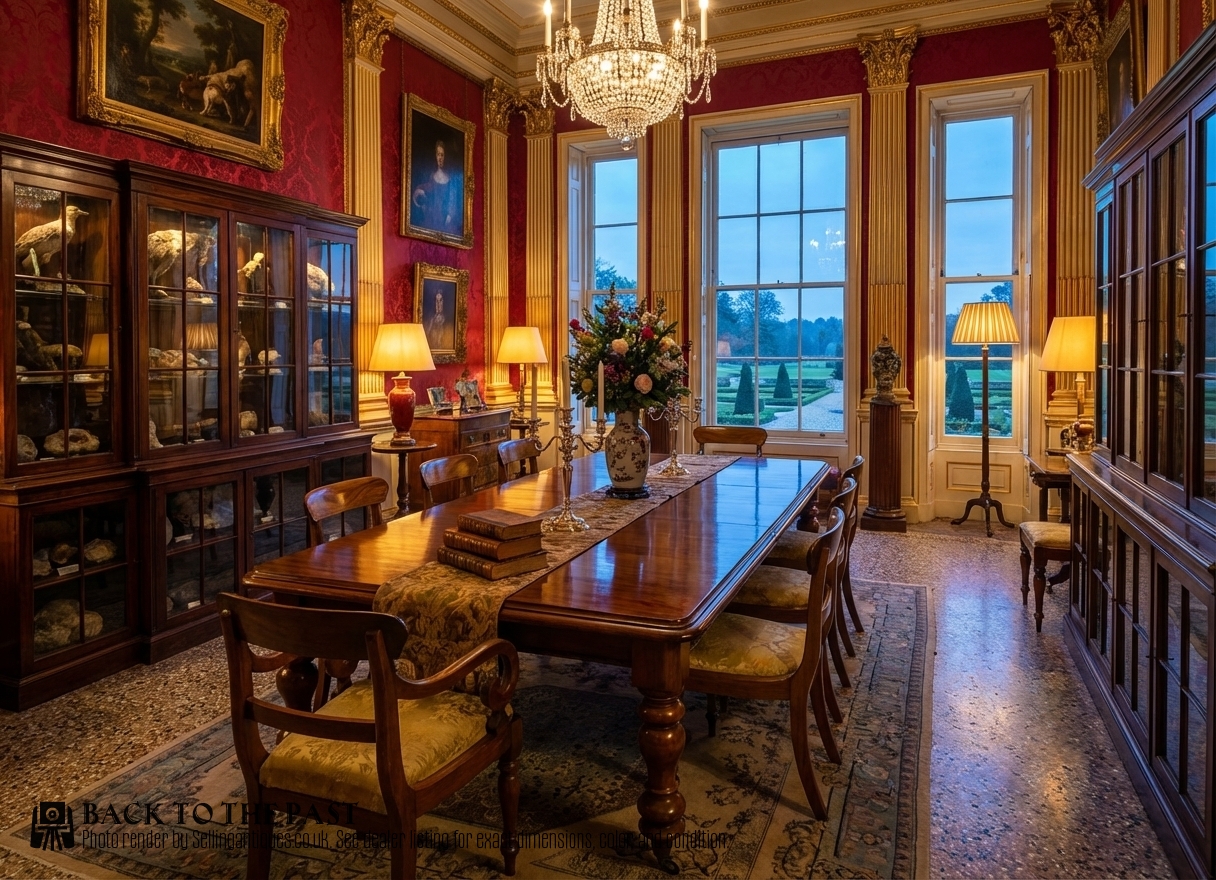
A ten seater dining table provides the scale needed for substantial dining rooms, appearing frequently in mahogany extending formats or robust oak farmhouse constructions. These large surfaces emerge from periods spanning the Regency era through the Victorian period and into the early twentieth century.
Buyers encounter formats ranging from wind-out extending tables in figured mahogany to fixed refectory boards and large rustic farmhouse designs in chestnut, pine, and oak. Many examples arrive paired with sets of high-back chairs or incorporate functional drawers beneath the top.
The architectural presence of these tables suits large dining spaces and boardrooms alike, drawing on styles such as Jacobean Revival, Gothic Revival, and French Country. Each piece reflects the formal dining requirements of its period through generous proportions and solid timber construction.
Materials and construction
Makers built these large dining tables primarily using solid mahogany, oak, and pine, often selecting figured timber veneers for the principal top surfaces. Supporting frames relied on heavy timber rails and substantial legs, sometimes reinforced with brass fittings or multiple pedestals to bear the significant weight.
Extending mechanisms utilised winding systems that allowed sections to separate smoothly and accept additional leaves for seating capacity. Farmhouse and refectory variants employed pegged joints and thick planks designed to withstand heavy daily use without losing structural integrity.
Ten Seater Dining Table Retail Price Guide 2026
Typical asking prices for ten seater dining table among the pieces listed under this phrase on Sellingantiques today, from the lower quarter to the upper quarter. They describe what is for sale here now, not the wider market.
Listings feature mahogany extending tables alongside solid oak refectory and farmhouse formats dating from the nineteenth and early twentieth centuries.
Factors that distinguish quality
Quality in a ten seater dining table rests on the selection of timber and the precision of the extending mechanism. Uniform grain in the mahogany or oak top, combined with smooth operation of the leaves, separates standard workshop production from finer examples.
The weight and stability of the base construction dictate longevity, particularly in multi-pillar or refectory designs where proper weight distribution prevents sagging across long spans. Subtle details in the turning of legs or carved borders separate straightforward utility furniture from more ambitious cabinet work.
The Ten Seater Dining Table Glossary
- Extending table
- A table designed with a mechanism to separate and insert additional leaves, increasing the surface length. This allows the furniture to adapt easily between everyday use and larger gatherings.
- Refectory table
- A long, narrow dining table traditionally used in communal halls and dining rooms. These pieces rely on fixed plank tops supported by substantial trestles or heavy legs.
- Mahogany
- A durable, reddish-brown tropical hardwood prized for its stable grain and suitability for fine furniture making. It took a high polish and dominated nineteenth-century dining tables.
- Figured timber
- Wood grain showing distinctive patterns such as flame, fiddleback, or curl, achieved by cutting across the grain or selecting specific sections of the tree. Cabinet makers reserved these boards for prominent table surfaces.
- Pedestal table
- A table supported by one or more central columns rather than four corner legs. Multi-pillar variations provide necessary clearance and legroom for seated guests along long spans.
Ten Seater Dining Table: Frequently Asked Questions
How do I measure for a ten seater table?
Allow sufficient clearance around the perimeter of the room so chairs pull out comfortably without hitting walls or sideboards. A length of three metres or more typically accommodates ten people adequately.
Consider the placement of table legs or pedestals relative to seating positions to ensure guests sit without obstruction.
How do extending mechanisms work?
Most nineteenth-century extending tables utilise a winding handle that turns internal wooden screws to pull the frame apart. Loose timber leaves drop into the central gap and lock securely into place.
Proper alignment pins ensure the top surfaces remain level and tight across the entire extended span.
What is the difference between mahogany and oak tables?
Mahogany tables generally offer a formal appearance with figured veneers and pedestal or pillar supports dating from the Regency and Victorian periods. They suited parlours and formal dining rooms.
Oak tables lean towards farmhouse, refectory, or revival styles, displaying prominent grain and heavy plank construction intended for robust everyday use.
How do I care for antique timber surfaces?
Maintain the finish by applying beeswax periodically and buffing gently with a soft cloth to nourish the wood. Avoid placing hot items or liquids directly onto the polished timber.
Keep tables away from direct heat sources and sudden humidity changes to prevent timber movement or splitting.