

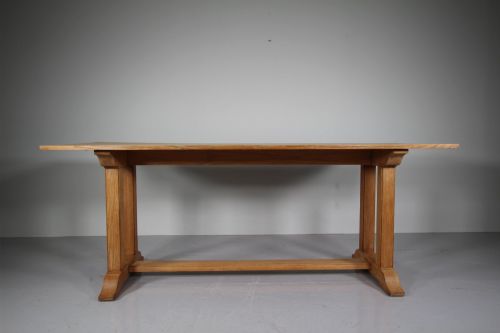
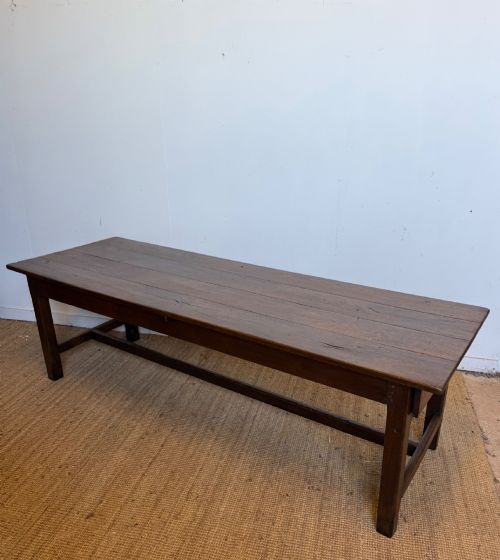
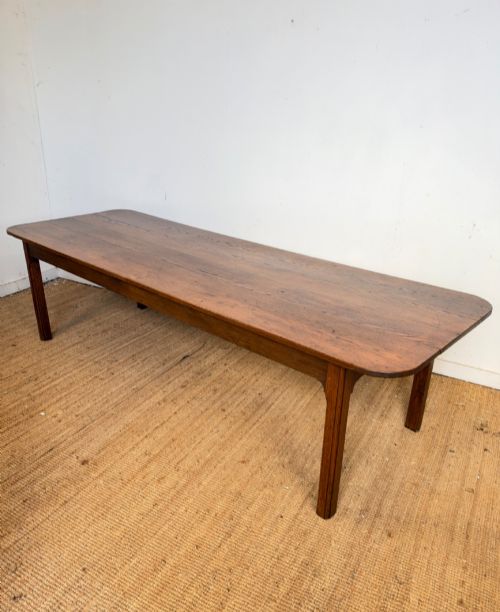
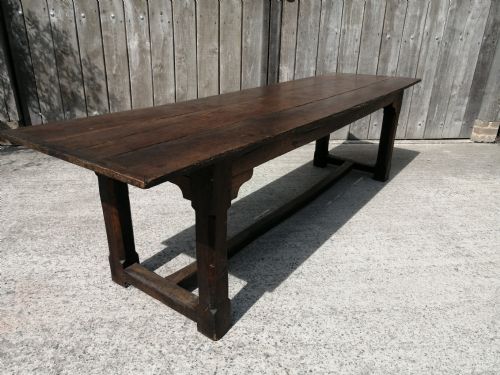
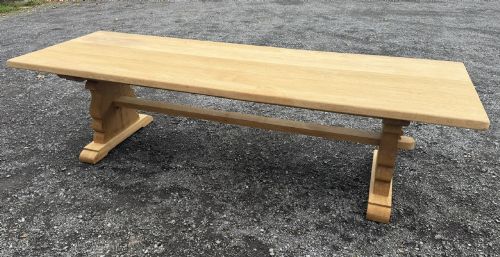
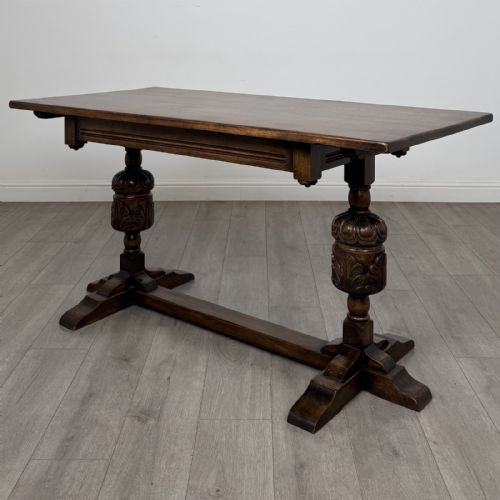
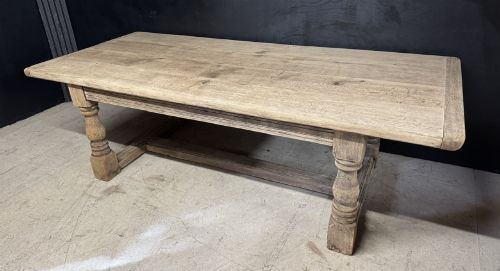
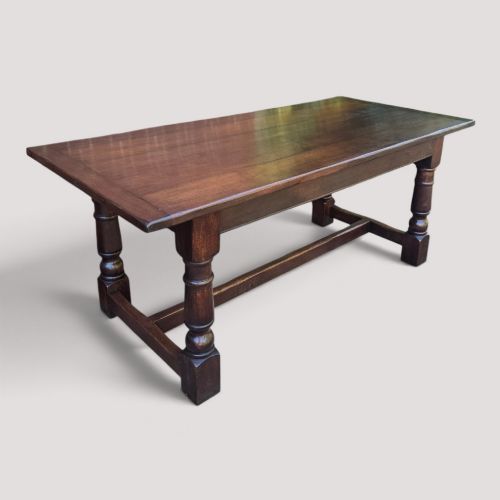
Large Oak Kitchen Table
Gathering around a large oak kitchen table brings a sturdy, enduring centrepiece into daily family life.

Large Oak Kitchen Table
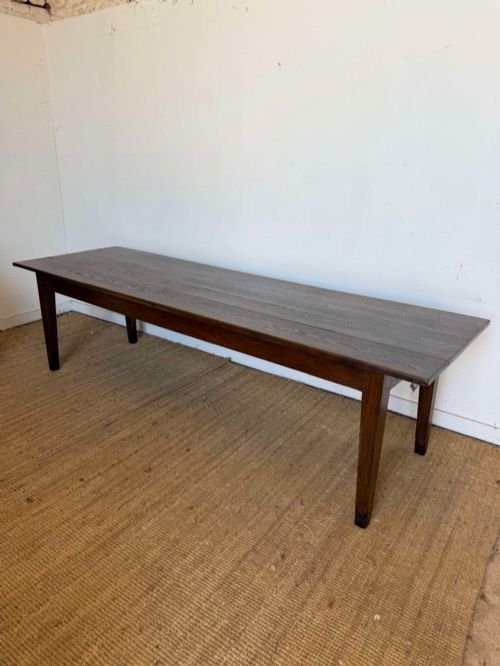
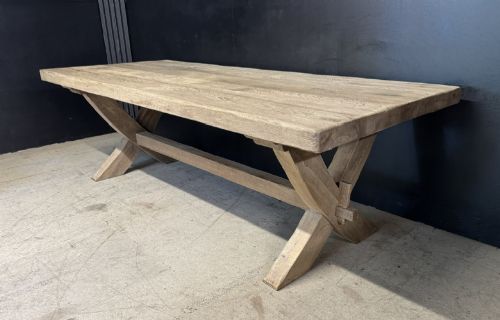
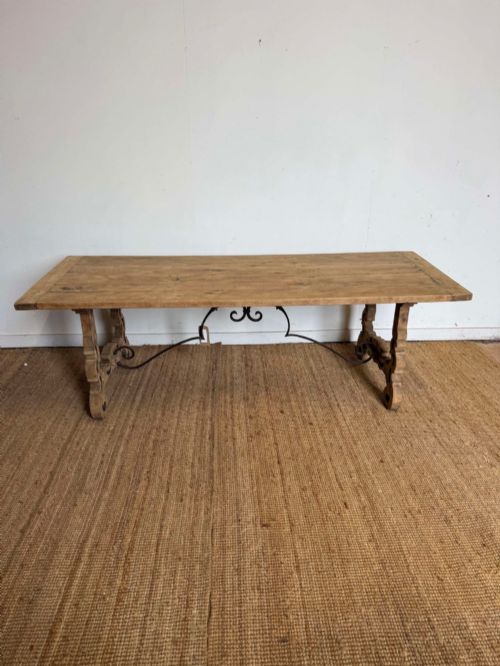
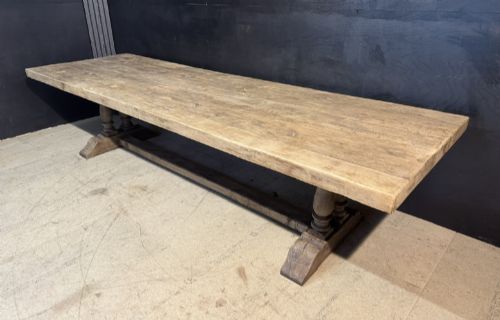
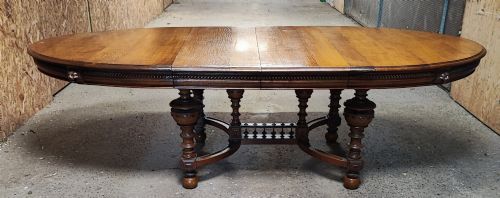
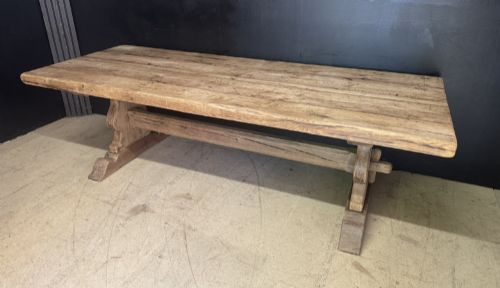
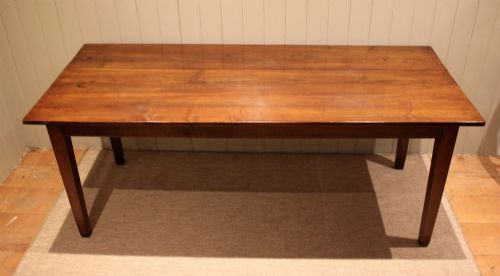
A large oak kitchen table serves as the primary gathering surface for dining, food preparation and daily domestic life. These pieces span centuries of design, appearing as rustic farmhouse boards, formal refectory formats and practical extending versions.
Buyers meet examples originating from eighteenth-century workshops alongside Victorian, Edwardian and early twentieth-century interpretations. French provincial styles sit alongside English country variants, often featuring substantial timber tops designed for heavy domestic use.
What varies in quality
Quality depends upon the integrity of the timber used for the top, with single plank surfaces and dense eighteenth-century boards representing the more desirable end of the scale. The construction of the underframe and the stability of stretcher bases dictate how well a heavy dining surface withstands daily use.
The degree of original patination and the subtlety of proportion separate standard utilitarian boards from finer vernacular pieces. Alterations, shrinkage splits and the replacement of structural elements shift an example's standing among collectors and interior furnishers.
Large Oak Kitchen Table Retail Price Guide 2026
Typical asking prices for large oak kitchen table among the pieces listed under this phrase on Sellingantiques today, from the lower quarter to the upper quarter. They describe what is for sale here now, not the wider market.
Listings feature oak alongside elm, pine and beech timbers, spanning periods from the seventeenth century through to the Edwardian era and the 1940s.
The Large Oak Kitchen Table Glossary
- Refectory table
- A long, narrow dining table traditionally used in communal dining halls and later adapted for domestic kitchens. These pieces typically feature substantial rectangular tops supported by sturdy legs joined by low stretchers.
- Draw-leaf table
- An extending table equipped with sliding leaves stored beneath the main surface that pull out to lengthen the board. This mechanism allows the table to expand seating capacity quickly.
- Plank top
- A table surface constructed from a small number of wide boards running the length of the table rather than multiple narrow staves. Single plank tops utilise wide sections of mature timber.
- Trestle ends
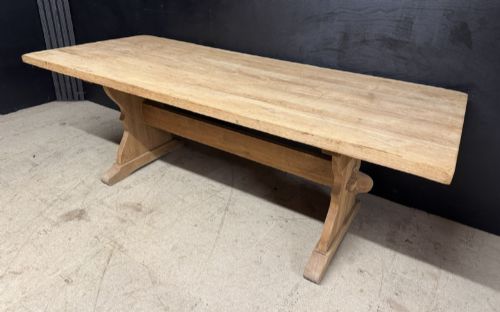
- Support structures positioned at either end of a table rather than conventional corner legs. They often incorporate shaped vertical boards joined by a central crossbeam.
- Patina
- The surface sheen and colour developed by wood over long periods of use, cleaning and exposure to light. This quality indicates the age and history of the timber.
Large Oak Kitchen Table: Frequently Asked Questions
How do I seat eight people comfortably?
Selecting a table with a length exceeding seven or eight feet generally provides adequate legroom between the supporting legs or trestle ends. Refectory formats and extending models offer flexibility for accommodating additional guests.
Checking the clearance beneath the apron ensures dining chairs slide underneath without restricting seating positions along the sides.
What is the difference between a refectory and a farmhouse table?
Refectory tables traditionally feature a long, narrow format supported by strong floor stretchers and trestles or heavy legs, originating from communal dining halls. Farmhouse tables often display a more domestic character with turned or tapered legs and occasional storage drawers.
Both styles utilise sturdy timber construction designed to anchor a busy kitchen or dining space.
How should I maintain an antique oak surface?
Routine care involves wiping the timber with a damp cloth and drying it immediately to protect the grain and finish. Applying beeswax periodically helps nourish the wood and maintain its natural lustre without sealing the surface permanently.
Avoiding excessive moisture and direct heat sources prevents the old oak planks from warping or splitting over time.
Are these tables suitable for daily family use?
Solid oak construction provides the structural strength required to endure heavy daily demands, from meal preparation to children's homework. The robust nature of these timbers means existing marks and knocks blend into the historic character of the surface.
Using protective mats during dining helps guard against heat and moisture while preserving the underlying patina.