
Rustic Oak Farmhouse Table
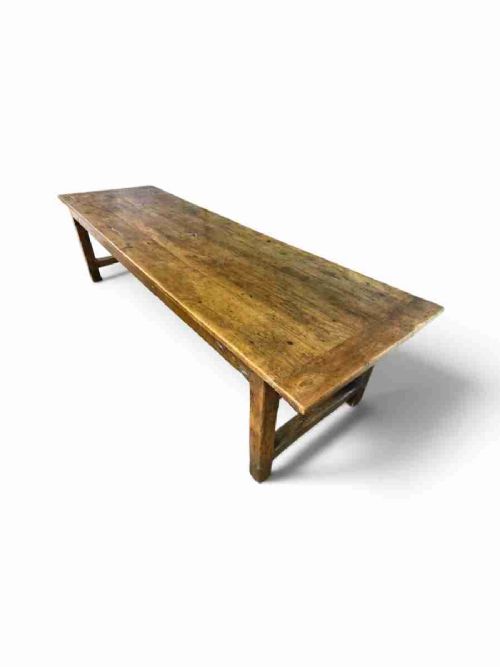
A rustic oak farmhouse table anchors a room with generations of sturdy utility and honest timber.
Rustic Oak Farmhouse Table
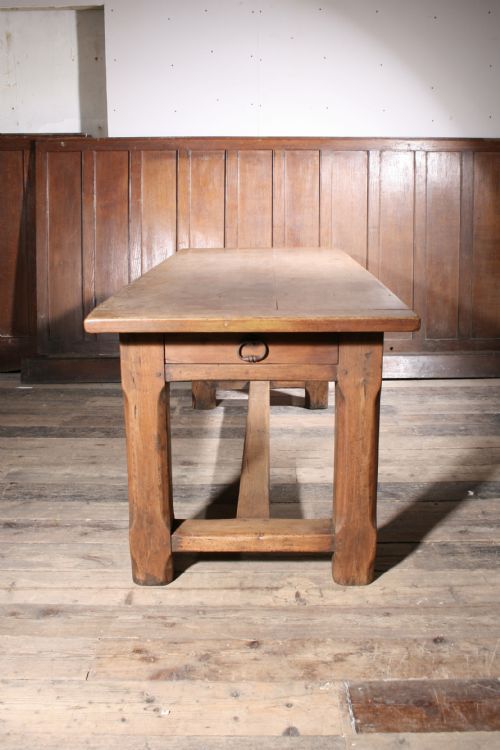
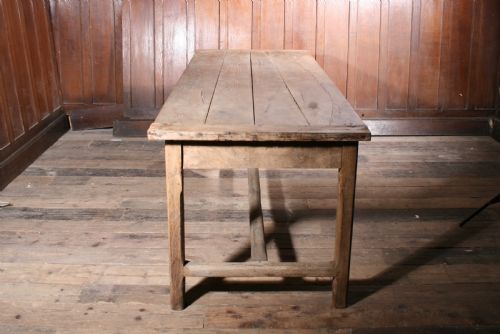
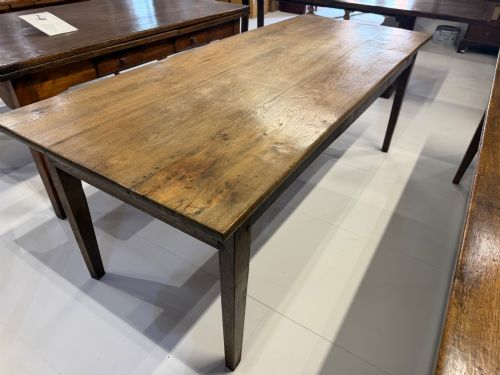
A rustic oak farmhouse table serves as the central hub of domestic life, designed for heavy daily use in kitchens and dining rooms. These pieces embody vernacular furniture traditions from England and France, spanning the eighteenth century through to the early twentieth century.
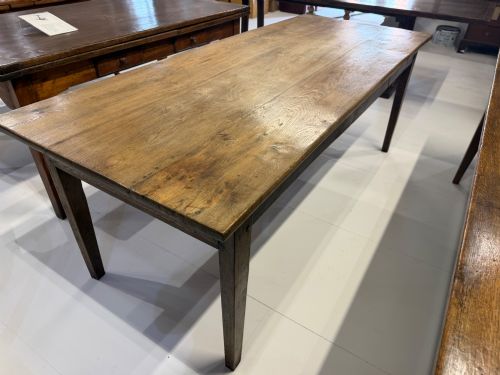
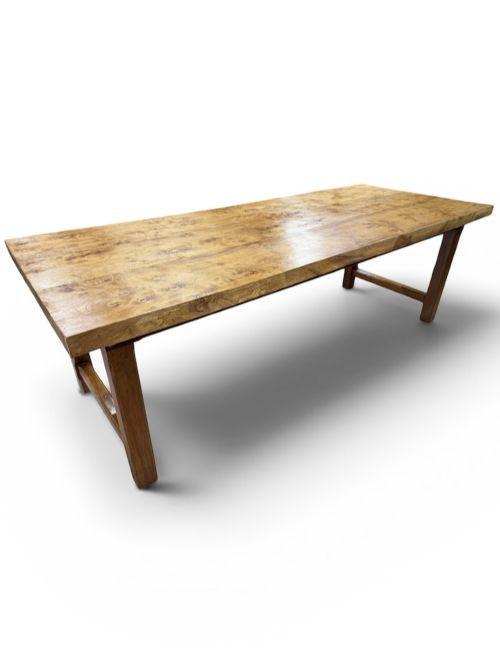
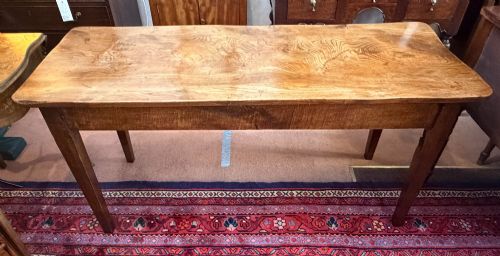
The most common examples encountered here are robust dining and refectory tables built from solid timber, often featuring generous lengths to seat multiple guests. Alongside standard dining formats, buyers frequently find prep tables, serving tables, and occasional coffee tables adapted from earlier forms.
Materials and Construction
Makers relied principally on solid oak for the primary surfaces and framing, frequently pairing it with secondary native timbers such as beech, pine, ash, and fruitwood for underframes and internal components. Planks were hand-selected for width and grain, then joined using traditional pegged mortise and tenon joints to withstand decades of movement.
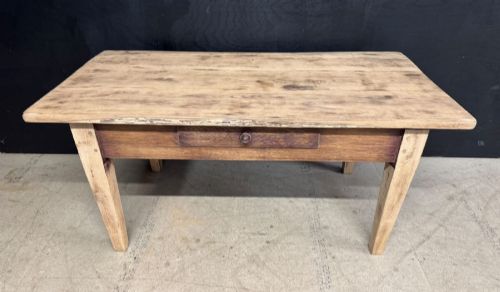
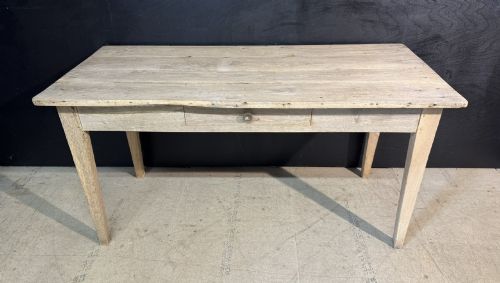
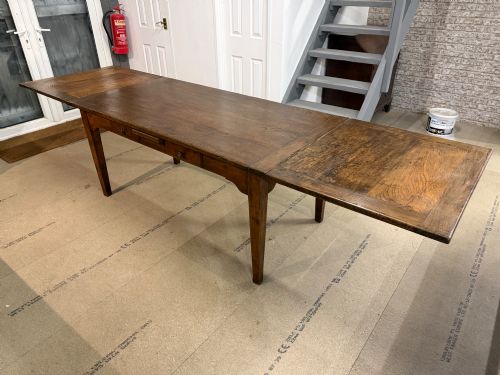
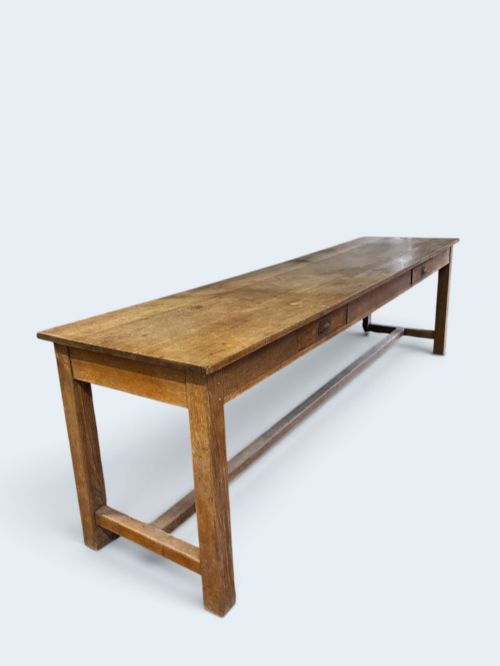
Surface finishing relied on simple applications of wax, oil, or traditional soap washing to protect the wood while retaining its natural texture. Some examples incorporate clever mechanical solutions such as double-extending leaves or storage drawers integrated directly into the aprons.
Several early nineteenth-century tables share space with a dedicated pig bench, proving that rustic oak furniture served every corner of the homestead.
Distinctions in Quality
Quality rests primarily in the integrity of the timber selection and the retention of original structural fabric. Tables constructed from thick, stable planks with minimal replacement timber sit at the upper end of the scale.
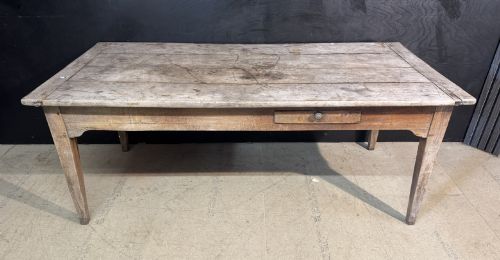
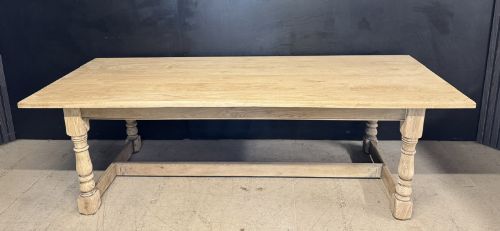
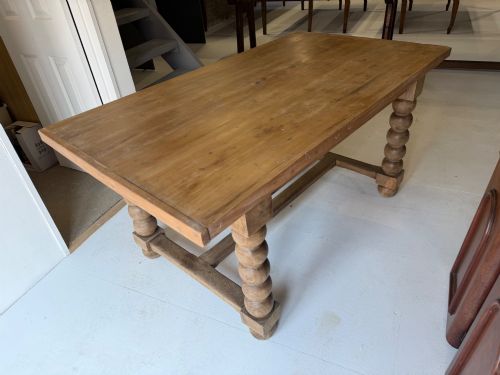
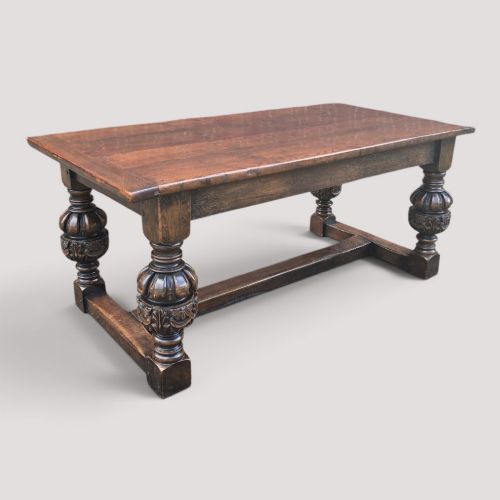
The proportion and turning of the legs - whether tapered, bobbin, or square - distinguish standard utility pieces from more considered vernacular design. Joinery tightness and the preservation of authentic surface patination further separate everyday examples from superior specimens.
The Rustic Oak Farmhouse Table Glossary
- Refectory table
- A long, narrow dining table traditionally used in communal halls and later adopted for domestic kitchens. These pieces typically feature stretcher rails running low between the legs for added stability.
- Plank top
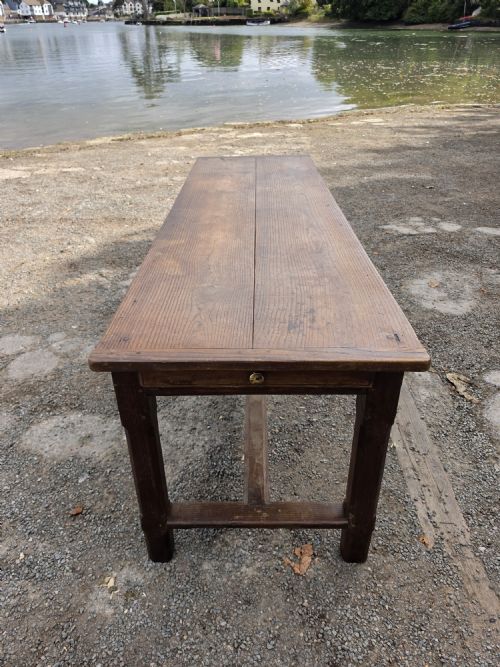
- A table surface constructed from joined boards running the full length of the piece. This method showcases the natural grain and growth rings of the timber.
- Bleached oak
- Timber treated to lighten its natural tone, a finish commonly found on French farmhouse tables. This process softens the visual weight of heavy wood.
- Pegged joint
- A traditional construction method where wooden dowels secure mortise and tenon connections without relying on metal fasteners. This allows the timber to expand and contract naturally.
- Patina
- The surface sheen and darkening developed through decades of handling, cleaning, and exposure to light. This quality marks the age and continuous use of antique timber.
Rustic Oak Farmhouse Table: Frequently Asked Questions
How do I clean a rustic oak farmhouse table?
Wipe surfaces using a slightly damp cloth and dry immediately with a soft lint-free towel to protect the grain.
Apply a clear beeswax periodically to nourish the dry timber and maintain a gentle protective sheen without building up heavy residues.
Can these tables withstand daily family dining?
These pieces were originally built for heavy agricultural and domestic work, making them inherently suited to modern family life. Solid timber construction ensures they absorb daily wear without losing structural integrity.
Minor marks and dents only add to the character established over centuries of previous service.
How do I tell an 18th-century table from a 19th-century one?
Eighteenth-century examples often display hand-sawn board marks and irregular timber dimensions reflecting early pit-sawing techniques. Joinery details tend to be more idiosyncratic, using pegged joints tailored by individual rural makers.
Nineteenth-century production frequently incorporates more standardised machine-cut elements while retaining heavy solid oak tops.
What is the difference between English and French farmhouse tables?
English versions typically favour darker native oak with simpler, sturdier underframes and occasional pitch pine or elm secondary woods. They lean towards straightforward utility and robust joinery.
French variations frequently showcase lighter fruitwood or bleached oak surfaces, sometimes incorporating drawers or more decorative leg turnings such as tapered or bobbin styles.