
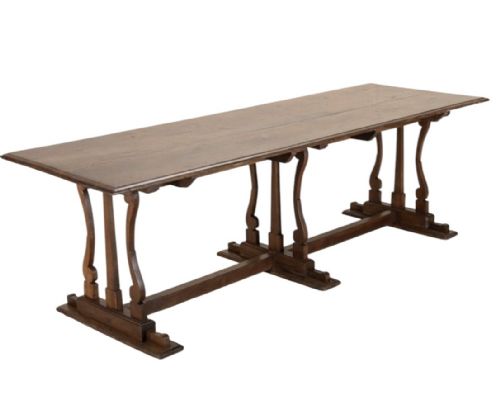


French Monastery Dining Table
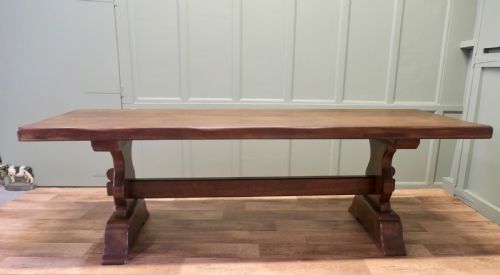
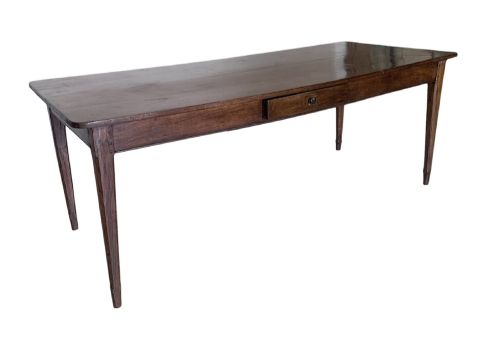
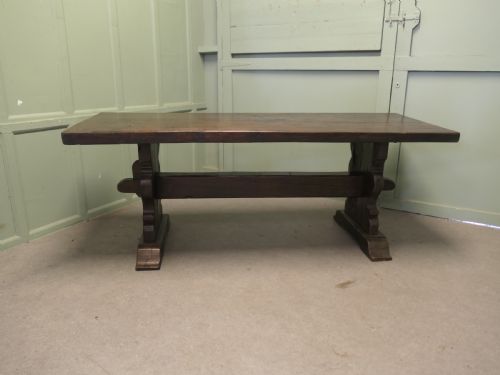
These heavy oak and walnut french monastery dining table examples bring serious provincial character to large rooms.
French Monastery Dining Table
A french monastery dining table is a substantial dining table built for large communal spaces, appearing predominantly in oak and walnut with occasional iron elements. These pieces span the nineteenth century, nineteen ten, nineteen twenty, nineteen hundred, and eighteen ninety.
The forms found here lean into french provincial, french country, and rustic farmhouse styles, often referencing seventeenth century design. Such tables provide immense surface area for seating numerous guests comfortably.
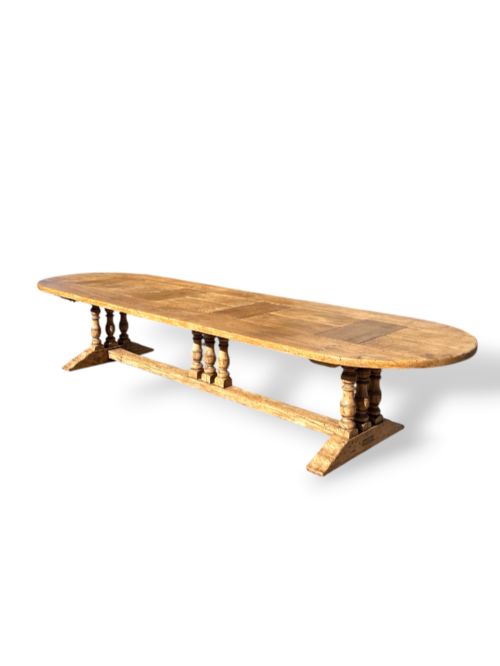
Buyers encounter long refectory tables and farm tables with plank tops, some reaching four metres in length. The construction emphasises long proportions suited to large dining rooms.
How they were made
Makers built these pieces primarily using solid oak and walnut, selecting dense timbers capable of enduring heavy daily use. Iron hardware frequently reinforces the structural joints of the larger tables.
Plank tops dominate the construction, joined tightly to form expansive eating surfaces that weather over decades of service. Some surfaces feature parquetry work, adding geometric detail to the timber.
Finishes range from natural dark timber tones to bleached oak surfaces achieved through historic weathering or stripping. The framing relies on traditional joinery methods designed to support significant weight without bowing.
The listings span the nineteenth century up to nineteen twenty, featuring oak, walnut, and iron across provincial and rustic farmhouse styles.
What varies in quality
The grade of timber dictates much of the stature, with tighter grain patterns and uniform plank selection sitting at the upper end. Walnut examples often command attention for their rich figuring compared to standard oak.
Proportion and length influence desirability, particularly when four-metre spans maintain structural integrity across the entire top. Heavy underframing and original iron bracing indicate superior utility and strength.
Surface treatment creates divergence, where bleached oak treatments or preserved historic patinas show varying degrees of evenness and depth. Tables retaining their original plank tops without excessive restoration hold distinct character.
The French Monastery Dining Table Glossary
- Refectory table
- A long narrow dining table traditionally used in monastic dining halls. These pieces offer extended seating capacity.
- Plank top
- A table surface constructed from boards running the full length of the piece. This method showcases the grain of the oak or walnut.
- Parquetry
- Geometric wood inlay work arranged in patterns across the table surface. This technique appears on select long dining tables.
- Bleached oak
- Timber treated to lighten its natural dark tone while retaining the grain texture. This finish lightens the visual weight in contemporary rooms.
- French country
- A domestic style emphasising rustic utility and sturdy local materials. Tables in this category prioritize robust construction over delicate ornament.
French Monastery Dining Table: Frequently Asked Questions
How do I clean a heavy oak dining table?
Dust the surface regularly with a dry cloth to prevent grit buildup in the grain.
Use mild soap and water sparingly for spills, drying the timber immediately afterward.
Will a four metre table fit my room?
Measure your dining space carefully, leaving ample clearance around all sides for chairs.
Account for doorways and stairwells if the table needs to move between floors.
What is the difference between oak and walnut?
Oak offers a prominent grain and rugged durability suited to heavy farmhouse use.
Walnut provides a darker, smoother appearance with finer figuring throughout the timber.
How do I seat twelve people comfortably?
Look for refectory tables exceeding three or four metres in length to allow adequate legroom.
Ensure the underframe construction does not obstruct chair placement along the sides.