


Pale Oak Trestle Table
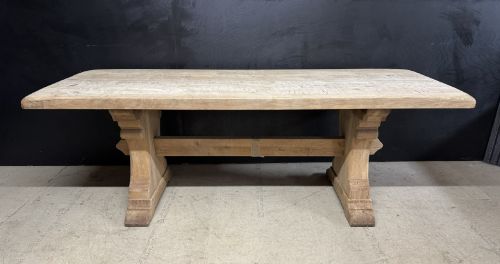
A pale oak trestle table brings light wood tones and a generous surface to a room, offering the practical architecture of a classic dining or serving board.
Pale Oak Trestle Table
A pale oak trestle table relies on structural end supports connected by a long stretcher, creating an open base that allows for uninterrupted seating along the length of the board. The evidence shows these pieces spanning the nineteenth century, the Edwardian era, and into nineteen twenty, reflecting provincial and country house traditions across France, Spain, Sweden, Italy, and England.
The dominant variants on this page combine pale oak or bleached oak surfaces with substantial trestle construction, often taking the form of refectory dining tables or farmhouse boards. Secondary timbers such as pine, poplar, sycamore, and elm occasionally appear in the base or secondary framing, supporting the primary oak top.
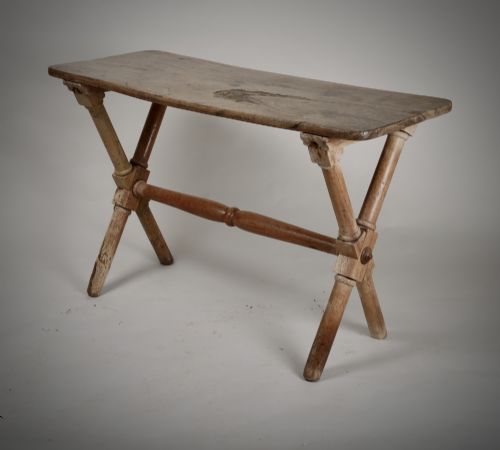
While primarily designed as dining tables, the listings include related forms such as tavern tables, console tables, and servers that share the same functional timber framing. These pieces suit interiors that require a long, narrow surface with historical character and a lighter visual weight than dark brown antique furniture.
Materials and construction
Makers built these tables using solid timber boards for the top, fixed to substantial trestle ends joined by a central floor stretcher for rigidity. The primary wood is oak, frequently bleached or scrubbed to lighten the natural tone of the grain.
Secondary structural elements incorporate pine, poplar, sycamore, and elm, particularly in the underframing or secondary boards of continental and country examples. Iron hardware occasionally secures the joints, combining traditional joinery with functional metal reinforcement.
Pale Oak Trestle Table Retail Price Guide 2026
Typical asking prices for pale oak trestle table among the pieces listed under this phrase on Sellingantiques today, from the lower quarter to the upper quarter. They describe what is for sale here now, not the wider market.
A French scrubbed sycamore and elm trestle table proves that even humble timber pairs happily with oak when dinner is ready.
Judging quality in construction and material
Quality rests in the selection of the timber and the integrity of the joints connecting the top boards to the trestle base. Superior examples display dense, well-figured oak boards that lie flat and maintain stability across a long span without excessive warping.
The degree of hand-working in the trestle supports and the harmony between the primary oak top and the secondary timbers indicate the care taken by the original maker. Tables retaining an authentic bleached or scrubbed finish show a more desirable surface texture than those altered by heavy modern sanding.
The Pale Oak Trestle Table Glossary
- Trestle table
- A table consisting of two or more vertical supports connected by a horizontal beam or stretcher that carries a wide top. This design provides maximum legroom along the length of the board.
- Bleached oak
- Oak timber treated to lighten its natural dark brown colour, exposing the grain with a pale finish. This treatment aligns with rustic country and provincial styles.
- Stretcher
- A horizontal wooden bar connecting the legs or trestles of a table to provide lateral support and stability. In trestle tables, it runs lengthwise beneath the top.
- Sycamore
- A dense hardwood used in provincial furniture construction, often paired with oak or elm for secondary framing. It provides a pale, smooth surface when scrubbed.
Pale Oak Trestle Table: Frequently Asked Questions
How do I care for a pale oak table?
Clean the surface regularly with a dry or barely damp cloth to remove dust without stripping the natural finish of the timber. Avoid harsh chemical cleaners that can damage the bleached or scrubbed patina.
Use protective mats under hot dishes and liquids to prevent staining on the bare wood surface. Periodic application of a suitable wax helps nourish the timber and maintain its resistance to daily wear.
Where were these tables made?
The listings show origins spanning France, Spain, Sweden, Italy, and England, reflecting diverse provincial and country house traditions. Continental workshops often utilised local hardwoods alongside oak to construct sturdy dining boards.
English and Scandinavian examples display regional joinery methods suited to domestic dining and tavern use. Each origin imparts distinct characteristics to the proportions and secondary timbers of the frame.
Can I use a trestle table daily?
The robust construction of these tables makes them well-suited for everyday family dining and social gatherings. The open trestle design accommodates chairs easily along the entire length of the board.
Solid oak and sturdy framing provide the durability required for heavy use in active households. The timber surfaces naturally absorb the minor marks of daily life while retaining their historical character.
How do I date a nineteenth century table?
Examine the tool marks, joint construction, and timber characteristics to understand the period of manufacture. Nineteenth century pieces often show hand-planed surfaces and traditional peg joinery rather than modern mechanical fasteners.
Compare the style against regional traditions such as French provincial or English country house furniture. The presence of secondary woods like pine or poplar can also indicate the workshop practices of the era.