

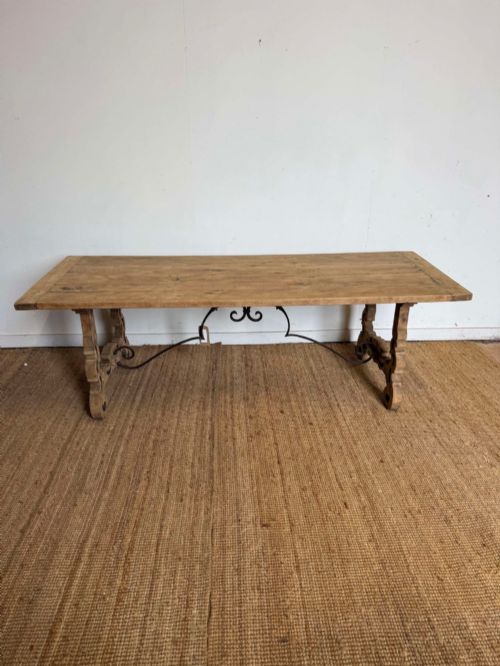
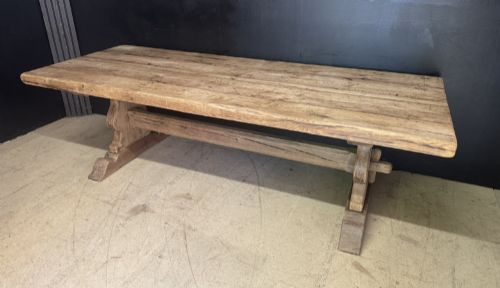
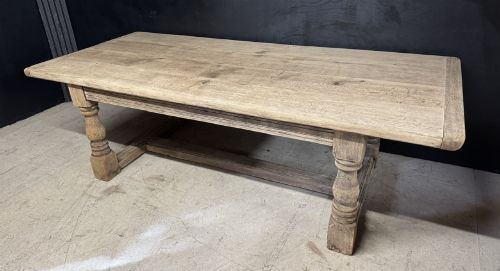
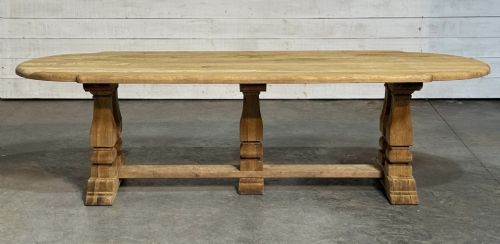
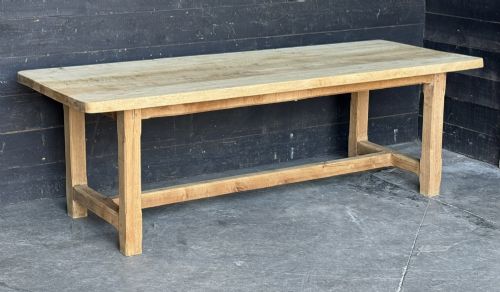
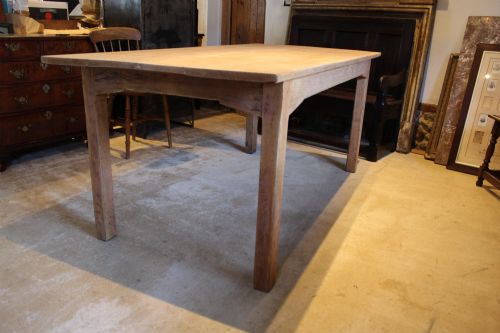
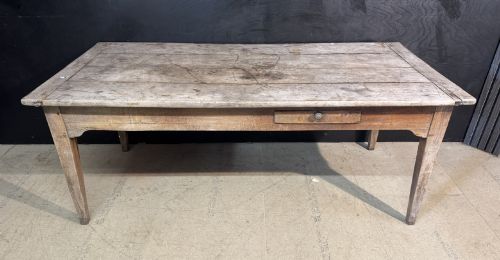
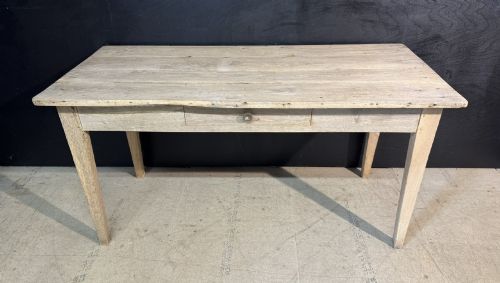
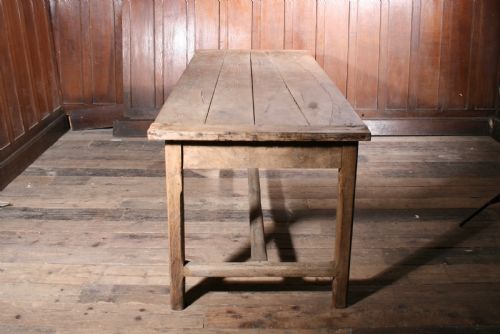
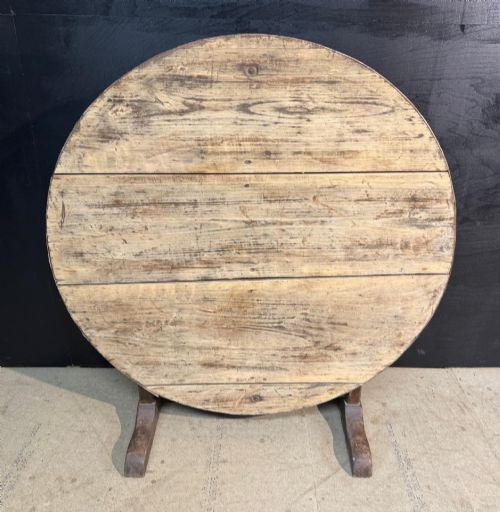
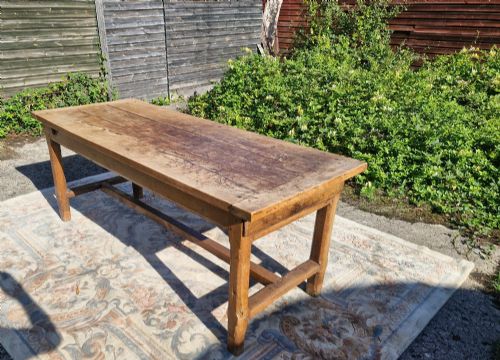
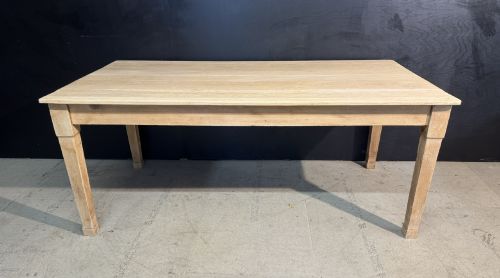
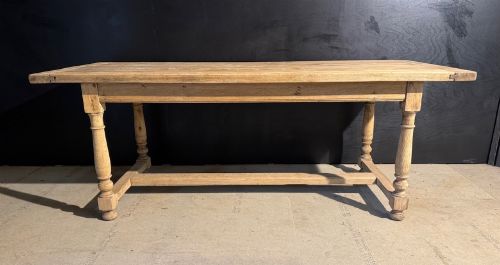


Scrubbed Oak Dining Table
A scrubbed oak dining table brings practical surface and pale grain to the room, ready for daily meals.
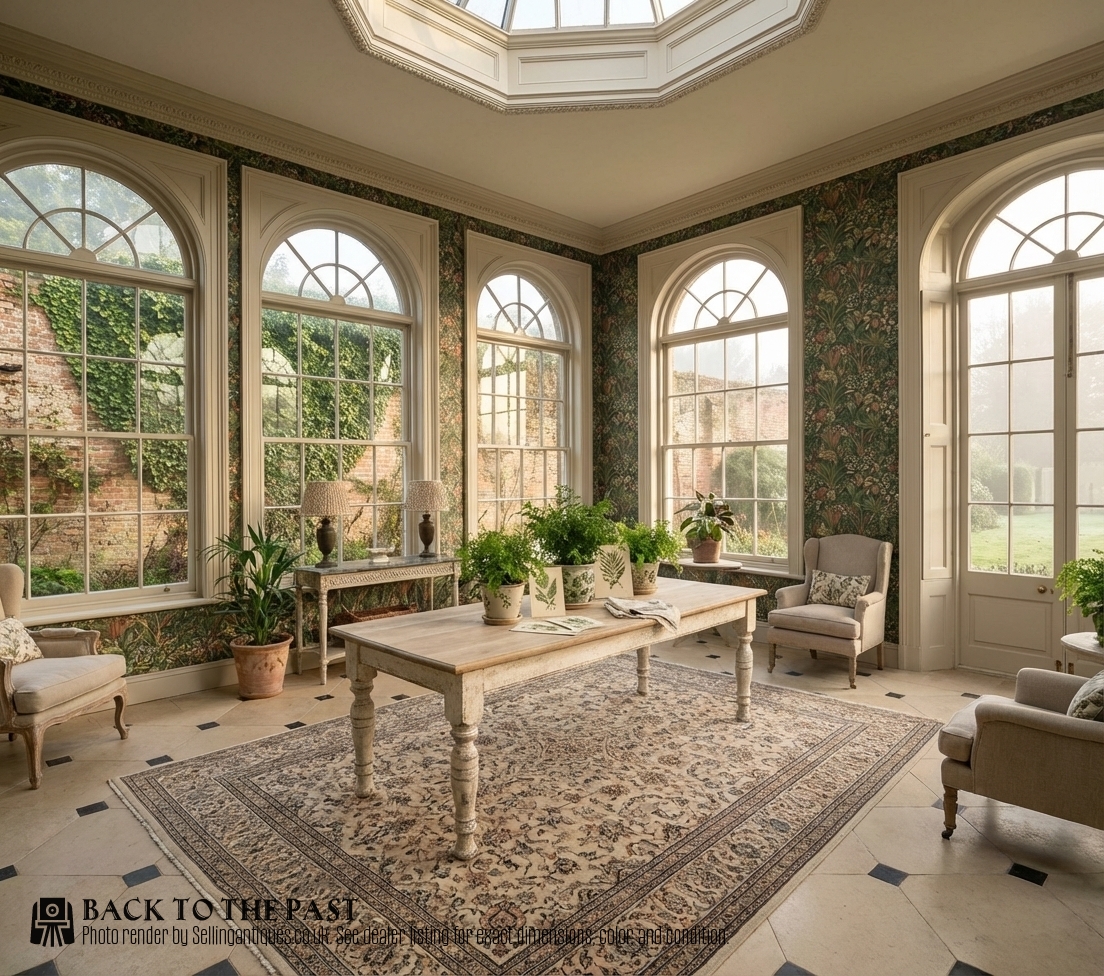
Scrubbed Oak Dining Table
A scrubbed oak dining table provides a robust centre for the kitchen or dining room, drawing on country traditions and sturdy construction. These pieces range from Georgian country forms to Edwardian refectory tables, offering long boards and accommodating legroom.
Most examples found here combine oak tops with complementary timbers like pine or sycamore, reflecting utilitarian origins in farmhouses and taverns. The surfaces bear the pale, clean finish left by vigorous washing and scrubbing over generations.
Makers shaped these tables for heavy domestic service, resulting in generous proportions that suit modern open-plan spaces. Buyers encounter French provincial designs, Scandinavian country trestles, and substantial refectory boards.
How they were made
Joiners constructed these tables using solid oak alongside supporting timbers such as elm, pine, and poplar for underframes and drawers. Planks were joined with pegged mortise and tenon joints to withstand the expansion and contraction of daily use.
Surfaces were repeatedly scrubbed with water and coarse stone or brushes, removing old finishes to leave a pale, raw timber texture. Some variations incorporate painted bases or fruitwood tops like sycamore, paired with trestle ends or four-legged frames.
Scrubbed Oak Dining Table Retail Price Guide 2026
Typical asking prices for scrubbed oak dining table among the pieces listed under this phrase on Sellingantiques today, from the lower quarter to the upper quarter. They describe what is for sale here now, not the wider market.
Listings feature oak, pine, sycamore, elm, and poplar across periods from the late eighteenth century through the Edwardian era.
What varies in quality
Quality rests in the balance of proportions and the thickness of the top boards, which should sit flat and true without excessive warping. Timber selection dictates the grain pattern and the visual weight of the piece, from simple country boards to more refined refectory construction.
The integrity of the underframe and the tightness of the joinery determine structural longevity, distinguishing utilitarian workshop builds from more considered country furniture. Surface wear tells a history of use, where gentle bleaching and honest timber patination elevate the visual interest.
The Scrubbed Oak Dining Table Glossary
- Scrubbed
- A finish achieved by repeated washing and scouring of timber, leaving the grain pale and exposed. This process removes surface oils and creates a clean, matte texture.
- Refectory
- A long, narrow dining table traditionally used in monastic or communal dining halls. These pieces feature sturdy stretcher rails and substantial length.
- Trestle
- A table design where the top is supported by two or more upright frames connected by a horizontal beam. This construction provides stability and maximises legroom.
- Farmhouse
- A domestic table style rooted in rural practicality, often featuring thick plank tops and simple, robust framing. They were built for daily kitchen and dining tasks.
- Sycamore
- A dense hardwood belonging to the maple family, occasionally utilised for table tops alongside oak. It offers a pale, smooth grain when scrubbed.
Scrubbed Oak Dining Table: Frequently Asked Questions
How do I clean a scrubbed surface?
Wash the timber gently with warm water and mild soap using a soft brush, following the direction of the grain.
Rinse carefully and allow the wood to dry naturally to preserve the pale, raw finish.
Can I seat eight people comfortably?
Many of these tables measure long enough to accommodate eight diners, particularly refectory and large farmhouse variants.
Check the length and the position of the legs or trestle bases to ensure chairs fit underneath.
Are these tables suitable for everyday use?
Built originally for heavy domestic or tavern service, these pieces are inherently durable and designed for regular activity.
Solid timber construction handles daily dining while accumulating character over time.
What is the difference between oak and pine underframes?
Oak provides a denser, harder framework that resists knocks and supports heavy top boards with minimal flex.
Pine offers a lighter alternative often found in regional pieces, sometimes paired with an oak top.