
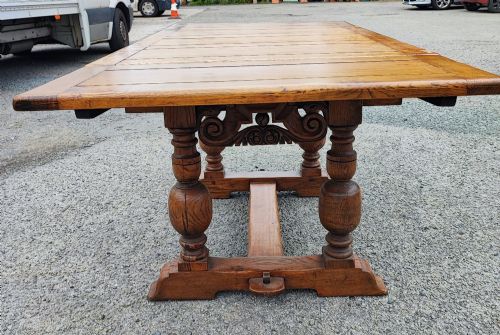
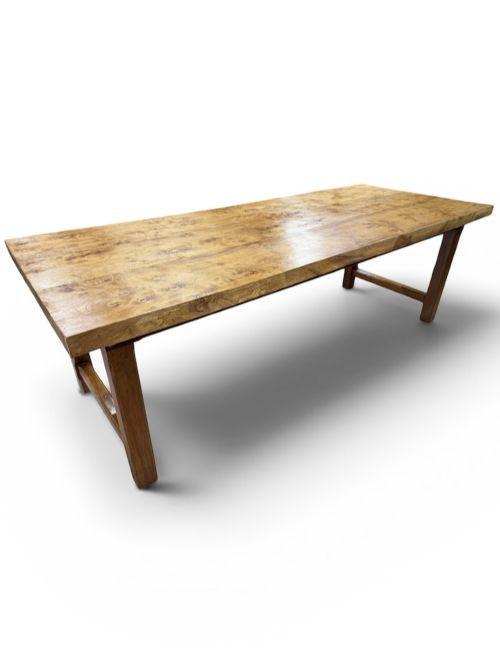
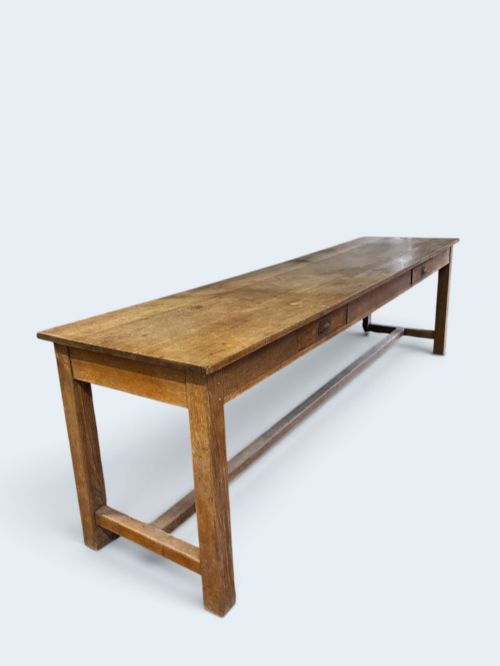
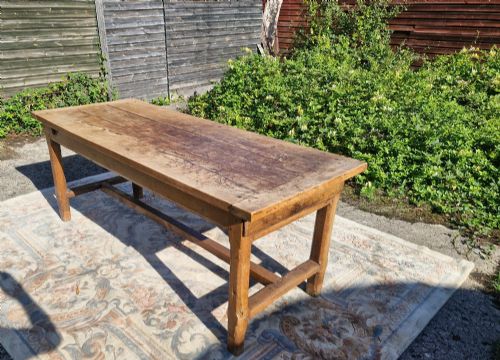
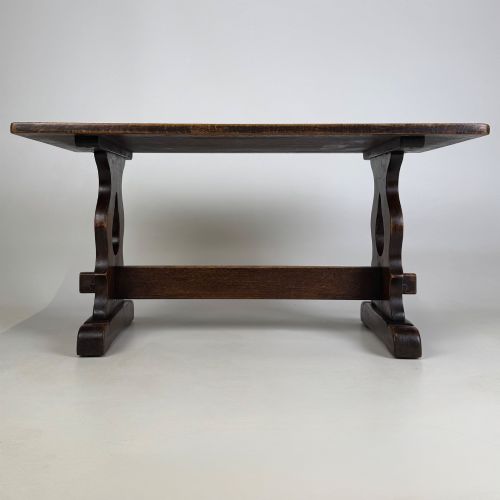
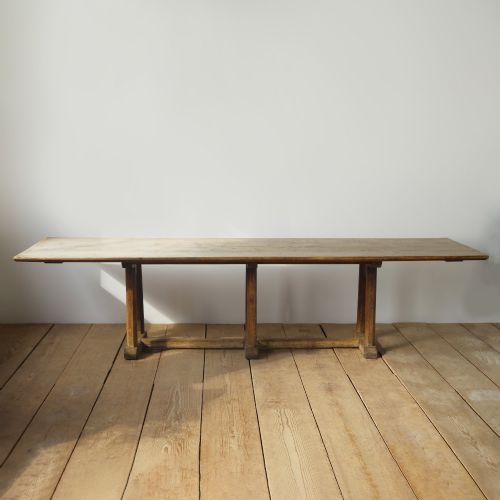
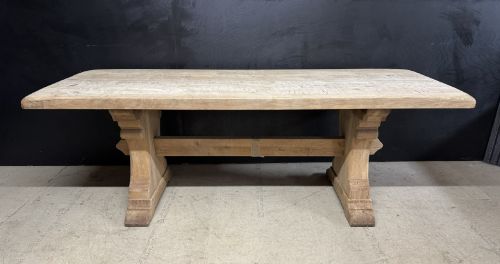
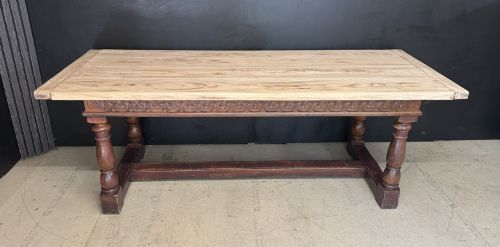
Vintage Oak Trestle Table
A vintage oak trestle table brings sturdy timber character to a room, offering the robust construction and enduring presence that collectors prize in domestic dining.
Vintage Oak Trestle Table
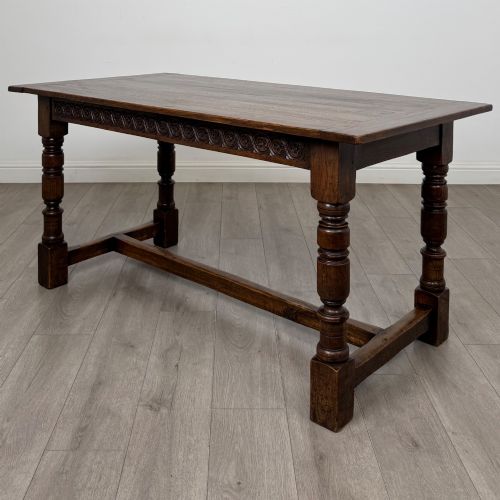
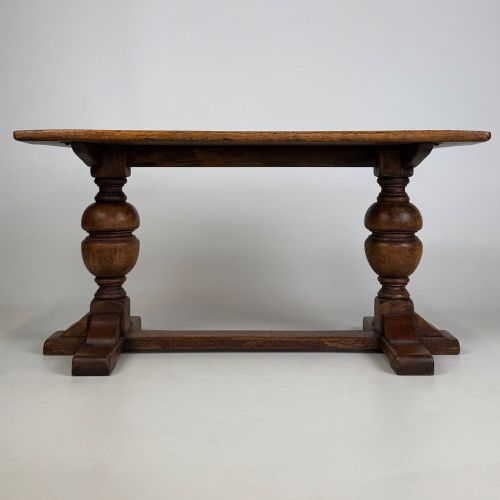
A vintage oak trestle table serves primarily as a dining or refectory surface, though smaller variations appear as coffee, side, console, and library tables. When searching for this phrase, buyers encounter pieces spanning the eighteenth, nineteenth, and twentieth centuries, including Edwardian iterations and specific revivals.
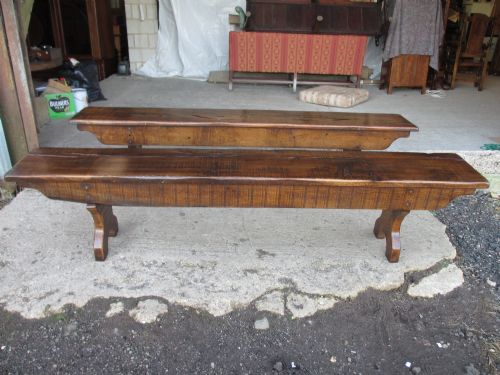
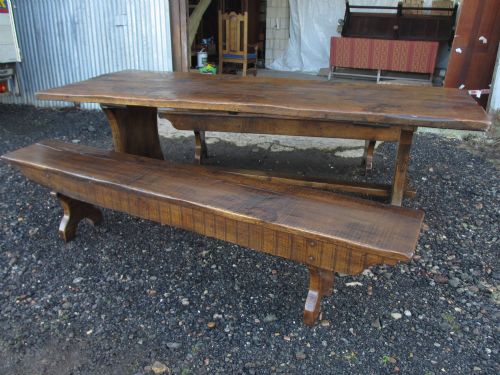
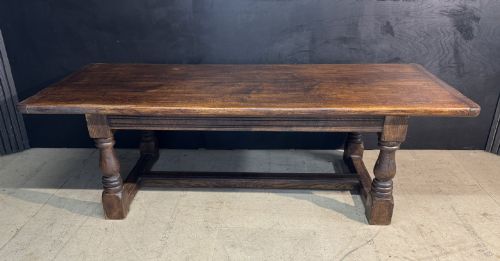
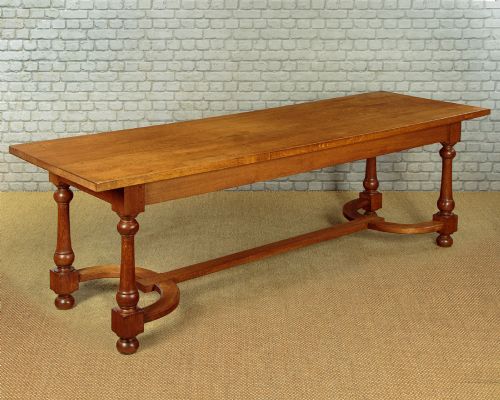
The dominant forms on this page include long refectory tables, draw leaf extensions, tavern pieces, and farmhouse styles equipped with heavy trestle ends or shaped supports. Many examples pair the table with matching benches, reflecting traditional communal seating arrangements in kitchens, public spaces, and dining halls.
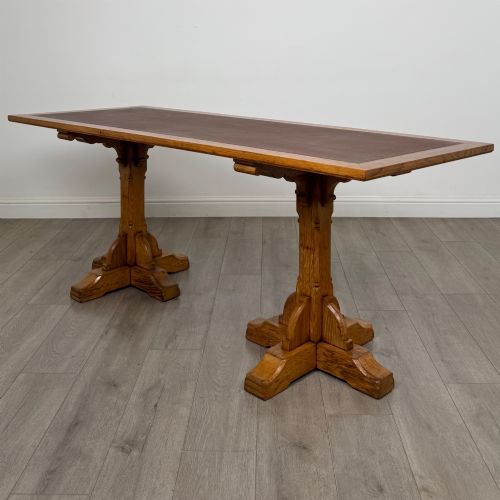
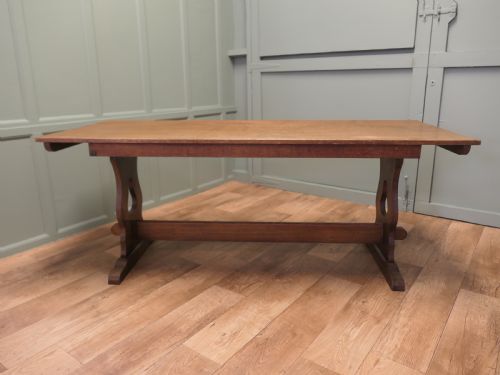
Origins and styling stretch from rustic country and French provincial designs to structured Arts and Crafts and Jacobean Revival pieces. Solid timber construction underpins these forms, utilising the substantial grain and durable weight associated with historic cabinetmaking.
Distinguishing quality across the range
Quality rests upon the selection of timber and the structural integrity of the trestle supports, where heavier, thicker oak boards command greater appreciation. Superior examples demonstrate harmonious proportions, particularly in long refectory and library formats where stability is paramount.
Craftsmanship shows in the execution of carved detailing, the smoothness of extension mechanisms such as draw leaves, and the depth of the natural patina accumulated over decades or centuries. Pieces reflecting specific movements like Arts and Crafts exhibit thoughtful design integration between the top and the base supports.
Vintage Oak Trestle Table Retail Price Guide 2026
Typical asking prices for vintage oak trestle table among the pieces listed under this phrase on Sellingantiques today, from the lower quarter to the upper quarter. They describe what is for sale here now, not the wider market.
Listings feature oak, pine, elm, and iron materials across periods spanning the eighteenth century to the Edwardian era.
The Vintage Oak Trestle Table Glossary
- Refectory table
- A long, narrow dining table traditionally used in communal dining halls and monastic refectories. These pieces often feature sturdy trestle bases and substantial timber construction.
- Trestle ends
- Support structures at either end of a table consisting of upright posts connected to a horizontal foot. They provide maximum legroom along the length of the surface.
- Draw leaf
- An extension mechanism where auxiliary leaves slide out from beneath the main tabletop. This allows the surface area to expand easily when needed.
- Arts and Crafts
- A design movement emphasising handcraftsmanship, simple forms, and the natural qualities of materials. Pieces from this tradition often highlight the honest construction of the oak frame.
Vintage Oak Trestle Table: Frequently Asked Questions
What is a refectory table?
A refectory table is a long, narrow dining surface historically designed for large communal meals in institutions. They are built for durability and frequent gatherings.
In modern homes, these long tables serve well in spacious kitchens and dining rooms as central gathering points.
How do I style a trestle table?
A trestle table pairs well with matching benches or a mix of wooden chairs to create a balanced dining arrangement. The open space beneath the top allows for comfortable seating along the entire length.
Keep table dressings simple to let the natural grain and sturdy wooden construction remain the visual focus of the room.
Are these tables solid oak?
Many of the listed pieces are constructed from solid oak or heavy timber, prized for its strength and distinctive grain pattern. Some examples incorporate related woods like elm or pine in their secondary construction.
Checking the description helps confirm whether a piece utilises solid timber throughout its top and base supports.
What periods do these pieces span?
The selection includes items ranging from the eighteenth and nineteenth centuries through to Edwardian and early twentieth-century interpretations. Revival styles frequently draw inspiration from much earlier historic eras.
Each period brings distinct characteristics, from the dark patination of Jacobean revivals to the honest simplicity of Arts and Crafts designs.