
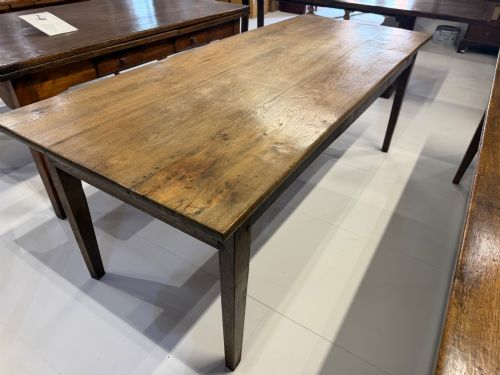
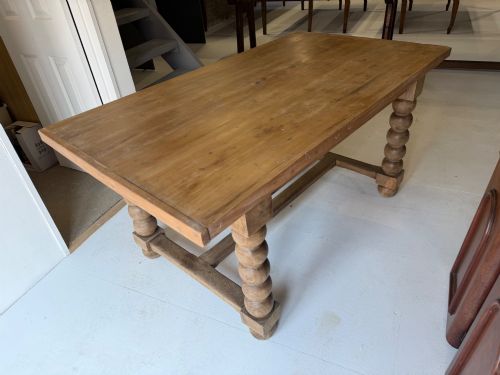
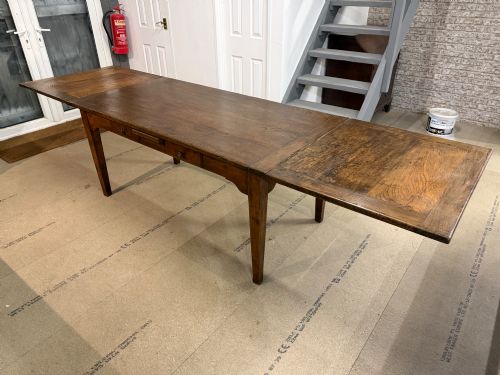
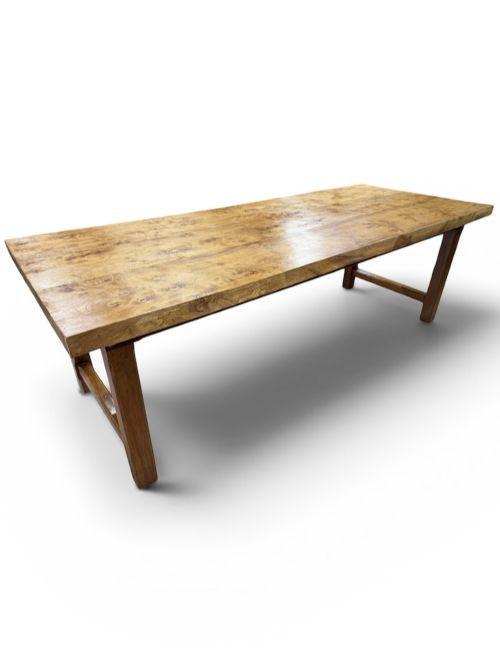
French Oak Farmhouse Table
A French oak farmhouse table brings honest provincial character and generous proportions into a modern dining room.
Understanding the French Oak Farmhouse Table
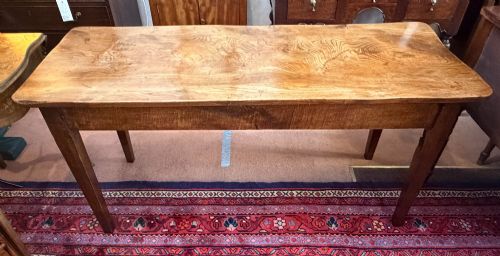
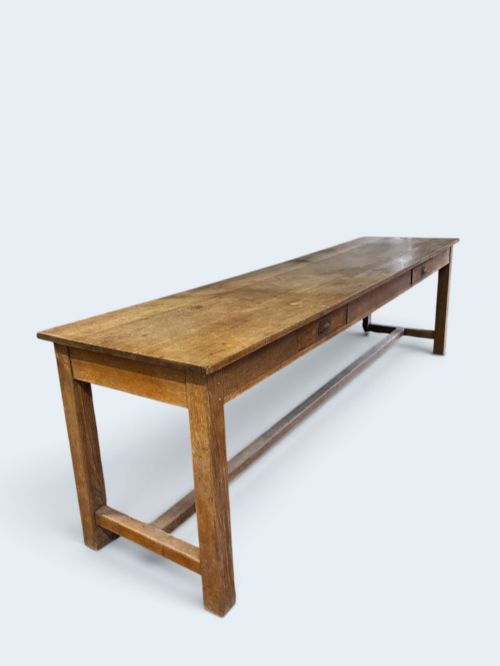
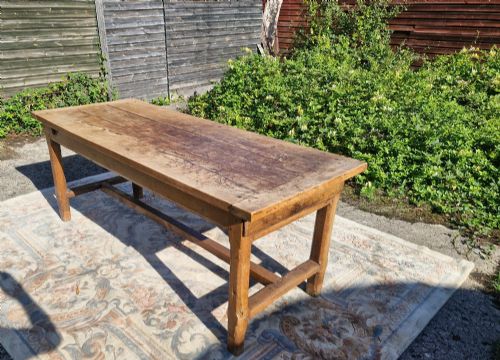
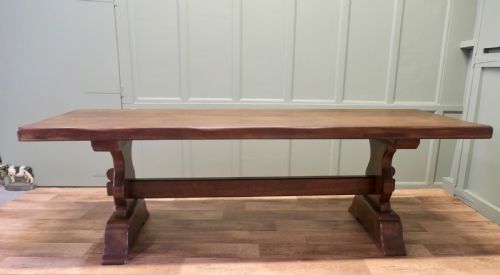
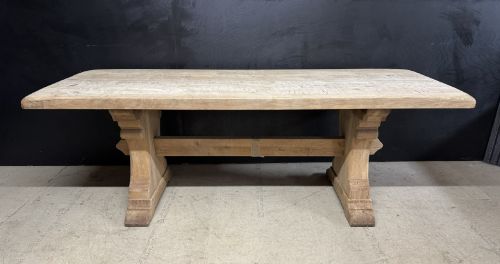
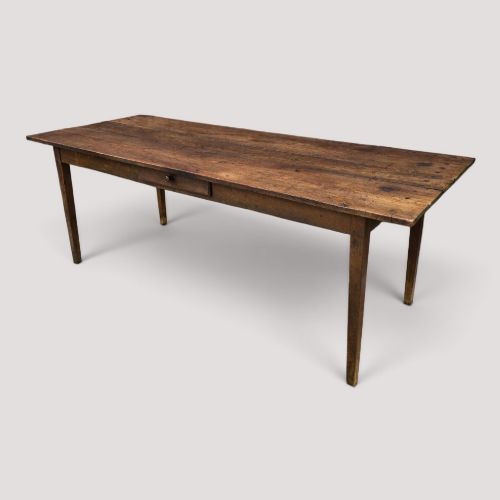
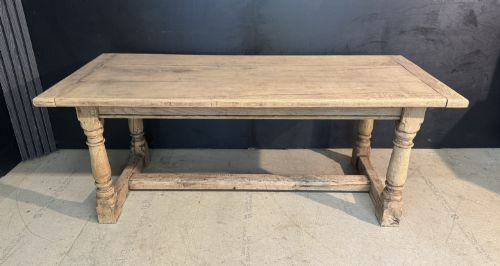
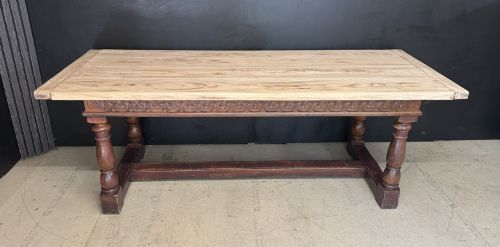
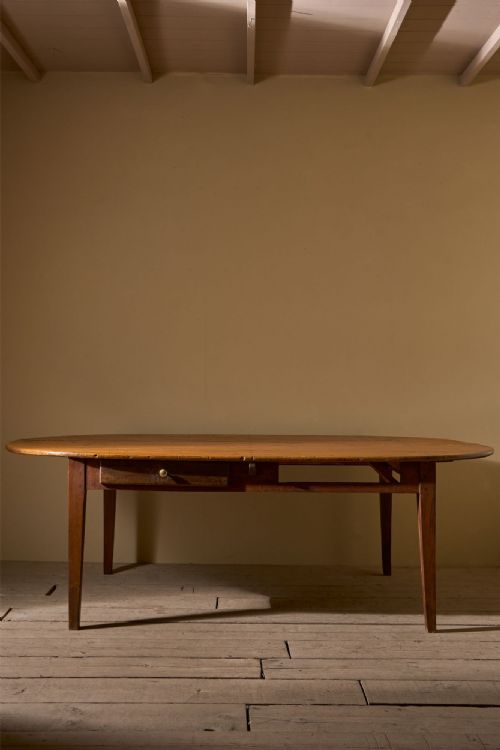
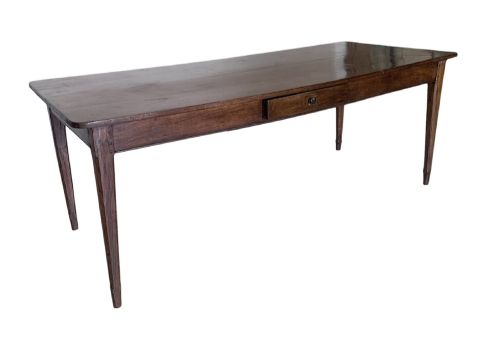
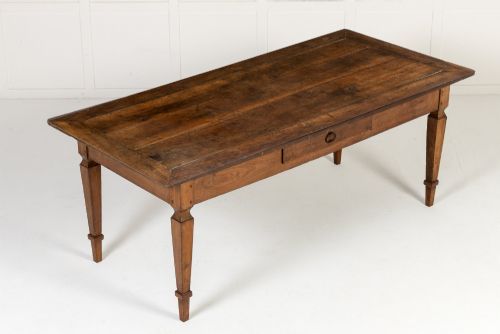
A french oak farmhouse table represents a sturdy utilitarian form originating in rural France, built primarily for daily communal dining and kitchen work. The examples seen here span the nineteenth century and the year nineteen twenty, encompassing styles such as French provincial, rustic farmhouse, and French country.
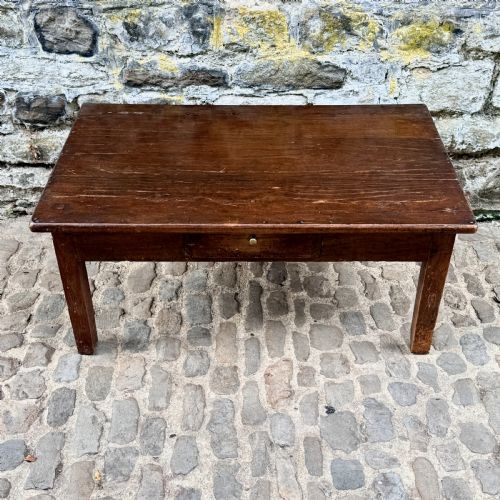
Most pieces encountered on this page function as dining tables or refectory variants, while archival records show occasional kitchen tables with drawers, dairy worktables, and extendable versions. Timber choices remain predominantly oak, sometimes paired with fruitwood, pear, poplar, or pine.
The aesthetic leans towards functional simplicity, featuring heavy plank tops and robust underframes designed for longevity. Buyers meet both deep proportions and bleached oak finishes among the current selections.
Assessing Quality and Character
The distinction between standard tables and superior examples rests upon timber selection and the number of planks utilised in the top. Two-board tops and substantial depths command greater regard among traditional pieces.
Proportion and structural integrity define the higher tier of these tables, where balanced scaling meets honest patination acquired through decades of service. Untouched surfaces with deep colour outrank heavily stripped alternatives.
Retail Price Guide 2026
Typical UK retail prices for french oak farmhouse table, calculated from the Sellingantiques database of over a million retail prices indexed since 2003. This retail price guide relies exclusively on Sellingantiques data; no external sources or auction records are used, so the figures do not describe the wider market.
Several archival tables include built-in drawers, proving that French bakers and cooks kept their rolling pins very close at hand.
The French Oak Farmhouse Table Glossary
- Refectory table
- A long dining table traditionally used in monastic or communal dining halls, often characterised by stretcher bases and substantial length. These forms heavily influence provincial French dining furniture.
- Scrub top
- A wooden table top designed to be aggressively scrubbed clean with water and sand, commonly found on dairy worktables and kitchen variants. This treatment leaves a pale, weathered timber surface.
- Bleached oak
- Oak timber that has been chemically or physically lightened in tone, a finish frequently seen on twentieth-century French tables. It offers a softer, more neutral appearance in contemporary interiors.
- Extension leaf
- A removable or sliding board designed to lengthen a dining table when extra seating capacity is required. Archival evidence shows these mechanisms built into both nineteenth-century and later refectory formats.
- Fruitwood
- A generic term for timber harvested from fruit-bearing trees such as pear, utilised by regional makers for specific tables or secondary components. It provides a distinct grain and warmth compared to standard oak.
Frequently Asked Questions
How do I date a French farmhouse table?
Dating relies on construction marks, timber movement, and stylistic cues from the nineteenth century up to nineteen twenty. Hand-cut joints and deep patination typically indicate earlier nineteenth-century origins.
Later pieces from around nineteen twenty often display more uniform bleaching or standardised extension mechanisms. Comparing leg turnings and stretcher placement against known period examples helps confirm the era.
Are these tables suitable for daily family use?
These tables were originally built for heavy daily labour and communal dining, making them exceptionally durable for modern households. Solid oak construction withstands regular family life while accommodating daily meals.
Existing marks and historical wear contribute to the character rather than diminishing the utility. Simple maintenance with appropriate wax preserves the surface against daily spills.
What is the difference between provincial and rustic styles?
Provincial tables often reflect refined regional cabinet-making traditions with lighter framing and subtle detailing. They suit formal dining spaces while retaining rural charm.
Rustic farmhouse variants embrace heavier proportions, simpler lines, and prominent grain patterns. These pieces emphasise raw utility and unadorned provincial construction.
How should I maintain a bleached oak finish?
Bleached oak surfaces require gentle cleaning with a damp cloth and mild soap to avoid stripping the treated tone. Avoid harsh chemical cleaners that can discolour the pale timber.
Applying a clear, non-yellowing wax periodically helps protect the porous oak from moisture rings and daily wear. Regular dusting maintains the natural dry feel of the bleached wood.