

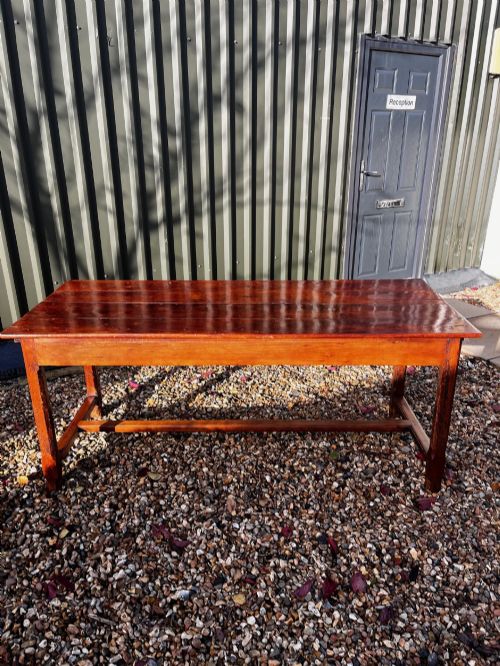
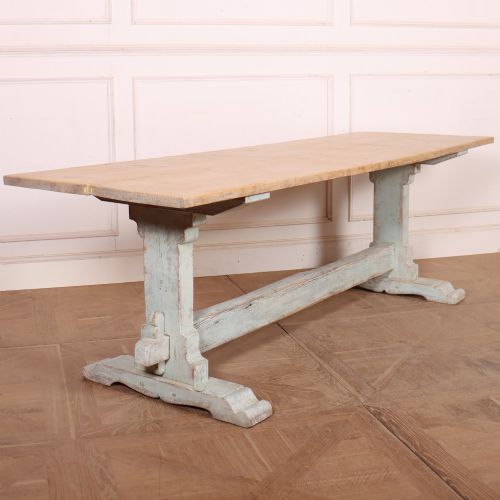
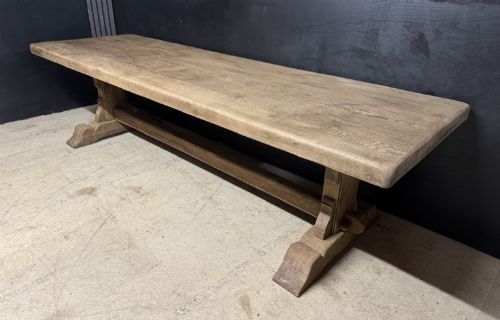
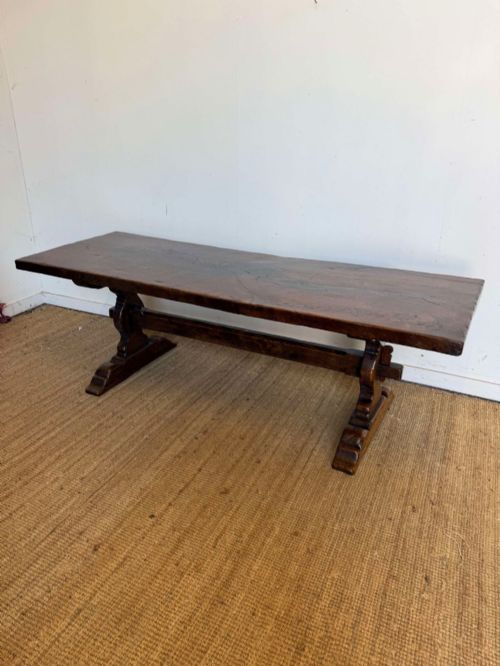
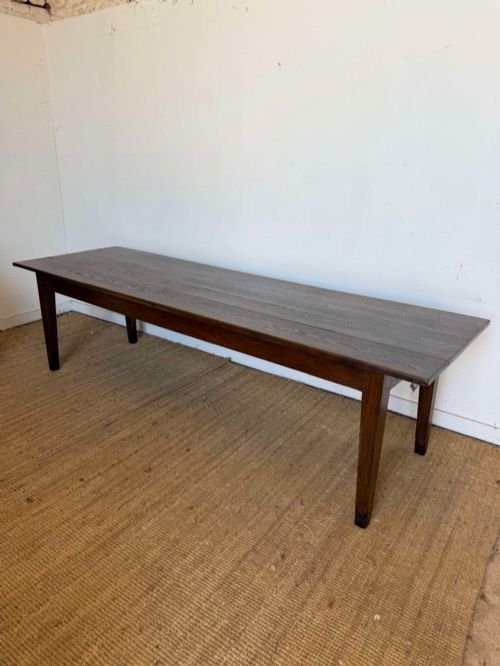
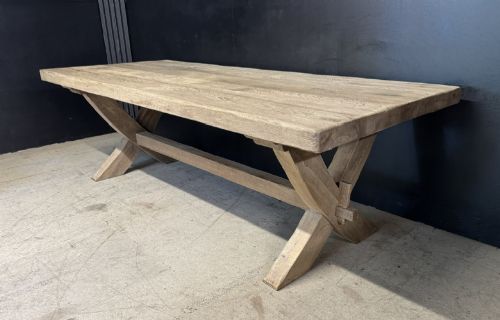
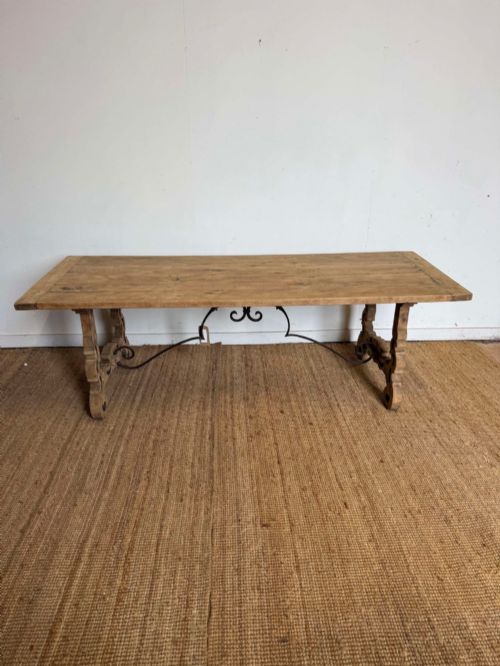
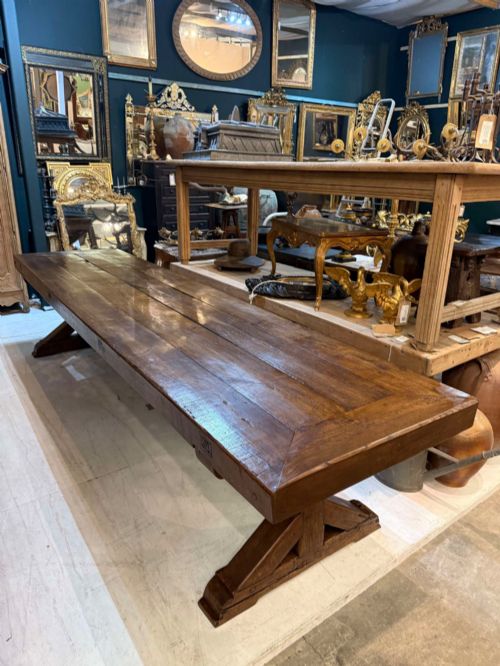
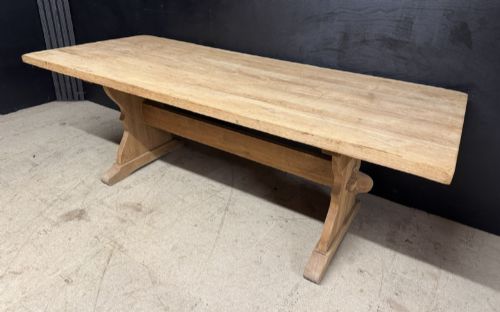
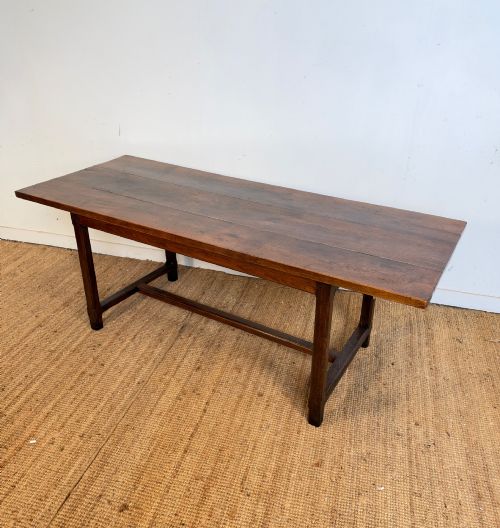
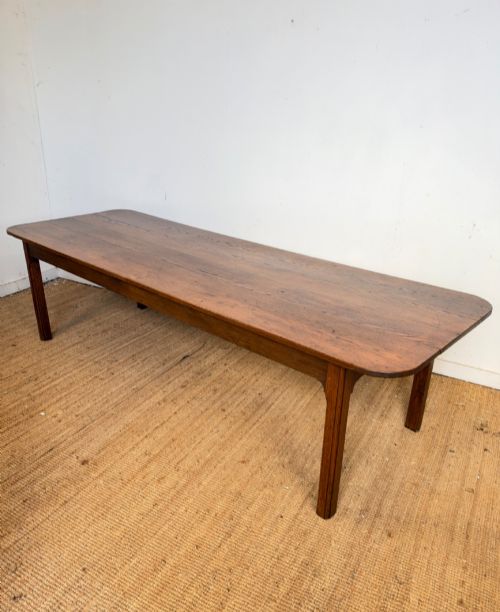
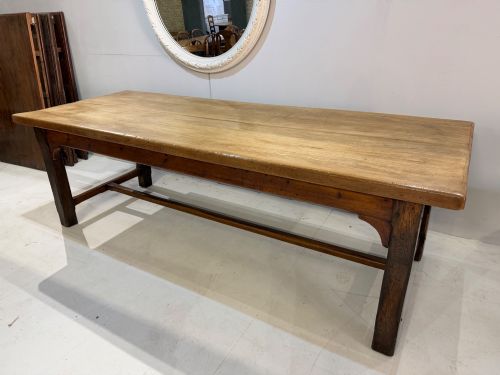
Rustic Trestle Dining Table
These rustic trestle dining tables bring hard-wearing timber and honest construction straight into the modern home.
Rustic Trestle Dining Table
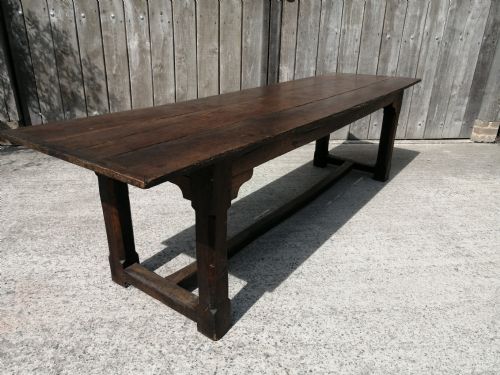
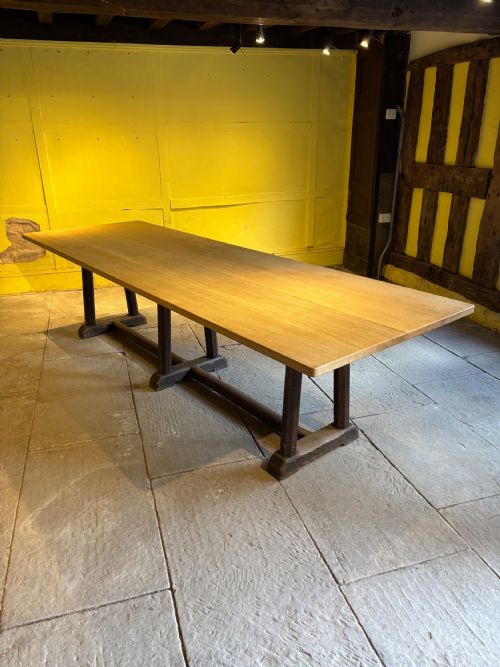
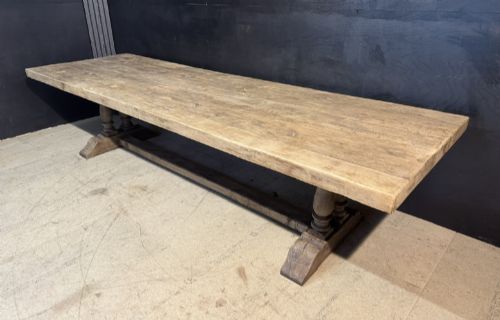
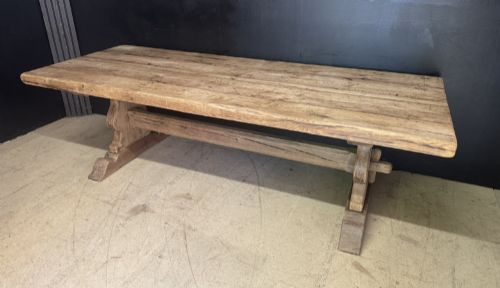
A rustic trestle dining table is a functional domestic surface supported by end uprights rather than four corner legs. These pieces draw on centuries of utilitarian design, often taking the form of refectory or farmhouse tables.
The versions most commonly met on this page date from the eighteenth and nineteenth centuries through to the early twentieth century. They appear in styles such as French provincial, English country, and Arts and Crafts.
Makers built these tables for long service in kitchens and dining halls, using robust timbers designed to withstand daily use. The enduring appeal lies in their straightforward lines and the character acquired over generations of meals.
How they were made
Makers relied primarily on solid timbers such as oak, elm, pine, and walnut for the tops and framing. These woods provided the necessary strength for large surfaces intended to seat multiple diners.
Construction techniques involved thick single-board or multi-board tops secured to substantial trestle ends, sometimes braced with stretcher bars or iron fixings. Surface finishes developed naturally through years of friction, oils, and simple waxing.
Rustic Trestle Dining Table Retail Price Guide 2026
Typical asking prices for rustic trestle dining table among the pieces listed under this phrase on Sellingantiques today, from the lower quarter to the upper quarter. They describe what is for sale here now, not the wider market.
Some early elm boards display the occasional knot hole patched by an eighteenth-century carpenter who refused to waste a good piece of timber.
What varies in quality
Quality rests in the selection of timber, the weight of the timbers used, and the integrity of the joinery. Tables made from dense hardwoods like oak or elm with thick plank tops stand apart from lighter constructions.
Proportion and balance dictate the visual success of the piece. Superior examples display thoughtful joinery at the trestle joints and a pleasing surface patina that reflects genuine age rather than artificial distress.
The Rustic Trestle Dining Table Glossary
- Trestle
- A support structure consisting of a horizontal beam or bar held up by two pairs of sloping legs. This framework allows maximum legroom along the length of the dining table.
- Refectory table
- A long narrow dining table originally built for communal eating in monasteries or large institutions. These forms often feature heavy stretchers connecting the trestle ends.
- Patina
- The surface sheen and colour acquired by timber through decades of handling, polishing, and oxidation. It serves as a visual indicator of genuine age and continuous use.
- Plank top
- A table surface constructed from wide boards joined edge to edge. Single plank versions are particularly prized for the breadth of the timber used.
Rustic Trestle Dining Table: Frequently Asked Questions
What is a rustic trestle dining table?
A rustic trestle dining table is a solid wood dining surface supported by end uprights instead of traditional corner legs. They originate largely from historic farmhouse and refectory traditions.
These pieces prioritise practical function and sturdy timber construction over ornate decoration, making them central to domestic life.
How do I date an old wooden table?
Dating relies on observing tool marks, timber selection, construction methods, and the natural wear accumulated on the wood. Examination of the underside and joints often reveals hand-cut joinery.
Comparing the style against known periods from the seventeenth to the twentieth centuries helps narrow the origin.
Are these tables suitable for daily dining?
These tables were originally built for heavy daily use in kitchens and dining rooms. Their robust construction makes them well suited to modern family life.
Routine maintenance involves simple cleaning and occasional waxing to protect the historic timber surface from moisture.
What woods were commonly used?
Makers utilised whatever durable local timber was available, most frequently oak, elm, pine, and walnut. Hardwoods provided strength for the large tops and support structures.
Each wood species ages differently, developing distinct surface textures and tones over the centuries.