

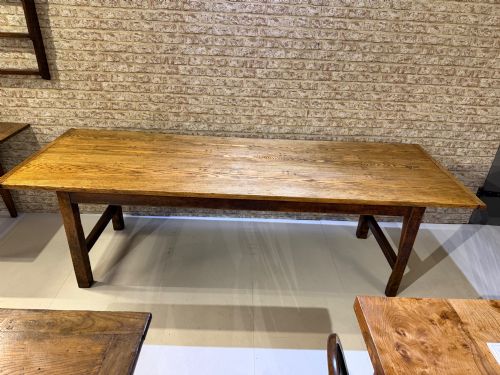
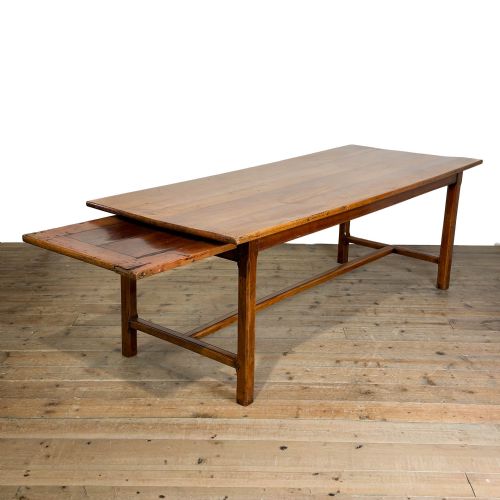
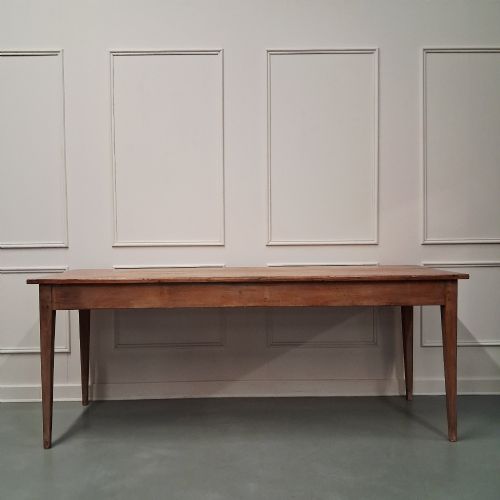
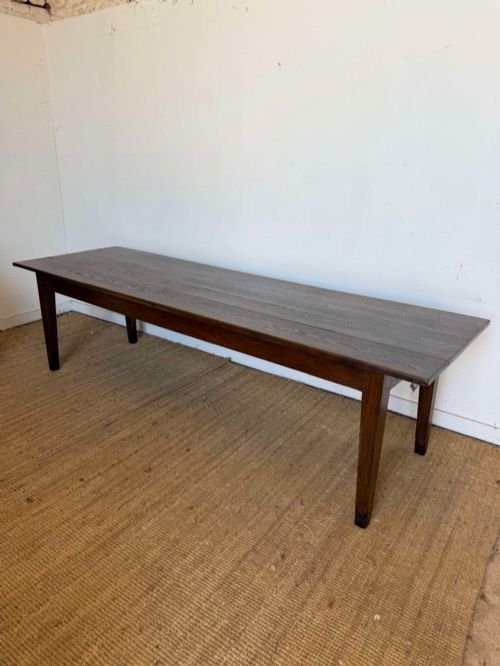
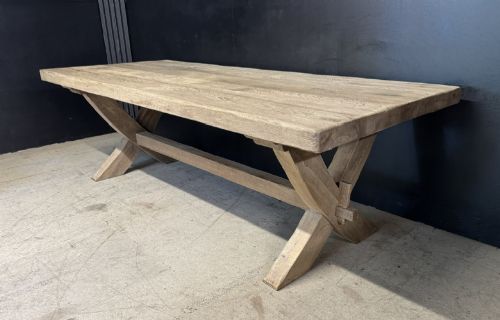
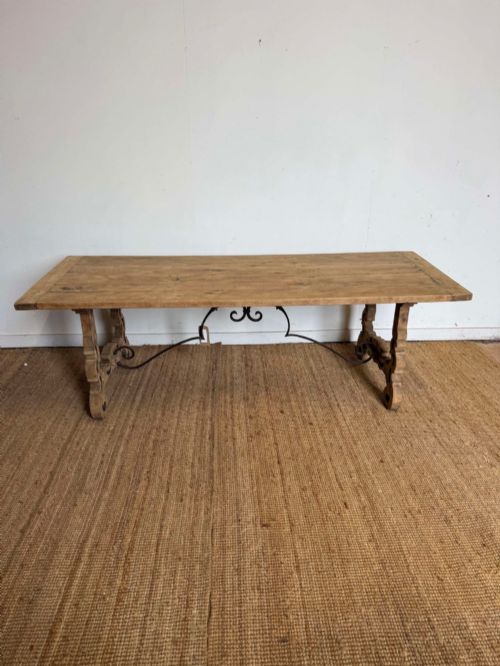
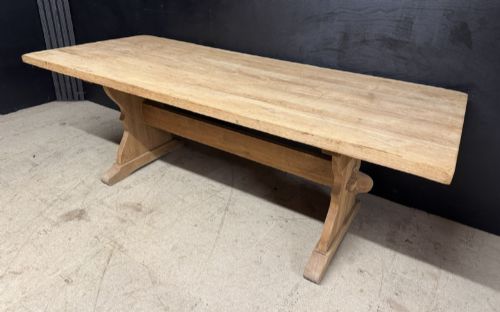
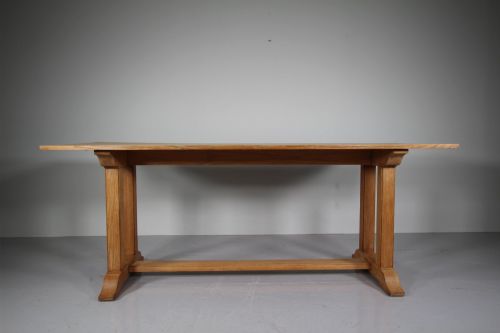
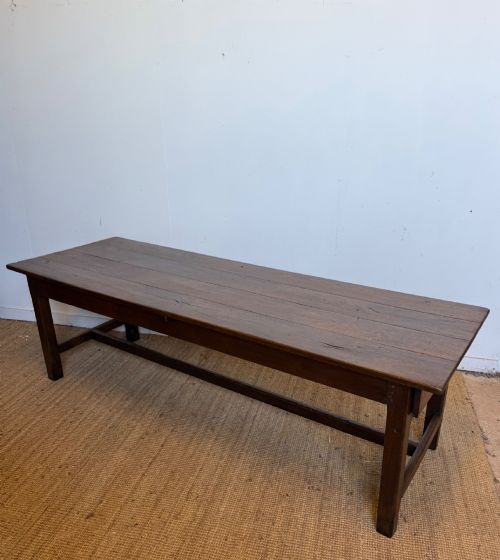
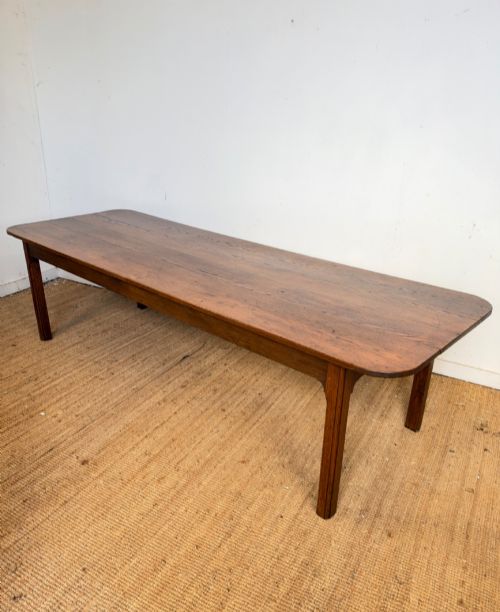
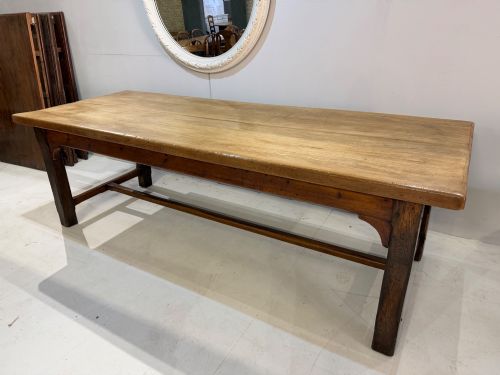
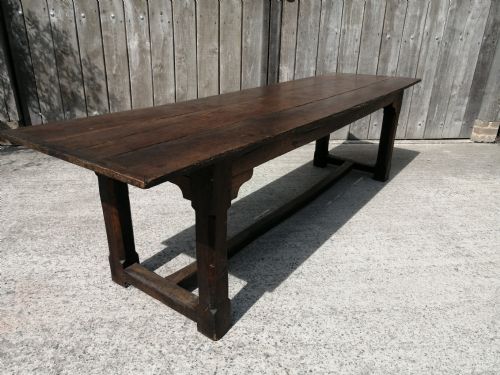
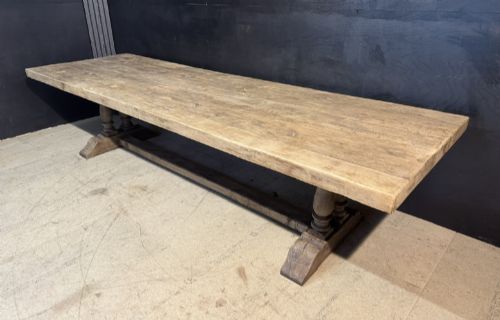
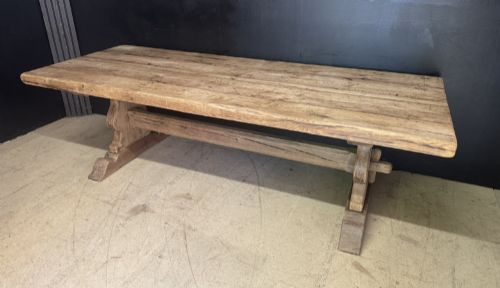
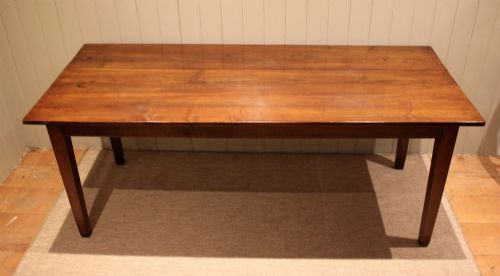
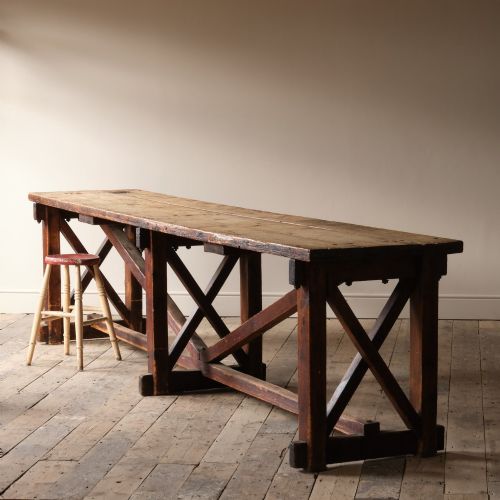
Large Wooden Kitchen Table
A large wooden kitchen table grounds a room with substance, bringing utility and warmth through substantial timber surfaces built for daily communal life.
Large Wooden Kitchen Table
A large wooden kitchen table stands at the heart of domestic life, designed over centuries for daily preparation, dining, and gathering. When searching for a large wooden kitchen table, buyers encounter substantial pieces built to handle heavy domestic work.
The selections here primarily draw from the nineteenth century and the early twentieth century, alongside select eighteenth-century and seventeenth-century examples. Common forms include farmhouse dining tables, refectory styles with trestle or straight legs, and functional scullery or work tables.
Origins span English, French, and Spanish workshops, reflecting diverse regional cooking and dining traditions. Buyers find everything from scrubbed pine workhorses to formal oak refectory boards designed to seat large families.
Materials and Construction
Carpenters utilised indigenous hardwoods and softwoods such as oak, pine, elm, beech, fruitwood, and walnut to build these functional surfaces. Timber selection depended on local availability, with dense oak and elm chosen for refectory frames and durable pine or fruitwood utilised for scrubbed top boards.
Construction methods prioritised strength and longevity, employing heavy plank tops joined to sturdy legs using traditional joinery. Many examples feature multi-board tops, shaped trestle ends, or integrated drawers for storage in busy sculleries and kitchens.
Finishes developed naturally through decades of use, though some pieces display historic wax, paint, or bleached treatments. Metal components like brass and iron appear selectively in structural brackets or drawer hardware.
Large Wooden Kitchen Table Retail Price Guide 2026
Typical asking prices for large wooden kitchen table among the pieces listed under this phrase on Sellingantiques today, from the lower quarter to the upper quarter. They describe what is for sale here now, not the wider market.
Several tables show historic drawer additions, proving that past cooks demanded just one more place to hide their wooden spoons.
Judging Quality and Character
Quality rests in the integrity of the timber selection and the proportional balance of the frame. Tables constructed from single-plank elm or dense quarter-sawn oak demonstrate superior material grade compared to utilitarian multi-board assemblies.
The depth of patination tells the story of a table's working life, distinguishing surfaces worn smooth through generations of use from later secondary alterations. Original timber proportions and uncompromised structural joining elevate certain pieces above standard vernacular furniture.
The Large Wooden Kitchen Table Glossary
- Refectory table
- A long dining table originally built for monastic refectories and later adapted for domestic use. These pieces typically feature elongated proportions supported by heavy legs or trestles.
- Farmhouse table
- A sturdy everyday table built for rural kitchens and dining rooms. They usually feature thick wooden tops and robust legs designed for heavy domestic labour.
- Harvest table
- A narrow dining table traditionally used during seasonal gatherings. Many versions incorporate drop leaves or long boards to accommodate large groups.
- Scullery table
- A utilitarian work table equipped with drawers for storing kitchen utensils. These surfaces were built specifically for food preparation and cleaning tasks.
- Patina
- The surface sheen and colour developed by wood over years of handling, polishing, and exposure to light. This quality indicates the age and continuous use of a piece.
- Trestle ends
- Support structures positioned at either end of a table top rather than traditional corner legs. This design provides maximum legroom along the length of the table.
Large Wooden Kitchen Table: Frequently Asked Questions
How do I care for a wooden kitchen table?
Maintain the surface by wiping spills promptly with a damp cloth and avoiding harsh chemical cleaners. Periodic application of natural wax helps preserve the timber and protects the historic patina.
Keep wooden tables away from direct heat sources and extreme humidity fluctuations to prevent the timber from warping or splitting over time.
Were these tables used only in kitchens?
While many served in kitchens and sculleries for food preparation, others functioned in dining rooms, libraries, and monastic refectories. Their robust construction made them suitable for any space requiring a large, stable surface.
Over the centuries, changing domestic habits meant tables moved freely between working areas and formal entertaining spaces.
How do I determine the period of a table?
Dating relies on examining construction techniques, tool marks left by carpenters, and the specific joinery methods used in the frame. Hand-cut joints and timber ageing patterns offer clear clues to a piece's age.
Style characteristics such as Jacobean revival motifs or Edwardian trestle shapes also help narrow down the manufacturing decade.
Are these tables suitable for daily dining?
These tables were built specifically for heavy everyday use and remain exceptionally durable for modern dining rooms. Their solid timber construction easily withstands the demands of family meals and gatherings.
Using placemats and coasters helps protect the historic surface while allowing you to enjoy the table as the focal point of the home.